


As pilgrim numbers surge, a new initiative is helping keep Kedarnath clean
Anandana-The Coca-Cola Foundation, in partnership with Healing Himalayas Foundation and government agencies, have established a waste recovery facility in Kedarnath. Its #CarryMeBack campaign encourages pilgrims to carry back waste down the route.

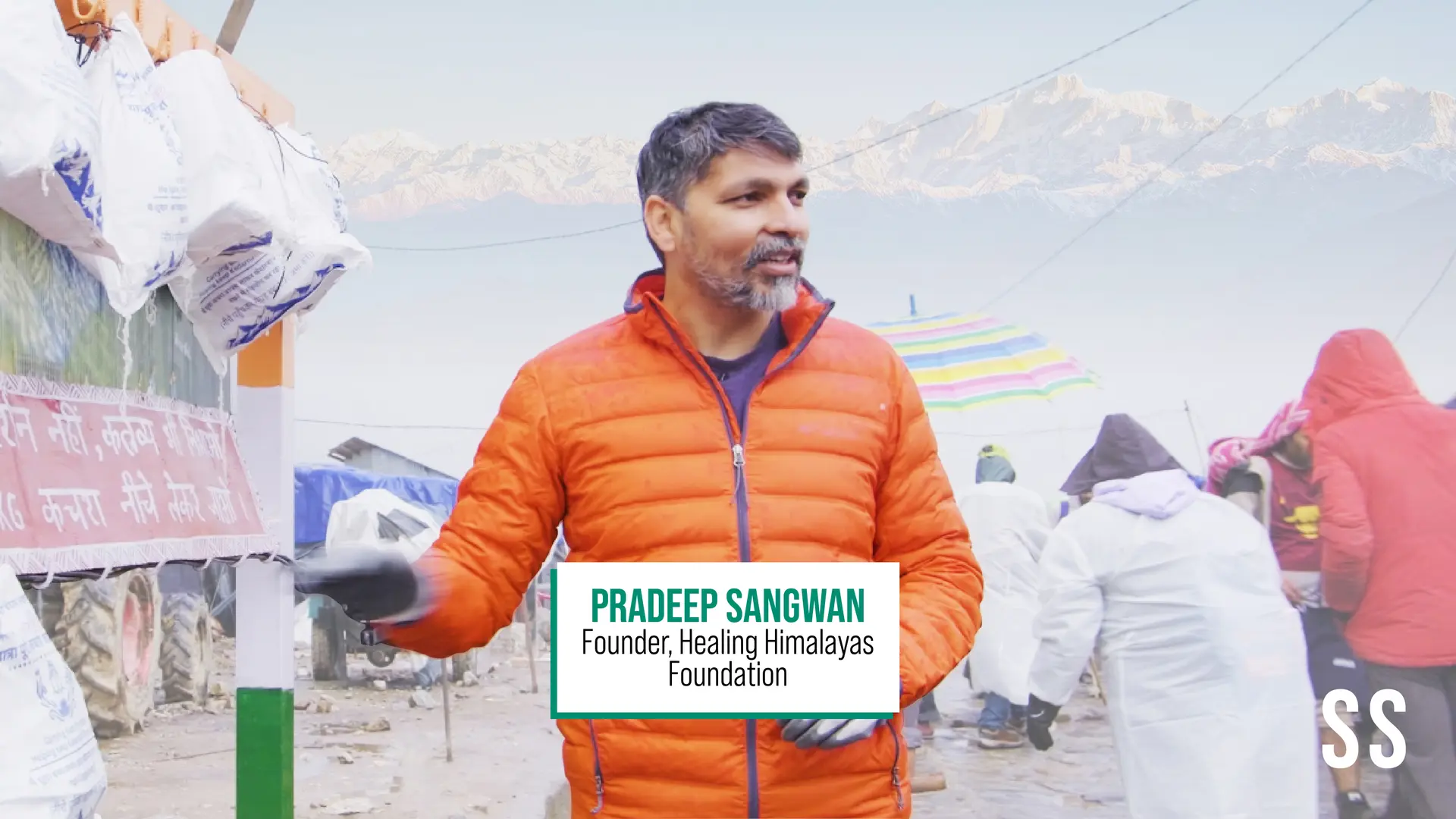

Last year, 17 lakh pilgrims visited Kedarnath during the yatra season. This year, the number of registered pilgrims has crossed 10 lakh within just 40 days.
The annual influx of pilgrims leaves behind significant amounts of plastic and other dry waste in one of India's most ecologically sensitive Himalayan regions. Collecting, transporting, and processing this waste is a formidable challenge, given the high altitude, rugged terrain, and limited infrastructure.
“On the waste side, every material you would find in an urban space ends up here—PET bottles, multi-layered plastic (MLP), glass. But there are also specific problem items: single-use raincoats, plastic-lined paper plates and cups, and even rubber shoe covers that trekkers buy and discard. The footfall creates an immense commercial opportunity, and businesses channel large quantities of material to Kedarnath during peak season to meet that demand,” says Pradeep Sangwan, Founder, Healing Himalayas Foundation.
Since 2016, Healing Himalayas has been dedicated to protecting the Himalayan ecosystem through clean-up drives, sustainable waste management, circular economy initiatives, waste collection centres, and environmental education rooted in on-ground action.
Waste management at 11,755 feet
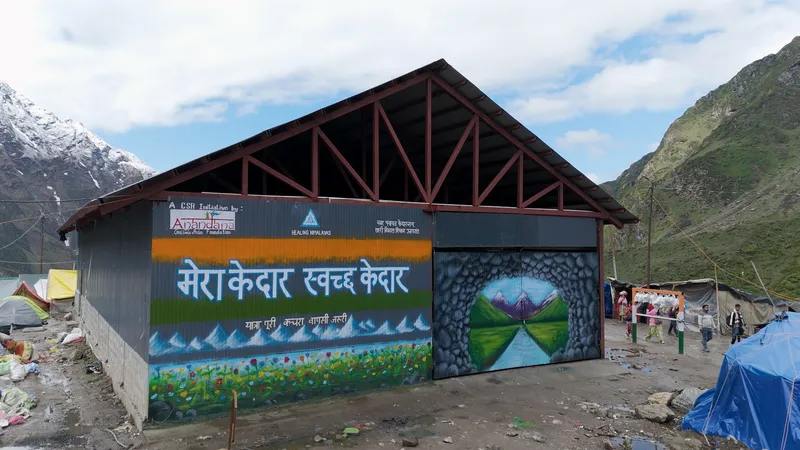
The Material Recovery Facility (MRF) in Kedarnath
The Himalayan Harmony Project, established by Anandana - The Coca-Cola India Foundation, in partnership with the Healing Himalayas Foundation, with support from the District Administration of Rudraprayag and the Urban Development Department of Uttarakhand, has established a Material Recovery Facility (MRF) near the Kedarnath Temple at an altitude of 11,755 ft, making it one of India's highest waste management facilities.
The MRF, spanning approximately 3,000 square feet, is equipped with a baling machine that compresses collected waste to reduce volume for transport, and a tractor for waste collection and haulage within the Kedarnath Panchayat area. Setting up the facility took two years.
The numbers from the first operational season are impressive. Over 12.5 tonnes of material have been neatly segregated at the MRF. An estimated 300 additional tonnes of waste stored during peak season will be processed through the off-season months of July and August. A second facility at Gangotri, another of the Char Dham sites, is scheduled to be operational by September 2026 under the same partnership.
Managing waste at high altitude is not just an ecological challenge but also carries financial implications. The most critical part of the initiative is creating a financially sustainable reverse supply chain—from collection at the top, to the MRF, and then to a recycler.
Transporting 60 kg of waste from Kedarnath down to the foothill by horse costs approximately Rs 2,000. At a significant scale, the economics become unsustainable.
#CarryMeBack to keep Kedarnath clean
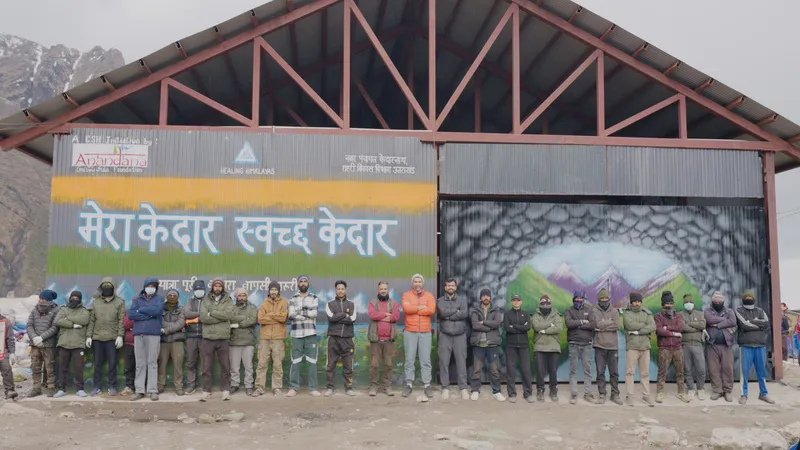
The team
That is where the #CarryMeBack campaign, a part of the broader 'Mera Kedar, Swachh Kedar' vision, comes in.
The idea is simple: pilgrims are given a small bag near the MRF and asked to carry a portion of the collected waste back down with them as they descend. The ask is modest; even 250 grams per person makes a difference.
In less than 15 days of operation, 1,341 pilgrims participated in the campaign, helping transport 2.37 tonnes of waste to the foothills. The rate of collection accelerated sharply: while the first tonne took 10 days to move, the second tonne was transported in just five days. The campaign has already saved approximately Rs 66,000 in transportation costs.
"People come from Gujarat, Maharashtra, from all over India. They take a flight, a bus, or walk all the way to the top. When they carry waste on their way back, they feel they have helped keep Kedarnath clean. That sense of meaning matters, and it makes this model replicable,” Sangwan says.
The campaign is now being expanded in three directions: engaging the horse and mule association (with an estimated 5,000 horses at any given point, each capable of carrying 2–3 kg of waste downhill per trip); distributing CarryMeBack packets through all hotels in the area; and pursuing discussions with the Ministry of Housing and Urban Affairs (MoHUA) about scaling the model into a national campaign.
“1,341 participants have joined. In the first 10 days, we transported one tonne of waste to the foothill. In the next five days, another tonne. The rate of collection is accelerating. Total waste transported through this campaign stands at 2.37 tonnes. The campaign has also saved approximately Rs 66,000 in transportation costs,” explains Sangwan.
The back-end logistics are critical to the campaign’s success. Every morning, the team packs the bags and places them near the MRF, where team members explain the campaign to pilgrims. “When pilgrims reach the foothill, there needs to be a clear, visible drop-off point. We are working with the Urban Development Department and Rural Development Department to build a permanent structure for Carry Me Back waste submissions at the foothill,” he adds.
Healing Himalayas has seen encouraging community participation in Kedarnath, with support from local communities ranging from 50–60% in the very first year.
“Hoteliers and kitchen owners have been particularly collaborative. We put up waste segregation guides in every kitchen we visited, explaining the difference between wet and dry waste, and they adopted them willingly."
The initiative has also generated local employment, hiring around 15 safai mitras (sanitation workers) and team members, largely from neighbouring districts. For its information, education, and communication (IEC) activities, the organisation has intentionally recruited women, believing they are more effective at building trust and encouraging behaviour change within communities.
"For the first time, Kedarnath will generate revenue from recovered materials. Earlier, the cost of waste collection and operations exceeded the revenue from selling recyclables. The Carry Me Back campaign and the baling infrastructure are changing that equation,” he says.
Saloni Goel, Senior Director – ESG Value Creation and Commercialization, Coca-Cola India, regarding this initiative said, effective waste management requires integrated systems that strengthen waste collection, segregation and processing while encouraging active participation from communities and local stakeholders.
“Beyond infrastructure, the initiative focuses on driving behavioural change through door-to-door awareness, engagement with local businesses, distribution of separate collection bags for dry and wet waste, and capacity building of waste workers to strengthen source segregation practices. A digital dashboard further supports real-time tracking of waste movement, helping improve transparency and operational efficiency across the waste management value chain,” she adds.
According to Sangwan, the biggest challenge lies in preventing waste from reaching the mountains. That means restricting certain materials at the foothills, a move that affects businesses built around the annual pilgrimage. It requires navigating the political and commercial sensitivities of one of India's most important religious destinations.
Equally challenging, he says, is changing people's behaviour.
“Pilgrims make extraordinary efforts—long journeys and physical hardship—to seek the blessings of Lord Shiva. And yet, many end up littering along the route and at the top. A place meant for meditation and spiritual renewal ends up bearing the cost of that behaviour. It is a contradiction I find very hard to reconcile.”
For Sangwan, the success of the initiative will be measured through four key indicators: expanding the region's waste collection and recovery capacity, digitising waste management to track the types and volumes of waste generated over time, improving transport efficiency through the baling machine, and increasing revenue from recyclable materials.
"The ultimate indicator is whether the reverse supply chain becomes financially sustainable. If more material reaches recyclers and generates revenue, it means we're not just collecting waste, we're creating a circular system that can sustain itself,” he says.