


How Magic Bus India Foundation is helping rural women become entrepreneurs
The Rural Livelihood Programme of Magic Bus India Foundation is helping women across seven states to become entrepreneurs through locally tailored livelihood programmes.


In a small workshop in Hiware village, on the outskirts of Pune, Kajal Hadawale packs another batch of instant poha into branded pouches. A few years ago, the surplus produce from her family’s farm —peanuts and vegetables that couldn’t make it to market in time—would rot. Today, with the help of a dehydrator machine, the same surplus is the raw material for a small but growing food business that supplies instant poha and upma.
In Khopoli, Jyoti Yogesh Kelatkar runs a cutlery shop with a tailoring counter tucked into one corner. Safiya Sayyed, 21, stitches sarees and blouses while quietly building a collective of young fashion designers. These three women run different businesses—and one common thread runs through the stories of transformation: Magic Bus India Foundation’s Rural Livelihood Programme.
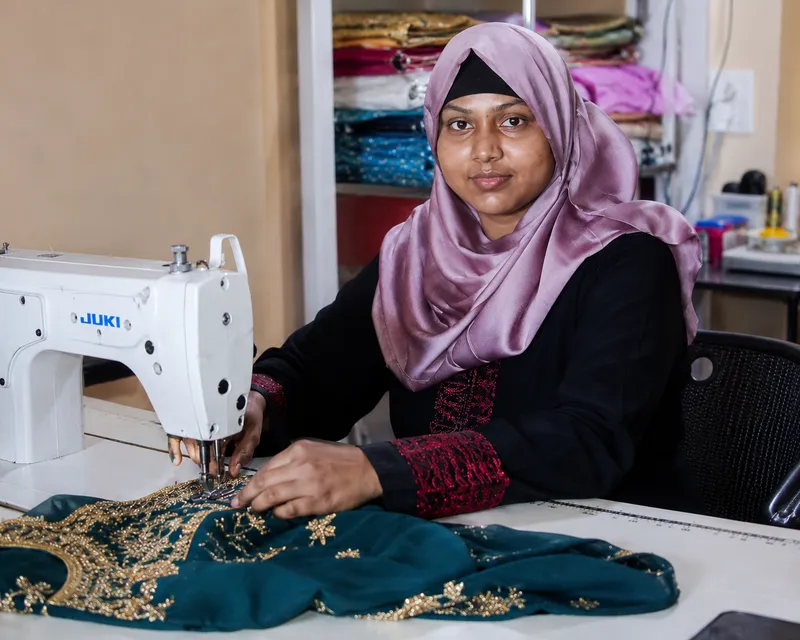
Saffiya Sayyed
Magic Bus India Foundation’s Rural Livelihood Programme teaches life skills to young people from underprivileged backgrounds. It has helped one million young people transition into jobs after skilling over the last 10 years.
When Magic Bus India Foundation was started 27 years ago, one of its strong driving goals was gender equity—supporting young girls and women to become self-standing, contribute to their families, become independent, and live more dignified lives.
Every programme launched by the Foundation has a strong gender lens built in, says Arun Nalavadi, Chief of Programmes.
These include the Adolescent vertical, where it works with schools and communities within the government system to help boys and girls transition to higher education or work.
The second is Livelihoods, which comprises urban skilling and job transition, and rural livelihoods.
As roughly 70% of India lives outside its cities, the organisation’s Rural Livelihood Programme, launched a few years ago, is now trying to replicate that scale. While the urban programme maintains a 50% gender balance, the rural cohort is almost entirely women.
The women the programme targets are typically 25 to 45 years old—older than Magic Bus’s urban beneficiaries —and have usually completed what Nalavadi calls “the first phase of motherhood.”
They come from economically stressed families, and most depend on multiple small sources of income rather than one: MGNREGA or similar social schemes give about Rs 2,000–2,500 a month; other social benefits add roughly another Rs 2,000, where available; and odd work by the head of the family adds another Rs 1,000–1,500. That’s about Rs 5,000–5,500 a month — not enough to live a dignified life, even in a rural setting. The idea is to build a fractional income of about Rs 3,500–4,000 to start with, which then doubles or triples over the years.
How the programme works
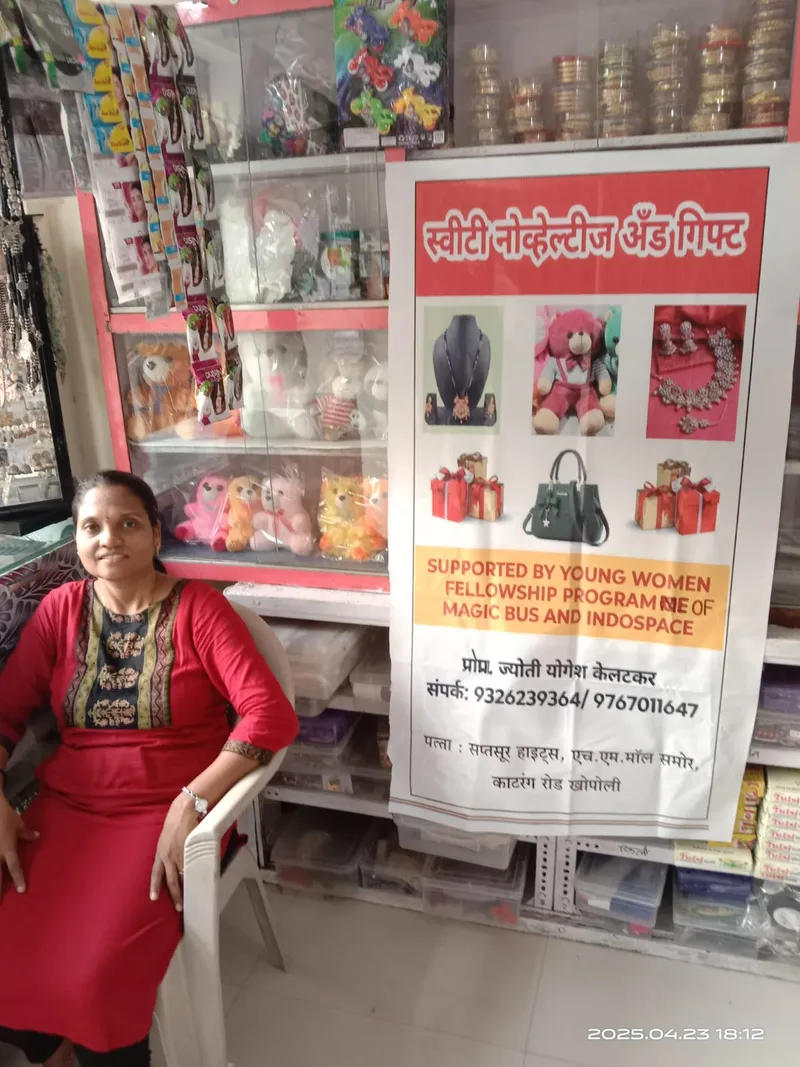
Jyoti
The organisation follows what it calls a "saturation model," identifying economically vulnerable blocks within a district and working intensively within those communities. Each intake is screened through a selection tool that weighs social and economic marginalisation — the programme works only with BPL families — alongside a test of entrepreneurial aptitude.
It partners with gram panchayats and local stakeholders, conducting door-to-door outreach and village meetings to enroll participants—primarily women—into its free livelihood programme.
Each intervention is anchored by a Livelihood Resource Centre, where participants are introduced to livelihood opportunities based on local market demand. Magic Bus enables women to choose between wage employment, self-employment, or entrepreneurship.
“Our programme teaches several things. First, self-reliance — building tenacity and confidence, including exposure to 21st-century skills. Second, business skills — understanding demand, supply, cash flow, profit, bookkeeping, customer loyalty, selling, quality, and building a pipeline of repeat customers, as well as how to access finance. Third, managing the psycho-emotional side of the journey,” says Nalavadi.
Following classroom and hands-on training, participants prepare business plans with guidance from programme staff. Those seeking employment receive interview preparation and placement support, while aspiring entrepreneurs are helped to establish their enterprises, complete the necessary documentation, and receive one-time seed funding to purchase equipment or initial inventory.
“The third and most difficult cycle is making sure the business survives — what we call hand-holding. We build a network of successful peer mentors, plus our own staff, who guide these women through the ups and downs. As the business grows, they also need working capital, so we help them understand how to access capital, build supply-chain efficiency, and manage risk — because one unmanaged risk, say in a poultry business, can wipe everything out,” he adds.
After a year, if all goes well, about 85% of businesses survive, and roughly 20% show real growth, reaching an average fractional income. Prosperity spreads into the family, and family members who initially opposed the woman’s involvement start supporting her.
To ensure long-term sustainability, Magic Bus helps women form village-level collectives that provide savings and lending support, peer learning, and psychosocial encouragement. As businesses mature, around 30% of entrepreneurs grow beyond one-person nano enterprises, creating livelihoods for others in their communities. Some are also trained as mentors, helping women in neighbouring villages establish businesses of their own.
Magic Bus is also piloting a second model, “green shoots”, where it converts groups of women into a federation. In a federation, all the units produce the same product, and the federation brands and sells beyond local consumption, district, state, even national level, which raises value-add and profits.
The rural livelihood programme operates in seven states—Odisha, Madhya Pradesh, Rajasthan, Karnataka, Tamil Nadu, Gujarat, and Maharashtra. Nearly 90% of the programme comprises women.
Magic Bus tailors its livelihood interventions to local market realities rather than following a standardised model.
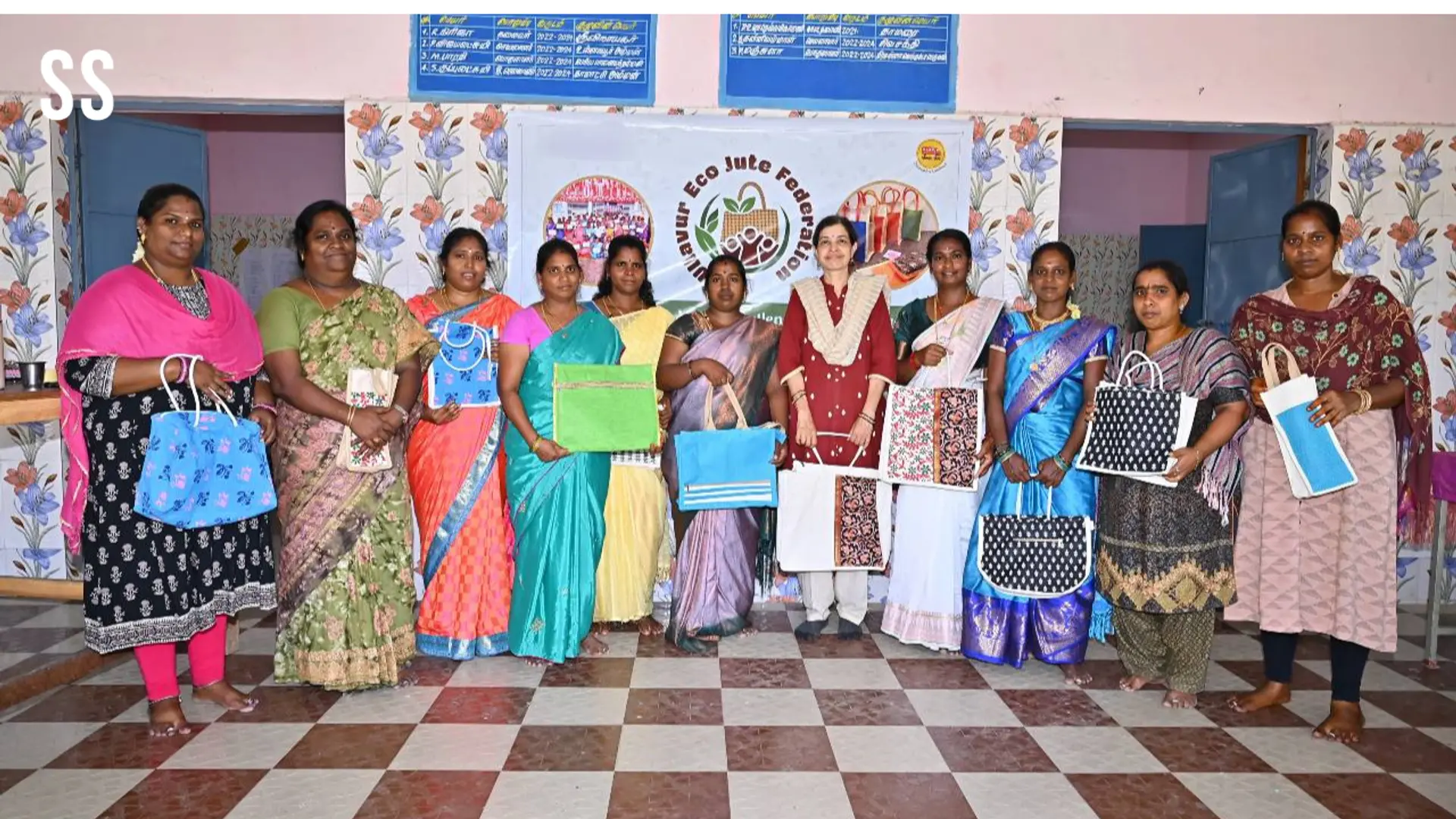
Philip Mathew KM, Senior Director of Livelihoods, Magic Bus India Foundation, gives the example of Oragadam in Tamil Nadu, where the organisation found 50 women skilled in tailoring but insufficient local demand to sustain that many tailoring businesses. Instead, they were trained to make natural-fibre products such as jute bags and gift items and were later organised into a registered collective.
The programme runs on a 12-month cycle per woman, and nearly 85% of women continue running their businesses after a year, and only 50% of them come back interested in scaling them.
Mathew says the bigger challenge is helping them grow. "Financial linkage and market linkage are the two biggest barriers to scaling,” he says.
To address this, Magic Bus runs Udyam Sahayak, a community mentoring initiative where successful entrepreneurs support other women with both business guidance and psychosocial support.
The programme has seen 2,500 women set up businesses. At the national level, the organisation partners with the National Institute for Entrepreneurship and Business Development — a Government of India institute under the Ministry of Skill Development and Entrepreneurship. In a few cohorts, it has worked with the Deshpande Foundation. It currently works with two state governments — Madhya Pradesh and Rajasthan.
Under the Government of India’s SVEP scheme, it is looking to partner with State Rural Livelihood Missions (SRLMs) as a technical partner. For the rural livelihood programme, its anchor funders include the Dorabji Tata Trust, AU Bank, and several others.
How the women found their businesses
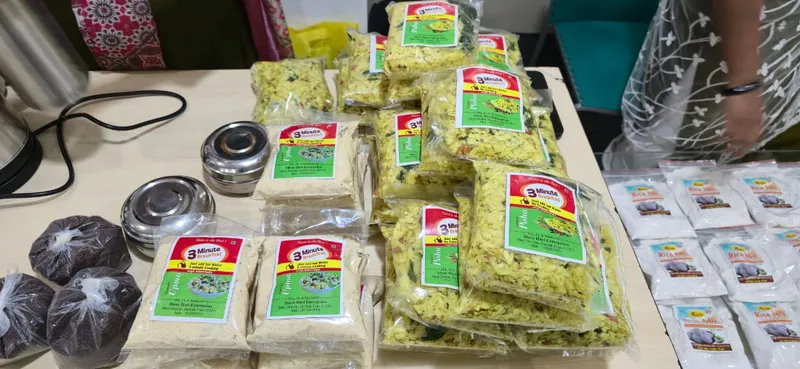
Kajal's instant food products
For the women of Maharashtra's Hiware village, farming often meant watching surplus produce go to waste because poor transport links prevented it from reaching markets. Magic Bus introduced dehydrator machines, and women like Kajal turned the opportunity into a business.
Kajal produces ready-to-cook poha and upma mixes, beetroot powder, and other products sold to local supermarkets, tea stalls, and hotels. The organisation is now helping her develop branding and expand online.
For Jyoti Kelatkar, entrepreneurship began long before Magic Bus. She had already built a garments business and later expanded into a cutlery store and tailoring unit. Magic Bus helped her strengthen the business through training in bookkeeping, sales, and profit management, as well as financial support.
"I had already started my shops, but the guidance I needed came from Magic Bus,” she says. Today, her monthly sales have grown to around Rs 24,000.
At just 21, Safiya Sayyed joined the programme to strengthen her tailoring business. While she already had customers, she lacked basic financial management skills.
"I didn't know how much profit or loss I was making. Now I know how to maintain accounts, and I'm making a profit,” she says.
With Magic Bus's support, Safiya has also joined hands with other young women to form a collective producing fashion accessories such as sling bags, with ambitions to grow the enterprise further.
Long-term goals
Nalavadi points out that for every programme, the goal is to eventually take it to scale.
“For the first five or six years, we test on the ground to make sure the impact is real and that the programme is fully tuned to what beneficiaries actually need — learning everything necessary before scaling. We are now at a stage where we’re very comfortable with the programme framework, content, and accumulated learning about what works and what doesn’t,” explains.
Over the next three years, the programme is looking to scale from its current outreach of 1,500–2,000 women a year to about 25,000–30,000.
“If we get there, we’d become one of the top two or three implementing agencies in the rural livelihoods space,” he adds.
Edited by Affirunisa Kankudti