



Why Mom's Belief wants every parent to become a co-therapist
Founded by Nitin Bindlish, Mom’s Belief is a for-profit social enterprise focused on children with neurodevelopmental disorders. Its parent-as-co-therapist model trains parents to actively support their child’s development.


In 2016, Nitin Bindlish, a chartered accountant, stumbled into the world of autism care by chance. His friend, who ran a therapy centre, asked him for help with its finances.
Bindlish had previously worked with companies such as KPMG, American Express, and Aeon before joining Clove Dental as part of its founding team, helping develop it into one of the country’s largest dental chains.

Nitin Bindlish
He started working pro bono at his friend’s therapy centre and, for the first time, he learned what autism meant.
“The more I learned, the more I realised how scary and deeply underserved this market is. There are many therapists, but it’s all fragmented. The major issues included quality, transparency, and playing on parents’ emotions,” says Bindlish.
That’s when an idea struck him: empowering the parent to become an integral part of the journey. The second realisation was accessibility.
“Parents from Tier II and III towns travel to Bangalore, Delhi, or Mumbai for therapy—sometimes shutting their shop or work for six months, hoping the child will be ‘fixed’ in that time. But autism isn’t an ailment you go to a hospital for and come back cured—it’s a way of life, a condition. Each year, they need to acquire different skills, and every child is different—some need higher intervention, some lower,” he explains.
The child often regresses because there’s no continuity of care, and no quality care at the last mile; many are not even aware of their therapist’s qualifications.
Around 2017-18, with support from a few angel investors, he took the leap.
This was the beginning of Mom’s Belief, a for-profit social enterprise that provides intervention plans for children with neurodevelopmental disorders.
Initially, the model focused on three areas: an online family support programme, preschools, and brick-and-mortar centres.
Modelled loosely on a franchise approach, it partnered with local doctors for referrals, expanded quickly, and grew to around 60 locations before COVID exposed its flaw. “Whoever is sitting at the centre is the only person who is the true owner, because they are taking the clinical call, clinical authority, and everything. We thought this model would not work,” says Bindlish.
So, in 2022, Mom’s Belief switched to a company-owned model with centres in different cities, anchored around partnerships with paediatric neurologists, developmental paediatricians, and child psychiatrists.
Preschool integration became a third channel, built around a 5:1 ratio that allows children needing extra support to be included in a regular classroom setting, with help from shadow teachers. It’s at this preschool stage, well before any formal diagnosis, that many developmental delays are first noticed, usually by a teacher.
How it works
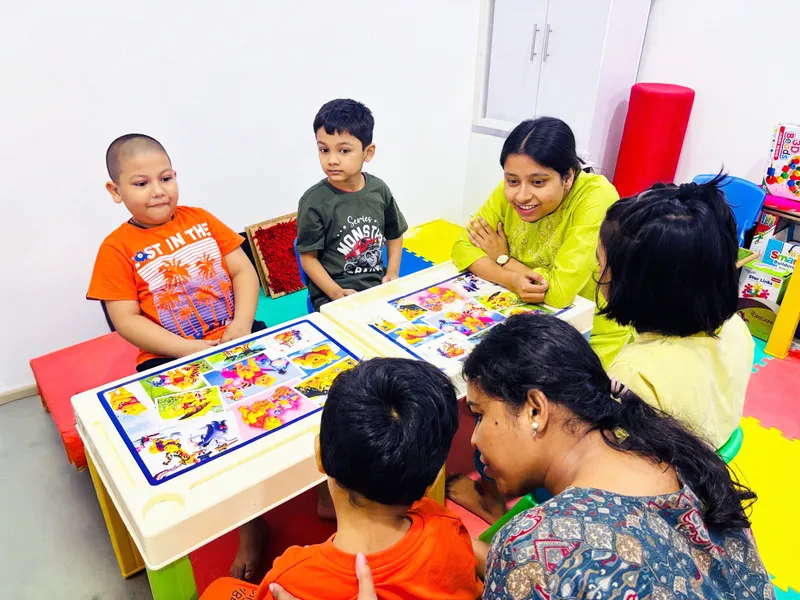
One of Mom’s Belief’s biggest differentiators is its ‘parent as co-therapist’ model.
When parents visit the centre, they are counselled on assessment and intervention. When the assessment is done, and the child is found to be on the spectrum, the first step is to manage the parent.
“Mothers especially can feel like their world has ended; there can be anxiety, depression, even suicidal ideation. We manage this, and siblings too. We begin intervention with OT, speech, etc—but every child is different, so every plan is tailor-made,” he says.
A parent typically stays engaged with the centre for about six to nine months at a stretch for a given developmental stage, and then the child moves into a new stage with new goals.
One of Mom’s Belief’s biggest differentiators is its ‘parent as co-therapist’ model, built on a simple premise: therapy cannot end when a child leaves the centre.
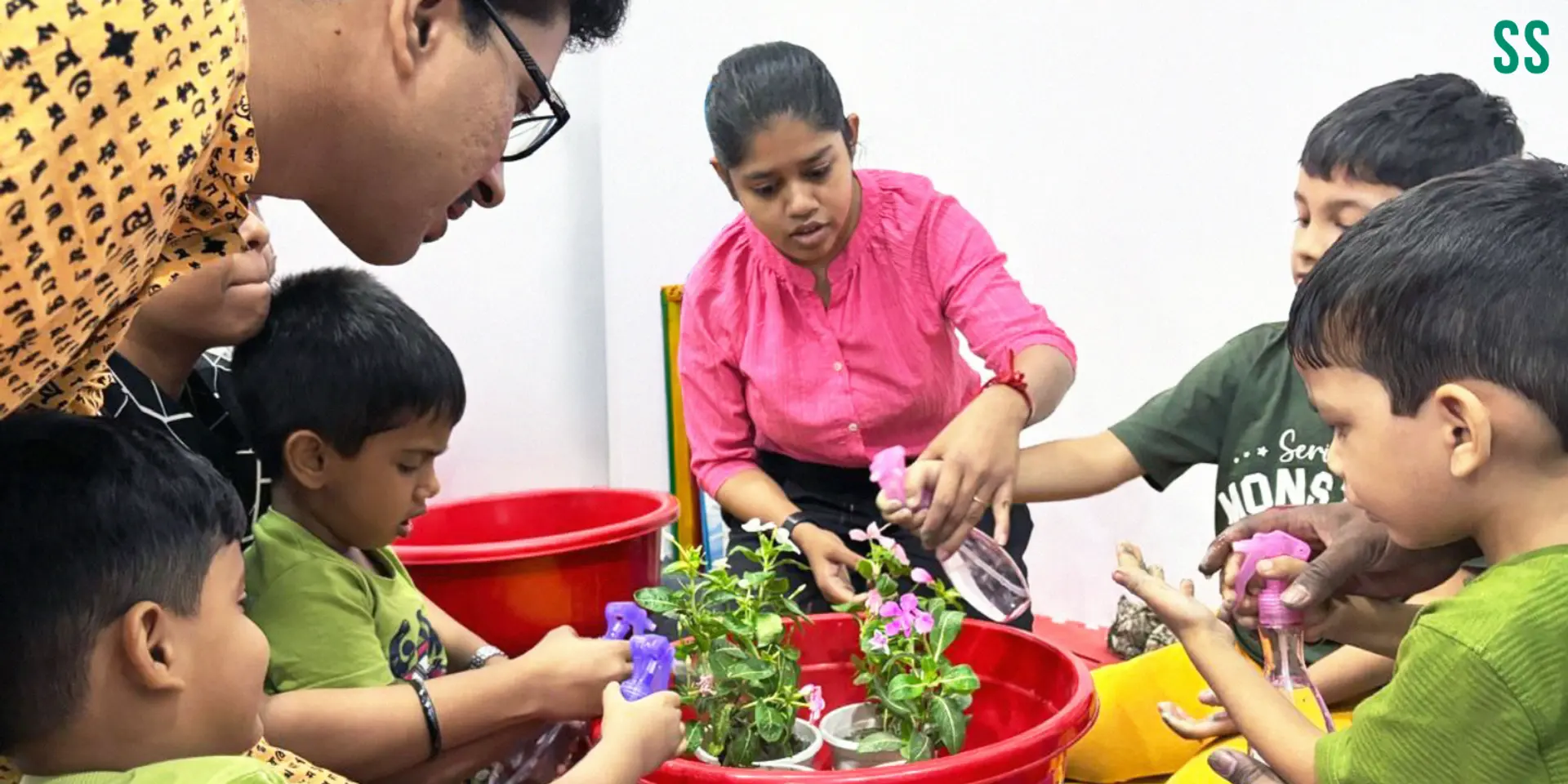
“Parents are the ones reinforcing life skills every single day—brushing teeth, putting things back in place, following routines, table manners, wearing shoes, fastening zippers and buttons. These aren't small tasks for a neurodivergent child," says Bindlish.
The organisation follows a hybrid approach. Families living near one of its centres attend in-person sessions where parents are encouraged to actively participate. For those in cities without a centre, therapy shifts online, with learning kits delivered to homes and virtual sessions connecting families with therapists and nearby resources. Where needed, preschools are also brought into the process.
Behavioural intervention forms a key part of the programme, with psychologists coaching parents on handling meltdowns, managing food-related challenges, and helping children regulate their emotions at home. Equally important is supporting parents’ own emotional wellbeing.
"Parenting has become a much-abused term. There are two sides to it—what you give your child, and what you feel. If a parent constantly feels guilty about not doing enough, that guilt becomes another burden. We help parents understand what’s reasonable to expect of themselves,” he says.
The programme also recognises that a diagnosis affects the entire family. Siblings are encouraged to participate rather than remain on the sidelines.
According to Bindlish, an internal research study comparing children whose parents actively participated in two of Mom’s Belief’s programmes with those whose parents were less involved found significantly better developmental progress among the former group. Children are assessed at the start of therapy, after three months and again at six months across parameters including cognition, speech, fine motor skills and gross motor development.
He estimates that mothers make up the overwhelming majority of the programme’s co-therapists, alongside grandparents and caregivers. Fathers account for only around 10% to 15% of hands-on involvement, though they are usually supportive emotionally and financially.
To date, Mom’s Belief has served over 56,500 children by equipping families with over 2,000 home-based learning tools and expert clinical guidance. It has 140 centres across 57 cities, with a significant presence in Tier-II and Tier-III towns.
When Priya (name changed), a former school teacher from Indore, learnt that her son Aarav had autism, she put her career on hold to care for him full-time. The family travelled to many cities in search of specialists, only to face long waiting lists, high costs and uncertainty. It was then that they discovered Mom’s Belief and its parent-as-a-co-therapist model.
“I remember thinking, ‘I’m a mother, not a doctor. How can I provide therapy?’ But the team helped me realise that I know my child better than anyone else. They trained me to use simple everyday moments—mealtimes, play, getting dressed—as opportunities for learning,” she shares.
Through regular mentoring, therapy toolkits and structured guidance, Priya learnt how to manage sensory challenges, improve communication, and respond to meltdowns more effectively.
"Aarav has gone from being almost non-verbal to speaking in sentences and telling me what he needs. His meltdowns have reduced significantly because we now understand what triggers them. He makes eye contact, seeks us out to play, and is becoming self-sufficient in ways I once thought were impossible,” she says.
For Anjali (name changed), a marketing professional in Bengaluru, accessing therapy for her five-year-old daughter Ishani, who has ADHD and sensory processing issues, often meant spending hours navigating the city’s traffic for a 45-minute session.
She says Mom’s Belief’s hybrid model transformed that experience by shifting the focus from weekly appointments to everyday life.
“They taught me how to use ‘Learning Through Play’ techniques—using her love for art and building blocks to improve her focus and emotional regulation. It wasn’t about ‘acting like a doctor’; it was about learning the science behind her behaviour so I could respond with strategy instead of just frustration,” she says.
Plans for the future
The pricing structure in Tier II and III towns is roughly 50% lower than in metros. For example, a centre in Gurgaon might cost Rs 1.75 lakh in rent for around 1,500 sq. ft., whereas in a smaller town you might get 4,000 sq. ft. for Rs 32,000–35,000.
“We pass that savings to families. At the same time, if we priced services at Rs 900–1,000 in smaller towns, almost nobody could afford them, so we are never positioned at the top of the market—even in metros, we sit in the mid-range,” says Bindlish.
In 2022, Mom’s Belief partnered with the LEGO Foundation to integrate "Learning Through Play" principles into clinical therapy. Families receive customised learning kits, including co-branded LEGO play modules, visual aids for skills such as toilet training, and emotion cards that help children recognise, express, and prepare for different emotions.
Mom’s Belief is preparing for a Rs 125–140 crore IPO, with the founders and existing investors retaining their entire stake. “No one is selling even a single share because we’re building a long-term legacy," says Bindlish. The company plans to list as India’s first for-profit social enterprise on the main board, with the IPO expected this year.
Bindlish believes that Mom’s Belief can be scaled to 1,000 centres. It currently runs about 37,000 sessions a month, with a team of around 500 full-time employees in India and about 50 in the US.
While it currently serves children ages 2-12, it aspires to expand into vocational training for ages 12-17.
“Parents won’t be around forever, and it’s a hard thing to imagine leaving behind a child who can’t earn or be independent. Even if it’s modest, Rs 10,000–15,000 a month, the goal is some form of independence.”
Edited by Swetha Kannan