



Filmmaker Sandesh Kadur brings out the shared spirit of Nilgiris in his latest documentary
The Bengaluru-based BAFTA award winning film-maker and naturalist believes people are the custodians of the land and they have to be sensitised to love, understand, and conserve the earth’s biodiversity. His latest wildlife docu-film ‘Nilgiris: A Shared Wilderness’ sets out to do just that.

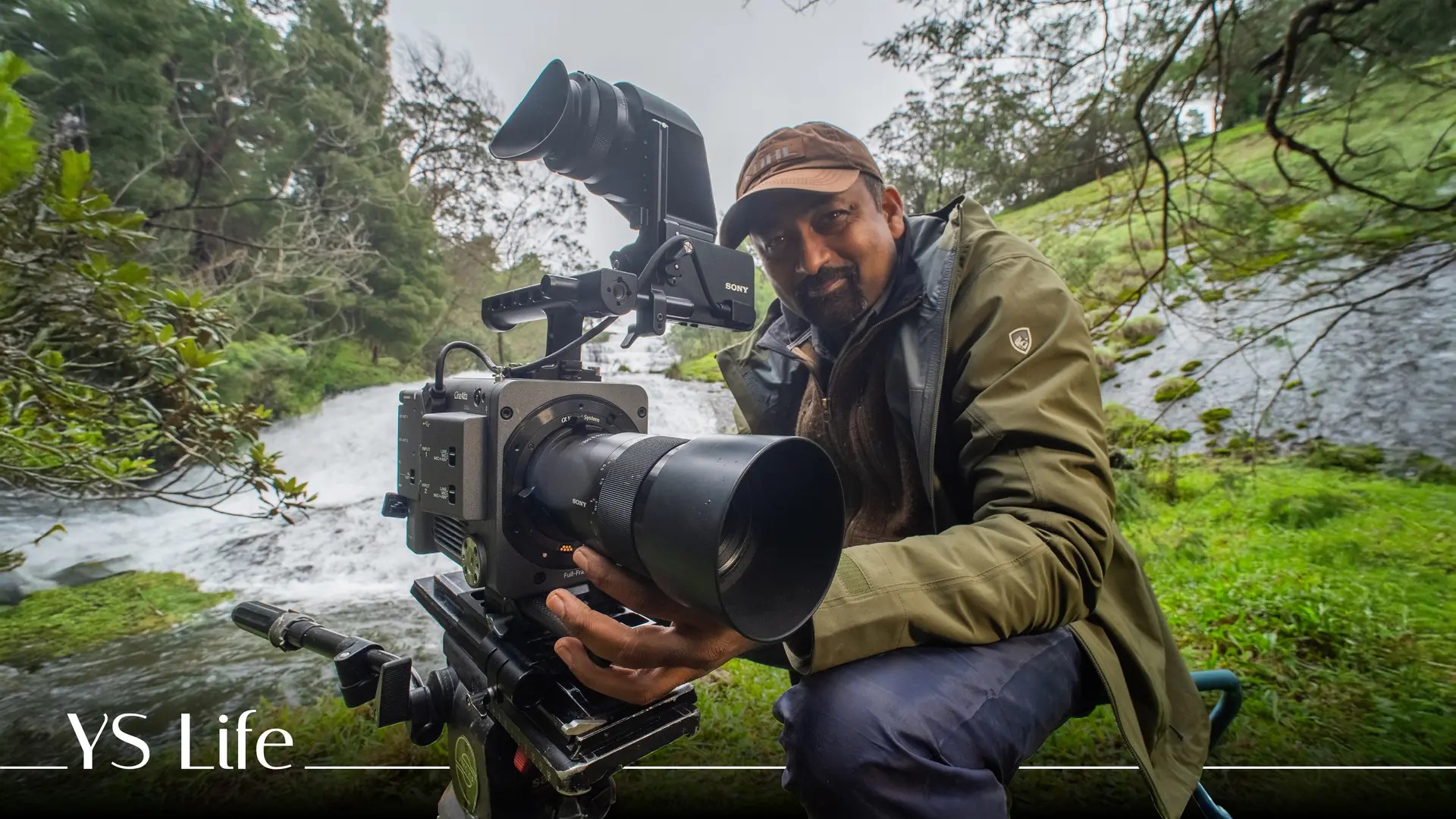

In the end, we will conserve only what we love; we will love only what we understand, and we will understand only what we are taught.
This beautiful quote by Senegalese forest scientist Baba Dioum is what drives wildlife documentary filmmaker Sandesh Kadur.
The Bengaluru-based BAFTA award-winning filmmaker and naturalist strongly believes people are the “custodians of the land” and they have to be sensitised to love, understand, and eventually conserve the earth’s delicate biodiversity.
Documentary films have a big role to play in this effort, says Kadur. “They affect people’s behaviour and perception, their care and concern for what’s going on (around them). They create a sense of empathy and belonging and the need to protect places. And in the future generation, they create curiosity and wonder.”
Kadur’s latest wildlife docu-film, Nilgiris: A Shared Wilderness, sets out to do just that.
Nilgiris: A Shared Wilderness, which released last Friday in theatres across the country, is a cinematic celebration of the rich wildlife and landscapes of the Nilgiris or the Blue Mountains, India’s first UNESCO biosphere reserve.
Presented by Felis Films and Rohini Nilekani Philanthropies, the film explores the interconnectedness between nature and the communities living in the Nilgiris.
The film’s director and cinematographer elaborates: “People of the Nilgiris say they are seeing a resurgence of wildlife in the region over the last couple of decades. The development of tea estates and the landscape had pushed the animals away. Now, with better education and more law enforcement, the animals have come back. But they have had to adapt to a landscape created by humans.”
Adaptation, however, is a two-way street.
“It’s up to us to also adapt and allow the shared wilderness to exist. We need the animals as much as they need us; we cannot remove them from the world. They are fundamental to our very existence… The mountains are powerful landscapes regulating everything around us. And we cannot take them for granted, which we do all the time.”
So, films like Nilgiris: A Shared Wilderness are a reminder to us to be more sharing and caring and become better custodians of this land, he emphasises.
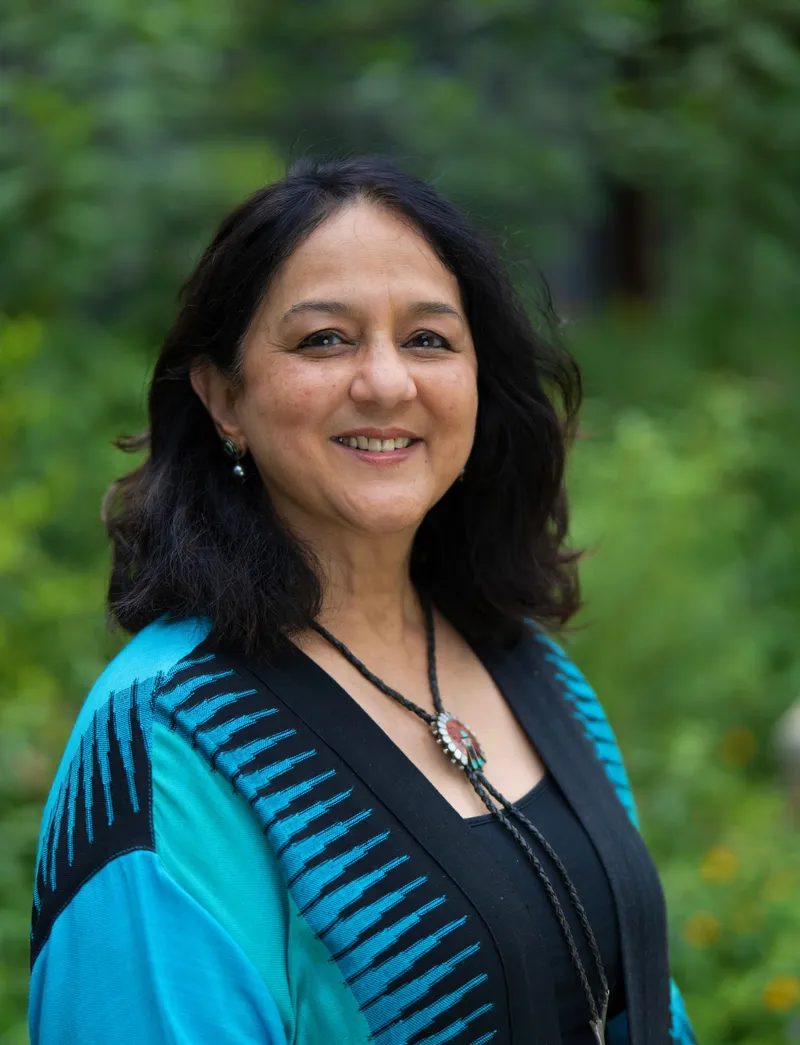
Rohini Nilekani
Rohini Nilekani, Executive Producer of the film and Chairperson of Rohini Nilekani Philanthropies, echoes this view: “With rising human-wildlife conflict, we need to learn anew how to coexist with that which nurtures us but can be scary too. Stories and films can remind us of this creative tension and the need to understand, love and protect our flora and fauna and forests.”
The documentary captures the unique behaviour of the animals of the region—from the tiger in hot pursuit of its prey, leopards and black panthers going about their business, sloth bears crossing a busy road, the sambar and chital striving for survival, to the birds, reptiles, and insects endemic to the mountains.
A particularly fascinating scene in the film involves the hornbill parents coaxing their chick to emerge out of its sheltered nest.
“The chick is crying for food. But the parents don’t give the food; they just show it and go away,” describes Kadur, a self-confessed bird enthusiast. This is nothing short of a family drama, he adds.
Among the region’s flora, the most striking is the Neelakurinji, which blooms only once in 12 years, transforming the mountains of Western Ghats into a carpet of vibrant blue. In fact, the Nilgiris derives its name from this flower. The film’s opening scenes depict the beauty of these rare blooms.
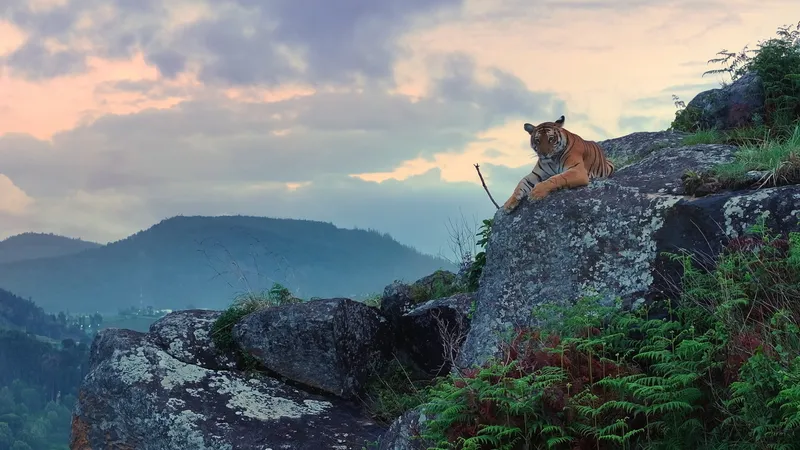
A still from the movie 'Nilgiris: A Shared Wilderness'; directed by Sandesh Kadur; music by Susheela Raman (who's also the narrator), Sam Mills, and Neel Adhikari; Image credit: ©Parinith Gowda/Felis Images
Behind the scenes
Nilgiris was three years in the making—from the time Kadur and Nilekani decided to create a documentary on the Blue Mountains, during a serendipitous walk in Coonoor, a charming hill station nestled in the Nilgiris, till the final cut.
On the difficulties involved in the journey, Kadur says filming the animals was actually the easy part, and the bigger challenge was the rain—due to its absence and abundance.
“Water is an integral part of the story, and I wanted to show it with all its energy. But the first year, there was no rain. And the second year, there was way too much of it. There were trees fallen everywhere, there were power outages. We couldn’t charge our batteries… Accessing places was hard as the roads were flooded."
Acknowledging the support of the people of Nilgiris in making the documentary, Kadur says it took a “whole mountain of people” to make the film. “A lot of people helped us with access to places and in finding unique stories.”
Interestingly, several portions of the film were shot outside the protected areas of the national park in the region—in tea gardens where a family of black panthers live; in people’s backyards; and even in their homes.
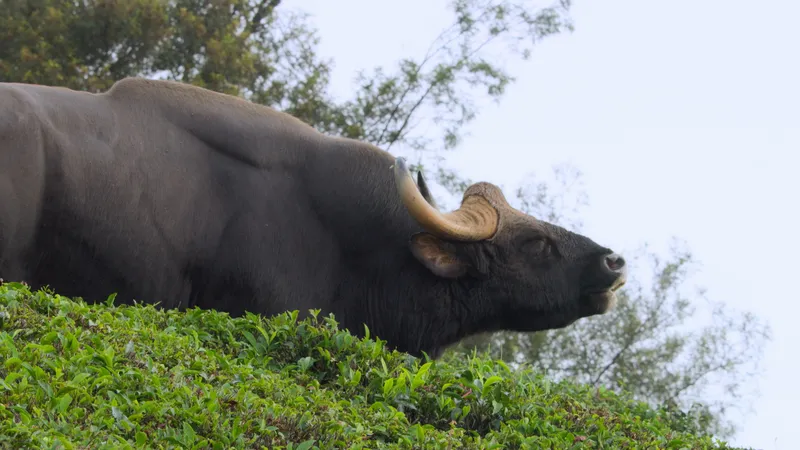
A still from the movie; a gaur in a tea estate; Image credit: ©Sandesh Kadur/Felis Images
The film also uses footage obtained from CCTV cameras to show how animals have become intertwined with people’s lives in the Nilgiris today. “There’s scene in which a bear goes into somebody’s house—that’s actually Rohini’s house,” quips Kadur.
AI too plays its part in the movie—the filmmaker has used it to animate authentic black-and-white images from archives to give life to still photographs.
“We cannot shy away from AI. But people watch documentary films for accuracy and authenticity; AI will not take away from what we are doing. We can use AI to enhance an image, but we cannot use it irresponsibly to manipulate and fake something," he says.

India is home to thousands of beautiful stories, says Kartiki Gonsalves of The Elephant Whisperers
Passion to profession
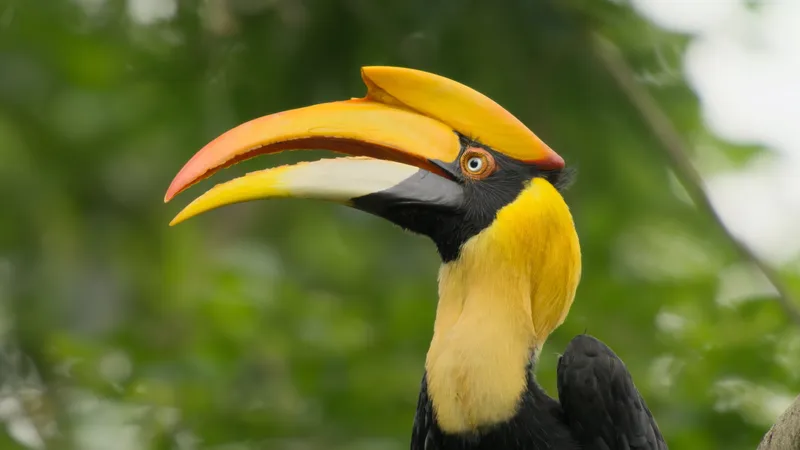
Great Hornbill; Image credit: ©Sandesh Kadur/Felis Images
Kadur’s fascination with the natural world began when he was a teenager—he’s been documenting everything in nature from the time he got his first camera at the age of 13. This passion eventually led him down the path of documentary film-making.
Felis Films is a production house he founded to create stories on wildlife, connect people through them, and help conserve the environment. His work as a camera professional and a nature photojournalist has taken him to varied terrains, including the biodiversity hotspot of the Western Ghats and the Himalayas, and across mighty oceans.
Kadur’s first film Sahyadris: Mountains Of The Monsoon follows the wildlife of the Shola forests during the height of the monsoon. He is also known for his breath-taking camerawork for BBC’s Planet Earth II series, for which he won a BAFTA award, and National Geographic’s Wild’s Earth Live broadcasts.
What’s on the cards next?
For now, Kadur wants Nilgiris to have a good theatrical run.
“In just one weekend, we were able to show it to 20,000 people across the country. We want to take it out to as many children and young minds as possible. Parents and other adults too… to make them more sensitive to the environment,” says Kadur, who is currently working on a project on the Himalayas.
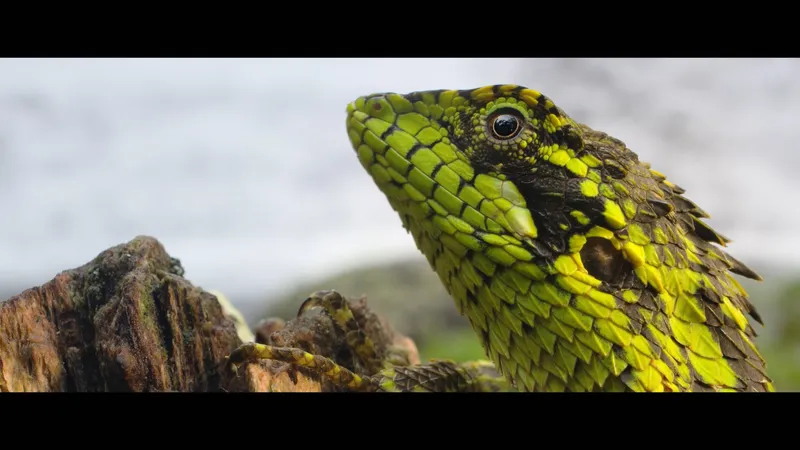
Nilgiri salea; Image credit: ©Sandesh Kadur/Felis Images
Nilgiris: A Shared Wilderness showcases the Nilgiri Salea, a lizard that waits like a ‘fly on the wall’ to trap its food—ironically the fly. Like the lizard, Kadur too wishes to quietly observe and continue capturing the miracles and mysteries of nature in all its glory.
“I am like a spy in the jungle. The jungle doesn’t need to know I am there. But I am always watching and documenting. That’s my job—to be the fly on the wall, watching what’s happening,” he signs off.
Feature image credit: Sandesh Kadur ©Nakul Raj/Felis Images
Edited by Megha Reddy