



From Roti John to masala infused cocktails: A culinary fusion of India and Singapore
With India and Singapore celebrating 60 years of diplomatic relations, YS Life dives into the cultural parallels between the neighbouring countries with the spotlight on food.

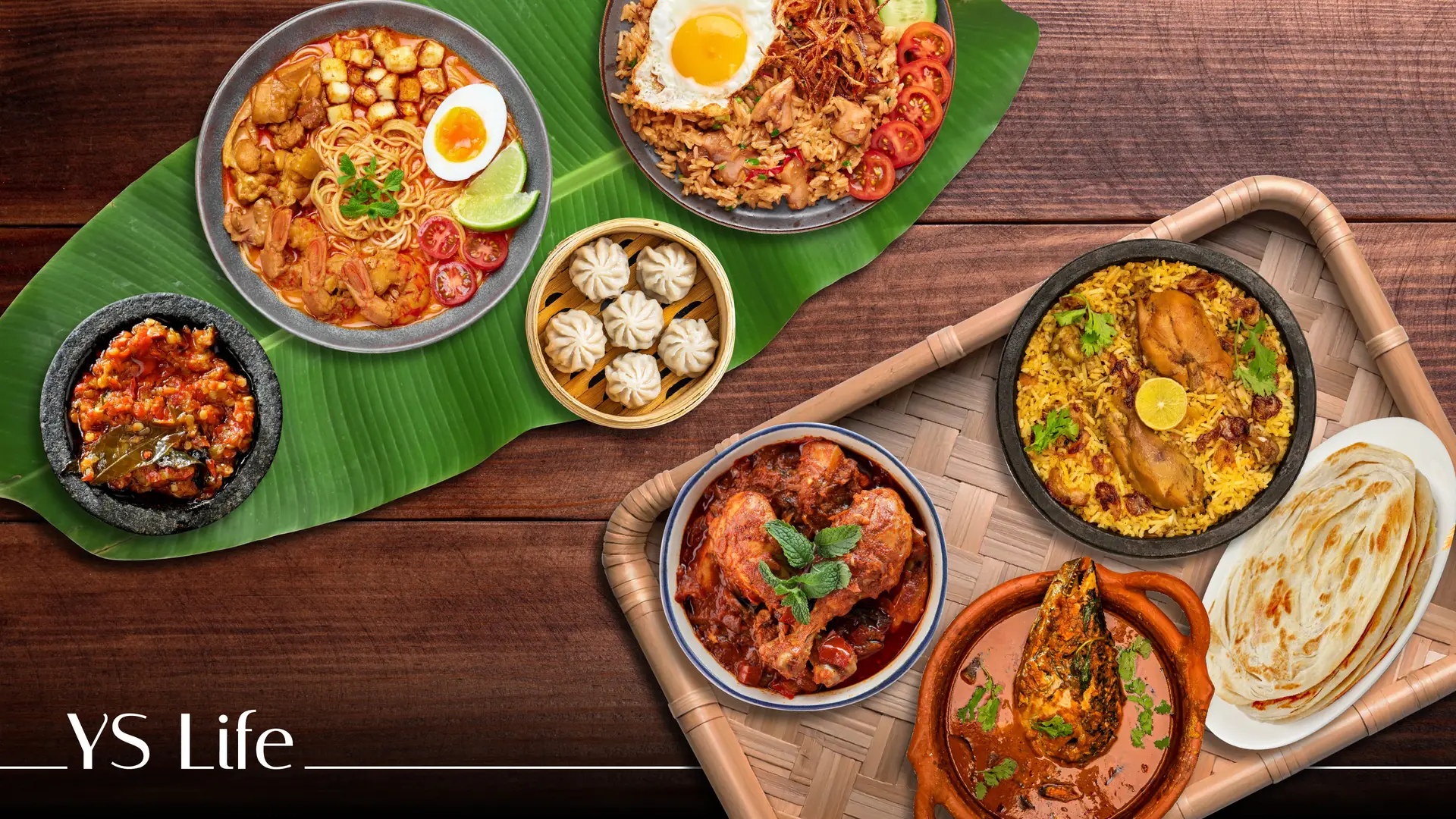

Last October, as I walked out and turned at the corner from Farrer Park MRT station in Singapore, I stepped into India. A week before Diwali celebrations began back at home, Singapore’s Little India neighbourhood was already in the mood for festivities. The streets were lined with colourful lanterns, the air filled with the rich aroma of spices from the hawker-style restaurants, and the bustling lanes herald the start of the festival of lights.
Singapore has a significant Indian diaspora. As of 2025, close to 6.5 lakh Indians called the Lion City home. In 2024, Indians were the third-highest visitors (1.2 million travellers), according to the Ministry of External Affairs.
The deep affinities between the two nations can be traced back to 1965 when India and Singapore established diplomatic relations after the latter gained independence. The year 2025 marks 60-years of the deep cultural ties and shared heritage between the two nations across art, culture, tradition and history.
For the middle-class growing up in India, the first international flight usually leads to either Malaysia or Singapore. “Whether for work, weddings, or just a dream of something ‘foreign’,” says Manoj Padmanabhan, Co-founder of Chennai-based Pandan Club—India’s first-ever Pernakan cuisine (primarily found in Malaysia’s Penang and Malacca, Singapore, and Indonesia) restaurant.
YS Life takes a deep dive into one of the most important aspects of the cultural parallels that brings together India and Singapore—food.
The unifying knot
Indians and Singaporeans share many culinary similarities. “From ingredients like curry leaves, turmeric, and ginger; to cooking methods that blend spice and simplicity. This shared heritage has laid the foundation for a food culture where traditional Indian flavours continue to thrive while embracing new, creative influences,” Renjie Wong, Area Director (Mumbai), Singapore Tourism Board, India, Middle East and South Asia tells YS Life.
Over the years, Indian migrants, especially from South India, travelled and settled in Singapore to explore work opportunities and better lifestyles. Consequently, their staples—dosa, chutneys, and biriyani—blend into the cuisine in Singapore.
“You see it in every prata (paratha) stall, every thosai (dosa) flipped at Little India, every cup of teh halia (ginger tea) shared after work. It’s in the way we pass down spice blends and stories, and how younger Indian Singaporeans are now plating those same roots with fresh perspective. What we’re serving isn’t just food—it’s memory, culture, and a bit of everyday magic,” says Yung Raja, a Singaporean rapper and songwriter with Tamil roots.
India and Singapore are both deeply multicultural, and that is reflected in their food. While India offers a range of regional or micro-cuisines, shaped by geography and tradition; Singapore’s cuisine, on the other hand, is an amalgamation of Chinese, Malay, Indian, and Eurasian.
“Both the countries value bold flavours and layered spices. In India, variety comes from regional techniques and ingredients; in Singapore, it is about combining traditions with structure and innovation,” says Gauri Devidayal, Co-founder of Mumbai’s iconic casual fine-dining restaurant, The Table.
Dishes like Indian rojak (a savoury salad often prepared by Indian-Muslim vendors), fish head curry, laksa (noodle soup cooked with Indian spices), and murtabak (savoury stuffed pancake, similar to a stuffed paratha) reflect this shared approach, rooted in heritage, shaped by community, and open to reinvention, explains Devidayal.
Singapore’s growing appetite for Indian micro-cuisines
For the longest time, Indian food overseas was boxed into dosa, butter chicken, and biriyani. “While these dishes are beloved, they represent just a small portion of the diverse flavours in Indian cuisine,” says Michelin-starred Chef Manjunath Mural who heads restaurant ADDA in Singapore.
Chef Manjunath formerly helmed The Song of India—a Michelin-starred Indian restaurant in Singapore.
Tamils continue to make up for the majority (54%) of the Indian community in Singapore, and dishes like roti-prata are still listed as one of the local-highlights by Visit Singapore official website. However, the food and beverage industry in the island country is curious and willing to try beyond the usual flavours.
This shift can be attributed to the more travelled and informed diners who look for authenticity, and the trend is led by fine-dining spaces that provide room for education through curated tasting and a-la-carte menus.
Acclaimed Indian restaurants in Singapore—Rang Mahal led by Chef Milind Sovani (who has earlier been a chef for two Prime Ministers of India—Indira and Rajiv Gandhi), ADDA by Chef Manjunath, Thevar by two Michelin-starred Chef Mano Thevar, Revolver Singapore by Chef Jitin Joshi, and Firangi Superstar by Chef Raj Kumar, are the forefront, driving this shift.
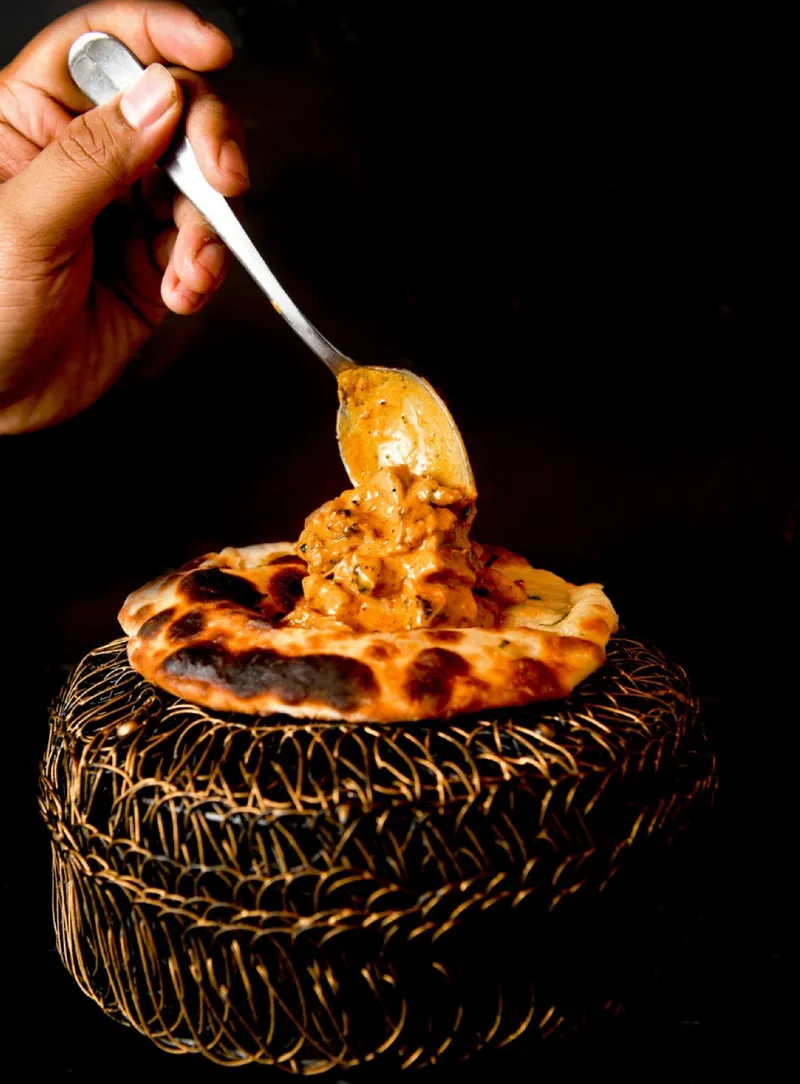
Butter Chicken Kulchette at Revolver, Singapore
“It is a very exciting time for Indian food here, because for once, we are not simplifying, we are celebrating the complexity,” says Chef Manjunath. At his restaurant, ADDA, the chef has embraced this evolution to explore new interpretations of Indian cuisine, while still honouring tradition.
The Motichoor Tiramisu at ADDA, for instance, offers a fusion of creamy tiramisu on a bed of motichoor, while Mirchi Ka Salan features pan-seared stuffed chillies cooked in a Hyderabadi-style sauce. Dariya Gunj Eggplant Bharta, an Indian take on baba ghanoush, and Bok Choy-Cottage Cheese Kofta, with crispy croquettes in a creamy sauce, are other examples of reimagined classics. ADDA has also embraced plant-based innovation with Butter Tindle Pot Pie—a dish featuring plant-based chicken sealed in flaky pastry, offering a comforting yet modern twist.
There also seems to be a growing appetite for regional Indian cuisines in Singapore with restaurants specialising in micro-cuisines like Kashmiri, Goan, and Bengali, among others, confirms Rumela Banerjee, a journalist based out of Singapore.
“The rise of regional Indian cuisine in Singapore has been a long time coming. We are a city that respects detail, and Indian food, in its full diversity, offers exactly that. More diners today are engaging with Indian cuisine beyond heat levels. They are asking where a dish originates, recognising the difference between the mustard oils of Bengal, the kokum tang of Goa, or the saffron of Kashmir and wanting to taste those distinctions on the plate,” adds Wong.
Restaurants like Shikar feature sophisticated dishes like Nadru Akhrot Seekh (lotus stem kebabs) bring Kashmiri flavours forward, while the Lal Maas, built around short rib and Wagyu from Queensland, is rooted in Rajasthani tradition.
There are takers for regional Indian cuisines across the fine-dining and street-food formats. However, Banerjee emphasises that the ‘budget options’ for Indian regional cuisine is usually more expensive than other international restaurants in Singapore. She adds that Singapore is seeing a rise in modern Indian bistros, street food-inspired cafes, and fine-dining spots that blend Indian flavors with global cuisines with dishes like butter chicken pasta and masala-infused cocktails making the cut with locals.
A frequent diner at Mustard Singapore, a Michelin-guide restaurant serving Bengali and Punjabi delicacies in the Race Course Road, Banerjee notes that the queue outside the restaurant is now longer than when she first landed in the city over a year ago.
“It has taught us an important lesson—even when visiting Indian restaurants in Singapore, it is wise to reserve a table in advance, as they’re often flooded with Singaporeans exploring diverse Indian flavours….the long queue often remind me of the vibrant restaurant culture back in Kolkata, my hometown,” she adds.
Chef Manjunath shares that about 60% of his guests at ADDA are Singaporean, and the remaining are a mix of Indian and international diners. “I particularly enjoy cooking for Singaporean guests. They come with an open palate, and when they connect with the food, their appreciation is genuine,” he adds.
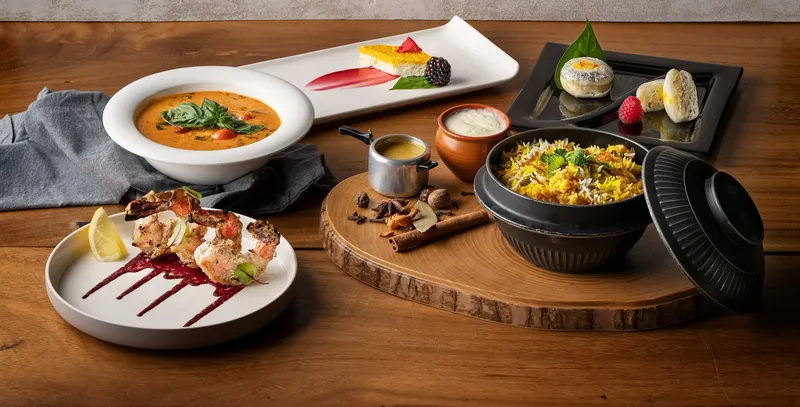
Indian food at Rang Mahal, Singapore
In line with this, Devidayal of The Table says that while India protects its culinary heritage closely, Singapore is more open to reinterpretation. “You’ll see Indian flavours pop up in unexpected places, like masala-infused cocktails or Goan-spiced seafood at a modern grill, without losing authenticity,” she adds.
Favourites like pani puri and cheese naan have become equally popular in the streets of Singapore, and complex flavours like of the Goan vindaloo are also gaining attention.
However, Chef Manjunath emphasises how in Singapore, diners appreciate Indian food but prefer it lighter, with clean flavours and a more refined use of spice. “Singaporeans also enjoy sauces that are smooth and well-integrated. So, I rework traditional gravies to be silkier and more elegant, while controlling the heat level to offer warmth, not fire. It’s a fine line, the food must be flavourful without being too rich or heavy,” he adds.
Hawker centres in Singapore serve Roti John—an adaptation where dosa is stuffed with eggs and meat. Other interesting fusion delicacies include saffron-infused ice cream; and use of techniques like tempering spices in hot oil (tadka) in Singaporean kitchen in dal and chilli crab are great examples of how Singapore is embracing the Indian food culture.
Regunarth Siva, Chairman of Little India Shopkeepers and Heritage Association (LISHA) shares examples of the two food cultures coming together through dishes like Chicken 65—a popular South-Indian delicacy—and how it is modified with a touch of sambal or soy; and Nasi Biryani, a lighter version of the Hyderabadi Biryani, but rich with local influences like pandan leaf of fried shallots.
However, this is just the beginning, believes Chef Jai Ganesh, Head Chef at Revolver Singapore. “Indian cuisine in Singapore is on the brink of something big…We’ve already seen the classics, but now it’s time to dive deeper—think lesser-known regional flavours from Goan, Kashmiri, Assamese, and Rajasthani kitchens…Indian cuisine will go from comfort food to an exciting, bold experience that embraces complexity and boldness. The future will be about rediscovery. Indian food here will evolve, with authenticity leading the charge, and innovation pushing it forward. This isn’t just about feeding people. It’s about leaving them with a craving for more.”
Singaporean flavours pique Indians’ interest
Back at home too, Indians have started craving and recreating their favourite delicacies from their holiday in the Lion City. Nasi and Mee—one of the first players to bring the flavours of Singapore to India—recently re-launched its Shiok! Breakfast Club.
With its parent company Foodsta Kitchens being based out of Singapore and running F&B businesses like Alt Pizza, Green Monster, Bloom, ABC, Fat Mario and CJ Fried Chicken in the city, founder Ravi Nahappan wanted to bring a taste of his home in Singapore back to his roots in India. The restaurant chain introduced Indian diners to Chicken Rice and Xiao Long Bao.
Earlier launched and eventually discontinued in 2017, the restaurant has found more takers for its Asian-inspired menu than before. The brand has reinvented the roti prata to suit the Indian palate and has introduced a fine-dining take on laksa. The breakfast club has also recorded repeat orders of rendang (meat stewed in coconut milk) and Kaya (coconut jam) toast.
“It’s rewarding to see people appreciate the nuance in Singaporean cuisine—the interplay of umami, spice, and subtlety,” says Dilip Krishnan, Co-founder and CEO India of Foodsta Kitchens.
Beyond the usual and more popular options—dimsums and baos, sambal has become a staple for diners at Nasi and Mee.
The Singapore-influence has tickled down to Indian bars’ cocktail menus as well.
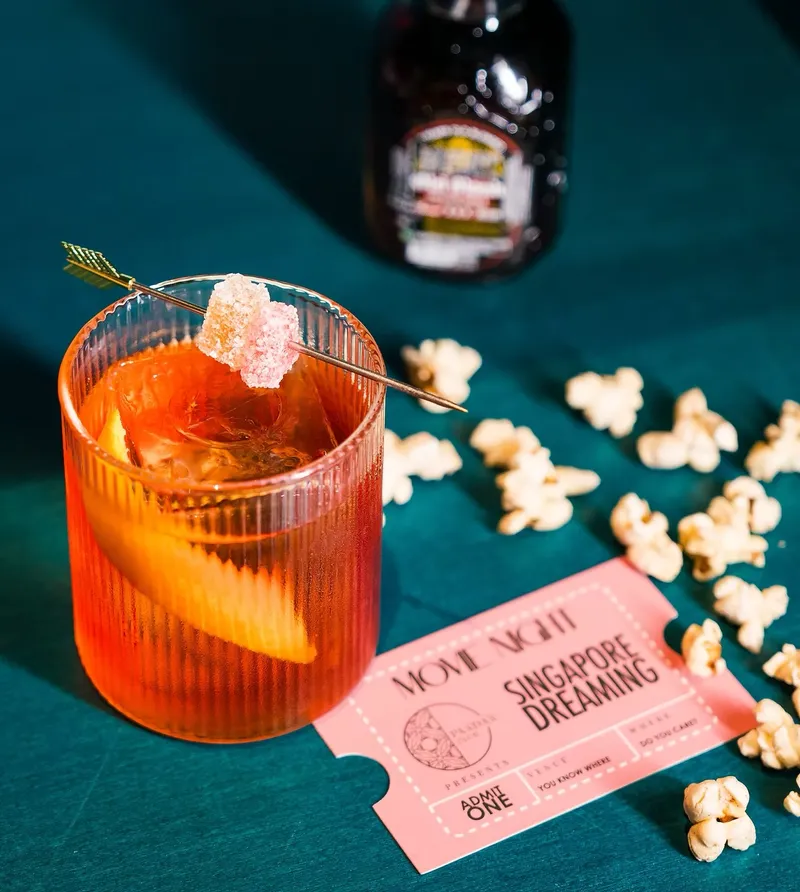
Cocktail Movie Night by Pandan Club
Chennai-based Pandan Club launched in 2022 is helmed by Singapore-born Chef Sashi Cheliah (of MasterChef Australia fame) and Padmanaban launched a cocktail programme in 2024, titled ‘Shortest Route’, where each sip designed to tell a tale from the streets of Singapore.
“The cultural convergence has always existed—through food, stories, and even the smell of that Vicks Vaporub-meets-laksa luggage. Shortest Route taps into that lived memory. The idea is simple—it’s not a ship that connects India and Singapore anymore, it’s the sip!” says Padmanaban.
Cocktails at Pandan Club that effectively encapsulates the flavours of the two countries in a glass. Its Tongue Twister is influenced by the ritual of buying kopi (or coffee) or breakfast in a plastic bag tied with a sting, and hung like a pendant of daily hustle. Pandan Club has recreated the exact format but instead of a kopi, it is filled with bourbon-based drink that blends kaya and coffee bitters. To add a touch of Indian nostalgia, the restaurant serves the cocktail with a traditional rusk or varki.
“The pairing is cheeky but comforting, like a breakfast your grandma might’ve made after a vacation to Clarke Quay (a famous neighbourhood in Singapore),” says Padmanaban.
Other examples of cocktails that effectively encapsulates the culinary crossroads between the two countries: Sarangoon Smith; Tell Me More, and Movie Night.
Besides these, pop-ups, residencies and takeovers between the two countries serve not just as stepping stones for chefs and mixologists but also provide platforms for them to test ideas, build communities and shape conversations around food and drinks.
Singapore’s renowned bars like Jigger and Pony, Sogo House, Native, and The Elephant Room, among others, have flown down to India for takeovers across cities and developed a strong fan-base in the country. India’s renowned mixologists like Pankaj Balachandran and Arijit Bose have also travelled to the Lion City to introduce their concoctions to the city.
“The city (Singapore) has always had a deep respect for food, but what makes it special is the audience—it is a mix of locals and travellers who are curious, culinary-aware, and ready to engage with ideas beyond the familiar. For any chef trying to express a regional identity or tell a story through their cuisine, that kind of receptiveness is invaluable…that is why chefs like SR Bala and Milind Sovania have been able to build perspectives that resonate with the people here” says Wong.
Agrees India-born Singapore-based Chef Jai Ganesh, he says: “Singapore’s food scene has fearless palates. People here get complex, spicy flavours. They crave the unexpected, and they’re open to exploring. It’s not about dilution, it is about evolution. That’s the thrill of cooking here. It's all about pushing boundaries and watching people embrace it.”
A key driver of this cross-cultural culinary revolution is accessibility. In Singapore, exceptional food isn't limited to luxury establishments; it's an integral part of daily life. The democratisation of quality, combined with a strong emphasis on consistency and experience, makes the city an ideal hub for this evolution.
Edited by Affirunisa Kankudti