



Manam Chocolate brings an immersive experience to Delhi
Manam Chocolate’s Delhi outpost signals its next phase of growth–from local pioneer to national leader in Indian craft chocolate.

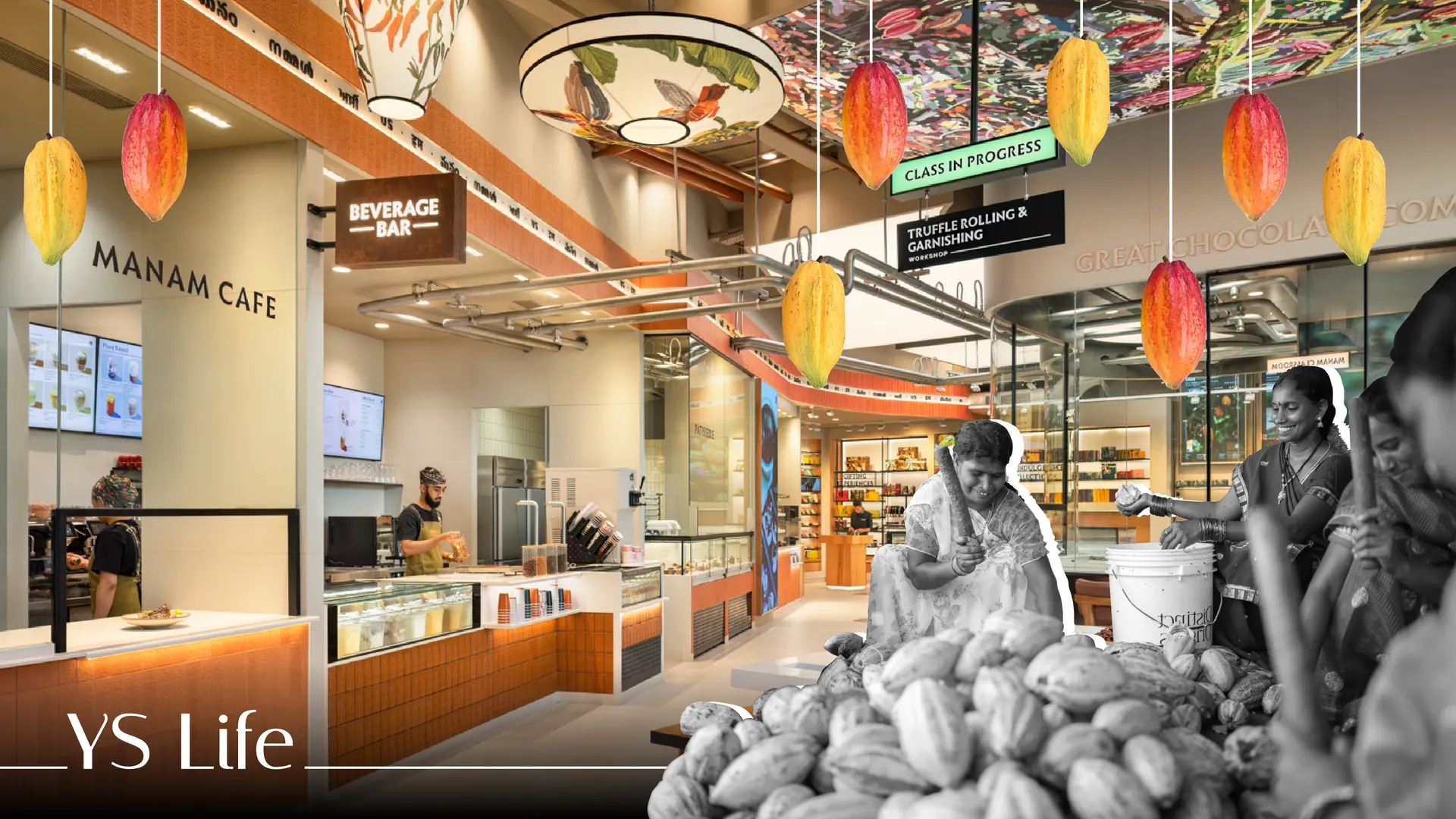

After reshaping Hyderabad’s chocolate scene with the Manam Chocolate Karkhana in Banjara Hills, the premium Indian craft chocolate brand has now arrived in the capital, Delhi.
Set within a 3,200 sq. ft. space at Eldeco Centre, Saket, Manam’s Delhi outpost blends storytelling, craftsmanship, and cacao in a truly immersive experience.
A warm, almost intoxicating aroma of chocolate serenades your senses the moment you step in. A thoughtfully curated ingredient library and a minimalist yet striking display tracing cacao’s journey to chocolate invites you to slow down and explore.
There’s more engagement. Chocolate courses through exposed pipes and weaves through the space like edible alchemy, hinting at the sensory theatre that lies ahead.
At this space in Delhi, Indian cacao takes centre stage in all its versatility–expressed through signature tablets, bonbons, truffles, barks, clusters, gianduja, spreads, viennoiserie, and more. Beyond the shelves, the experience unfolds through a curated gifting section, a craft chocolate beverage bar, live chocolatiering, and even ‘Make Your Own Tablet’ counters.
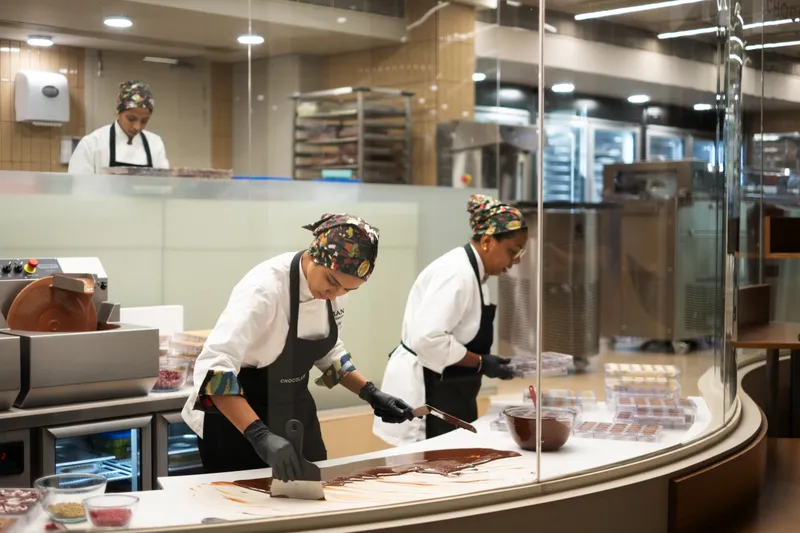
Chocolatiering at Manam Chocolate Karkhana | Image by: Daniel Dsouza
There’s also a Manam Classroom where visitors can learn more about fine-flavoured Indian cacao and craft chocolate through knowledge programmes and workshops.
Manam’s arrival in Delhi marks a pivotal moment in its evolution–from a strategic brand extension of Hyderabad’s Almond House to a category-defining collective with a singular vision: to champion Indian cacao and craft chocolate on a global stage.
Rewriting India's chocolate story
In just a year and a half since its inception, Manam Chocolate has launched over 350 unique products across 50 categories. The brand is not only creatively ambitious but commercially successful.
Based on Q2 projections, Manam Chocolate is expecting an annual run rate (ARR) of close to Rs 50 crore this year. With year-on-year growth nearing 125%, the brand is on a strong upward trajectory and is expected to sustain momentum over the next three years.
“There was no eureka moment,” says Chaitanya Muppala, CEO of Distinct Origins, which launched Manam Chocolate. When asked why he ventured into the world of chocolate, he was clear. “It started with a gifting need.”
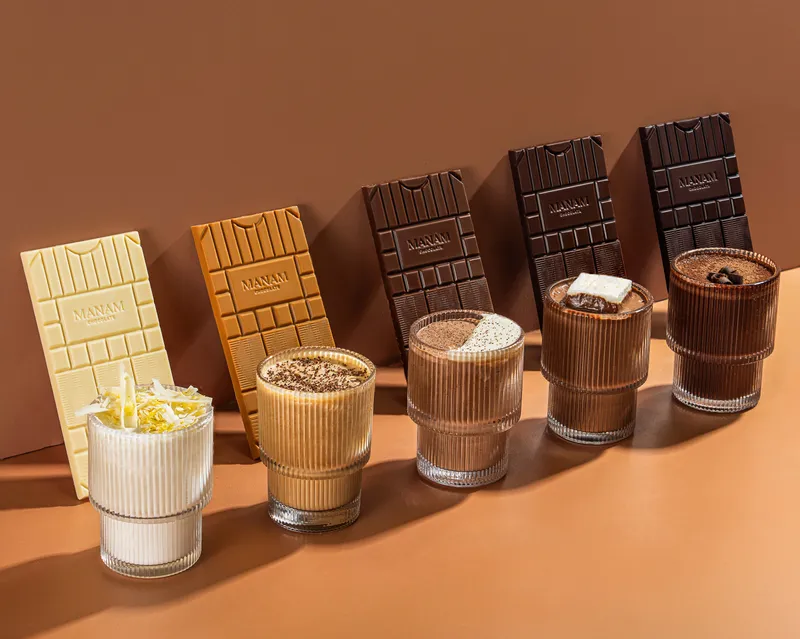
Signature Hot Chocolate with Tablets at Manam Chocolate | Image by: Lost & Hungry Studios
Back in 2019, Muppala-owned Almond House, already known for premium mithai and a string of exploratory F&B concepts like Gappe Vappe and Indulge Ice Cream, was picking up cues from customers around chocolate.
But instead of taking the easy road of melting couverture, Muppala saw a gap that he wanted to address. “There was a much larger opportunity here. We realised anybody who is doing chocolate in India, particularly in premium retail and gifting, was buying chocolate as a raw material, melting it, moulding it, putting their nuts and sea salt, and calling it chocolate,” he shares.
“It didn't seem like a sustainable enough differentiation for me. If everyone is going to make the same product, it will end up becoming a very homogenous product mix across the market.”
That realisation led to a two-and-a-half-year deep dive into cacao agriculture, fermentation science, and the untapped potential of Indian terroir.
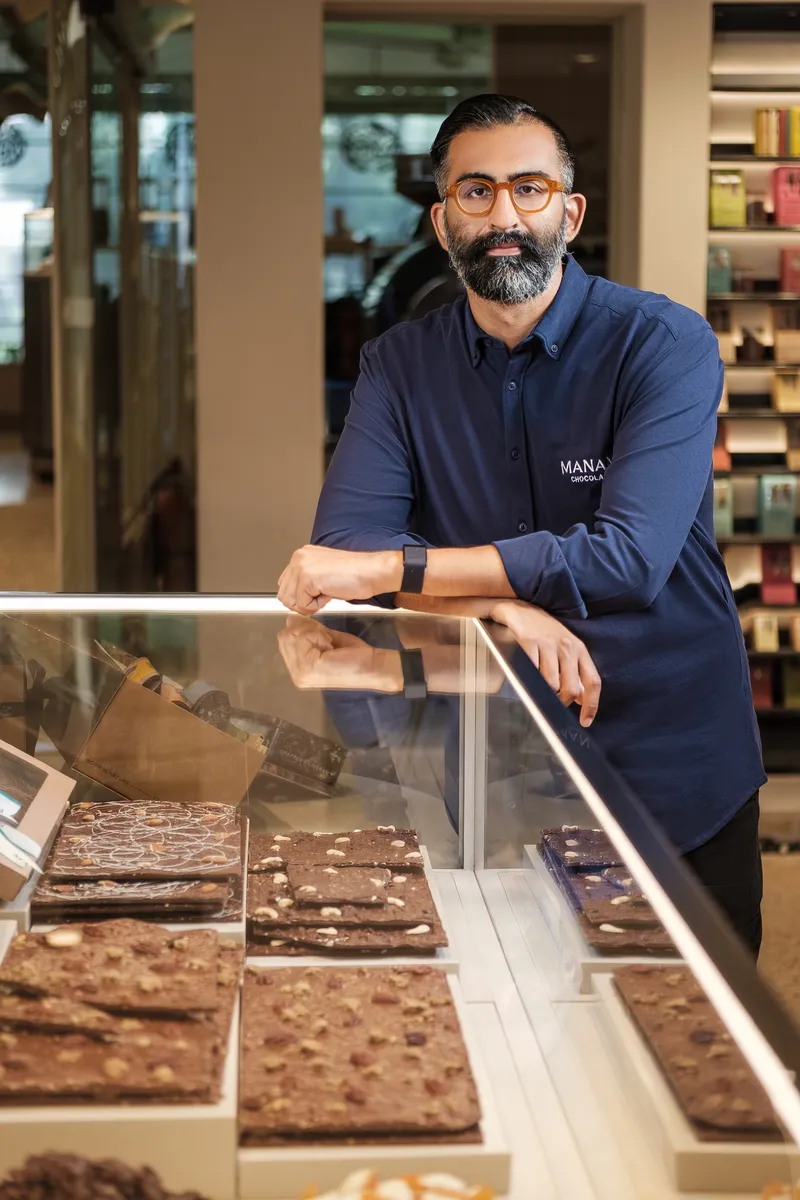
Chaitanya Muppala, Founder of Distinct Origins and Manam Chocolate
“We realised this may be something that we can do, but it’s very easy to make bad chocolate,” reveals Muppala. “The barriers to entry are very low so we asked ourselves where do the beans come from and it started from there.”
The company soon found itself not just in the chocolate business but in cacao transformation, and partnered with over 150 farmers, pioneering flavour unlocking at source.
Chocolate as culture
The name ‘Manam’, meaning ‘us’ in Telugu, encapsulates the brand’s collaborative DNA. It sounds giftable, feels local, and reflects a sense of rootedness. Every bonbon, bark and beverage tells a part of this story.
“We started off wanting to make chocolate. Instead, we went and built a whole agrisite supply chain and that's kind of what brought us to chocolate,” he reiterates.
In the early stages, the biggest hurdle was a lack of information and knowledge. Everything had to be learned from the ground up. Just as challenging–if not more–was building trust with farmers.
“It takes years to do that and that is the time we've invested in it. You know a boy from the city coming and speaking about something randomly doesn't stick. It takes hard work to build trust. That's one of our biggest assets,” says Muppala.
Unlike several craft chocolate brands like Paul and Mike, Soklet and Mason & Co following a bean-to-bar model, Manam's journey in chocolate making begins much before the bean, with the fruit, and continues way beyond the bar into the world of confection.
Operating in a small-batch, artisanal space, Manam aims higher: a scalable, sustainable business model with complexity built in. Each step of the process is controlled by the brand–from growing and fermenting their own beans, making, and selling their own chocolate, and now offering it across categories—from self-indulgence to gifting, HORECA to weddings.
“It just so happens that this particular project is driven by a philosophical mission of building a reputation for Indian cacao but there's no reason why we shouldn't look at it as a serious business problem,” he adds.
Where experience meets innovation
Creating an experiential space wasn't an afterthought for Manam Chocolate. Muppala is confident about the product, but the segment that they are trying to build–gifting–requires a larger-than-life experience to appease customers.
“Besides, chocolate is such a visual delight. Why would I hide it in a factory? It's so beautiful to watch and interesting for most of us to know where our food comes from, and how it is made,” says Muppala.
At Manam Chocolate, innovation isn’t an add-on—it’s baked into the brand’s DNA. Head Chef Ruby Islam leads this charge, constantly experimenting with new creations while staying closely tuned to shifting tastes and evolving consumer habits.
The brand is equally mindful of striking a thoughtful balance in how it expresses its Indian identity.
“As Indians, does it mean masala, elaichi, badam, or does being Indian mean to truly embrace the complexity of what we are as modern urban, Tier 1 residents?” he questions.
So, you will find coconut and curry leaf bonbons as well as Chakkarakeli banana soft serve but also dark chocolate-orange palettes and oat milk tablets. “India is just as much peanut butter and raspberry as it is elaichi and badam,” Muppala insists. “We’re not building an Indian theme park. We’re building an Indian future.”
The result is a collection that feels both nostalgic and novel–a celebration of terroir, technique, and taste.
The future
Still just over a year and a half old, Manam is already exporting beans to Switzerland, building hospitality partnerships, and opening new retail formats.
“We are working on different models–experience centres, beverage bars, high street retail, shop-in-shop model, travel retail, e-com and hyperlocal delivery, and the model varies across different cities,” shares Muppala, who reveals Manam Chocolate has raised a pre-Series A round (about $3.5 million) from marquee investors.
“We are working to ensure the profitability of all the channels in the coming months.”
The brand plans to spread its wings in major metros like Mumbai and Bengaluru over the next two to three years. However, Muppala is clear–he wants to go deep in each of the markets.
“You will see us focusing quite a bit on Delhi over the next 18-24 months. International expansion is also not far-fetched. We see this as a global representation and we want to build Indian chocolate as a thing,” he says.
Despite its many plans, the mission remains firmly grounded: to create a serious, scalable, and sensory future for Indian craft chocolate.
“Success? It’s a moving yardstick,” says Muppala. “For now, it’s about solving the problem in front of us. Today, that means helping people see Indian cacao for what it really is: world-class.”
At its Delhi outpost, Manam doesn’t just offer a box of chocolate, it offers a new way to experience chocolate.
Edited by Megha Reddy