



Rono guides you through nine shades of grief in ‘Adhoore se Khwaab’
Adhoore se Khwaab is a dive into grief that stems from the untimely demise of Rono’s father and Indian director Pradeep Sarkar. The songwriting is carved from an intense burden and executed masterfully.

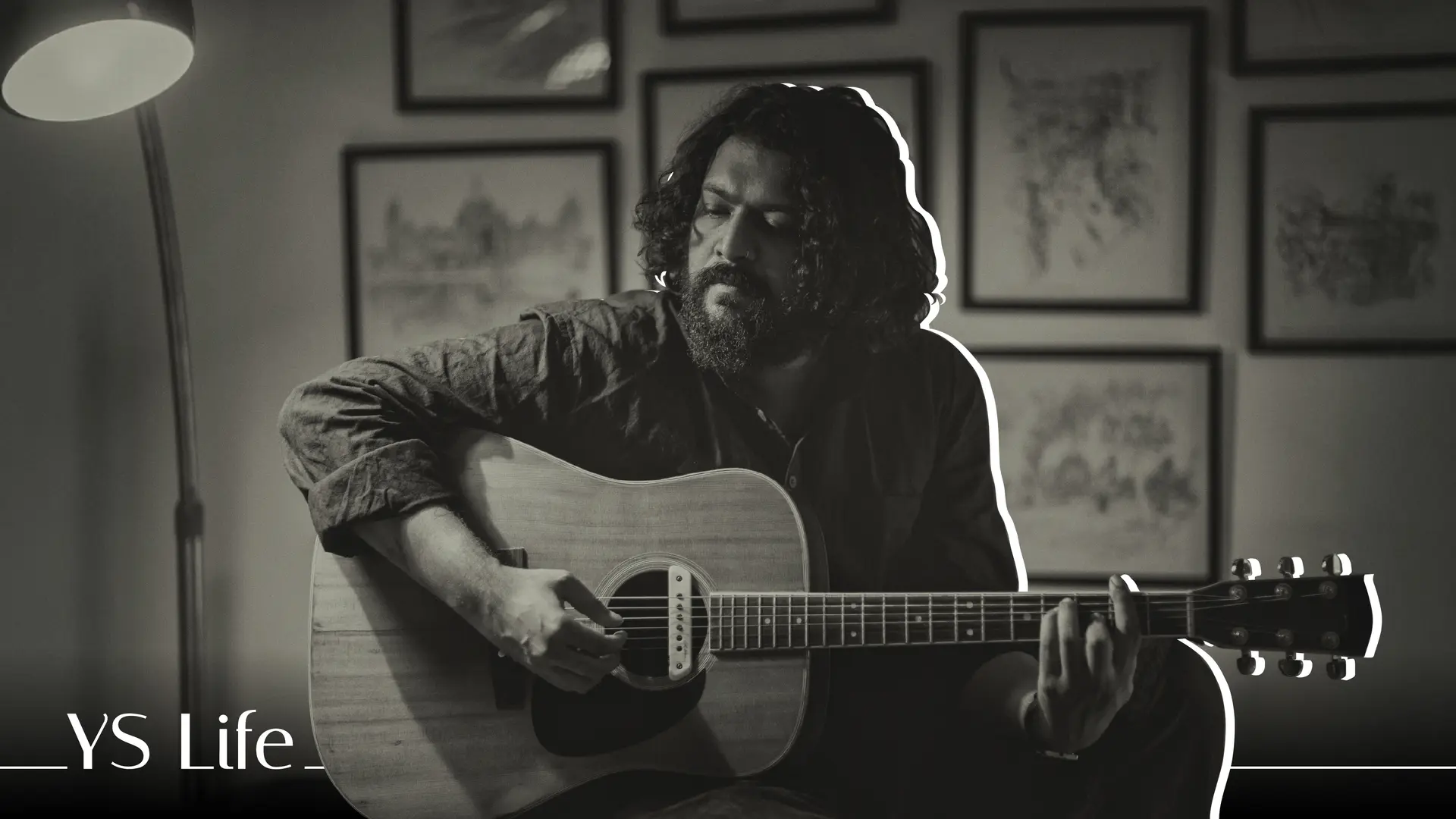

Ronit Sarkar a.k.a. Rono’s debut album isn’t just a collection of amazing folk ballads but symbolises the crystallisation of his pain. Through his latest album Adhoore Se Khwaab, Sarkar has accomplished something many artists can only aspire to — metamorphosing suffering into beauty.
Adhoore se Khwaab is a dive into grief that stems from the untimely demise of Rono’s father and Indian director Pradeep Sarkar (of Parineeta and Laga Chunri Mein Daag fame). The songwriting is carved out from an intense burden and executed masterfully.
Characterised by Sarkar’s distinct melodic construction and supported by his painfully osculating delivery, the album takes the idea of grief seriously. The instrumentals are vivid, sweeping, and boast of space. It sits in complete contrast to Sarkar’s voice, providing a massive canvas for his croons. The organic nature of the production, spearheaded by Satyajit Chatterji and Sarkar himself, builds a candid tapestry of sound that is as piercing as Sarkar’s pitches. Co-songwriter Taab’s writing perfectly cradles Sarkar’s vocals as he trudges through each shade of refracted melancholy.
The album flows well, opening with the shortest track on the record, Tere Bin, which instantly pulls you into the deep end of the narrative. The crisp production, with the undercurrent of the guitar — later joined by the harmonium — demands attention.
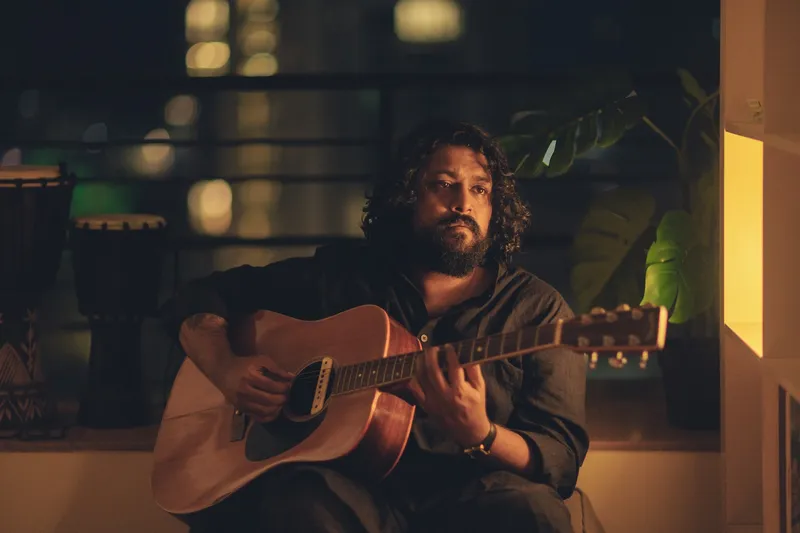
Music artist Ronit Sarkar a.k.a. Rono

The first song I ever played was the Indian national anthem: Grammy winner Ricky Kej
Tere Bin beckons you to drop all acts and listen to the music as Rono shows himself to you. The song sheds light on the strongest trait of the album, honesty.
The next song, Kar Rihaa, features Andrew Sabu on harmonies and backing vocals. The track, which sings with a broken smile, mends the shock of honesty and gently paces out the experience. Sabu’s harmonies add a satisfying richness and weight in tastefully. The track also features a fuller instrumental arrangement, with violins, played by Rajarshi Das, who is the only violin player on the album. His contribution to this and other songs on the record has added grandeur and movement. In this song, he and his strings dance a gentle waltz.
Mehfooz Rakh is a particularly special song on the album featuring veteran Indian singer and songwriter, Swanand Kirkire (of Lootera and Parineeta fame). The chemistry between Sarkar and Kirkire, who also happened to be a close friend of Sarkar’s father, is less that of artists and more that of family. Through the song, Sarkar is held up by Kirkire’s reaffirming backing vocals and riffs. The tone of Kirkire’s voice along with Sarkar’s, denotes a coming together of generations, remembering those who’ve gone and those who remain to withstand the burden of loss.
Tera Mujrim resets the pace of the album, introducing the drums played by Swarnavo Datta. It also punctuates the use of the Mandolin, which is also used in the previous track. The addition of drums accentuates and puts everything into perspective. It's the frame of the painting and Datta’s pristine touch is unobtrusive. Instead of restricting the composition within the structure, he opens it up further allowing the song to bloom. The production of the snare in particular is crunchy and delightful.
Vaapas Toh Aao Kabhi marks the halfway point of the album. A tricky place in any album but Sarkar owns the slowness. At this point, I have to confess that I’m guilty of skipping the middle order in many albums, but there is much over here to inhale.
Despite the album’s dedicated pursuit of its singular sonic theme, Sarkar and Taab’s lyrical game, along with the former’s melodic architecture, brings enough variety to keep you hooked. The song introduces the analog Moog Sub 37 synthesizer, bringing quickly accelerating revolutions. It also features Karishma a.k.a. Dear Kokum on brickle backing vocals and harmonies that tickle the ears. Thodi Si reigns beautifully, featuring singer-songwriter and long-time friend of Sarkar, Aarifah Rebello, on raspy backing vocals showcasing her textured lower octaves that add gravitas. I need to take a moment here to commend the creativity of co-producers Chatterji and Sarkar who restricted themselves to the use of only organic acoustic/hardware instruments. The album possesses a warm sound that focuses more on virtuosic expression on every instrument that’s been used.
Nange Paaon shifts focus to a more piano-centric composition. In comparison to previous tracks, the songs in the second half certainly magnify the poignant nature of the record.
In many ways, Nange Paaon is reminiscent of the opening title Tere Bin, shining light on Sarkar’s vulnerability. Aakhri Safar which features the complete arrangement of instruments is the penultimate song on the album. It’s a moment of respite before the finale.
Aakhri Safar sounds like a final memory. The childish core really hits home, supported splendidly by everything that’s happening in the instrumentals. The violins, guitars, harmonium and drums all carry their own weight and create a perfect garden of sound.
Concluding the album is Bas Hawaaein which begins with Rajarshi’s painful violin that dawns realisation on Sarkar. It’s a confession more than anything else, resting on a gradually simmering instrumental, hard carried by Rajarshi’s sweeping strings. The essence of the album is reflected in the ending of this song, which compels Sarkar to come to terms with his reality.
It’s discomforting to hear him hold back his tears but that’s also what makes it real. Adhoore se Khwaab is an exceptional album. It’s not that I don’t want to pick apart this album, I just can’t. Sarkar and friends have left no stone unturned in creating what is possibly the best singer-songwriter album of the year by a mile. Right from the creative process to the execution by Soutrik Chakraborty is bang on. The album is as soulful as it is finessed. I highly recommend you listen to it and give yourself to this body of work even if it isn’t your cup of tea.
Edited by Kanishk Singh
(Disclaimer: The views and opinions expressed in this article are those of the author and do not necessarily reflect the views of YourStory.)