



De-stress on demand: Former Food Darzee founder’s wearable helps build resilience
Backed by five years of research, the neurotech device InnerGize claims to improve the body’s resilience to stress by activating the vagus nerve.


Anxiety is the new pandemic.
As of 2024, around 80% of the Indian population experienced at least one symptom of stress regularly. The leading causes are financial instability and work pressure, according to a GOQii India Fit Report, as long work hours, lack of job security, growing competition, and low wages keep urban workers on edge.
For 28-year-old Delhi-based backend engineer Amit Sharma*, the usual options—meditation, and natural remedies—didn’t really help. “With long hours and late-night meetings, I often felt mentally foggy and wired even when I was exhausted,” he tells YS Life.

That’s when he took the help of InnerGize.
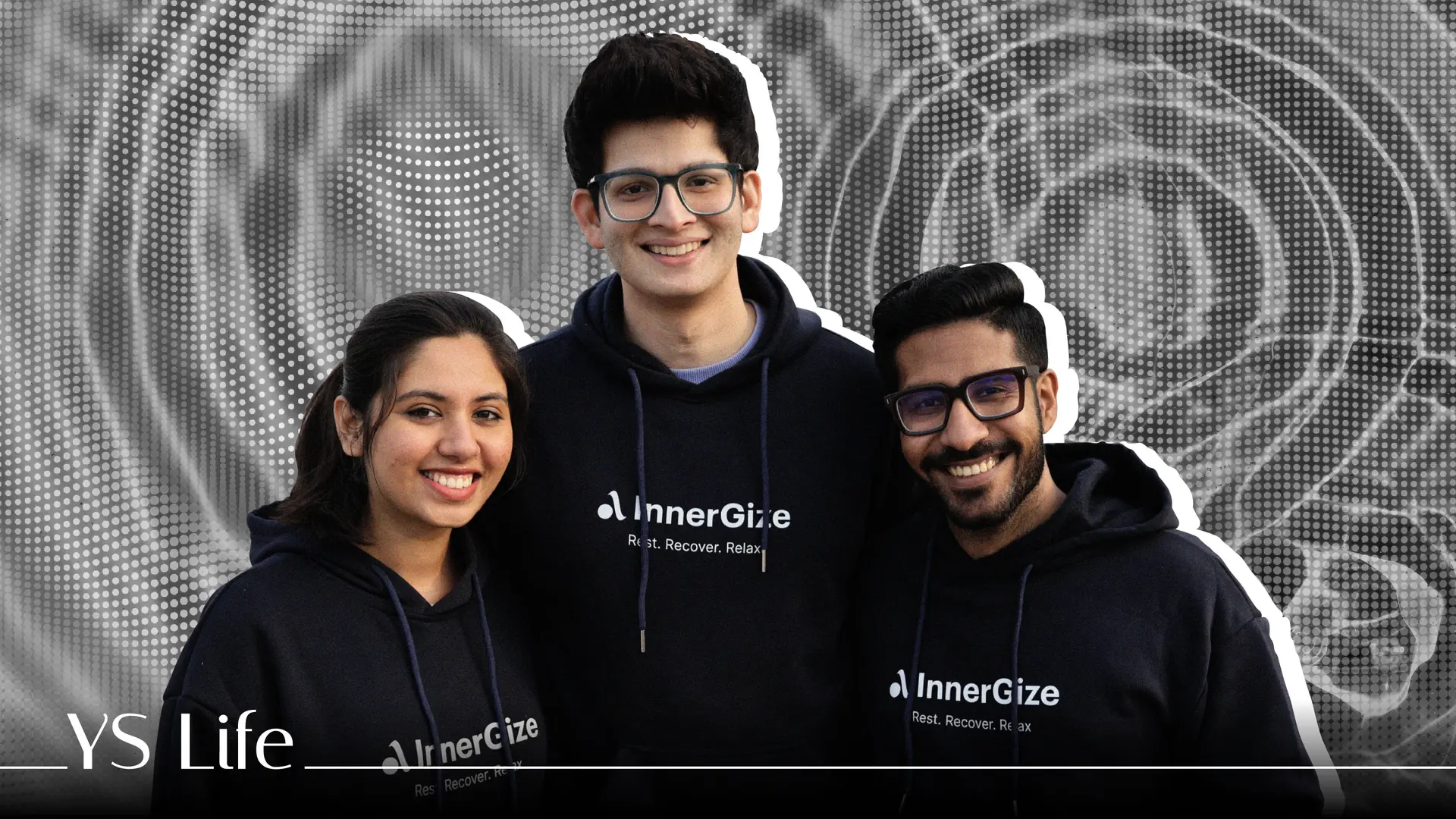
Founded by former Food Darzee co-founder Siddhant Bhargava, along with Shalmali Kadu and Mitansh Khurana, InnerGize offers a wearable technology that claims to help users de-stress on demand. The device leverages neuro-acoustic vagal modulation, i.e. using sound stimulation to activate the vagus nerve, to reduce stress and anxiety.
“Using InnerGize before bed has made a big difference—it helps me switch off, clear my mind, and fall asleep more easily. The device is super small, discreet, simple to use, and fits right into my schedule,” Sharma, who has been using the product for three months, says.
Featured on Shark Tank India season four, InnerGize has raised Rs 6.5 crore in its pre-seed round from a bunch of investors—Antler India, AC Ventures, Aman Gupta (boAt Lifestyle), Ritesh Agarwal (OYO Rooms), and other angel investors. InnerGize is also a recipient of the BIG (Biotechnology Ignition Grant) scheme under BIRAC (Biotechnology Industry Research Assistance Council) and is also a part of Nikhil Kamath’s WTFund’s second cohort.
Treating at the source
Bhargava was 19 when he was diagnosed with lupus, an autoimmune disease. By the time he turned 25, he was diagnosed with thyroid cancer. “The last 10 years of my life haven’t been easy, in terms of health. I realised that people who are more resilient to stress just do better in life,” he says. With this in mind, Bhargava started researching about increasing stress resilience.
The autonomous nervous system, he explains, manages all the autonomous processes—sleep, rest, recovery and alertness; and is divided into two systems—sympathetic and parasympathetic nervous systems. While the sympathetic nervous system is responsible for the ‘fight or flight’ response, the parasympathetic system calms one down.
However, over the years, Bhargava says, even the smallest triggers—traffic, notifications, screen time, relationships, ambition, career, or any other micro trigger—tell the body that requires immediate action.
“Your sympathetic nervous system is always keeping you on the edge. It’s overdriven all the time, and your parasympathetic nervous system is not able to get back to equilibrium or neutrality. This mismanagement between these two systems is what causes stress,” he adds.
On the other hand, the mismanagement of stress causes anxiety, and the other plethora of mental health conditions.
“If you can trigger the parasympathetic nervous system into doing its job when it’s supposed to, you can change the way your body regulates stress,” Bhargava explains.
How it works
Backed by more than five years of research, and by 50 experts, InnerGize uses sound or acoustic stimulation to modulate the activity of the vagus nerve that connects the brain to the body’s other organs, and helps activate the brain’s ‘relax and restore’ mode. With regular use, InnerGize claims that it can train the vagus nerve to perform better on its own and increase the body’s stress resilience.
“A trigger that used to bother you six months ago will just be dealt by your own body physiologically,” Bhargava says.
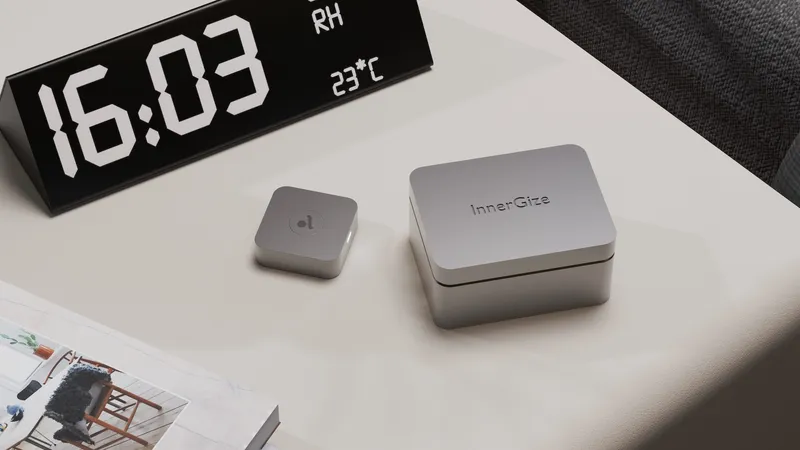
The InnerGize device
InnerGize comprises two components—a device that can be attached behind the ear using an adhesive patch, and an app to control the sessions. Users can use the app to check their ‘stress score’, set the mode of their session—workplace stress, cooldown, pain management, and stimulant control—and choose the soundscape of their choice.
Jayita*, an occupational therapist in Delhi, often finds herself exhausted while helping others cope with stress and anxiety. “My days are packed with back-to-back client sessions, and by the time I’m done, I’m mentally exhausted. I tried meditation and breathing techniques, but they didn’t help when I was feeling overwhelmed,” she says.
She decided to give InnerGize a try. “As a therapist, I’m always mindful of the importance of self-care, and I’ve noticed using InnerGize consistently, my sleep quality has significantly improved, and I am waking up feeling more rested,” Jayita says. The 26-year-old has been using the product for over a month now—twice a day.
Bhargava suggests using the product thrice a day—for 10 minutes each time. “We are doing a 75-day challenge where if a customer uses the product for at least 10 minutes a day and doesn’t see a change within themselves, I will give them back their money,” Bhargava asserts.
The wearable market
Earlier priced at Rs 5,000, InnerGize is presently sold at Rs 8,000 on pre-orders, and going forward, Bhargava further wants to increase the cost to Rs 11,000 eventually. At present, the waiting period for InnerGize is six weeks.
“We have already done Rs 1 crore worth of sales in six weeks, and we are doing about Rs 25 lakh in online sales per month,” Bhargava claims. By assembling the entire product in-house, InnerGize is able to manage a gross profit margin of 80% per device.
According to the World Health Organisation, the COVID-19 pandemic triggered a 25% increase in anxiety and depression worldwide. This eventually led to the rise of wearables and a band of homegrown and international brands democratised the space with affordable smart wearable technology—watches, bands, rings, and more.
However, for the first time, in 2024, International Data Corporation's India Monthly Wearable Device Tracker recorded a decline in India’s wearable device market. Bhargava is optimistic about changing that with InnerGize. “(Wearable) technology has stagnated everywhere. The amount of innovation that is required to keep a category alive is not happening…Wearables need to be ergonomic and seamlessly fitted into a person’s life.”
“Solution-based wearables is what the world genuinely needs. Anything else is just insights. It is telling you that your heart rate is high; how are they even creating a positive health outcome? We are making a whole new category of wearables that are solution-oriented and not just your typical diagnostic wearables,” Bhargava says.
The team at InnerGize wants to reach high-intent audiences, that is, people who really need the product, via B2B2C channels—therapists and psychiatrists. Eventually, once the startup collects enough data, it plans to build an entire ecosystem for mental health issues, “where you solve the physiological aspects using technology, behavioural aspects using services or therapies, and also build a community or peer-to-peer support mechanism,” he adds.
*Names changed to protect identity.
Edited by Kanishk Singh