



Inside Lento’s slow-brewed philosophy
In a world of takeaways and fast-paced cafés, Lento in Goa offers something far rarer—a space built on patience, personal memory, and the quiet luxury of staying a little longer.


Most cafés today move at the speed of our lives. You place your order, check your phone, answer a few emails, and before the last sip, you’re already out of the door. The tables are clean, the WiFi is fast, and the playlist blends into the buzz of meetings and mouse clicks.
These are cafés designed to keep up, not slow down.
But Lento, tucked into a quiet corner in Goa’s Saligao neighbourhood, offers something different—–it invites you to stay and feel.
“There was a time when cafés were about lingering,” says Dishant Pritamani, Co-founder of Lento. “No one rushed you, the bill didn’t come with your coffee. You could read, think, and sit with a friend for hours. Everything today is fast, performative, transactional. I wanted to create the opposite.”
With Lento, Pritamani wanted to bring that feeling back. In his words, it is a place where nothing demands your attention, but everything quietly welcomes it.
“It's where you can disappear into yourself, or into conversation, and not feel hurried out of either. A space that allows you to pause not for productivity, but simply for the pleasure of being still,” he adds.
Learning to slow down
The intention to slow down found its roots in Goa, specifically with Pritamani’s first project—Second House, also in Saligao.
“That shift from the intensity of Bombay to the quieter rhythms of Goa taught me a lot. It wasn’t just about geography, it was about pace. About learning to trust slowness, to embrace patience, to let things unfold at their own time,” he shares.
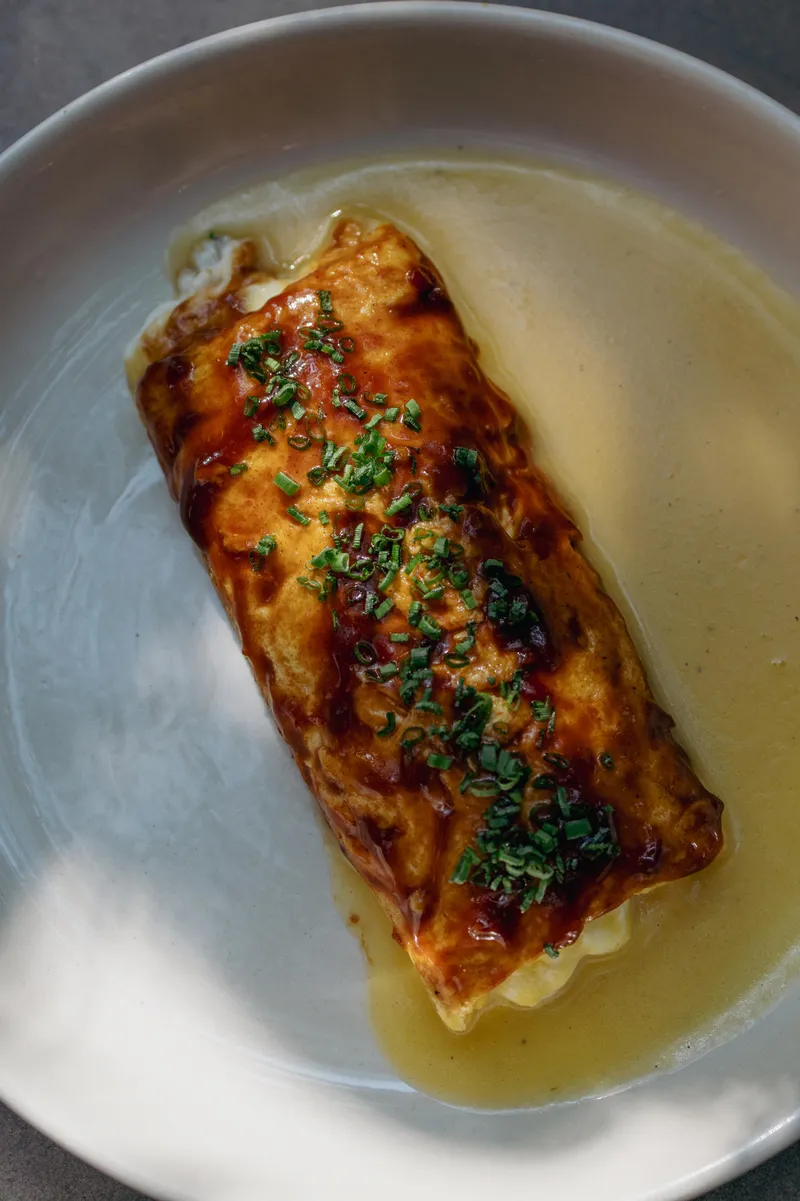
Crab Omlette

In Pritamani’s opinion, Second House showed him the joy of building something intentionally, of not forcing it to happen overnight.
“I think that spirit naturally led us to Lento. Even though the two spaces are completely different, the underlying philosophy is the same: do things properly, give things time, allow them to become what they’re meant to be,” he mentions.
A kitchen full of memories
Lento’s food reflects the same philosophy. For Chef Jyoti Singh, the menu is an emotional archive—each dish is an echo of her childhood, culinary travels, and the quiet moments in between.
“I grew up in a small town in a vegetarian household where food was always homemade and deeply connected to rhythm and ritual,” he says. “Even eating out was rare, so it always felt special. That duality, of food being ordinary and celebratory, has stayed with me.”
Years later, his career took him from kitchens in Delhi, Bengaluru, and Kolkata to culinary stints in Egypt and Bali. But the thread of emotional comfort remained.
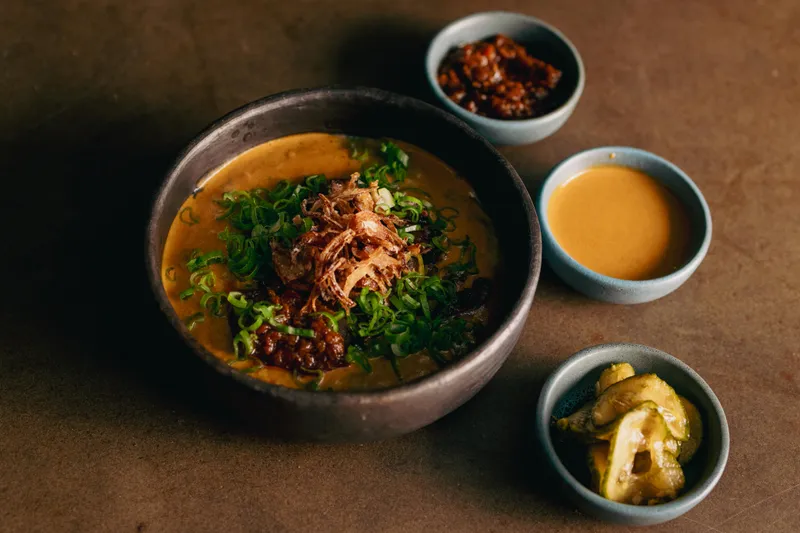
Sunrise Conjee
“Comfort doesn’t have to mean predictable,” says Singh. “It’s not just about familiarity, it’s about connection. That might come from texture, or flavour, or even how you eat.”
Some of their dishes, Singh says, are meant to be eaten with hands. It slows you down and makes the experience more personal.
One such dish is Chicken Soup for the Soul—a warm, clear broth inspired by the mornings at his in-laws’ home in the Northeast.
“It’s not a copy of any single tradition,” says Singh. “It’s just a quiet bowl of warmth, inspired by where I’ve been.”
The McPav, Hangover Dumplings, and other stories
Lento’s menu reads like a memoir. Each dish is rooted in memory, a moment, or a map. The McPav, for instance, was born from Chef Singh’s early days in Mumbai.
Chef Singh says he wanted to take that memory and give it a new context.
That’s how the McPav was born—a comforting, familiar bite reimagined with a sourdough pav that’s lighter, airier, and easier on the gut than its milk bun predecessor. “Pav is such a cultural staple,” Singh explains. “But I wanted to modernise it, make it nostalgic but also nourishing.”
The Hangover Dumplings draw from his Delhi training days, when late nights were often followed by steaming momos. “I was always the designated driver when we went out with friends” he smiles. “The ritual of relishing momos stayed with me, and I felt there was space to create a comforting, all-day version.”
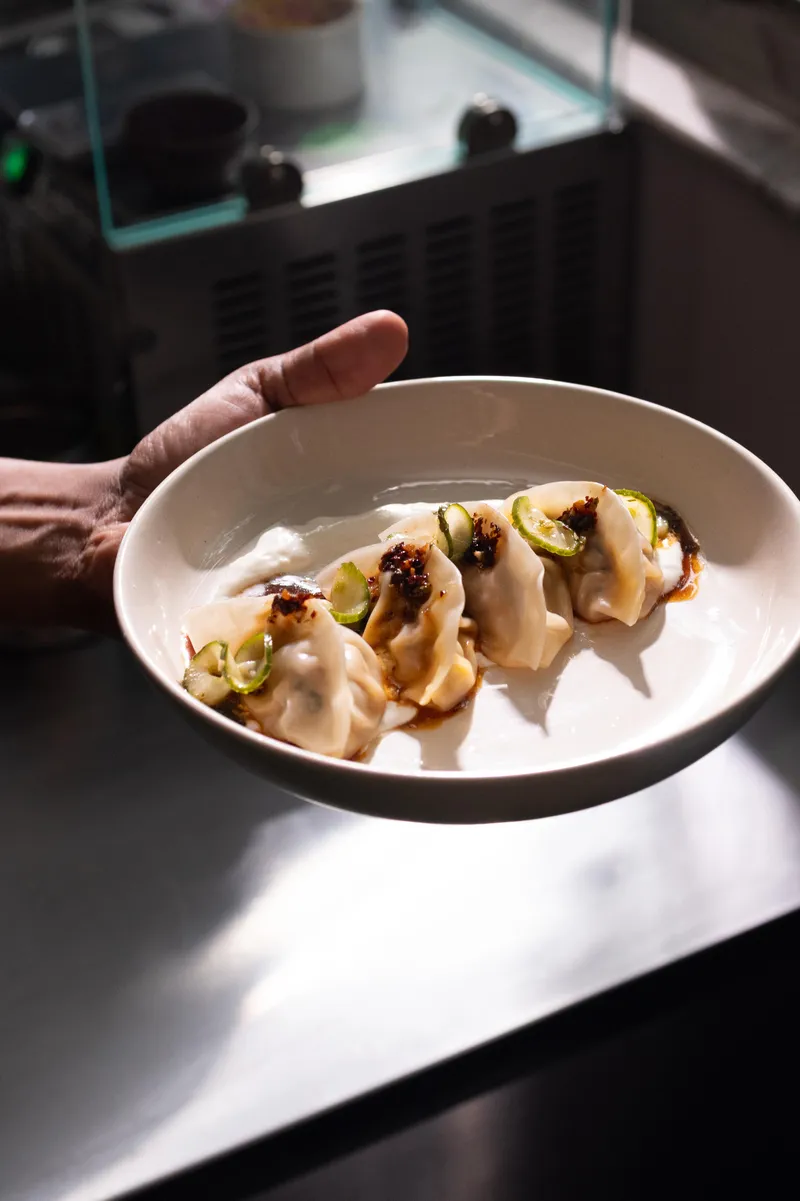
The Hangover Dumplings
Another favourite is Tofu Akuri, a vegetarian take on Irani café-style scrambled eggs, served on garlic sourdough. “It reminds me of living in Charni Road, surrounded by old cafés where Akuri on pav was my favourite breakfast.”
Even Lento’s desserts tells stories. Frenching in Saligao, their version of a French toast, is inspired by the loaves from Singh’s childhood bakery. “We use sourdough brioche to keep it light. It’s indulgent, but not heavy. It evokes that same warmth I remember growing up with.”
The café that grew like a forest
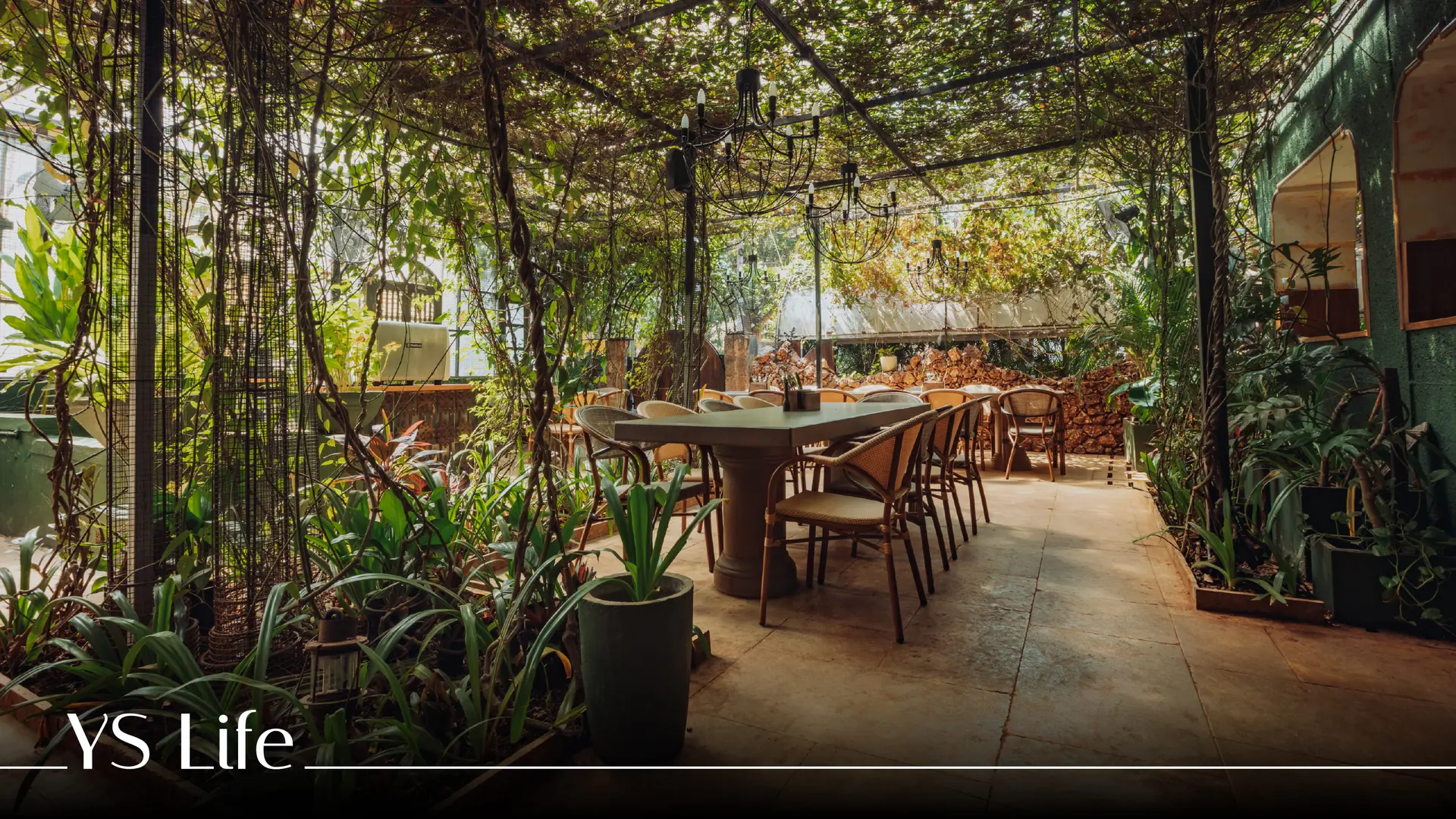
While the menu unfolds with quiet nostalgia, the space itself tells another story—of restraint, of letting go, of letting nature lead. “We’ve forgotten how to let spaces breathe,” Pritamani says.
“With Lento, we waited for the creepers to grow over two monsoons. That waiting became part of the story.”
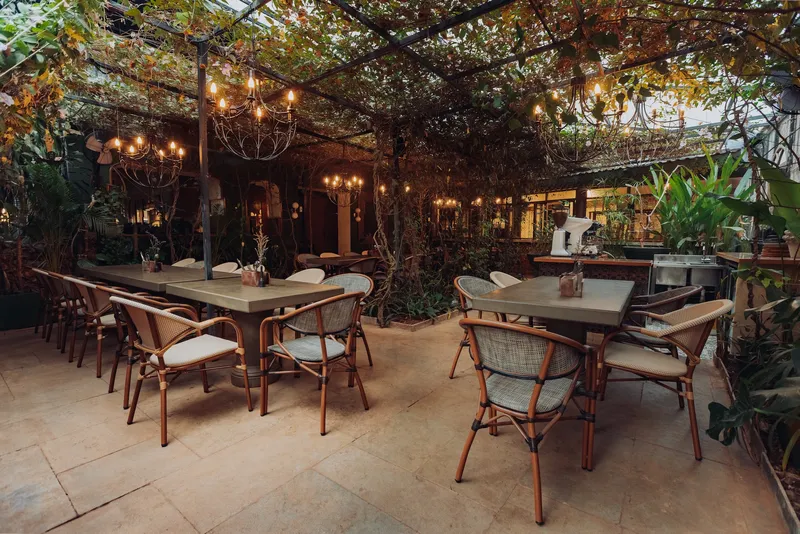
It was this organic evolution that gave Lento its name. “It wasn’t just a concept,” he says. “It was something that revealed itself to us. Watching something grow slowly taught us more than any business plan could.”
Working with architect Ayaz Basrai of Busride Design Studio brought this vision to life. “Ayaz understands the poetry of spaces,” Pritamani adds. “He let things remain undone where they needed to be. That’s how the ruin became beautiful, not tragic.”
Discarded tiles, rusted nets, and old water troughs all found new life at Lento. “Imperfection carries history,” says Pritamani. “We didn’t want it to look pristine. We wanted it to feel lived-in, like a place that’s been quietly loved for years.”
Not a brand, but a feeling
Ask Pritamani if Lento is a café brand, and he smiles. “Technically, yes. We serve coffee and light meals. But for us, it’s more like a journal,” he says.
“A collection of moments—Jyoti’s McPav memory, our evenings at Second House, and conversations shared across time.”
From the start, their principles were non-negotiable—nothing rushed or fake and everything made with care. That extended to coffee as well. Their signature blend, created with Suhas Dwarkanath, is 70% Arabica, 30% Robusta.
“We didn’t want coffee that shouts,” says Pritamani. “We wanted something that lingers quietly. That small percentage of Robusta gave the cup weight, warmth, and a kind of groundedness. It was about the process, the patience and the intention behind it. It felt like the most natural extension of what Lento already stood for,” shares Pritamani.
Scaling without losing soul
With plans to take Lento to Pune and Mumbai, one question remains—can something so personal scale?
“If the philosophy stays rooted and the soul stays intact,” says Singh. “Each Lento will reflect its city. Pune isn’t Bandra. People eat and gather differently. We won’t copy-paste but we’ll listen, adapt, and evolve.”
And perhaps that’s the essence of Lento. It’s not a formula. It’s not even a design. It’s a belief that the best things take time; that stories can be plated and spaces can breathe.
“Ultimately, every city will leave its imprint on Lento,” says Singh. “And we hope Lento will quietly return the favour.”
Timings: 9 am-6 pm (Wednesdays closed)
Meal for two: Rs 1,500 + taxes
Edited by Megha Reddy