


A wellness retreat where mindful living extends beyond the stay
Situated on the outskirts of Pune, Nitin Nyati-helmed Swastik Wellbeing focuses on the five dimensions of wellness—health, spiritual wealth, love, bliss and spirituality.

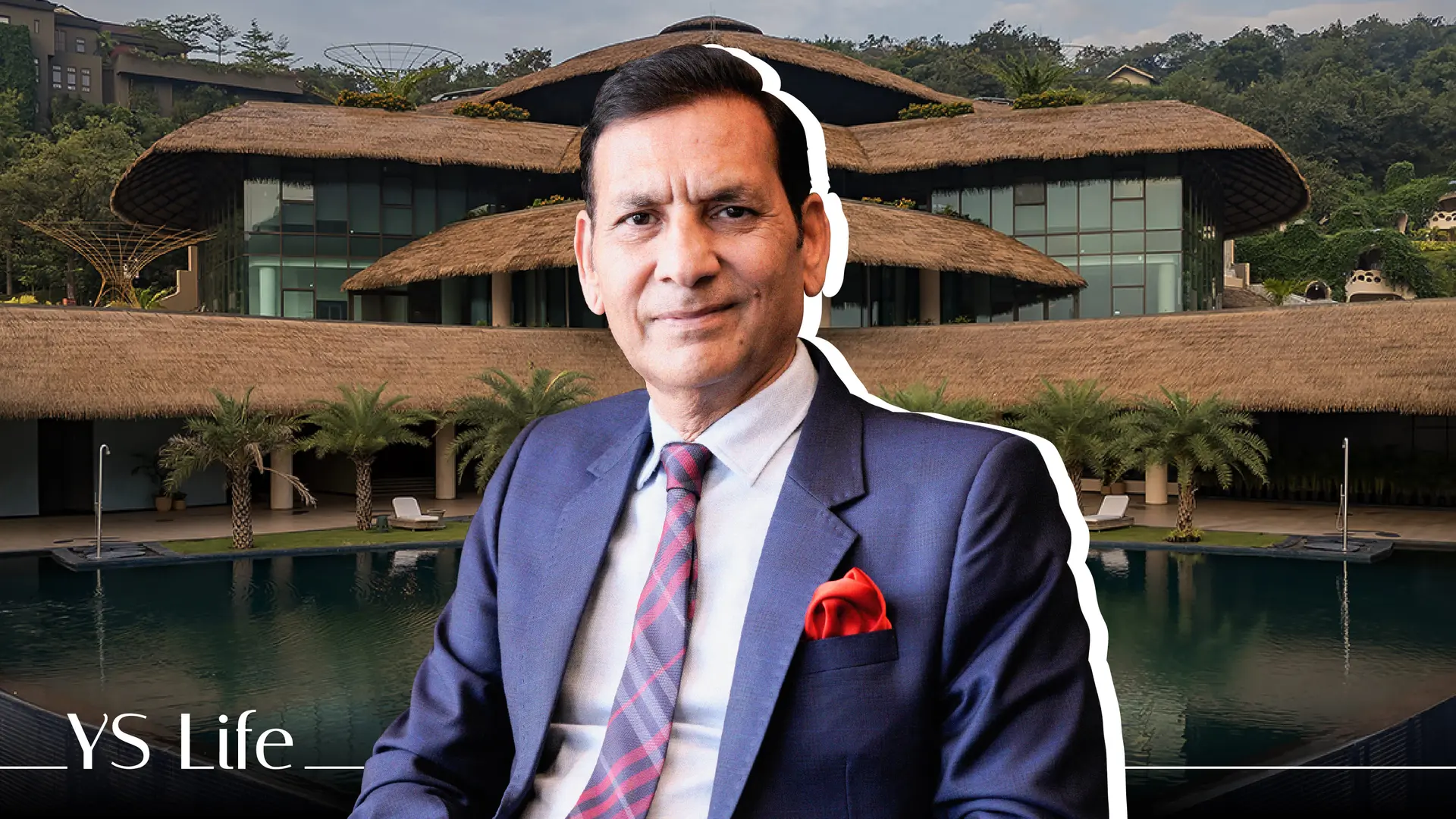

How often do you savour your meals—mindfully chewing it, and relishing each flavour? How often do you retire for the night without worrying about the next day’s calendar invites? Life has gotten faster and busier than usual for most of us. Long lunch-hour breaks are history, as people rush through their lunches to chase deadlines, and spend their dinners in front of the idiot box.
Swastik Wellbeing wishes to address people’s relationship with food and more.
Food is a crucial part of wellbeing, and deserves attention and mindfulness, believes Nitin Nyati, Founder at Swastik Wellbeing. “Most of us consume meals at least three times a day, and what you put into your body creates it,” says Nyati.
Food is just one aspect of life that Swastik wishes to tackle. The wellbeing retreat in Pune is on a mission to encourage an overall fuller and mindful lifestyle.
Nestled in Peacock Valley, overlooking the Khadakwasla Dam, Swastik Wellbeing Sanctuary focuses on the five dimensions of wellness—health, wealth (spiritual), love, bliss and spirituality.
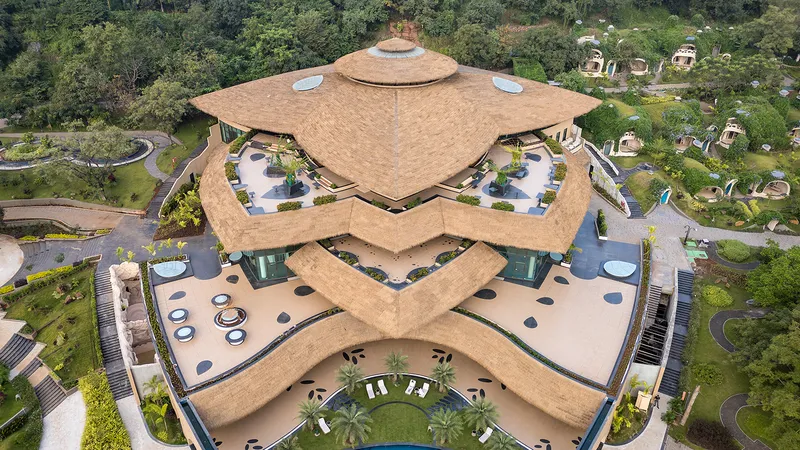
Anand Vihar at Swastik
Nyati, a real-estate developer, sheds light on what led him on to the path of wellness and spirituality and what Swastik aims to achieve.
Edited excerpts from the interview:
YS Life [YSL]: From real estate to wellness—what influenced this shift?
Nitin Nyati [NN]: While real estate leaves a mark on the physical landscape of a city, there was a strong desire to leave an imprint on the soul space of people. A wellbeing offering was hence conceived to teach people at large on how a sustainable vibrant lifestyle can be lived, which in turn, has a profound impact on society. It had to be nothing short of an evidence-based wellbeing sanctuary.
YSL: What challenges did you face in bringing Swastik to life, especially in a world that is often sceptical of alternative wellness approaches?
NN: I truly believe there are no challenges; there are only opportunities.
We used challenges as opportunities on many fronts—contours and size of the plot, garnering resources, attracting right talent, collecting evidence for the therapeutic offerings, aligning the project team architects and the operations team to the vision behind Swastik, launch, marketing, staff loyalty, and many more.
Keeping a positive and altruistic mindset has only attracted the right people, and all road blocks have been smoothly overcome and actualised better than expected.
From ground breaking to operations commencement, everything has happened in less than four years. The feedback and referrals from our seekers (guests) have firmly convinced us that we are on the right track.
In fact, the launch of Swastik has cemented the position of Pune as the wellbeing capital of the country just as Rishikesh is the yoga capital of India.
YSL: What, according to you, defines the Swastik movement?
NN: The Swastik movement empowers the seeker with deep evidence-based knowledge and tools to take responsibility of their own wellbeing. Once our seekers master that, they also take other dimensions of their life into their hands and create rewarding outcomes for themselves and the society at large.
We have seen many CXOs go back and drive wellbeing programmes in their companies, thereby having a profound effect on so many people as a domino effect.
YSL: You’ve chosen to focus on five dimensions—health, wealth, love, bliss, and spirituality. How did you arrive at these?
NN: The idea of five dimensions to life comes from the ancient Indian concept of Panchakosha—five sheaths of existence from the grossest to the subtlest aspect of existence; pancha mahabutha or the five elements (water, earth, fire, wind and space); the idea of the primordial energy flowing in the energy channels ida, pingala and sushumna; and the essence of discussions with my guru and other masters.
Swastik offers activities for each of the dimensions on a daily basis, so the philosophy can be practically lived and benefits experienced first-hand.
Health can be experienced through our wellness therapies, from Ayurveda, naturopathy, salt therapy, and acupuncture. Wealth can be experienced by the wealth of knowledge gained by interacting with masters of various fields.
Love can be experienced during the cow petting sessions, nature walks, release and intent rituals. Bliss can be experienced during mandala painting, pebble art, fun games, and other activities.
Spirituality can be experienced through the many meditation techniques, breathwork, and advanced yoga practices.
YSL: Can you share an example of how ancient wisdom and modern science come together in the therapies and programmes at Swastik?
NN: One of the many examples is yoga and yoga therapy. While yoga is an ancient science, we use the research behind it as a therapy. Breathwork improves lung capacity, yoga postures improve muscle mass and sense of balance, meditation improves sense of calm and reduces anxiety. We measure heart rate variability scores before and after the programme to measure outcomes.
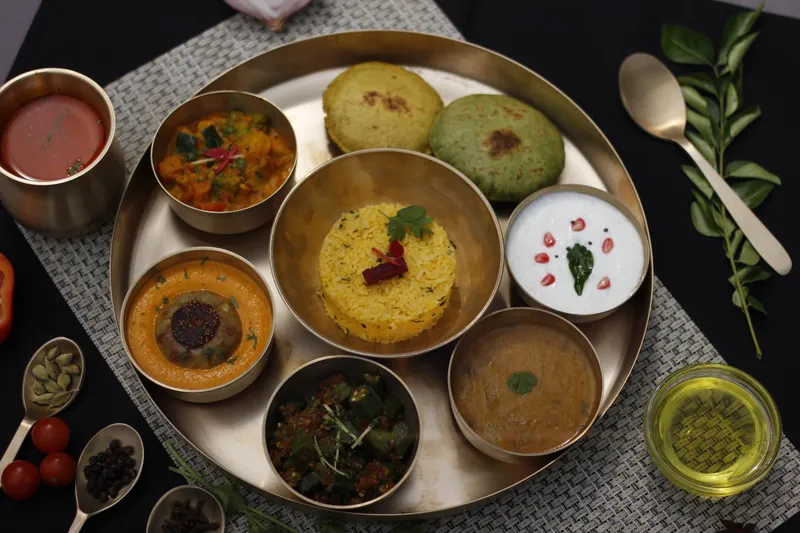
Ayurvedic thali at Swastik
YSL: Food is an essential element at Swastik. How did you ensure that the food served caters to modern sensibilities while also being rooted in Ayurveda?
NN: Our team of chefs, nutritionists and doctors sat together and worked out food that is not only densely nutritious, organic and plant-based, but also presented as gourmet meals. Meals are not repeated, and, at the same time, they are presented as works of art while taking the aspect of taste as seriously.
What’s more, the food also incorporates Ayurvedic principles. For example, while millet-based pizza is served, it is topped with vegan cheese and not with regular cheese for a person with high kapha dosha.
YSL: Who are some of the mentors you have partnered with? How do you curate these lists of mentors?
NN: We have a team that reaches out to masters and engages with them. After a careful analysis, the team curates masters on principles of domain expertise, authenticity, impact, empathy and ability to communicate clearly to their audience. Each of these masters enriches one or more of the dimensions of life.
We have already had several well-known and rarely known masters visiting us. Guru Nagendraji from Bengaluru, Swami Nirmalananda from USA, Swami Vasudev from Russia, Breathwork Master Duttaji from Indonesia, among others, are associated with us.
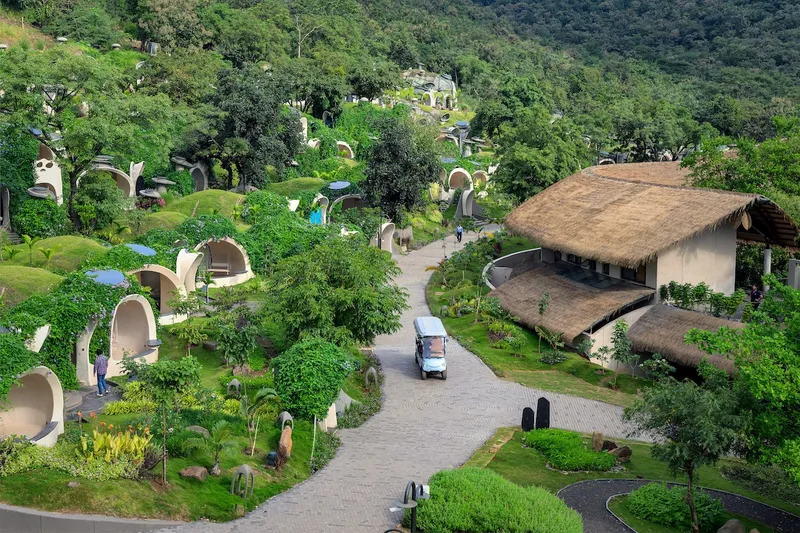
Sukh Vihar with the residential guhas at Swastik
YSL: How important was the choice of location in shaping the energy and architecture of the sanctuary?
NN: Location was important as it had to have easy accessibility, be close to nature and yet away from the humdrum of human existence.
The current location of Peacock Valley served the purpose in every way. Being surrounded by 7,000 acres of forests, and the valley facing the Khadakwasla Lake meant that we had to build into the topography. The residences were hence burrowed into the slopes, and the buildings are just one-level higher or lower than the ground floor.
In terms of architecture, there are no sharp edges in Swastik. The pillarless 11,000-sq ft Dhyan Vihar (spiritual space) has a spire that signifies the ascension of energies.
The Ayu Vihar (therapy space) is naturally ventilated and with ample sunlight which promotes healing energy. Guhas (accommodation) are spaces built into the earth that have a grounding energy, and have been designed to discharge electromagnetic pollution from the body.
Swastik is also naturally aligned along the principles of geomancy (vastu) and so the feel is totally different. In addition, every space of Swastik has been energised with mantras and sacred chants.
YSL: How does Swastik ensure that real transformation is not timetabled into a few days, but can be incorporated into day-to-day life?
NN: The offerings are packaged in an easy-to-take-back way. Easy-to-do aqua workouts, yoga flow routines, systematic relaxing techniques, live cooking sessions, simple meditation practices, and idea rumination with fellow seekers ensure that the seekers go back with a subtle switch for the better in more ways than one. In addition, our medical team is available for consultations for follow-ups up to 45 days to ensure results.
YSL: Retreats like Swastik are not exactly accessible to the average Indian. Is there a danger of wellness becoming elitist?
NN: India is an ancient land, with ancient healing knowledge, where wellness is accessible across the price value spectrum along the length and breadth of the country.
Swastik, by design, has been built to cater to the decision-makers who in turn impact a large number of people under their sphere of influence. We have already seen many HNIs and celebrities who have benefitted from their stay at Swastik. They have in turn gone back to introduce wellbeing programmes in their companies and peer groups, with many starting with something as small as chair exercises to counter the ill effects of sitting.
YSL: Are there plans to expand this concept to other locations?
NN: There are so many aspects within Swastik itself that can be expanded. For example, our Dhyan Vihar can evolve into an independent space where global masters share their knowledge to even non-residents.
We also have the flexibility to become venue partners for healing and spiritual retreats from global masters, both physically and virtually.
We are a venue for Garbh Sanskar, an Indic approach to pregnancy and begetting spiritually altruistic children in a world that is becoming increasingly chaotic.
We are receiving requests for collaborations from across the world to start many more Swastik Wellbeing Sanctuaries and are open to expand once our operations stabilise over the next year.
(The profits made at Swastik Wellbeing Sanctuary are directed towards Nyati Foundation to promote healthcare and education for the underprivileged section of society.)
Edited by Swetha Kannan