


5 Science-backed books that prove doing nothing works
Discover 5 science-backed books that reveal why slowing down, resting, and doing nothing can actually boost creativity, focus, and happiness.

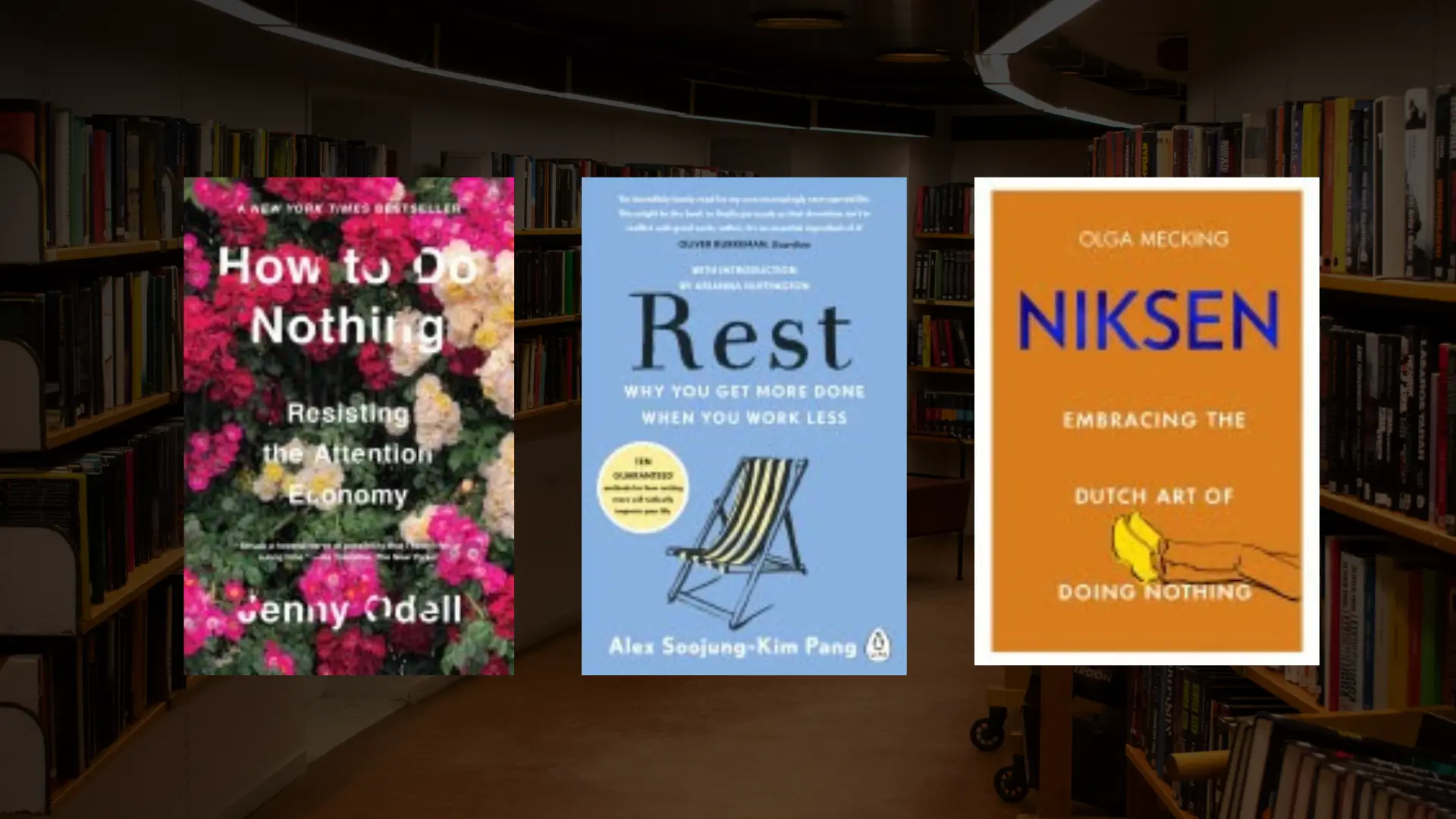

In a world obsessed with productivity, hustle, and constant motion, doing nothing feels almost rebellious. We glorify busyness as a badge of honour, the packed schedules, the endless to-do lists, the late-night emails. Yet, beneath all the noise, science tells a different story: stillness isn’t laziness; it’s essential.
Research from neuroscience and psychology has shown that our brains need downtime to process information, spark creativity, and maintain emotional balance. The moments we spend daydreaming, reflecting, or simply pausing are not wasted; they’re when breakthroughs happen. Some of the greatest thinkers in history, from Einstein to Virginia Woolf, understood the power of stepping back.
But in today’s digital age, where even leisure has turned into “content,” slowing down takes courage. Thankfully, several authors and researchers have explored this idea deeply, blending science, philosophy, and storytelling to remind us that doing nothing can be the most productive act of all.
5 books that prove rest fuels productivity
1. How to Do Nothing: Resisting the Attention Economy by Jenny Odell
Jenny Odell’s bestseller isn’t about idleness — it’s about reclaiming your attention from the forces that constantly demand it. A Stanford artist and writer, Odell argues that modern capitalism thrives on keeping us endlessly distracted. She uses art, ecology, and digital culture to show how “doing nothing” can become an act of resistance.
Backed by cognitive science, Odell explains how attention is a finite resource, and how reclaiming it — even through simple acts like birdwatching or walking — can restore our sense of self and purpose.
2. Rest: Why You Get More Done When You Work Less by Alex Soojung-Kim Pang
Productivity and rest might seem like opposites, but Pang flips that notion on its head. Drawing on neuroscience and psychology, he reveals that periods of deliberate rest — naps, walks, hobbies, vacations — actually make us more effective.
He cites examples of famous scientists, writers, and thinkers like Darwin and Hemingway, who structured their days around deep work followed by meaningful rest. Their secret wasn’t working more — it was resting better.
3. Do Nothing: How to Break Away from Overworking, Overdoing, and Underliving by Celeste Headlee
Celeste Headlee blends personal experience with social science in this thought-provoking book. She traces how technology and culture have wired us to equate busyness with worth, often leading to burnout and dissatisfaction.
Citing behavioural and psychological research, Headlee makes a powerful argument for slowing down, redefining success, and rediscovering what truly matters: connection, meaning, and joy.
4. Niksen: Embracing the Dutch Art of Doing Nothing by Olga Mecking
“Niksen,” a Dutch term meaning “doing nothing,” is gaining international attention as a mindfulness trend backed by psychology. Mecking explores this cultural phenomenon, explaining how intentional idleness helps reduce stress, improve creativity, and prevent burnout.
Through science-backed studies and real-life examples, she shows how moments of stillness can help us reconnect with ourselves and live more intentionally in a chaotic world.
5. Bored and Brilliant: How Spacing Out Can Unlock Your Most Productive and Creative Self by Manoush Zomorodi
In this fascinating book, journalist Manoush Zomorodi examines the neuroscience of boredom and why it’s actually good for us. Drawing on research and experiments with thousands of people, she reveals how being bored activates the “default mode network” in our brains, which fuels imagination and problem-solving.
Through practical exercises and engaging insights, Zomorodi shows readers how to unplug, embrace boredom, and rediscover focus in a hyperconnected world.
Final Thoughts
Doing nothing is not about quitting or escaping life. It’s about returning to it — refreshed, aware, and aligned. These five books remind us that rest, reflection, and stillness aren’t luxuries; they’re necessities backed by science.
So the next time you feel guilty for pausing, remember: your brain needs that silence to make sense of everything. In a world that never stops talking, doing nothing might just be the smartest move you make.