



UGRO doubles disbursals as it shifts to fast loans for festive season rush
Founder Shachindra Nath says September marked near-record disbursements as consumption resilience and GST cuts fuelled demand among India's small businesses.

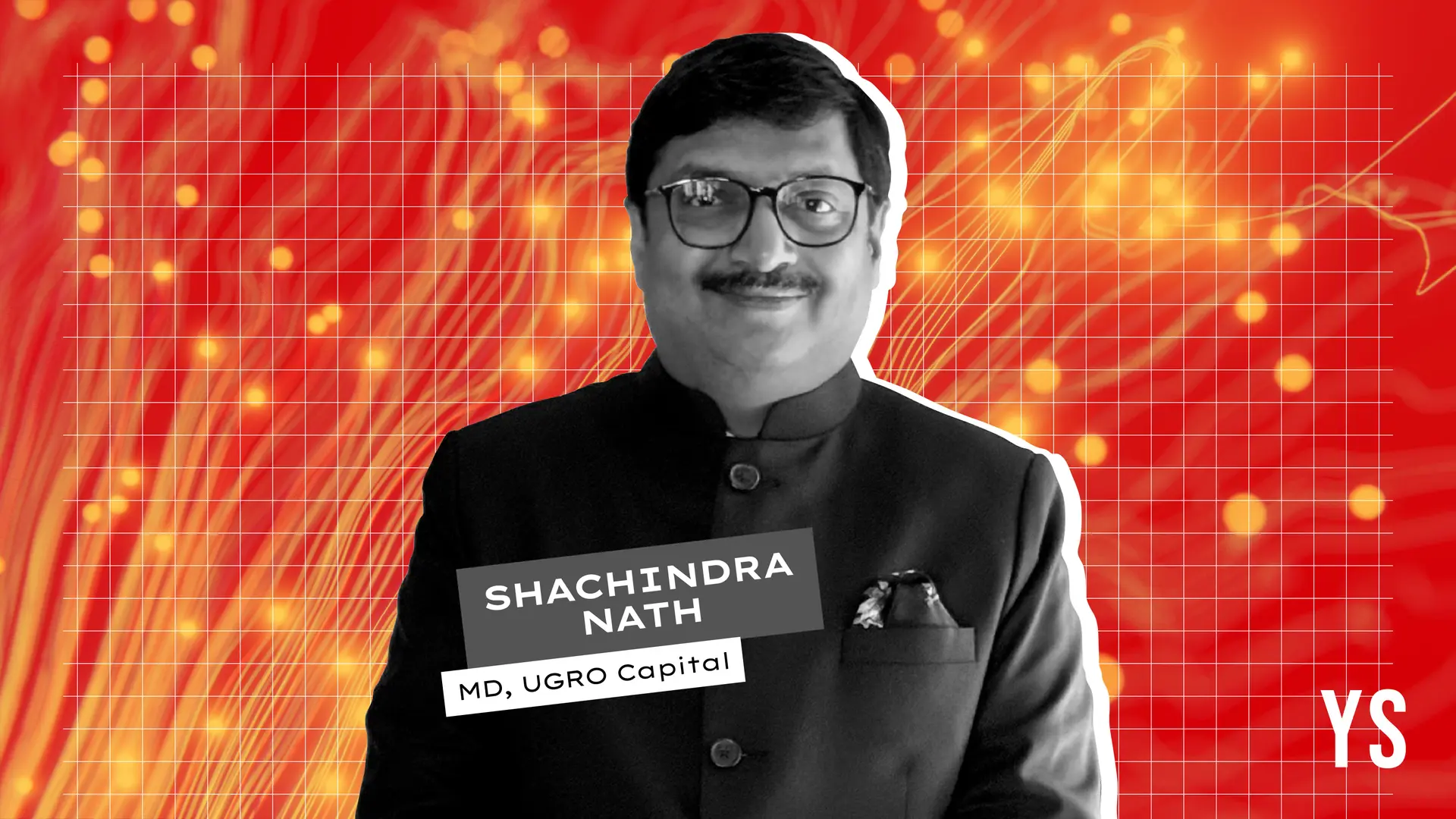

Non-banking financial company UGRO Capital Ltd has ramped up short-term lending to help India’s small businesses stock up for the country’s biggest shopping season.
The Mumbai-based company has reallocated origination capacity from long-tenure secured loans to fast-turnaround digital products. In the lead up to Diwali, it has doubled monthly disbursements on its merchant platform to about Rs 300 crore from Rs 150 crore in a typical month.
"We are witnessing one of our highest-ever disbursement levels—a lifetime high—as the Diwali season fuels pent-up consumption," Founder and Managing Director Shachindra Nath said in an interview. September marked near-record disbursements for the company, he added.
The lender, which manages assets of roughly Rs 15,500 crore, targets borrowers with annual turnover between Rs 15 lakh and Rs 15 crore, a segment largely overlooked by traditional banks.
Over the past seven months, more than 150,000 QR-enabled merchants have accessed funding through its ecosystem integrations with payment platforms, including PhonePe and BharatPe. UGRO had recently acquired MyShubhLife for an enterprise value of Rs 45 crore to bolster its embeded finance play.
For secured lending, which includes loans against property and long-term business loans, the typical ticket size ranges between Rs 7.5 lakh and Rs 50 lakh.
For unsecured digital merchant lending, which targets micro and small retailers through QR-linked payment platforms such as PhonePe and BharatPe, the average loan size is around Rs 1 lakh.
UGRO has detected a shift in credit appetite across India's smaller cities. Tier II and III towns are showing stronger demand than metropolitan centres, Nath said, as consumption in smaller markets outpaces urban India.
The trend reflects Diwali's unique position as India's only truly pan-national festival, Nath noted. Unlike regional celebrations such as Durga Puja in West Bengal or Pongal in the south, Diwali centered on worship of Lakshmi, the goddess of prosperity commands commercial significance across the country. "Even in Tamil Nadu, where they may not burn firecrackers, everyone will pray to Goddess Lakshmi," he said.
The festival's connection to prosperity rather than agriculture or regional identity makes it the single biggest consumption event in India's calendar, and demands that lenders scale operations nationwide during this compressed window.
"The biggest requirement during the festive season is timely delivery of credit," Nath said. "If a retailer needs Rs 5 lakh today to stock goods, the money is useless if it comes 10 days later." With Diwali falling on 21 October, small retailers rushing to stock inventory in late September needed approvals within hours, not weeks.
UGRO's merchant-lending infrastructure processes the application and sends money to the account within an hour, with an average ticket size of Rs 1 lakh. The lender's total monthly disbursement capacity runs at roughly Rs 700-800 crore.
The company's lending focus spans nine core sectors, including healthcare, food processing, hospitality, light engineering, electrical equipment manufacturing, auto components, chemicals and small retail—all linked to household consumption.
Demand has surged particularly in sectors tied to Diwali preparations: home improvement, restaurant and hospitality services, and retailers stocking sweets, crackers and festival goods.
The tactical reallocation—shifting origination "engine" capacity rather than altering underwriting models—is designed to be temporary. The company expects to recalibrate toward longer-tenure lending once the festive spike subsides, Nath said.
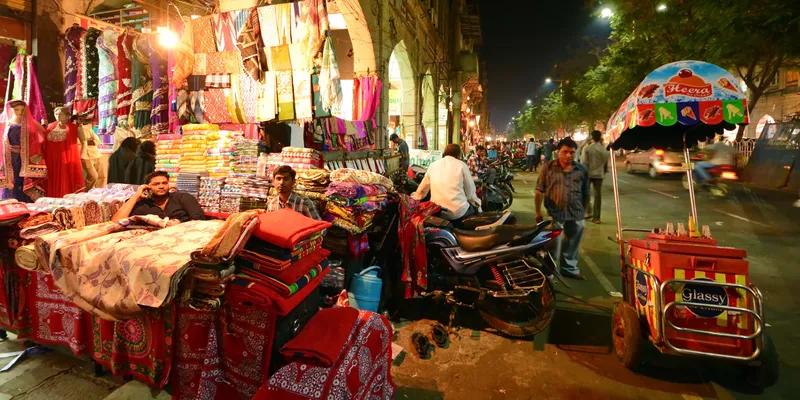
Indian festive season spending in 2025 is projected to hit record levels, reaching between Rs 12 lakh crore and Rs 14 lakh crore, boosted by recent GST rate cuts and a strong uptick in consumer demand across segments like clothing, weddings, electronics, and automobiles.

Tech stack and regulatory ease
Yet even fast-turnaround loans require hybrid infrastructure. UGRO's proprietary "Grow Score" platform uses algorithms that analyse GST filings, banking patterns and bureau data and automatically rejects half of applicants. Of the remaining 50% that pass initial screening, credit officers conducting physical assessments reject a further 25%.
"Digital gives clearance for at least 50% of the customer base," Nath said. "But for the balance 50% there is a requirement of physical presence." The company maintains operations in more than 350 locations to serve a customer segment that typically lacks formal financial statements but has GST footprints and banking history.
The approach reflects the peculiar position of India's smallest formal businesses—too large for microfinance, too small for banks. These companies form UGRO's core market.
UGRO’s push for unsecured lending comes as India's non-banking financial sector emerges from a period of regulatory constraint. After months of heightened scrutiny and selective restrictions that dampened risk appetite across the industry, the Reserve Bank of India has restored certain risk weights while system liquidity has swung from deficit to surplus.
Policy rates have also begun to ease, creating what Nath characterises as a 24 to 36 month growth window for well-capitalised NBFCs. However, he cautioned that stress persists in small-ticket unsecured segments and microfinance, which he expects to normalise over the next two quarters.
The regulatory environment has shifted dramatically over seven to eight months, Nath said, following a period when several NBFCs faced lending bans and tightened risk weights cooled market sentiment. "Over the last seven-eight months, the regulatory stance around NBFCs changed quite dramatically," he said, noting improved liquidity and the lifting of restrictions.
UGRO has also benefited from improving MSME sentiment from GST rate reduction following months of uncertainty in export-facing sectors such as textiles and gems, triggered in part by US tariff concerns.