



Direct Debit Mandate: How the Indian government is reducing payment risks in its clean mobility transition
The framework, introduced in October last year, was designed to mitigate payment risks in the adoption of electric buses under PM e-Bus Sewa. Prior to its adoption, the segment saw rising delays and defaults in payments from state transport undertakings to electric bus OEMs and financing agencies.

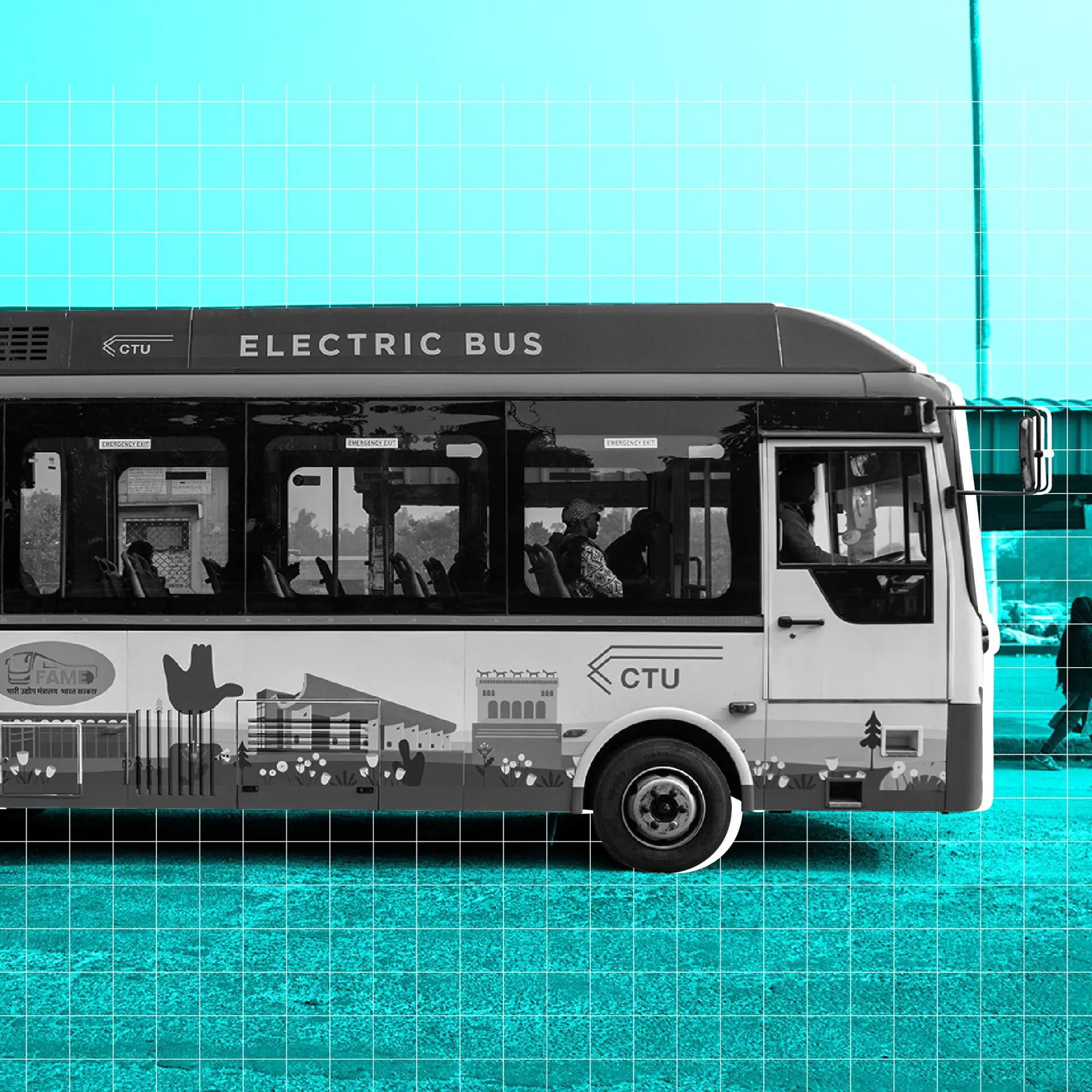

In 2023, large electric bus makers, including Tata Motors, JBM Auto, and PMI Electro, were distancing themselves from government contracts for supplying electric buses.
Reuters reported that these original equipment manufacturers (OEMs) feared not getting paid on time. Other reports also note that electric bus projects heavily rely on commercial banks for debt financing, but the high collateral demanded by financiers and short repayment tenures, coupled with delayed payments from public transport authorities (PTAs), created financial stress for operators.
In short, the current payment system was discouraging adoption of electric buses, creating a bottleneck for the government’s goal to deploy 50,000 electric buses over the next few years.
In October 2024, the Ministry of Heavy Industries rolled out the PM e-Bus Sewa Payment Security Mechanism (PSM) for the procurement and operation of electric buses, which aims to mitigate payment risks and improve bankability for OEMs and operators who have entered into concession agreements with public transport authorities.

What is DDM?
Direct Debit Mandate (DDM) is the payment mechanism under the PM e-Bus PSM that ensures automatic and timely payments to OEMs and operators through a dedicated payment security mechanism fund.
This fund, overseen by Convergence Energy Services Limited (CESL)—a wholly owned subsidiary of Energy Efficiency Services Ltd, backed by the Indian Ministry of Power—can be tapped into by public transport authorities, state governments, or union territories, in case the transport agency is unable to pay the OEM as per the concession agreement signed.
For instance, if a state-specific transport agency places an order for ten electric buses from an OEM for Rs 10 crore, as per the agreement, the agency must pay the manufacturer Rs 10 crore within 30 days. However, if the agency is facing cash flow problems and is unable to pay the OEM within the window, MHI can request the Reserve Bank of India to activate the DDM.
When this happens, RBI can automatically debit the required amount, in this case Rs 10 crore, from the state or union territory’s bank account and credit it to the payment security mechanism fund, which can then be disbursed to the OEMs or the operators.
The transport agency, within 90 days, must recoup the funds. If the repayment is delayed, then the agency must pay interest (Late Payment Surcharge or LPS) on that delayed amount. It is important to note that the LPS is charged from the date CESL disburses the money to the OEM or the operator until the date RBI recovers that money from the state or the union territory through DDM.
Under this mechanism, the OEMs and the operators get paid on time, and states cannot indefinitely delay payment. The automatic recovery brings financial discipline into the payment system and discourages late payments.
How can PTAs join this scheme to procure e-buses?
PTAs who have procured e-buses using the Gross Cost Contract (GCC) model can participate under the scheme laid out by the government. GCC is a model whereby the operator provides the e-bus service and the government or the PTA pays a fixed fee per kilometre for running the buses for a specified period of time.
This places the onus on the operator or OEM for procurement of buses, maintenance and repair of the fleet, and establishing and managing charging infrastructure, as well as hiring and paying drivers. This also results in the city absorbing the risk of low ticket revenue.
Under the scheme, the state or union territory must sign a DDM with the RBI, which will give the government the right to automatically debit from the state’s account if it fails to repay the scheme fund. However, RBI will debit from the state’s account only if enough free funds are available.
If a PTA is not using the GCC model to procure buses, it can still participate in the scheme, but only if the Steering Committee (SC) approves. Under the PM e-Bus Sewa, the SC is tasked with monitoring and overseeing the implementation of the payment security mechanism.
Why Delhi might miss out on e-bus allocations
On November 20th, Mint reported that Delhi stands to lose the 2,800 electric buses that were allocated under the PM E-Drive scheme because Delhi has not set up the required payment security mechanism.
As mentioned above, all states and union territories need to set up a DDM with the RBI. However, Delhi has not created a DDM, which would have let the RBI automatically deduct funds from Delhi’s account to pay bus manufacturers.
According to the report, MHI, RBI, the Union Home Ministry, and the Delhi government are rushing to clear this roadblock by eyeing the possibility of using Delhi’s consolidated fund.
This fund is the main government account for the National Capital Territory (NCT) of Delhi and was established under the Government of National Capital Territory of Delhi Act, 1993.
The conflict arises because Delhi, being a union territory with legislature, has restrictions on how its consolidated fund can be used. The article noted that rules have been framed in such a way that they still gives the home ministry a say in how the city’s finances can be used.
Edited by Jyoti Narayan