


10 Lessons to learn from the book Feel Good Productivity
Discover 10 powerful lessons from Ali Abdaal’s Feel Good Productivity that show how joy, energy, and fulfilment, high-quality productivity


For decades, society has glamourised the hustle mindset — the belief that real success is built on suffering, sleepless nights, and sacrificing mental peace. We scroll through social media and see people celebrating 4 a.m. wake-up routines, overloaded schedules, and endless multitasking, as if exhaustion is proof of ambition.
Yet internally, most of us feel drained, overwhelmed, and frustrated by this approach.
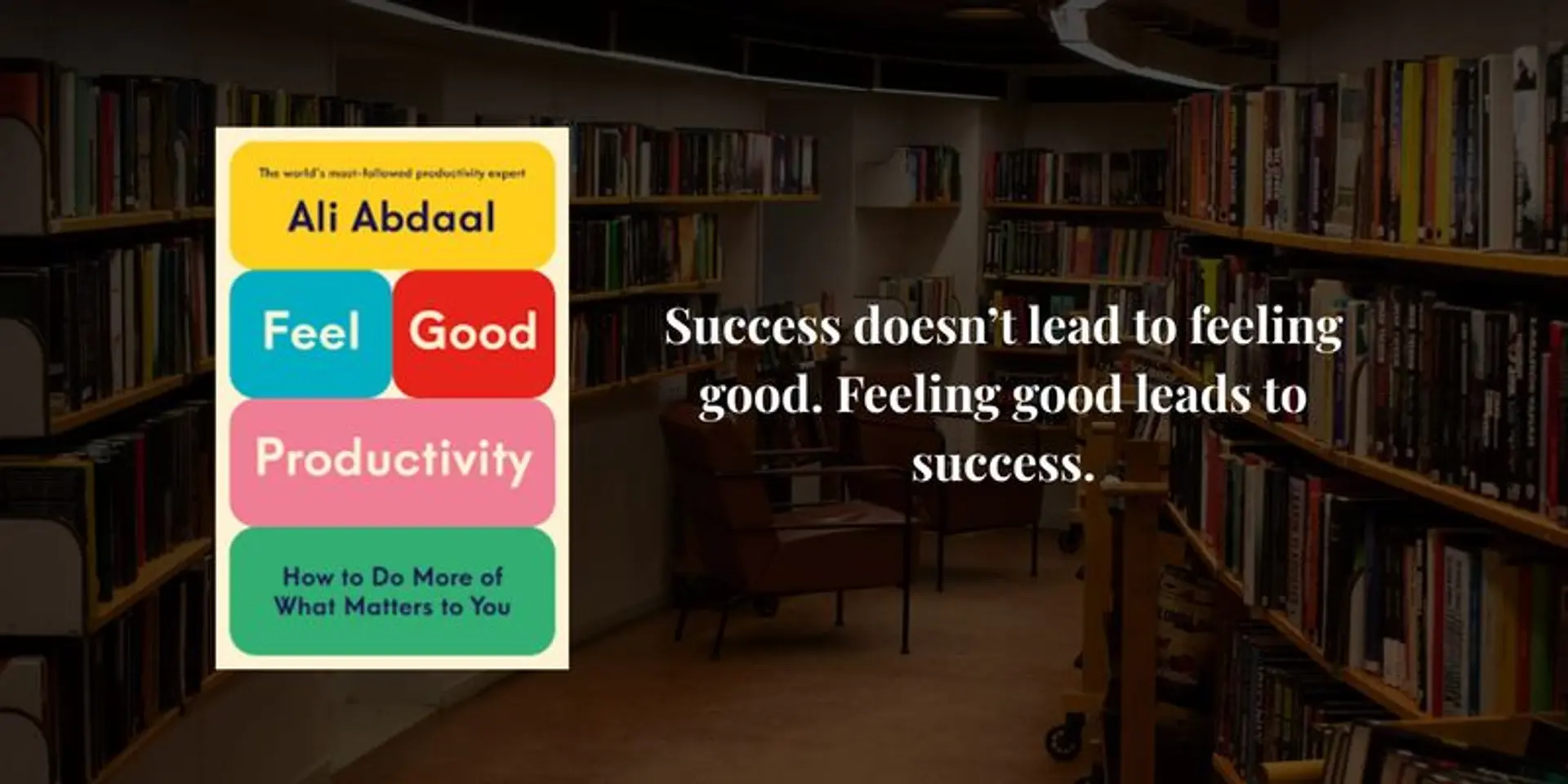
Dr. Ali Abdaal, in his transformative book Feel Good Productivity, flips the narrative. He argues that the most productive people are not the ones who burn the hardest; they are the ones who feel energised, inspired, and emotionally aligned. Productivity becomes powerful when it feels good, not when it hurts.
Because when you feel your best, you think better, focus better, create better, and persist longer. When you enjoy the process, consistency becomes natural.
This book teaches us that joy is not a luxury; it’s a strategy. Here are 10 lessons from the book, expanded with deep insights and practical real-life examples to help you transform how you work and live.
10 life-changing lessons from Feel Good Productivity
1. Energy fuels productivity, not time
Most people believe time is their biggest productivity constraint, but Ali emphasises that energy is the real engine of performance. You could have 10 free hours, but if you’re mentally exhausted, nothing meaningful gets done. Productivity improves when your mind and body are energised.
Example
If your energy crashes in the afternoon, instead of forcing yourself to work, take a 15–20 minute walk outside, stretch, hydrate, and eat something light, such as fruit or nuts. You’ll return with more clarity and complete tasks faster than struggling for hours in a low-energy state.
Monitor your energy like you track money, know your peak hours and schedule important work during those times rather than battling through unproductive periods.
2. Fun is a productivity tool
Adding fun to tasks reduces resistance and increases creativity and motivation. When work feels joyful, the brain releases dopamine, making you more likely to continue.
Example
If cleaning your room feels hard, play upbeat music and set a 10-minute timer. You’ll not only start faster, but you might even end up cleaning longer because it becomes enjoyable rather than burdensome.
Fun is not childish, it’s strategic. Even high-performing athletes incorporate fun to avoid burnout.
3. Motivation comes after action
Most people procrastinate because they wait for motivation to magically appear. But Ali says motivation is the result, not the starting point. Once you begin, momentum builds. The challenge is starting.
Example
If writing feels intimidating, commit to writing only three sentences. Once your brain switches from resistance to action, motivation naturally kicks in.
Movement breaks mental friction. The smallest starting step can unlock the biggest progress.
4. Build a productive environment
Your environment influences behaviour more than discipline. A cluttered desk, noisy surroundings, or constant phone notifications force your brain to multitask and reduce deep focus.
Example
Keep your phone in a different room while working. You’ll avoid mindless checking and increase concentration dramatically.
Design your environment so productivity becomes the default, clean workspace, comfortable lighting, inspiring items, reduced distractions.
5. Break goals into micro-steps
Big goals can feel paralysing because they trigger overwhelm. Micro-steps make progress measurable and less intimidating.
Example
Instead of trying to study for 4 hours straight, break it into:
- 20 minutes of study
- 5-minute break
- Repeat 4 times
Suddenly, the task feels manageable instead of impossible.
Your brain rewards completion. Small wins build confidence and reduce procrastination.
6. Rest improves performance
Rest is not laziness; it is essential maintenance. Creativity and focus are highest when the brain is restored. Without rest, your productivity becomes slow and sloppy.
Example
Use the 90-minute focus cycle: work deeply for 90 minutes, then take a 10–15 minute break (stretch, water, sunlight, breathwork).
Your brain’s capacity is limited; downtime improves learning, memory, and problem-solving.
7. Curiosity drives creativity
When you approach work with pressure, fear blocks creativity. Curiosity opens possibilities and encourages innovation.
Example
Instead of thinking “I must do this perfectly,” shift to “Let me experiment and see what happens.”
Curiosity quiets perfectionism and transforms tasks into learning experiences rather than performance tests.
8. Surround yourself with supportive people
The people around you influence your energy, beliefs, and habits. High-support environments increase motivation and accountability, while negative environments drain ambition.
Example
Join a study group, writing club, co-working café, or online accountability circle where everyone works silently together. You’ll feel motivated simply by the shared energy.
Your environment is stronger than your will — upgrade your circle, upgrade your results.
9. Celebrate progress, not only results
Most people wait until they hit the final goal to celebrate, but that creates frustration and burnout.
Celebrating small wins trains your brain to feel rewarded and stay motivated.
Example
End each day by writing three things you accomplished, no matter how small: finished reading a chapter, exercised, woke up early, completed tasks. Progress builds belief — and belief powers momentum.
10. Productivity should support your life
The purpose of productivity is not to fill every minute with work. It is to build a life that feels meaningful, peaceful, and exciting.
Example
Before starting any task, ask yourself: “Why am I doing this?”
If the task doesn’t align with your values or goals, remove or delegate it. Work should enhance your life, not consume it.
Final Thoughts
Feel Good Productivity is a powerful reminder that productivity isn’t about force — it’s about alignment. When you feel good emotionally, physically, and mentally, your work naturally improves. The most extraordinary results don’t come from stress, but from energy, joy, clarity, and consistency.
If you’re tired of the hustle mindset, maybe it’s time to build a productivity system that supports your happiness.
Because when you feel good, you do good and when you do good consistently, everything changes.