



Amazon rides AI growth wave; ultra-fast delivery surges in India
Amazon’s profit rose 77% to $30.3 billion, boosted by AWS, which drives about 60% of earnings. Heavy AI investment and chip growth support strong cloud-led growth globally.

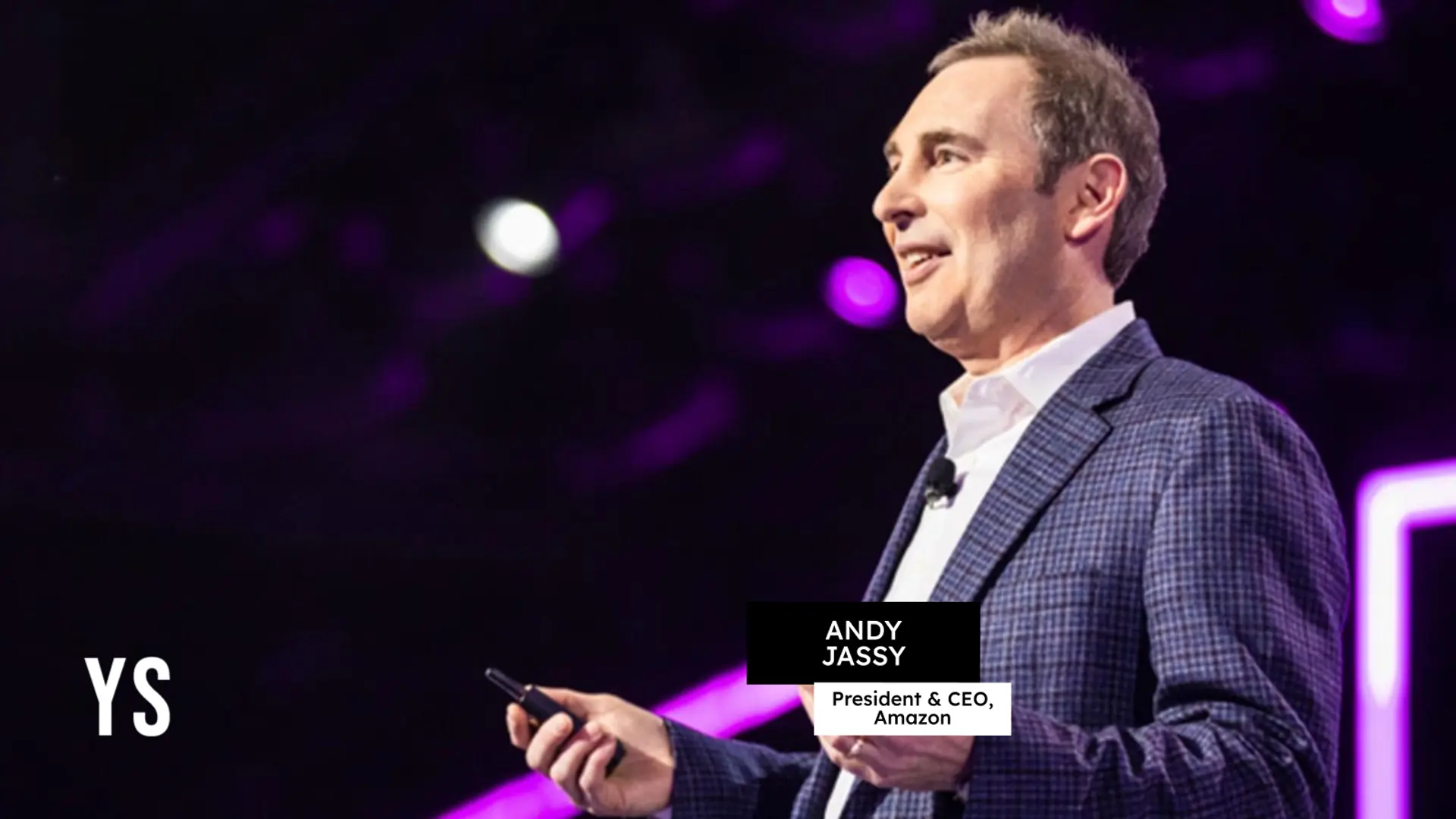

Amazon President and Chief Executive Officer Andy Jassy, spoke about the rapid growth of the firm’s ultra-fast delivery service, Amazon Now, in the Indian market, during the company’s first quarter earnings call.
“It [Amazon Now] started last year in India, where orders are increasing 25% month over month, with Prime members tripling their shopping frequency once they start using it. The service is now available to tens of millions of customers across nine countries, with more to come as well,” Jassy noted.
India has long been a focal point for Amazon, receiving multiple rounds of substantial investments across both its ecommerce operations and cloud computing division, Amazon Web Services (AWS).
These investments are part of a broader strategy to establish a dominant presence in a market with immense long-term potential. This commitment to expansion is not limited to the Indian subcontinent, as the global business of Amazon has seen a robust surge during the first quarter of 2026.
The company's global growth is driven by several factors, including an acceleration in cloud services and a resurgence in retail unit growth. For the quarter ended March 31, 2026, Amazon’s net profit increased to $30.3 billion, up 77% year on year.
This figure includes $16.8 billion in pre-tax gains from non-operating income related to the investments of the company in AI firm Anthropic.
The real engine of profitability for Amazon remains AWS, which saw its sales increase by 28% year on year to reach $37.6 billion. This represents the fastest growth rate for the cloud division in 15 quarters.
In terms of profitability, AWS reported an operating income of $14.2 billion for the quarter. When compared to the total company operating income of $23.9 billion, it becomes clear that AWS contributes roughly 60% of the total operating profits for Amazon.
This outsized contribution highlights the pivotal role of the cloud segment as the primary driver of the bottom line for the company, effectively subsidising and supporting more capital-intensive ventures elsewhere in the business.
While AWS provides the bulk of the profit, the total net sales for the company reached $181.5 billion, a 17% increase from the previous year. The revenue from AWS accounts for about 21% of this total topline.
Jassy noted that the AWS business has now reached an annualised revenue run rate of $150 billion.
AI inflection
The current era is defined by what Jassy describes as one of the biggest inflections of the company's lifetime, primarily driven by generative AI. To meet the exploding demand for AI, Amazon is investing heavily in infrastructure.
The capital expenditure (capex) for the quarter was a substantial $43.2 billion, which was primarily directed toward AWS and the expansion of generative AI capabilities.
A significant portion of this investment is going into custom silicon. Amazon has developed its own chips, including Graviton for general purpose computing and Trainium for training complex AI models.
Amazon’s big tech peers Meta, Alphabet, and Microsoft have also sharply increased capital spending to expand server and data centre capacity as AI-driven growth lifts computing demand, despite concerns about a potential AI bubble, with their combined capex expected to exceed $650 billion in fiscal 2026.
Jassy shared that the chips business of the company has topped an annual revenue run rate of $20 billion and is growing at triple-digit percentages. He further explained that if this were a standalone business selling to third parties, the run rate would be closer to $50 billion.
Technical developments in this area are rapid. The company recently announced that its Trainium2 chips offer 30% better price performance than comparable alternatives, and the upcoming Trainium3 is expected to improve on that by another 30 to 40%. These chips are already heavily subscribed or reserved by major AI labs.
Moreover, the company is expanding its AI infrastructure through Amazon Bedrock, a service that allows customers to build AI applications using various foundation models. Jassy noted that Bedrock processed more tokens in the first quarter than in all prior years combined. Recently, OpenAI announced that its models are available directly to customers on the Bedrock platform.
In the age of AI, the company’s approach around the workforce has shifted towards efficiency rather than aggressive expansion. Total employee numbers stood at approximately 15,75,000, which is only a 1% increase from the previous year.
While there were no major new layoffs announced in this specific quarter, the company is leaning heavily on automation and robotics to manage growth. All new large-format fulfilment centres in the United States in 2026 will feature the latest generation of robotics, which the company claims provides a step change in efficiency and safety.
Retail and future horizons
The Stores business of Amazon showed renewed vigour with unit growth of 15%, the highest since the pandemic era. Amazon is now the second-largest grocer in the US. Perishable goods sales have grown over 40 times year on year.
Amazon Chief Financial Officer Brian Olsavsky pointed out that “overall unit growth of 15% continues to outpace our cost to operate the fulfilment network” as the company optimises its logistics.
In addition to retail, the advertising services of Amazon grew by 22% to $17.2 billion. Prime Video has also reached a milestone, being described now as a large and profitable business in its own right that drives new Prime memberships.
Another ambitious project is Amazon LEO, a low-Earth orbit satellite network designed to provide global broadband. This project is on track for a commercial launch in the third quarter, with significant revenue commitments already in place from partners such as Delta Air Lines and Apple.
Outlook
Jassy warned that “the cost of components, particularly memory, has skyrocketed” due to capacity constraints, which could pressure future margins.
Additionally, Brian Olsavsky noted, “Our guidance anticipates higher transportation costs related to fuel inflation.”
For the second quarter of 2026, the company expects net sales to be between $194 billion and $199 billion. Operating income is projected to be between $20 billion and $24 billion. This guidance accounts for the costs associated with launching the satellite network and a seasonal increase in stock-based compensation.
With a massive AWS backlog of $364 billion, which does not even include a recent $100-billion deal with Anthropic, Amazon appears well-positioned to continue its trajectory.
Edited by Swetha Kannan