



5 Lessons from The Anxious Generation by Jonathan Haidt
Explore 5 key lessons from The Anxious Generation on smartphones, mental health, childhood, resilience, and real-world connection.

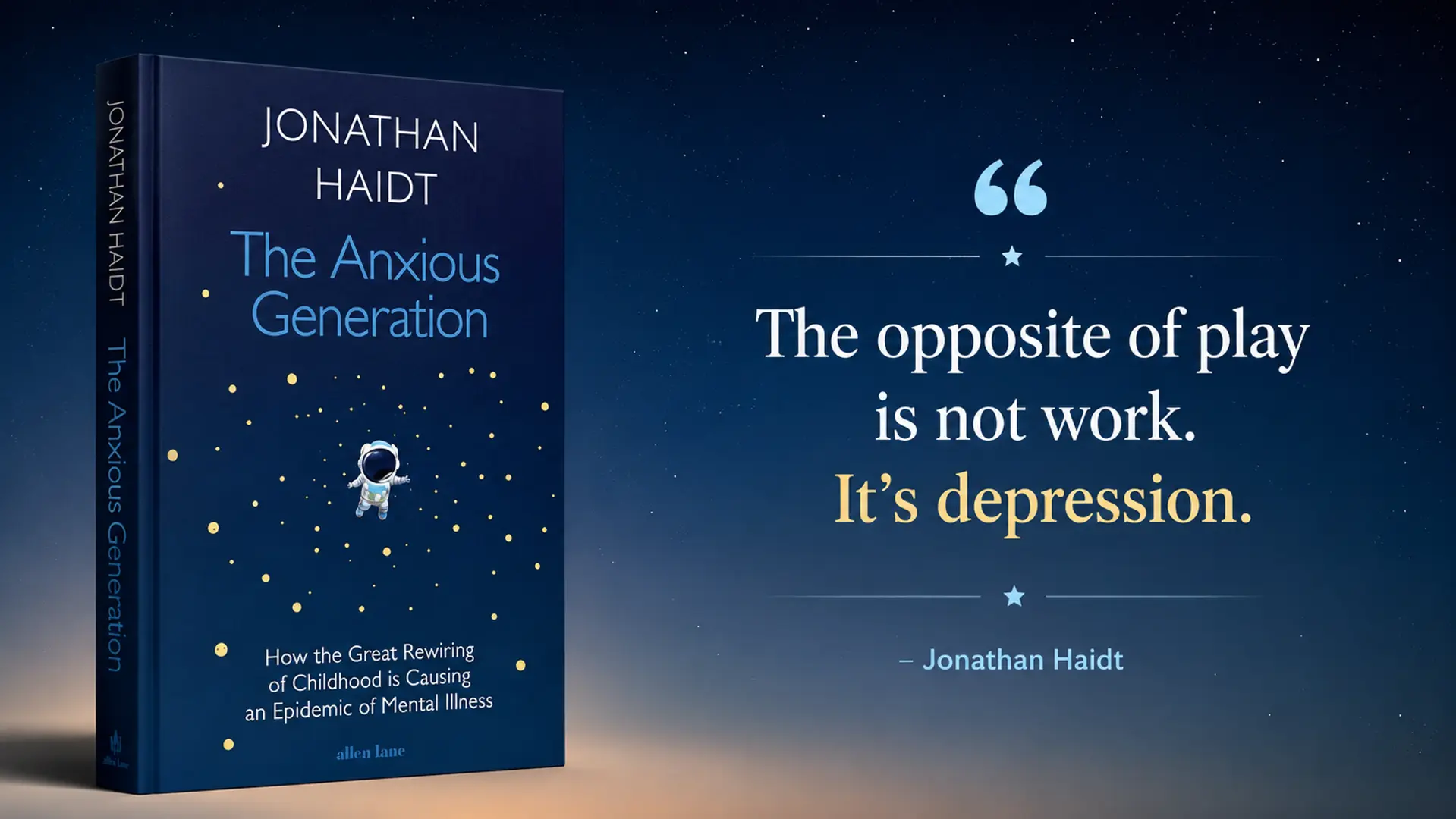

For years, many people assumed that rising levels of anxiety, depression, loneliness, and self-harm among young people were simply part of modern life. Social media became normal, smartphones became unavoidable, and childhood gradually moved online. But what if these changes were not as harmless as they seemed? In The Anxious Generation, social psychologist Jonathan Haidt explores what he calls the "Great Rewiring of Childhood."
He argues that a generation raised on smartphones and social media has experienced a fundamental shift in how childhood works, with serious consequences for mental health and development. At the same time, children have become increasingly protected in the real world while being exposed to unprecedented risks online.
The book has sparked global discussions among parents, educators, policymakers, and young people themselves. Whether readers agree with all of Haidt's conclusions or not, the book raises important questions about technology, resilience, and what children need to thrive.
5 Powerful lessons from The Anxious Generation
1. Childhood needs real-world experiences
One of Haidt's central arguments is that children learn essential life skills through real-world experiences. Activities such as playing outdoors, resolving conflicts with friends, exploring independently, and taking age-appropriate risks help children develop confidence, resilience, and social skills.
According to the book, these opportunities have declined significantly over the past few decades as childhood has become increasingly supervised and structured. Haidt believes that reducing opportunities for independent play has deprived many young people of experiences that help them become capable and emotionally strong adults.
2. Smartphones have changed childhood dramatically
The book argues that the widespread adoption of smartphones fundamentally transformed childhood in the early 2010s. Instead of spending free time interacting face-to-face, many young people began spending increasing amounts of time online.
Social media, constant notifications, and digital entertainment gradually became central parts of everyday life. Haidt suggests that this shift created what he calls a "phone-based childhood," replacing many of the experiences that previously helped children develop emotionally and socially.
3. Mental health is shaped by more than individual choices
A key lesson from the book is that mental health trends are often influenced by broader social environments. Haidt argues that rising rates of anxiety, depression, loneliness, and self-harm among adolescents cannot be understood solely through individual decisions.
Instead, he points to larger cultural and technological changes that have affected entire generations at once. The book encourages readers to think about how systems, technologies, and social norms shape wellbeing rather than viewing mental health as purely a personal issue.

4. Connection is more powerful than constant connectivity
Modern technology allows people to communicate instantly, yet many young people report feeling lonely and disconnected. Haidt argues that digital communication cannot fully replace face-to-face relationships.
In-person conversations, shared experiences, physical presence, and genuine community play an important role in emotional wellbeing. The book suggests that while technology can be useful, meaningful human connection remains one of the strongest foundations for mental health and happiness.
5. Solving modern problems requires collective action
One of the book's most practical lessons is that individual families often struggle to address these challenges alone. Parents may want to limit smartphone use or delay social media access, but they worry their children will be left out if everyone else participates.
Haidt argues that meaningful change requires collective action from parents, schools, communities, technology companies, and governments. By working together to create healthier norms around childhood and technology, societies can provide environments that better support young people's development.
Why this book resonates with so many readers
What makes The Anxious Generation so compelling is that it addresses a question many people have been asking: why are so many young people struggling despite having access to more technology and information than any generation before them? Haidt offers a thought-provoking explanation by examining how childhood has changed over the last few decades and what those changes may mean for mental health. Whether readers fully agree with his conclusions or see the issue as more complex, the book encourages an important conversation about how society can help the next generation grow up healthier, happier, and more resilient.