



10 Lessons from The Midnight Library about second chances
Discover 10 powerful lessons from The Midnight Library about second chances, regret, self-acceptance, and finding meaning in life.

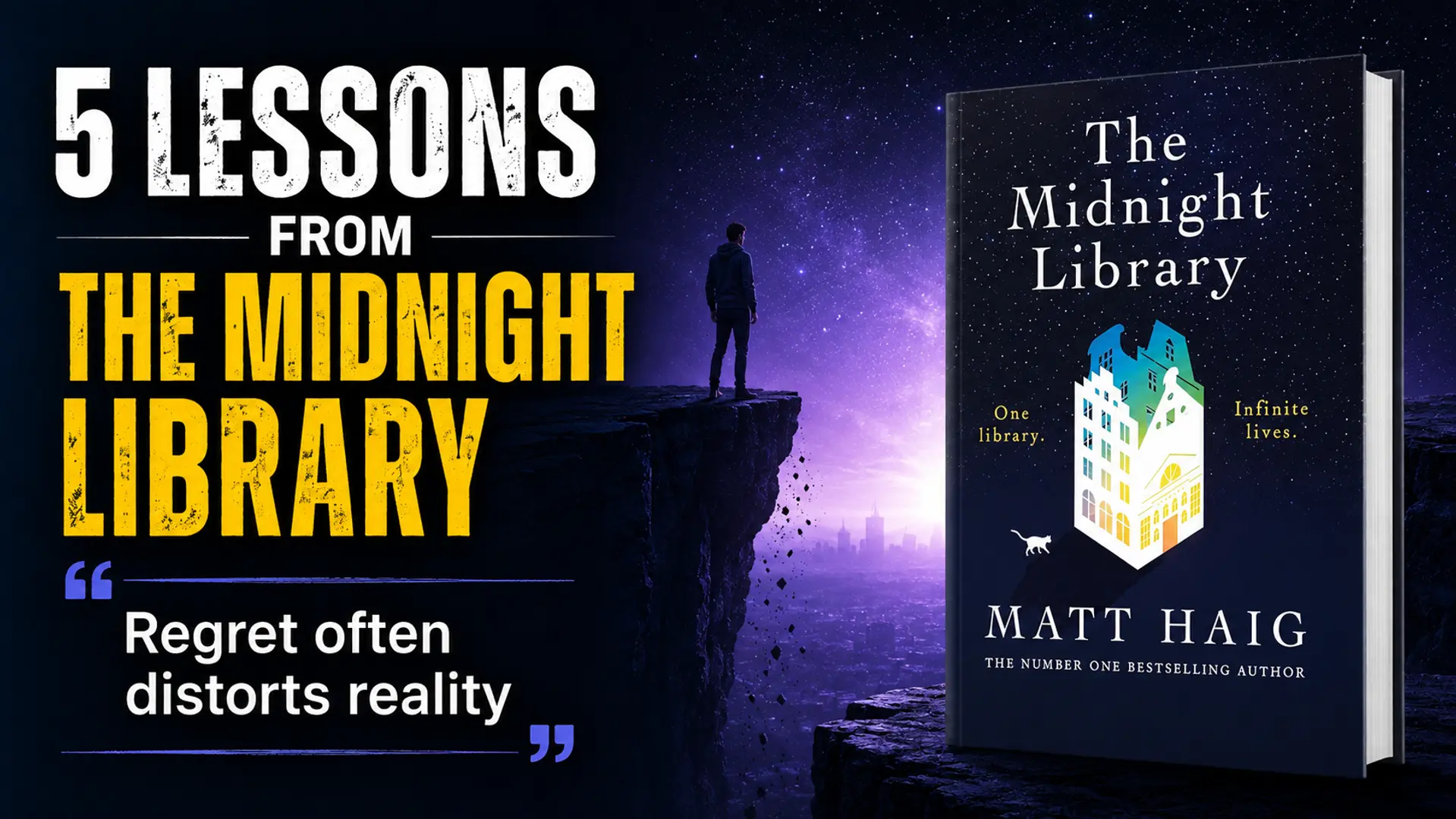

Matt Haig's The Midnight Library is a novel that explores one of humanity's most universal questions: what if we had made different choices?
Through the story of Nora Seed, a woman who finds herself in a mysterious library between life and death, the book examines regret, possibility, and the search for meaning.
Each book in the library represents a different version of Nora's life based on choices she could have made.
As Nora explores these alternate realities, she discovers that happiness is more complex than she once believed. The novel offers profound lessons about second chances, self-acceptance, and the importance of embracing the life we have.
10 Lessons to be remembered from this novel
1. Regret often distorts reality
Many people imagine that a different decision would have solved all their problems. Throughout the novel, Nora learns that the lives she idealised also contain struggles, disappointments, and sacrifices.
The lesson is that regret often focuses on what could have been while ignoring the challenges that would have come with those alternatives.
2. There is no perfect life
One of Nora's biggest discoveries is that every version of life includes difficulties. Fame brings pressure. Success brings responsibility. Relationships bring complications. The book reminds readers that perfection is an illusion and that every path contains both rewards and challenges.
3. Small choices can change everything
The novel demonstrates how seemingly minor decisions can lead to dramatically different outcomes. A conversation, a friendship, a hobby, or a risk taken at the right moment can alter the direction of a life.
This lesson highlights the significance of everyday choices and their long-term impact.
4. You are more capable than you think
As Nora experiences different versions of herself, she discovers talents, strengths, and possibilities she never recognised. The book suggests that people often underestimate their abilities because they become trapped by limited views of themselves.
5. Happiness is not found in achievements alone
Several alternate lives give Nora things she once believed would make her happy. Yet she discovers that external success does not automatically create fulfilment.
Meaning often comes from connection, purpose, growth, and appreciation rather than status or accomplishment.

6. Self-acceptance matters more than self-criticism
Throughout much of her life, Nora is harshly critical of herself. The novel shows how self-judgment can become a barrier to happiness. One of the most important lessons is that genuine growth begins with compassion toward oneself rather than constant criticism.
7. Every life contains unseen struggles
Nora repeatedly discovers that people she envied were facing difficulties she never knew about. This lesson encourages empathy and reminds readers that appearances rarely tell the whole story. Everyone carries challenges that others cannot see.
8. Hope can return unexpectedly
At the beginning of the novel, Nora feels trapped by despair. Yet her journey reveals that circumstances and perspectives can change in ways that are impossible to predict. The book offers a powerful reminder that hope often appears when people least expect it.
9. The present deserves attention
Many of Nora's regrets come from focusing on the past and imagining alternative futures. The novel gradually teaches her to appreciate the life directly in front of her. Meaning is often found not in hypothetical possibilities but in the present moment.
10. Second chances begin with perspective
Perhaps the book's most important lesson is that second chances do not always require a completely different life.
Sometimes they begin with seeing our existing life differently. A shift in perspective can open possibilities, relationships, and opportunities that were always there but previously overlooked.
Why these lessons must be known
The Midnight Library resonates with readers because it addresses regrets that nearly everyone has experienced. It asks what would happen if we could revisit our choices and discover the lives we might have lived.
Its answer is both comforting and profound: no life is perfect, no path is free from hardship, and happiness rarely comes from eliminating every regret. Instead, fulfilment grows from embracing uncertainty, accepting ourselves, and finding value in the life we have today.