



Meta’s Muse Spark signals a new phase for the Facebook parent’s AI strategy
Meta’s Muse Spark signals a new phase in its AI strategy, introducing a new model line alongside Llama, backed by heavy investment in infrastructure to strengthen its position in the global AI race.

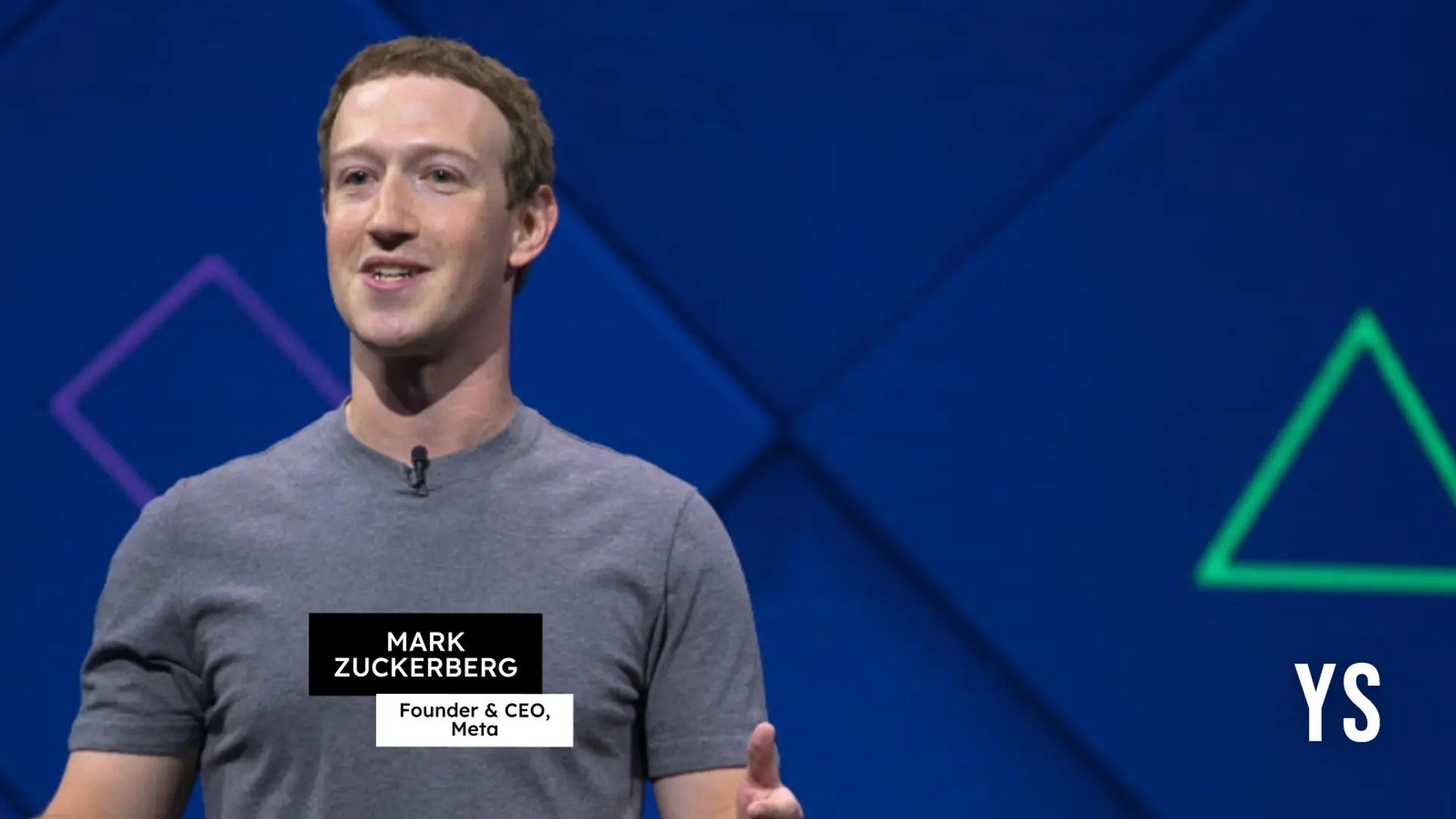

Meta’s latest AI announcement is not just about a new model. It is also about a new phase in its AI strategy.
The social media giant has introduced Muse Spark, which is the first in a new series of large language models built by Meta Superintelligence Labs.
Meta says Muse Spark is already powering the Meta AI app and meta.ai, and will roll out to WhatsApp, Instagram, Facebook, Messenger and AI glasses. It will also be offered in private preview through an API to selected partners.
That makes Muse Spark important for two reasons. First, it is a public sign that Meta’s new AI structure is producing real products rather than just reshuffled teams and bigger promises. Second, it shows how Meta is separating its AI efforts into different layers. One layer is the consumer assistant, Meta AI. Another is the broader model ecosystem, where Llama remains the open model family that developers know well.
Meta AI was already built with Llama 3 in 2024, and Meta said at the time that the assistant was available across Facebook, Instagram, WhatsApp and Messenger. Muse Spark now appears to be the newer, more tightly controlled model line for Meta’s own assistant and products. Meta has not disclosed Muse Spark’s size, which makes direct comparisons with other companies harder, but the benchmarks it has shared suggest a mixed yet competitive profile.
The model scores 52 on the Artificial Analysis Intelligence Index, a composite benchmark that compares overall AI capability, placing it fourth behind leading systems from Google, OpenAI and Anthropic. This suggests Muse Spark is among the top tier of current AI models, but not at the very front. It performs particularly well in more practical and visual tasks. For instance, it reaches about 50% on Humanity’s Last Exam in its extended ‘contemplating’ mode, which allows it to take more time and explore multiple reasoning paths. This test is designed to be extremely difficult, so the score indicates relatively strong problem-solving ability. The model also scores around 86 on CharXiv, which measures how well an AI can read and interpret charts and visual data, pointing to strong multimodal skills.
It also scores 42.8 on HealthBench Hard, indicating strength in health-related tasks. However, performance is weaker on more abstract reasoning benchmarks such as ARC-AGI-2. This suggests a capable model that is particularly strong in practical and specialised domains, but still uneven in general reasoning.
Why Meta is making the bet
Muse Spark matters because it is tied to Meta’s wider claim that it is building towards what it calls personal superintelligence. Meta uses that phrase to mean an assistant that can help people with the things that matter most to them. The company says Muse Spark is the first model in the Muse series and that each generation will validate the last before Meta goes bigger. This is a staged scaling strategy, not a one-off launch. Meta also notes the next generation is already in development.
It’s a sign that Meta wants to move beyond simply adding AI features to its apps. It wants AI to become part of the core product stack. The assistant is now meant to handle both quick answers and harder problems, and Meta says it can launch multiple subagents in parallel. A subagent is just a smaller AI worker that handles one piece of a task, such as planning a trip or comparing options. That is a way of making the assistant feel more capable without relying on one single response path.
The history of Meta Superintelligence Labs helps explain why the company is pushing so hard. Last June, Meta created the superintelligence lab as part of a broader AI push, and in July it appointed Shengjia Zhao, a co-creator of ChatGPT, as chief scientist of the lab. Meanwhile, Meta took a major stake in Scale AI and brought in Alexandr Wang to lead the effort. This, according to reports, suggests Meta was not satisfied with the pace of its earlier AI work and decided to build a more centralised, more aggressive structure around frontier AI.
Infrastructure behind the ambition
Muse Spark is only a visible tip of a much larger buildout. Meta says it rebuilt its AI stack over nine months and has been scaling its infrastructure for AI, recommendation systems and advanced research. At the hardware level, Meta is pushing its own chips, especially MTIA, the Meta Training and Inference Accelerator.
Inference is the process of running a model to answer a real user query, as opposed to training the model in the first place.
Meta notes MTIA is designed for ranking and recommendation models, which are the systems that decide what content people see in feeds and ads. It says it is now developing and deploying four new generations of MTIA chips within two years.
The social media firm is also widening the rest of the stack. Its infrastructure moves highlight a portfolio approach, wherein it is mixing its own silicon with hardware from outside partners so it is not dependent on one vendor.
Officially announced partners include NVIDIA, AMD and Arm. Meta says its AMD agreement covers up to 6GW of Instinct GPUs, while the NVIDIA partnership is aimed at AI-optimised data centres, better performance per watt and messaging features such as confidential computing for WhatsApp. The Arm deal is for a new class of CPUs for large-scale AI deployments and data centres. That is a very broad hardware strategy.
The data centre story matters just as much. Meta states its next generation of infrastructure is being built with AI in mind, and Mark Zuckerberg said Meta would spend hundreds of billions of dollars on massive AI data centres over time. Reuters reported that Meta has used debt markets to help finance AI and cloud expansion, including a reported near-$30 billion financing package for its Louisiana Hyperion data centre project.
Meta’s 2025 results show how large the spend already is. Full-year 2025 capital expenditure was $72.22 billion, and Meta said it expects $115 billion to $135 billion in 2026 capital expenditure, with the rise driven by Meta Superintelligence Labs and the core business.
The tech giant is also dealing with power, which is now a central issue for every serious AI company. Meta has signed long-term nuclear power agreements in 2025 and 2026, including a 20-year deal with Constellation Energy and other nuclear partnerships with Vistra, TerraPower, and Oklo. That may sound far from AI itself, but it is not. Models need power, cooling and steady electricity as much as they need chips. Meta’s AI strategy is therefore as much about energy and infrastructure as it is about software.
Where Meta fits in the AI race
Meta is doing what the biggest technology firms increasingly think they must do. They are not only building models, but also securing chips, data centres, power and network capacity.
In 2026, the big tech firms are on track to spend in excess of $600 billion collectively on AI-related infrastructure. This is the new centre of gravity in AI. The competitive edge is no longer just model quality. It is also who can afford the compute, who can keep the data centres running and who can turn a model into a product people actually use.
That is why Muse Spark matters beyond Meta. It is a model launch, but it is also a statement about industrial scale. Meta is competing with the likes of OpenAI, Google and Anthropic not only with its models, but with a wider system that includes its apps, its glasses, its ad business, its chip programme and its data centre pipeline.
The company is part of the same crowded frontier AI race. And Muse Spark shows that Meta has become one of the few firms trying to compete on every layer at once.
“This is going to be a big year for delivering personal superintelligence, accelerating our business, building infrastructure for the future, and shaping how our company will work going forward,” the Meta chief had noted, during Q4 2025 earnings call in January.
Edited by Affirunisa Kankudti