



How Roinet’s BC-Sakhis are rewriting the rules of rural finance
Five years ago, Roinet started training rural women to deliver banking services using just a smartphone and a biometric device. Today, over 10,000 BC-Sakhis are active across India, turning doorstep banking into a female leadership movement.

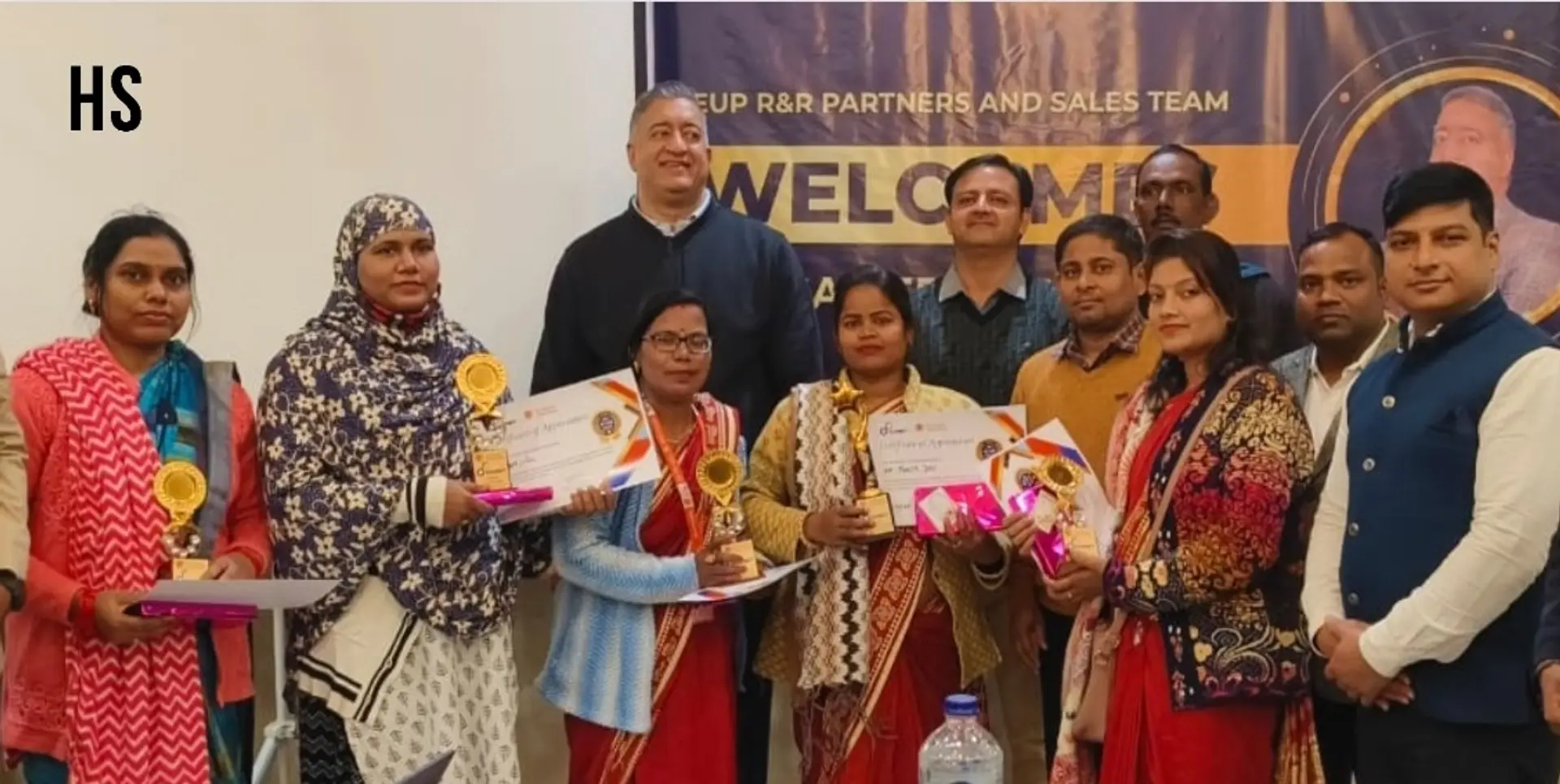

In May 2020, when Gurugram-based fintech Roinet Solutions decided to place the tools of financial revolution in the hands of rural women, many of whom had never owned a smartphone, earned an income, or left the boundaries of their village unaccompanied, they encountered a mix of excitement and also resistance.
But what started as a seemingly ambitious idea has, in just four years, scaled from 105 customer service points (CSPs) to over 10,000 Banking Correspondent-Sakhis (BC-Sakhis), transforming not just the financial landscape, but the self-perception of thousands of women in India’s hinterlands.
BC-Sakhis are women from rural or semi-urban communities who are trained and equipped by Roinet to act as CSPs. Most of them are first-time earners, often from marginalised or low-income households.
“There was hesitation initially, even dismissiveness," recalls Sameer Mathur, Founder and Managing Director of Roinet Solutions. "People would ask, 'How can a woman in a ghoonghat (traditional veil) deliver banking services?' There was doubt. Even from their own families. But what we saw in these women was a hunger to learn, to earn, and to be seen," he adds.
The BC-Sakhi programme started working with women as part of the National Rural Livelihood Mission (NRLM). The company partners with local NGOs, self-help groups, and panchayats to identify women with potential. Their focus is on familiarity with the community, basic literacy, and “most importantly, a willingness to learn,” says Mathur.
This is followed by a robust training programme that includes not only the use of smartphones, biometric authentication devices, and app-based transaction systems, but also modules on customer handling, cybersecurity, and confidence-building.
"Most of these women had never asked questions in a group before. Some were scared to speak at all. We had to create spaces where they could grow into the role of professionals—where they could see themselves as bankers," says Mathur.
From literacy to leadership
Each BC-Sakhi is equipped with a smartphone, a biometric device linked to Aadhaar, and access to Roinet's app platform that allows for seamless banking in low-connectivity regions. Their services range from cash deposit and withdrawal, balance enquiries, Aadhaar-enabled payments, utility bill payments, and remittance services, to enrolling rural customers in microinsurance and pension schemes.
The results have made Mathur proud.
In 2020, Roinet had just over 100 CSPs. As of 2024, more than 10,000 BC-Sakhis operate across India, enabling over Rs 4,012 crore in Gross Transaction Value in just one year.
Thirty-six-year-old Riya Sharma, a BC-Sakhi and a mother of two young boys, is working for the first time in her life. Despite having completed her Bachelor’s degree, she took care of the household until she found an opportunity in the NRLM and BC-Sakhi programme.
“In my family, my mother-in-law handles the finances, even today. I had no experience with money. In fact, when I enrolled for this programme and had to go for training in Harora, I struggled to stay away from my children,” says Sharma. “But I earn Rs 14,000 to Rs 15,000 today, and this has happened only because I took that first step, and was among the few who had the full support of my family.”
Sharma helps seniors open bank accounts, educates her community on insurance, linking Aadhar and KYC. Her work day starts at 9:.30 am and ends at 7:.30 pm.
Several BC-Sakhis have gone on to open fixed-location customer service points. Others have trained new recruits, advised local women on savings and insurance, and earned a reputation as reliable financial touchpoints in their communities.
"They've gone from mobile agents to entrepreneurs," says Mathur. "One of our BC-Sakhis told us her son now wants to be a banker because of her. That’s the ripple effect we were hoping to see."
Digital design with human intent
Mathur says they built their technology with a keen understanding of rural infrastructure gaps.
"You can’t drop an English-only, engineer-first app into rural India and expect it to scale," he explains. "We designed for simplicity. Two or three taps max; interfaces that feel intuitive, and support in regional languages."
The goal, beyond everything, was often trust. In regions where even basic banking services are absent or mistrusted, BC-Sakhis often become the bridge between a household and the formal financial system. Because they are known in the community, they carry credibility. Their success rests not just on technology but on human connection.
Phygital, not just digital
The BC-Sakhi model is what Mathur calls "phygital"—a hybrid of physical presence and digital backbone. It's a format particularly suited to India’s unique needs: tech-enablement supported by trusted local relationships.
"Financial inclusion can't be passive. You need someone to go house to house, explain the service, earn the trust, and be available for questions. Our BC-Sakhis do that," says Mathur.
One of the early concerns was safety and financial risk. Could women travel safely to collect documents or deliver services? Would they be blamed if something went wrong?
Roinet addressed these with a mix of operational checks and cultural sensitivity. Women were trained not to handle large cash amounts but rather serve as transaction enablers. Communities were looped into the process to ensure family and neighbourly support.
The economic benefits are clear—BC-Sakhis earn between Rs 10,000 and Rs 50,000 per month depending on transaction volume. But the social shifts are harder to quantify and perhaps more profound.
"When a woman becomes a BC-Sakhi, she’s no longer just someone’s wife or mother. She’s a banker. She has a reason to be on the phone, a reason to travel, a reason to speak. That changes how she's seen and how she sees herself," says Mathur.
Take Jayalakshmi Devi, 35, and a mother of two sons, also from Varanasi. She joined the BC-Sakhi programme three years ago, standing up to her family who weren’t comfortable with her leaving the kids behind and going to work.
But she went anyway.
“I’ve only studied till Class 10. People used to say, ‘what will she teach us about banking’. But today, I take care of all their finances,” says Devi.
Devi adds that a relationship of trust was also cultivated with community members over time. “Sometimes, people would just deposit Rs 100, and immediately withdraw, just to see if we were genuine. I’ve also become a role model for the girls in her village. They tell me, ‘bhabhi we want to grow up like you’, and I feel so happy. I’m no more than just a high school dropout.”
Towards a female-led fintech future
India's digital economy is expanding rapidly, but the inclusion of women—especially rural women—remains uneven. According to the National Family Health Survey (NFHS-5), only 25% of women in India use the internet compared to 49% of men. This gap is more pronounced in rural areas, where social norms and limited access to digital resources further restrict women's participation in the digital world.
Initiatives like Roinet’s BC-Sakhi programme offer a powerful model of what inclusive fintech can look like: not just in terms of access, but in terms of dignity, autonomy, and choice.
"We talk about GDP and transaction value, but real progress is when a woman who never touched a smartphone is now advising her neighbours on insurance," Mathur says. "That’s the story we’re trying to build."
(The copy was updated to reflect the economic benefits.)
Edited by Affirunisa Kankudti