



Rap, rage and roots: Mahi G’s journey into conscious music
Adivasi rapper Mahi G is channelling the fight for her community’s rights through hip-hop. What began with poetry has now grown into a strong voice of resistance from the forested heartlands of Maharashtra.

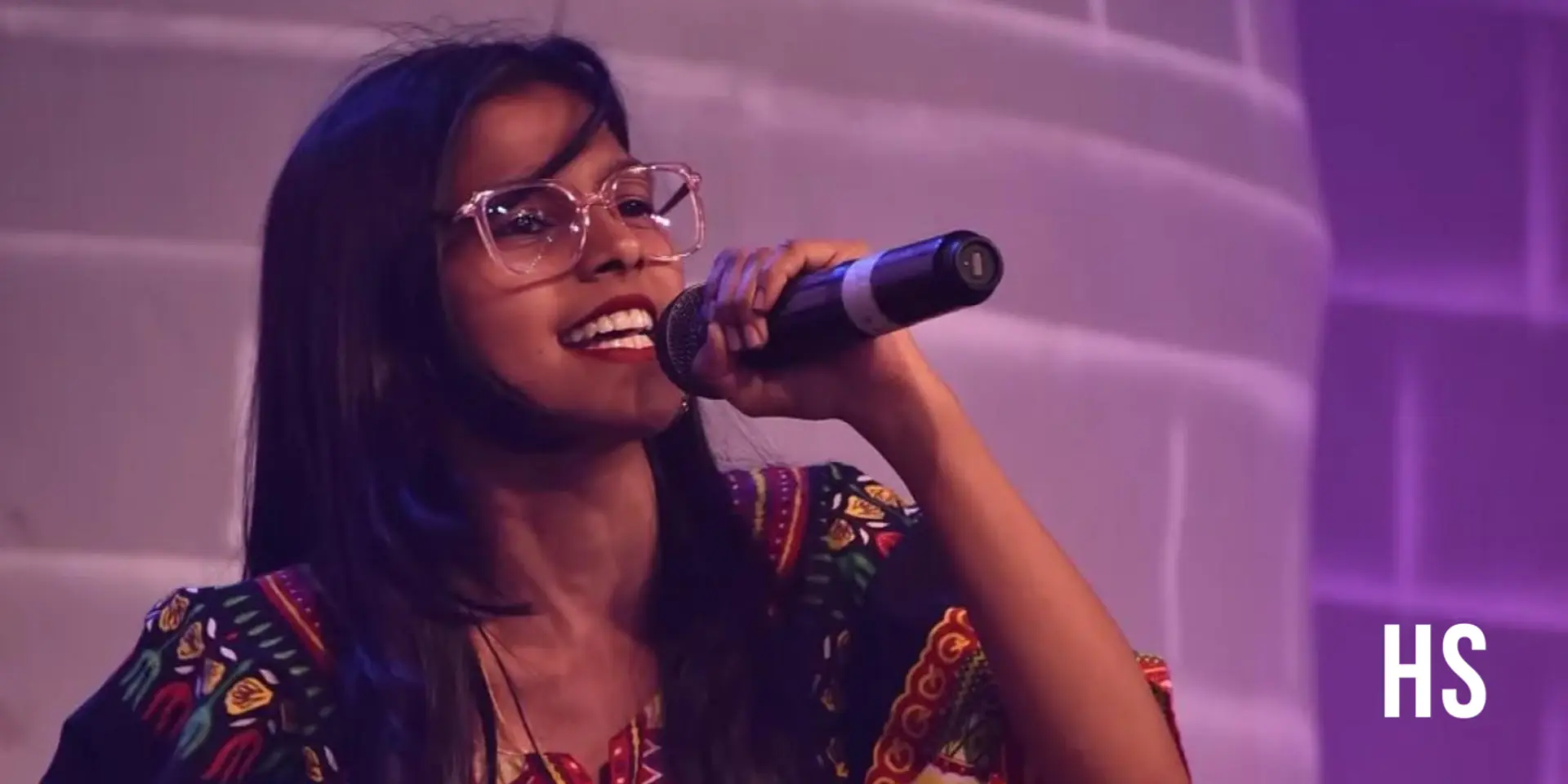

Growing up in Kalyan near Mumbai, Mahi G, born Madhura Ghane, knew little beyond urban life, barring the few trips she made to Kalan, her native village in Maharashtra— home to an ecologically rich forest and the Adivasi community of Mahadev Kolis, to which she belongs.
The raw energy and fierce poetry of rap hadn’t yet entered her world.
As first-generation learners of their community, Mahi and her brother were encouraged to pursue engineering—a path seen as essential for securing a stable future, particularly within Adivasi communities, where economic security is often a non-negotiable need.
Yet, even as she grew up away from her ancestral land, Mahi’s parents made sure she stayed connected to its values.
“You take only what you need. You live simply, without chasing more. You tread lightly on the land, in harmony with the environment. These were habits my parents embodied their whole life,” says 27-year-old Mahi.
“My father is a bus conductor, and there were many mouths to feed at home. But not once were we made to feel under-resourced. We knew how to make the best of what we had.”
Much later, Mahi realised that this approach was central to how Adivasi communities lived—self-sufficient and resourceful by nature. “And their connection with their land was what made this possible,” she says.
In college, where she studied electronic and communications engineering, Mahi encountered the first flickers of rap and hip-hop, whose sounds and stories caught her ear between lectures, across corridors.
During those years, Mahi’s passion lay in poetry, not music.
“I wrote a poem and showed it to friends, who loved the spirit and energy,” she says.
In 2021, amid the fervour of the farmers’ protests, she penned her first rap: about ten to twelve lines. She recognised that hip‑hop could engage those under 25—nearly half of India’s population—and draw them into social and political issues.
During the Covid-19 lockdown, Mahi went to her village to live with her community. This exposed her to the travails people here endured on a daily basis—the fight to preserve their culture and land in the face of displacement, industrial pollution, and the growing pressure to take up daily-wage work.
Mahi elaborates, “The common narrative is that losing forests is the price of development. But this makes sense to only those who don’t call the forest their home. To us, it’s as bad as having your generational home razed to the ground in front of your eyes, and calling it ‘development’.
“Adivasi communities know the plants and animals like their own bloodline. They thrive on collecting honey and herbs. They are the kings of the forest. In a daily wage job, they become slaves, underpaid, and at the mercy of a powerful and corrupt system.”
Her official debut track Jungle cha Raja (King of the Jungle) captures this essence. Produced along with Marathi rapper, singer and songwriter Rapboss, the track protests environmental destruction and deforestation in and around Maharashtra. It was filmed at Mahi’s village with visuals inspired by her grandmother’s attire, highlighting her Adivasi identity and connection to the land.
The song became viral, catching the attention of artists like Badshah, Vishal Dadlani, and even some MLAs from Gujarat.
Her track Haq Se Hijda Hun is a dedication to the transgender community asserting their visibility and humanity. While working on this track, Mahi consulted with individuals from the community and engaged with the Humsafar Trust to ensure her words were thoughtful and representative of trans rights.
She has also released a song about Babasaheb Ambedkar, titled Baapmanus, which she performed at Jawaharlal Nehru University in New Delhi.
Despite her early success in rap, Mahi is taking things slow, letting her musical journey find an organic path.
“I find it counter intuitive to rush things. I want my music to have real-life impact, reach older generations in our community who did not have the awareness or voice to fight back. I want to research, work and collaborate in a way that my music isn’t released for the sake of views on social media but as a tool of engagement, solidarity, and even celebration.”
Edited by Swetha Kannan