



At The Banyan, food brings dignity, income and belonging to homeless, mentally ill women
Through baking programmes, residential kitchen training, and food enterprises, women with mental illnesses, who were once disconnected from the community and self, are learning to participate again—on their own terms.

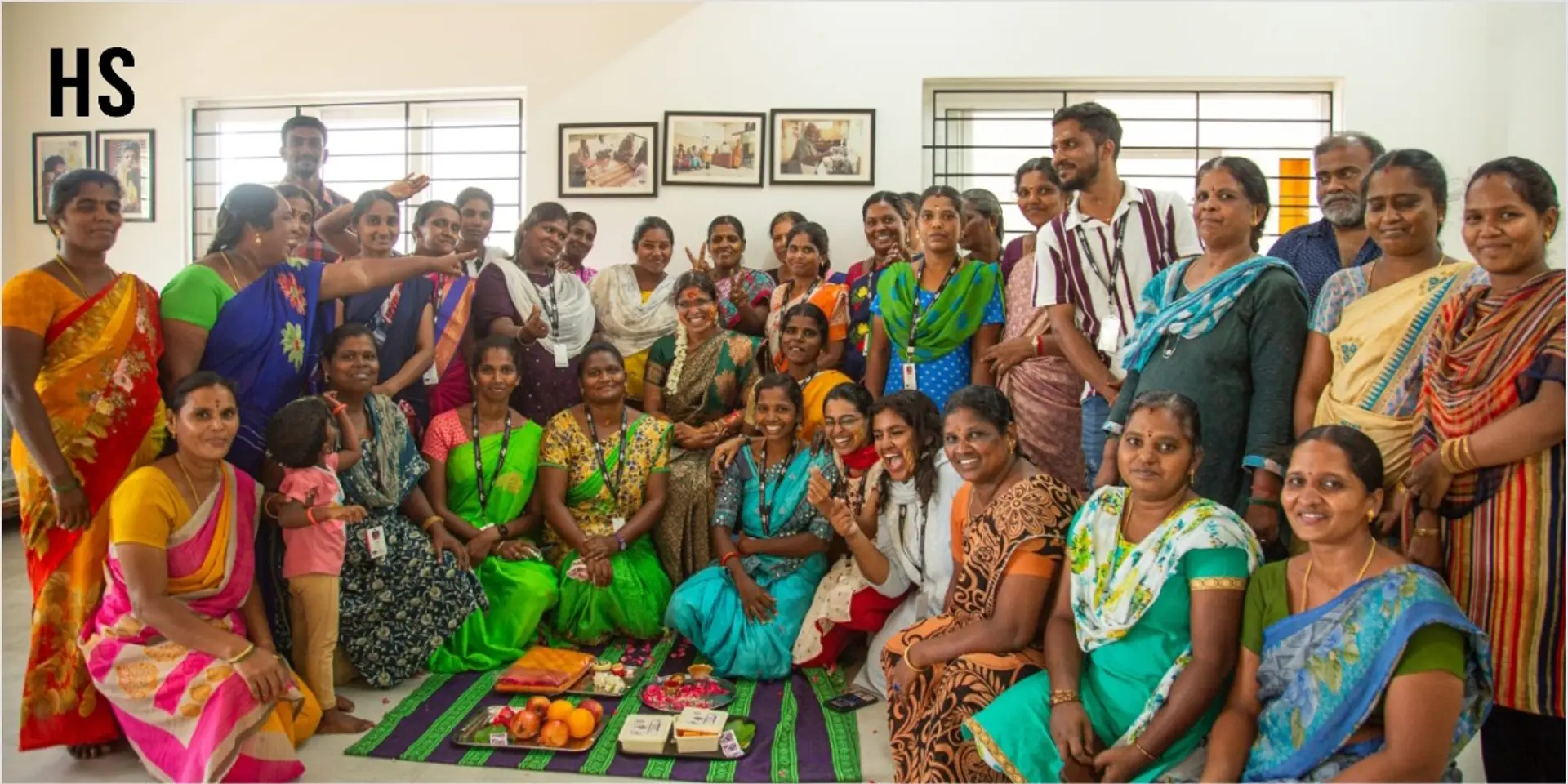

At a transit care centre for homeless women in Mogappair, Chennai, a group of women keep busy mixing bowls, grain flours, and baking trays. They aren’t training to be professional chefs; they are part of a quiet experiment in recovery—using food as a structured, sensory way to rebuild routine, memory, and economic agency.
For over two decades, The Banyan, a Chennai-based nonprofit focused on mental health, has been integrating food-based training into its care models for individuals facing homelessness and long-term psychiatric conditions. By conducting baking workshops in residential centres and through community cafés and public canteens, its programmes aren’t simply about skill-building, but a step towards stability, choice, and a sense of continuity for women navigating life after institutionalisation.
Across The Banyan’s Mogappair and Kovalam campuses, as well as at a government-run canteen in the heart of Chennai, women who’ve experienced chronic mental illness and institutionalisation are cooking, baking, earning, and rebuilding their lives.
Nine years ago, at the organisation’s transit care centre in Mogappair, Senthil Kumar Balu, Founder of health-conscious home bakery Wholesome Rhapsody, was invited by then-resident psychiatrist Dr Anbudurai to consult on improving the nutrition of women residents.
“I was brought in to look at dietary shifts—moving away from refined grains and sugars to whole grain options that might support better mental health outcomes,” Balu recalls in conversation with HerStory. “But it quickly became clear this could be incorporated as an activity for the residents.”
As the idea of a baking workshop took root, Balu began conducting weekly sessions where residents—many of whom had been homeless or institutionalised for years—learned to make cakes and muffins using local, healthy ingredients like millets, palm sugar, and fruit peels.
“It turned into something joyful,” he says. “Any sweet treat made with your own hands—it brings a deep sense of pride. And that feeling was amplified for the women here.”
Thus began Nalam Bakers, an informal initiative under The Banyan’s broader NALAM (Nurture, Awareness, Livelihoods, Advocacy, Mental Health) programme. While the women participated on a rotational basis each week—some away for tailoring or grocery errands—the sense of structure and camaraderie remained consistent.
“One group would sieve, another mix, another pour into pans,” says Balu. “Sixty to seventy percent were regulars. That’s when we thought: why not create a proper unit?”
Women soon began selling what they baked—cakes, muffins, and cookies—to visitors and staff. Some even used their savings to buy back what they’d made.

But scaling this into a commercial venture proved challenging, but not because of the baking, which they loved. “The logistics—orders, packaging, deliveries—that’s where it got tough. Then came COVID-19, and the momentum paused entirely,” he explains.
The programme is now slowly being reimagined. With kitchen renovations underway, Balu and the team are exploring more sustainable models, like baking breads and buns that require less packaging and can be made in batches.
Meanwhile, the baking continues at smaller scales. Women are trained three times a week in baking techniques using unconventional, healthier ingredients. “They’re not just learning—they’re also educating others,” says Mary Sasikala, Production Manager at The Banyan’s Skill Development Unit. “When community members ask them about the ingredients, the women confidently share why they’re healthier and how to prepare them.”
But more importantly, at the heart of all this is memory and reclamation.
“Many of our women have been disconnected from family life, where cooking was once a part of their routine,” Sasikala explains. “Over time, due to trauma and isolation, they even forget how to cook. But in these sessions, we see their memories return. They enjoy making festive food—be it for Ramzan or just a grandmother’s chutney recipe—and from there emerges camaraderie, much joy, and a sense of self. And when food is shared in a community, it creates a sense of normalcy and connection that’s invaluable.”
That same philosophy extends beyond the baking room.
In 2022, The Banyan launched Thinnai Café in Kovalam, staffed entirely by women residents. They cook and serve South Indian meals—idlis, dosas, lunch—to the public, earning monthly salaries.
Annamary came to The Banyan as a client two decades ago. Today, she co-leads D’Lite Masala—a social enterprise she helped launch in 2022—with fellow resident Nandhini. Its handmade masalas are now a staple in the kitchen at Thinnai Café, adding flavour to every meal.
Then there’s the SIEMAT canteen at the Directorate of Public Instruction in Nungambakkam, run in partnership with the Tamil Nadu Education Department and Winners Bakery. Around 20 staff from The Banyan, all with lived experience of mental illness, now serve over 400 people a day. The canteen doubles as a training ground where women gain skills, confidence, and the dignity of a paid job.
These food-centred enterprises form part of The Banyan’s livelihoods model, which has evolved over two decades. Funded in part by philanthropic partners like the Paul Hamlyn Foundation, Azim Premji Foundation, and Rohini Nilekani Philanthropies, the nonprofit offers residents paid work within cafés, tailoring units, wellness salons and canteens. According to The Banyan, over 60% of individuals in its care are now engaged in gainful employment or meaningful activity.
The Banyan employs around 20 staff across these programmes.
Jayshree, once institutionalised at the Ratnagiri Regional Mental Hospital, transitioned into The Banyan’s Home Again programme—its inclusive housing programme—in October 2019. Having suffered many personal losses, Jayshree's journey took an exciting turn when Home Again launched its first social enterprise, a food cart in Ratnagiri. Playing a crucial role in the planning process, Jayashree embraced the opportunity to work at the food cart, even obtaining a food license in her name. “Throughout my journey, I have foregone many things and acquired a wealth of knowledge. However, I now understand that self-reliance is inherent to who I am, and I can strive towards that aim regardless of circumstances,” she says.
For women transitioning out of institutional care and into ‘Home Again, these kitchen-based trainings are not just optional skilling but important life-building tools. “The women come from different regions and communities,” says Sasikala. “But food becomes a universal language. It helps them reclaim who they are.”
Edited by Kanishk Singh