



‘A part apart’: Sonajharia Minz becomes first Adivasi woman to co-lead a UNESCO Chair
From bypassing bias in academia to co-chairing a global initiative, Professor Minz lays out a bold, clear-eyed roadmap for epistemic justice in India and beyond.

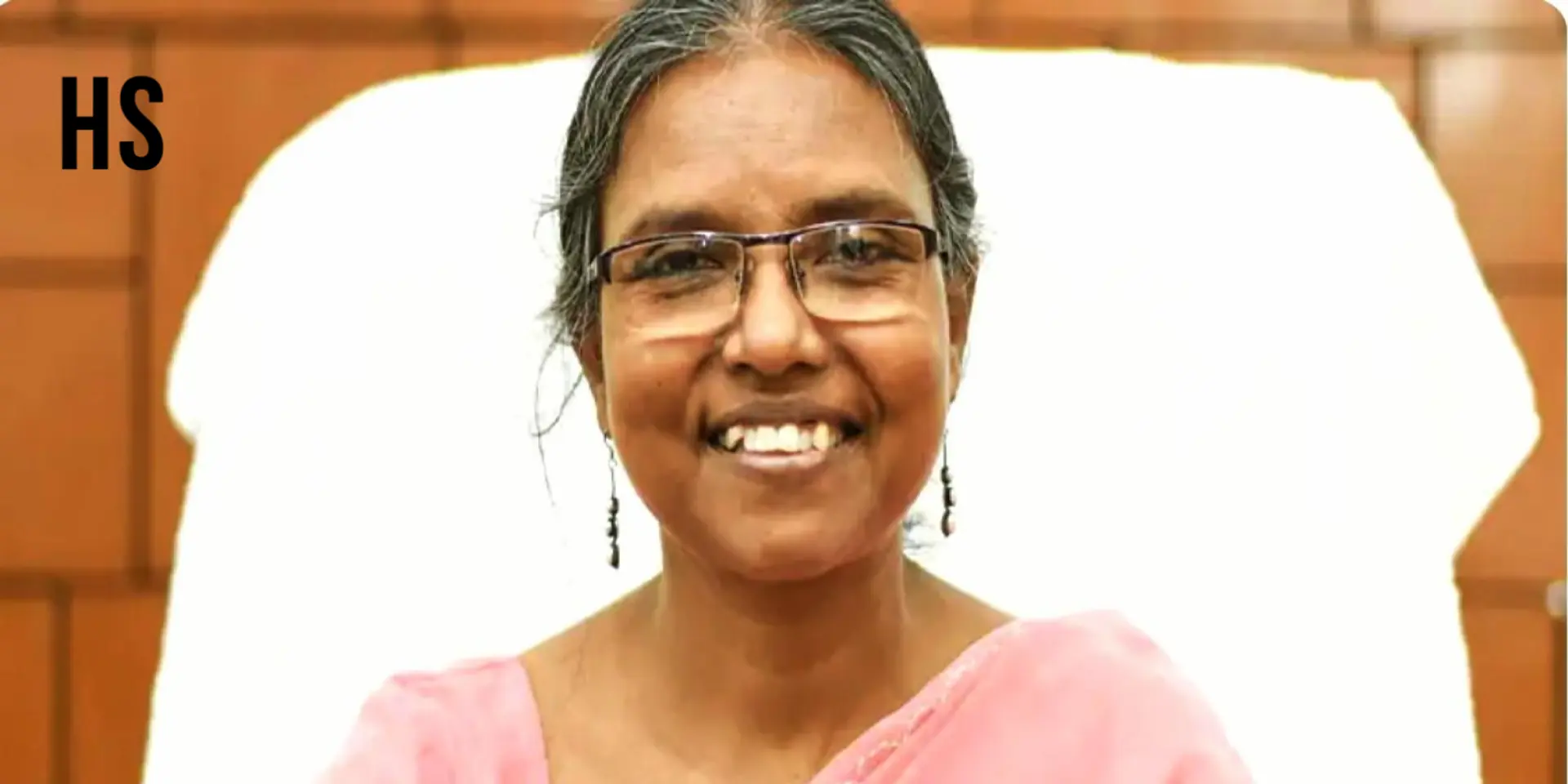

In an academic landscape that has long been dominated by Eurocentric norms, Professor Sonajharia Minz became one of those few Adivasi women to break into the highest ranks of Indian academia in the 1980s. She recalls that back then, “there were a grand total of three Adivasi women academics in JNU." And this was pre-reservation times.
Four decades later, Minz, who comes from the Oraon tribe (a prominent Scheduled Caste community), has now been appointed UNESCO Chair on Indigenous Cultural Heritage and Sustainable Development. In this joint appointment between Jawaharlal Nehru University (JNU) and Simon Fraser University in Vancouver, Canada, Minz will co-chair the position alongside Amy Parent, a member of the Nisga’s Nation in British Columbia and an indigenous scholar specialising in language, land, health and education within her community.
Minz's title may be new, but all her life, she has been advancing the Chair’s mandate on the ground—designing indigenous-led curricula, introducing the Santali language in academic research, and pushing for data sovereignty and ethical tech through her work in computer science.
“I’ve always seen myself as part of a part apart,” she reflects. “Adivasis have long been a part apart from Indian society—and I’ve always belonged to that part.”
This sense of deep cultural, political, and epistemic belonging continues to drive her interventions within academia.
In her new role, Minz will help lead efforts to safeguard indigenous knowledge systems, promote sustainable development rooted in community values, and build equitable, community-led research frameworks.
With a lived understanding of the systemic barriers Adivasi communities face, Minz asserts that “even with education and jobs, many Adivasis I know never found joy in urban life. They were pulled away from the collective, from home—and that loss is not easily repaired.” From the alienation of children in classrooms where their languages are not spoken, to the silencing of Adivasi names and histories in institutional records, the violence of erasure is something she has seen firsthand.
“The first time a child is out of the comfort of their home, the classroom becomes an unsafe place, especially when the language spoken there is not theirs. That fear alone can push children out of school.”
From her early years in academia—studying and later teaching computer science in institutions like JNU and Madurai Kamaraj University—Minz used her disciplinary training to work around hostile or exclusionary academic spaces.
“In hindsight, I call it a bypass,” she laughs. “Social science classrooms often exposed Dalit and Adivasi students to humiliation when their communities were discussed. But in the sciences, I was spared that.”
It’s a privilege she hasn’t taken lightly. The collective identity of being Adivasi, she notes, shaped her purpose long before academic qualifications did. “Adivasi identity is never individual—it is collective. My journey was never mine alone. Even when I had access to education, I was always aware that so many in my community did not.”
Claiming academic space on indigenous terms
Minz’s concern over exclusionary academic spaces translated into initiatives that challenged deeply embedded hierarchies. As Vice-Chancellor of Sidho Kanho Birsha University in the Purulia district of West Bengal—the historical and cultural heartland of the Santal community—Minz saw no reason to delay what should have been obvious: the launch of an MA in Santali Culture Studies, likely the first such programme in a public Indian university.
“It wasn’t just a course. It was a tool for self-determination,” she says. “It helped students engage with their culture through an academic lens, to create and recreate knowledge in their own language.”
Language, for Minz, is more than a medium—it is epistemology. “Many of our terms are untranslatable. A word in Santali could require an entire sentence in English. And when we lose that word, we lose the perspective behind it,” she explains. “So when academic research has only used Hindi or English, much of the semantic depth is lost.”
Academic colonisation, and ways to resist it
In her UNESCO role, Minz is determined to formalise indigenous knowledge production. This also means confronting academic colonisation head-on. Seventy-eight years since India’s independence, colonisation continues, she believes.
“Dictionaries define ‘colonisation’ as the action and process of settling among and establishing control over indigenous people of an area, or appropriating a place or domain for one's own use. Now, if there is a non-Adivasi expert or academic who is considered an authority in that area, or a non-Adivasi-led research team receives funding for innovation or livelihood enhancement for Adivasis, and there is not even one Adivasi co-PI—isn’t that colonisation too?”
Instead, she advocates a shift to what she calls a reciprocal model—one based on co-creation, co-validation, and co-design. “Communities must be recognised as knowledge holders, not merely as subjects of study,” she says.
Her references are time-tested and global: from the CARE (Collective Benefit, Authority to Control, Responsibility, Ethics) and FAIR (Findable, Accessible, Interoperable, Reusable) principles of the Global Indigenous Data Alliance to OCAP (Ownership, Control, Access, Possession) principles in Canada’s First Nations.
Data justice, tech ethics and the next frontier
Minz’s background in computer science lends a particular sense of urgency to this work. “Fifteen years ago, when I spoke about ethics in AI, people laughed,” she recalls. “But today, we are finally seeing conversations around provenance and digital sovereignty. The IEEE even has a practice guide now for the provenance of indigenous knowledge. That’s significant.”
She views digital colonisation as the next frontier—one that must be pre-emptively addressed through indigenous-governed digital infrastructure. “Even with India’s Digital Personal Data Protection Act, the language is vague and can be twisted. If the data of tribal communities is digitised without safeguards, it can easily be used against them,” she adds.
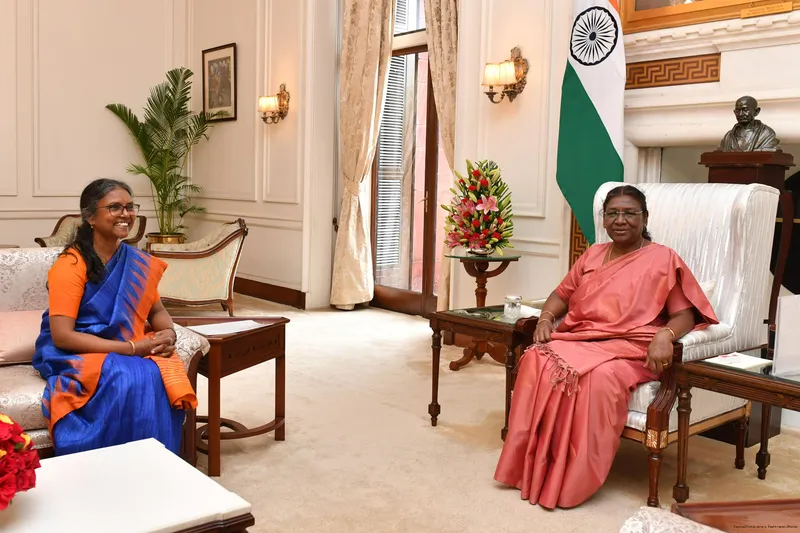
As Vice-Chancellor of Sidho Kanho Birsha University in the Purulia district of West Bengal, Minz introduced an MA in Santali Culture Studies, likely the first such programme in a public Indian university.
This is why ethical AI, to her, must centre consent, custodianship, and co-governance. “We need frameworks where the origin and ownership of knowledge are transparent and respected. Otherwise, we risk repeating the same extractive patterns—this time through technology.”
Education reform, particularly at the primary level, is another core priority in her UNESCO Chair mandate. “I remember how alienating school was for me—the language, the environment. Most Adivasi children drop out not because they’re incapable, but because the system is hostile,” she says. “If a child makes it to Class 12, even with third division, that’s not failure—it’s a victory.”
Minz also raises concerns about academic erasure through forced renaming—a practice she says strips cultural identity. “When a domestic worker named Majharan (a traditional name in Oraon culture) is renamed ‘Mili’ because her employer can’t pronounce her name, she becomes untraceable. Names are not ornamental—they’re cultural identifiers.”
A vision of epistemic justice
Her vision, ultimately, is for an academic ecosystem that allows indigenous knowledge systems to stand not in opposition to dominant narratives, but alongside them.
“We’re not looking for token inclusion. We’re asking for epistemic justice,” she says. “And that means institutionalising the idea that there are multiple ways of knowing—and all are valid.”
Her mandate as UNESCO Chair is currently for four years, with the possibility of extension. “If I don’t survive to see the next term, I hope another Adivasi scholar does,” she says. “This is a bogey that must not be missed.”
Edited by Jyoti Narayan