



This 83-year-old woman has spent 25 years helping prisoners find calm and purpose
A volunteer-teacher at the Art of Living, Aruna Sareen visits the Netaji Subhash Chandra Bose Central Jail in Jabalpur every day to conduct yoga and skills sessions as part of the organisation’s Prison Program.

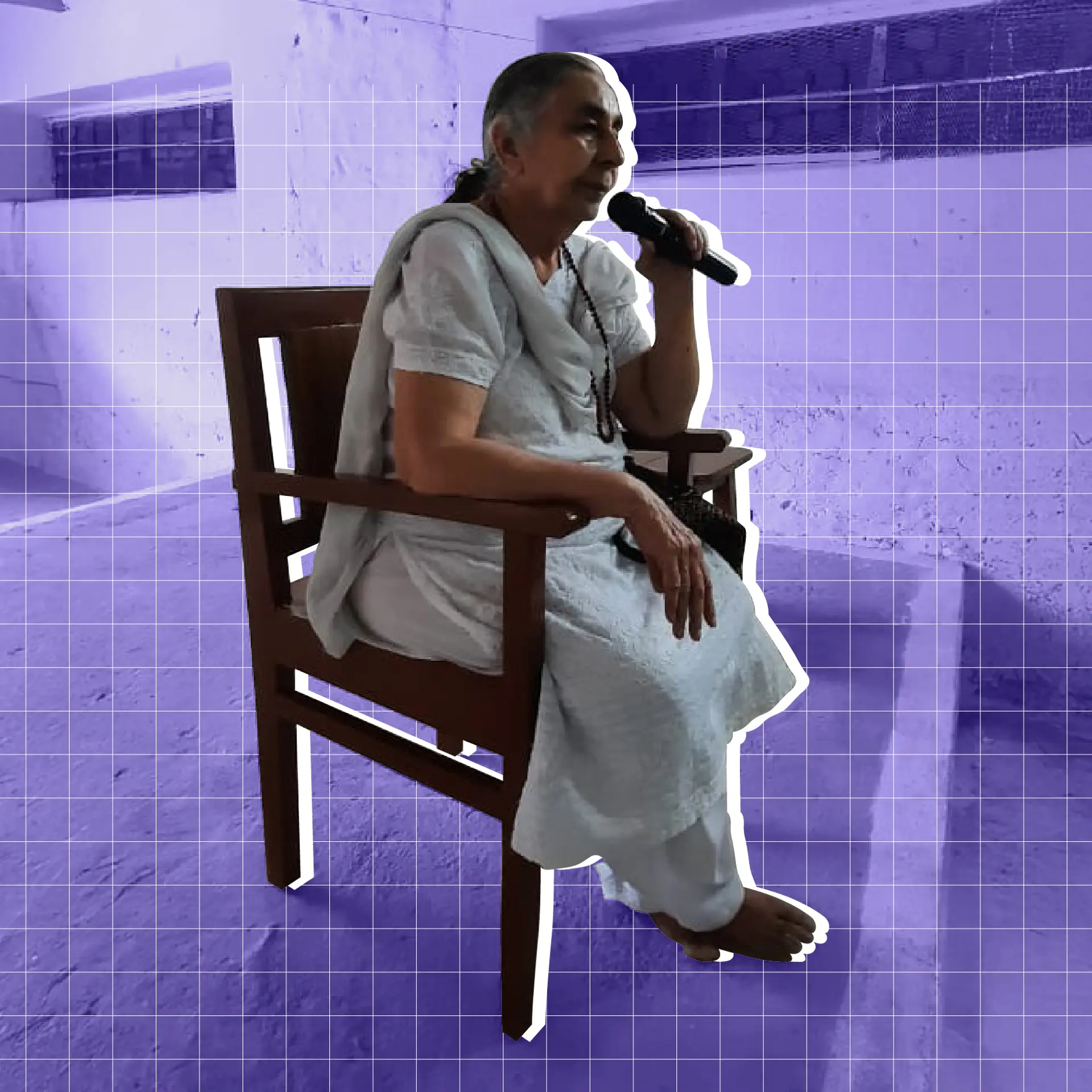

Every morning, 83-year-old Aruna Sareen prepares herself for a visit to the unlikeliest of places: a prison. For the past 25 years, the retired school teacher and principal has been involved in conducting yoga sessions, organising skills training, and listening to the inmates through the Art of Living’s Prison Program at the Netaji Subhash Chandra Bose Central Jail in Jabalpur.
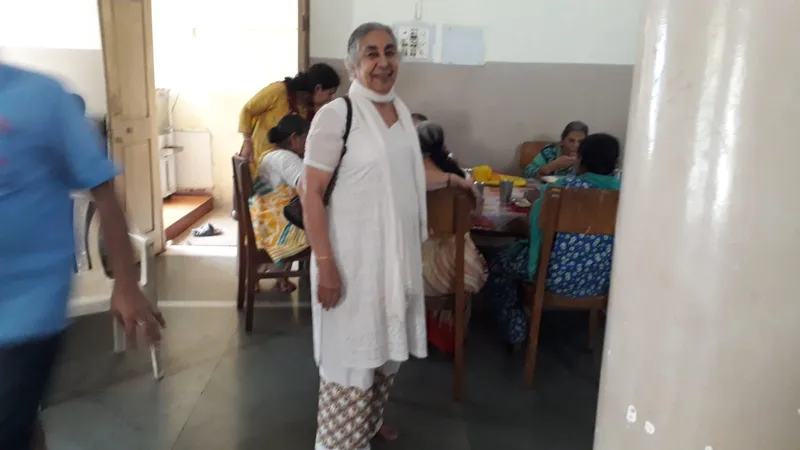
Aruna Sareen
“Like people go to temples everyday, I go to jail,” Aruna says with quiet conviction.
It all began in 1999 when she discovered a pamphlet on the Art of Living courses. At that time, she was posted at Kendriya Vidyalaya in Jabalpur after a career that took her across the country, as she accompanied her husband on his Army postings.
Aruna decided to see for herself what the Art of Living was all about. Having practised Vipassana meditation earlier, she was open to new experiences.
Her husband Sareen, however, was sceptical. When he came to drop her at the Art of Living campus , the organisers asked him to try out the experience for a day. “He said, ‘Okay, I will be here today, I won’t come tomorrow.’ He sat there, and stayed with the organisation forever,” she recalls.
Colonel Sareen had retired, and soon he immersed himself in various Art of Living activities. Aruna was still teaching, even as she found herself increasingly drawn to the organisation’s philosophy and practices.
A sense of belonging
Both met the Art of Living Founder Gurudev Sri Sri Ravi Shankar at the ashram in Bengaluru in 2000.
Aruna remembers feeling an instant sense of belonging, saying, ‘We felt we had to be here, this was what we had been seeking.’”
In July 2002, tragedy struck just 15 days after Sareen returned to Jabalpur following Aruna’s resignation from teaching. Colonel Sareen passed away while she was travelling to Bengaluru to be trained at the Art of Living.
However, this loss did not end her spiritual journey. Six months later, she completed her training and became an Art of Living teacher in Jabalpur, and the first advanced course teacher in Madhya Pradesh.
Before becoming a teacher, Aruna had her first experience with prison life in 2002, when Manju Goyal, an Art of Living teacher from Delhi, came to Jabalpur to visit her parents. During her stay, Goyal decided to conduct a course in the local prison and asked Colonel Sareen to accompany her. Both Aruna and Sareen joined Goyal.
“That was my very first experience of going inside a prison, meeting the inmates, and seeing the environment. Somehow I liked it, I didn’t feel any fear. Everything went smoothly. We had arranged the course well, and even shared a meal with the women inmates, the superintendents, and other officers,” Aruna remembers.
Creating impact
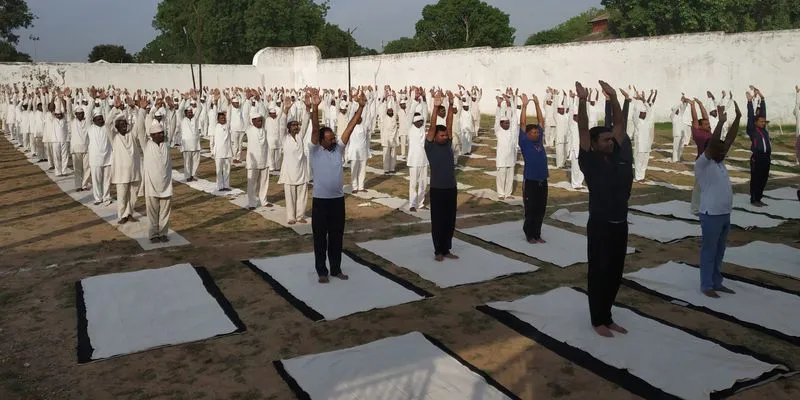
An Art. of Living session
For 25 years, Aruna’s routine has hardly changed. Every morning, she heads to the prison for three-hour sessions, missing only Sundays and public holidays. Her work has expanded from Jabalpur to more than 10 prisons across Madhya Pradesh, including facilities in Indore, Satna, and Bhopal.
She conducts the Happiness Program (includes guided meditation, breathing techniques and sessions) and advanced courses that centre around Sudarshan Kriya, a rhythmic breathing technique. Independent research has shown that these practices significantly reduce cortisol (the stress hormone), benefit the immune system, and relieve anxiety and depression while enhancing brain function.
Inside the Jabalpur prison, the impact of the Art of Living courses is visible.
According to Aruna, inmates serving various terms, from undertrials to those sentenced to life imprisonment, have shown changes after participating.
“After doing the course, fights among inmates have reduced, anger has lessened, and even incidents of self-harm, like prisoners cutting their hands with blades, have almost disappeared,” she says.
Earlier, some inmates attempted to escape from prison or failed to return after parole, but now, participants report back voluntarily and peacefully. Substance abuse, though still present with new entrants, has declined significantly among those who complete the course, she shares.
Aruna, who also conducts de-addiction sessions alongside Red Cross volunteers, recalls seeing dramatic changes: inmates experiencing severe withdrawal symptoms often find the strength to not run away or relapse.
Stories of redemption
The stories of redemption are many. Raju, a drug dealer who initially planned to return to trafficking after his release, changed after he assisted Aruna in the prison’s de-addiction centre.
“After seeing the people suffer, he said, ‘I will not do this work anymore. For my two children, I will not waste so many lives,’” she shares.
Another inmate, a woman who became a drug dealer to fund her daughter’s wedding, also changed after completing the course and committed to a future without drugs as a source of income.
Aruna’s work extends beyond spiritual practices to practical rehabilitation. The Art of Living ensures training and skilling as part of the Prison Program. Women inmates learn to make pearl jewellery, preserve fruits, apply mehendi, and work as beauticians. Male inmates receive training in tractor repair, electrical work, and labor supervision.
The prison also operates a small manufacturing unit, and produces its own uniform. Its samosas for visitors are very popular. “You should come to our jail sometime. It looks like an ashram,” says Aruna.
The Art of Living Prison Program operates in more than 10 prisons across Madhya Pradesh. Aruna has reached over 50,000 inmates in the state alone. Globally, more than 800,000 prisoners have participated in similar programmes.
"The Art of Living’s Prison Smart Camps have brought a remarkable transformation in the inmates of Central Jail, Jabalpur. Inmates practised Sudarshan Kriya, controlled breathing, and meditation with the support of dedicated trainers, which reflected in their positive attitude changes and enhanced emotional well-being,” says Akhilesh Tomar, Superintendent, Central Jail, Jabalpur.
“The improvement in discipline and reduction in conflicts have made the jail environment more conducive for rehabilitation. Such programme are vital in shaping better lives inside and outside prison walls,” he adds.
For Aruna, success is measured in different ways—the absence of fear in long-term inmates, prisoners sharing their hopes for redemption, and the stories of transformation she has seen in 25 years.
She believes many inmates are victims of circumstances. There are incidents of property disputes turning deadly, domestic violence with tragic consequences, or financial desperation leading to poor choices.
What drives Aruna to spend her golden years among prison inmates?
She says it’s a matter of karma and faith.
“There must be something for Guruji to keep me here. I get a lot of satisfaction,” she says.
Edited by Swetha Kannan