


Climate crisis exposes deep gender gaps as women bear the brunt of displacement
Women and girls are more affected than men by climate disasters and face serious health consequences and the risk of death. Some states in India are making efforts to bridge the gaps, but implementation is still patchy.

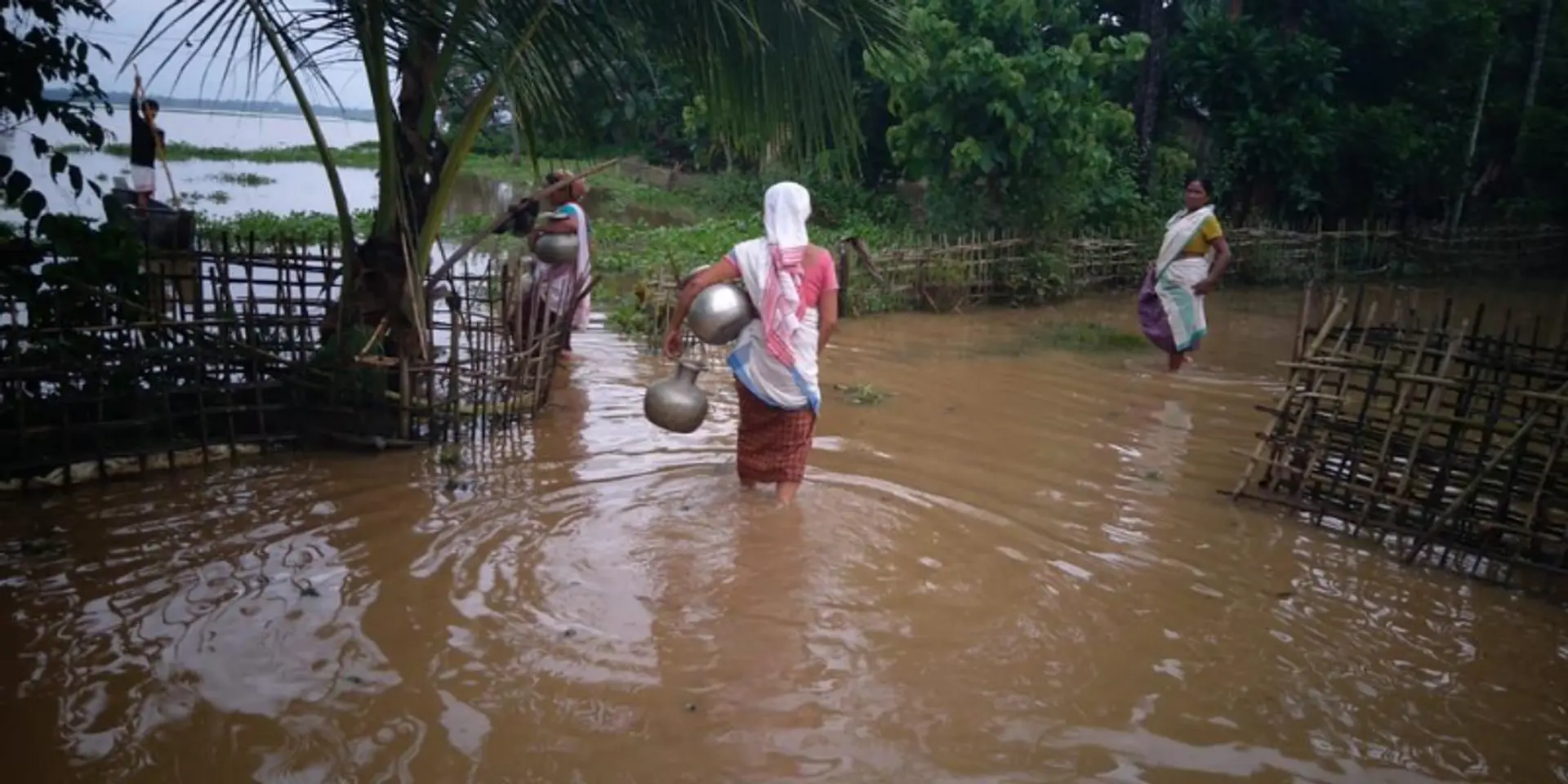

Women and girls are more affected by displacement due to climate disasters than men. The impact ranges from safety challenges and poor health to more severe consequences such as violence and even death—due to their assumed roles and responsibilities, burden of care, social norms, and vulnerabilities.
Data from different United Nations (UN) bodies over the years says that women and girls make up about 80% of people displaced by climate-related events globally, and are roughly 14 times more likely than men to suffer severe health consequences or die during climate disasters.
The Gender Snapshot 2025 report, released recently by the UN, warns that climate change is not gender-neutral. This report—which provides data, trends and gaps across gender equality indicators tied to the Sustainable Development Goals—indicates that existing adaptation and humanitarian systems systematically fail women and points to the absence of gender-specific climate action that takes into account women’s needs.
In India, when people are forced to leave their homes due to climate disasters, the impact on men and women is not the same. Their experiences, roles, responsibilities, safety issues, and challenges are often different.
In 2024, the country recorded its highest annual disaster displacements since 2012 (about 5.4 million people, with roughly 2.4 million displaced by monsoon floods). And these movements disproportionately affected women through disrupted services, lost livelihoods, and care burden.
Recent UN and field reports from the Bihar floods show how evacuations cut off maternal health services and pushed women into unsafe, makeshift shelters.
The climate crisis disproportionately affects women due to deeply entrenched gender inequalities, which make them more vulnerable to displacement and other challenges.
Peer-reviewed evidence by Aga Khan University and a few others spells out multiple, interacting mechanisms.
Rising heat increases risks in pregnancy (preterm birth, stillbirth, low birthweight), with recent systematic reviews and major studies flagging maternal and neonatal harm from escalating heat exposure.

Analyses of catastrophic events by UN Women, the UN agency for gender equality and women's empowerment, show that disasters often produce higher female mortality because of restrictions in the mobility of women and girls due to gendered responsibilities, safety constraints, and social norms.
Extreme events are also linked to a rise in gender-based violence, economic disempowerment, and forced child marriage, according to studies by The Lancet, United Nations Population Fund, and global civil society partnership Girls nor Brides.
Why implementation of gender-specific plans falls short
Some states in India are making efforts to close these gaps, but the implementation is still patchy.
Between 2019 and 2025, Odisha—which is often battered by cyclones—set up a gender and inclusion cell in Odisha State Disaster Management Authority, invested in multipurpose cyclone shelters, and piloted women-led preparedness cadres and distribution of sanitary-hygiene products after storms.
Post 2018, Kerala has focused on gender-sensitive rehabilitation and created tools for women’s empowerment in reconstruction, which include mobilisation under the Kudumbashree Mission, livelihood rehabilitation, and gender audits.
However, reports and evaluations by the Government of Kerala, UN bodies, and organisations like OXFAM and the World Bank, have flagged persistent problems in implementation with respect to shelter, sanitation, access to menstrual hygiene, privacy, and not accounting for the role of unpaid care in recovery.
India has the National Disaster Management Plan, National Disaster Management Authority and State Disaster Management Authority, which call for gender-sensitive responses. While institutional commitments exist, implementation gaps remain.
Relief aid seldom considers women’s specific health or emotional needs, and early warnings about disasters often fail to reach them due to unequal access to information.
Civil-society case studies from Bihar, Assam and Kerala show that where local women's groups, ASHA and Anganwadi workers, and self-help groups are involved, the outcomes for women improve; and in places where these linkages are absent, recovery is unequal.
What must be done
India has one of the highest numbers of disaster displacements worldwide (5.4 million in 2024), according to the Internal Displacement Monitoring Centre. However, there is no systematic data on people displaced due to climate disasters based on age and sex. This means women’s displacement remains invisible in official records.
Studies on global priorities in gender-responsive climate and disaster governance call for a few practical shifts.
These include:
- Scaling efforts to track displaced men and women separately (disaggregated data)
- Funding and institutionalising women-centred health, gender-based violence and menstrual-hygiene services in every emergency response
- Investing in women’s leadership in risk governance at the local and national levels.
Disaggregated data based on age and sex, protection of women in shelters, and inclusion of women leaders in risk preparedness at all levels will enable India to bring in equity in climate adaptation.
Edited by Swetha Kannan