



‘#MeToo wasn’t relief, it was hell’: Feminist technologist Noopur Tiwari on power, privilege, resistance
The founder of Smashboard, a feminist tech collective, talks about #MeToo’s unfinished revolution, the limits of a ‘due process’, and building feminist technology that resists both patriarchy and profit.

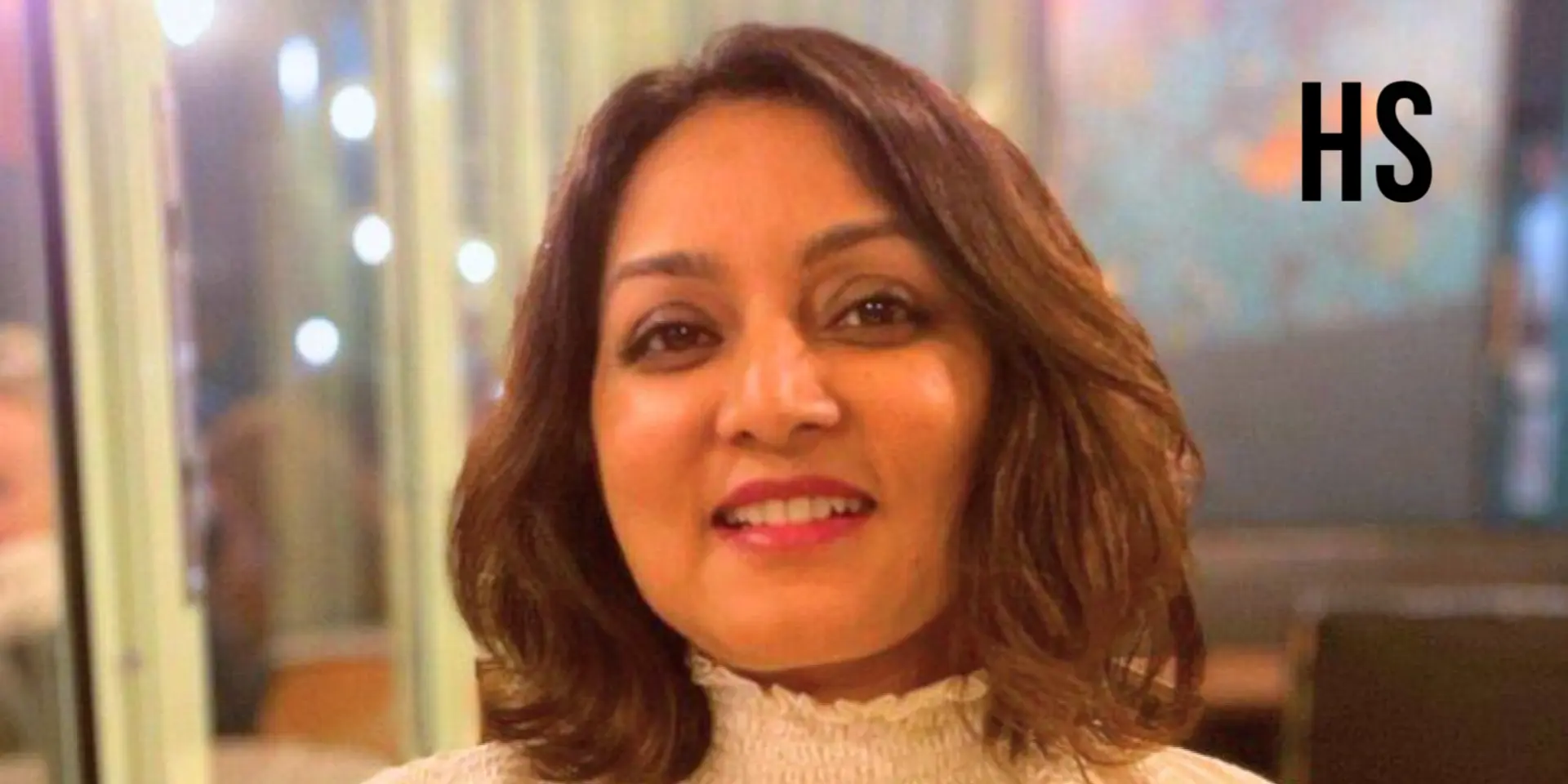

Seven years after #MeToo upturned India’s power circles, journalist and feminist technologist Noopur Tiwari looks back at the movement—she believes it was never about catharsis but about confrontation.
As the founder of Smashboard, a Paris- and Delhi-based feminist platform working at the intersection of technology and collective resistance, Tiwari has spent years advocating for the rights of survivors of sexual violence.
The UNESCO award-winning platform empowers survivors of violence with tools designed to protect their privacy and respond to trauma without surveillance or data exploitation. Through encrypted platforms, survivor-centred design, and digital safety tools, Smashboard offers a radical alternative to mainstream tech by enabling survivors to safely log incidents of sexual violence, document evidence without surveillance, connect with trauma-informed professionals, and find peer support within a feminist, caste-aware framework.
Built to resist data commodification and online harassment, the collective’s technology turns the internet from a site of retraumatisation into one of solidarity, care, and collective resistance.
Tiwari is also a liberatory somatic practitioner promoting ‘embodied activism’, an approach to social justice that views the body as a site of transformation, healing, and resistance.
In a conversation with HerStory, she recalls that the #MeToo movement "wasn’t relief, it was hell"—a collective act of desperation from those whom the system had abandoned.
Edited excerpts from the interview:
HerStory (HS): It’s been seven years since #MeToo swept through India’s media and public life. Looking back at the movement, what do you think were the most meaningful shifts? Did we overestimate the change it would bring about?
Noopur Tiwari (NT): #MeToo confirmed that sexual harassment takes place on a devastating scale and that the system is deeply entrenched in misogyny. It led to a wider realisation that naming one’s perpetrator is not accessible, safe, or helpful for everyone. In India, casteism, ableism, queerphobia, and other structural inequalities compound the injustices marginalised bodies face.
For those who hadn’t experienced it firsthand, #MeToo exposed how the criminal justice system itself is part of patriarchal structures. The due process is a trauma trap—revenge-oriented and rarely transformative.
As for whether we overestimated change, I don’t think it’s useful to point fingers at those who hoped for it. Hope is essential to survival. The problem is with patriarchal systems that push back against transformation. They lie exposed and continue to be challenged, including—though not only—by #MeToo.
HS: Do you think #MeToo was a movement of catharsis or of justice? And has that justice truly materialised?
NT: People often mistake #MeToo as cathartic, but catharsis implies relief. Most who participated in the movement went through hell. Many were ignored, punished, gaslit, or retraumatised. Others witnessed all this and endured the pain of being unable to name their perpetrators.
Justice comes only with deep transformation—and that hasn’t fully taken place. Punishment or ostracisation aren’t transformative justice. And if the system failed to respond, it’s the system that failed, not the movement.
#MeToo was born out of desperation and the lack of any other choices.
HS: When you look at the growing fatigue around sexual harassment, especially online, does it threaten to wear down or silence feminist movements?
NT: There has been a great deal of silencing and refusal to listen. I don’t agree that feminist energy gets neutralised over time—that’s what oppressive systems want us to believe. What we see is the system failing and lashing back.
The energy of collective resistance is infinite. Exhaustion, rage, and grief are all part of the process, not signs of defeat. We rest, resume, and show up in whatever ways we can. Every act of resistance is a step closer to change, even if it’s slower than we’d like.
This resistance didn’t begin or end with #MeToo. More people today understand consent and abuse of power, and more are leaning towards transformative justice.
HS: How do caste, class, and institutional complicity continue to shape whose experiences of sexual violence are believed, amplified, or ignored?
NT: In India, caste determines whose stories are believed. When the List of Sexual Harassers in Academia (LoSHA) was released by a group of marginalised individuals, upper-caste elite feminists failed to back them—instead, they questioned its credibility and invoked ‘due process’. That was caste oppression and erasure.
Those facing systemic oppression—casteism, racism, ableism, transphobia—experience sexual violence in ways that directly threaten survival and worsen their quality of life. Institutions are patriarchal; so naturally, they are complicit. We must begin by being more irreverent toward them. Capitalist culture worships power and wealth, no matter how corrupt.
HS: How is Smashboard giving a voice to women and queer people outside elite circuits—domestic workers, Dalit and Adivasi women, garment workers, or those in rural economies?
NT: At Smashboard, none of us used the #MeToo hashtag to name perpetrators publicly. Our work against sexual violence began before #MeToo, even though the organisation launched around that time. The timing helped us, but our focus has always been on those experiencing ongoing violence or its aftermath.
The obsession with perpetrators and punishment often sidelines survivors. Dismantling systemic violence begins with centring those most impacted.
We’re working in a digital space dominated by vectoralists—those who control information networks like Meta, Google, and X. We resist as we can, knowing one initiative can’t address everything.
As an anti-oppression platform, we hold deep regard for the wisdom and sacred rage of Dalit, Bahujan, Adivasi, and Vimukta (DBAV) voices. We put our privileges in the service of anti-caste work—starting with ourselves. Personally, as a Savarna, non-binary, queer, and disabled person, my goal is to be a cycle-breaker in my own communities.
Smashboard’s work only has meaning if we continue collaborating with DBAV authors, advisors, and activists. Are we doing enough? Probably not. There’s still so much work ahead.
HS: Even after its early embrace of #MeToo, has the media really changed—or has it simply reinforced the old hierarchies of who gets to be heard and believed?
NT: The media’s early embrace of #MeToo was mostly opportunistic; it rode the news wave. It served its purpose but was short-lived. India’s media remains dominated by upper-caste men and women, both patriarchal. Corporate media owners thrive on these structures and have no incentive to dismantle them.
With the fascist wave, priorities have shifted further toward consolidating power. Even many ‘radical’ small media outlets are led by editors who were indifferent or even hostile to survivors. I’ve personally witnessed contributors to LoSHA being mistreated by such editors.
HS: What’s your assessment of POSH today—in spirit and implementation? Has it been reduced to a bureaucratic checkbox, or can it still be reclaimed as a feminist tool?
NT: If POSH has done one thing, it’s naming the elephant in the room—something that once felt impossible. It’s hard to measure where it’s implemented meaningfully versus just for compliance. And, of course, the informal sector—the most vulnerable—remains excluded.
Consultants tell me many organisations now take POSH seriously, reporting has increased, and false cases are rare.
At the same time, I know people who’ve faced sexual harassment at work and found POSH useless. The power dynamics, disbelief, and psychological strain of due process make it unaffordable for many.
HS: Defamation suits and digital smear campaigns are used to silence survivors. What structural safeguards are required now?
NT: Defamation suits are tools of retaliation—ways for men to protect their patriarchal ‘reputation’, a form of patriarchal currency they believe they’re entitled to. These laws would have been scrapped long ago if our criminal justice system weren’t designed to protect the powerful.
Those trapped in cycles of violence speak truth in any way accessible to them. I oppose smear campaigns and cancel culture—but #MeToo was neither. When people are given no support or choice, they must be met with nuance, not blame and suspicion.
#MeToo challenged those with systemic impunity. Labelling that collective outpouring of rage and desperation as malicious is part of the backlash. We shouldn’t hold participants to a standard of perfection or assume their intent was to harm.
HS: Has Smashboard’s role shifted since its founding—from a safe-reporting app to something bigger?
NT: No. Our work hasn’t become ‘bigger’, and there’s no shame in that. Rather, we have faced challenges. Depth matters more than scale. We frequently check our capacity and slow down—a necessary act of resistance against capitalist demands for constant productivity.
We’ve resisted corporate appropriation, refused funding rooted in exploitative wealth, and rejected the capitalist notion that everything of value must yield profit.
Even though violence against women is widely acknowledged as a global issue, a project like ours still feels threatening to many—precisely because it challenges the systems that sustain that violence: capitalism, caste, and patriarchy.
HS: What does inclusive feminist reporting on sexual harassment look like in practice?
NT: A radical ecosystem of anti-oppression already exists—just not in the mainstream template of credibility. There’s a wealth of writing, blogs, podcasts, publications, zines, and online communities doing this work every day. They may not look ‘legitimate’ to the establishment, but they’re where feminist truth-telling truly lives.
Edited by Swetha Kannan