



Breaking barriers, building tech: The women who defined India’s digital story in 2025
HerStory presents a list of women leaders in India’s tech ecosystem who are leading digital transformation across sectors and navigating the AI landscape with panache and an instinctive understanding of inclusion.

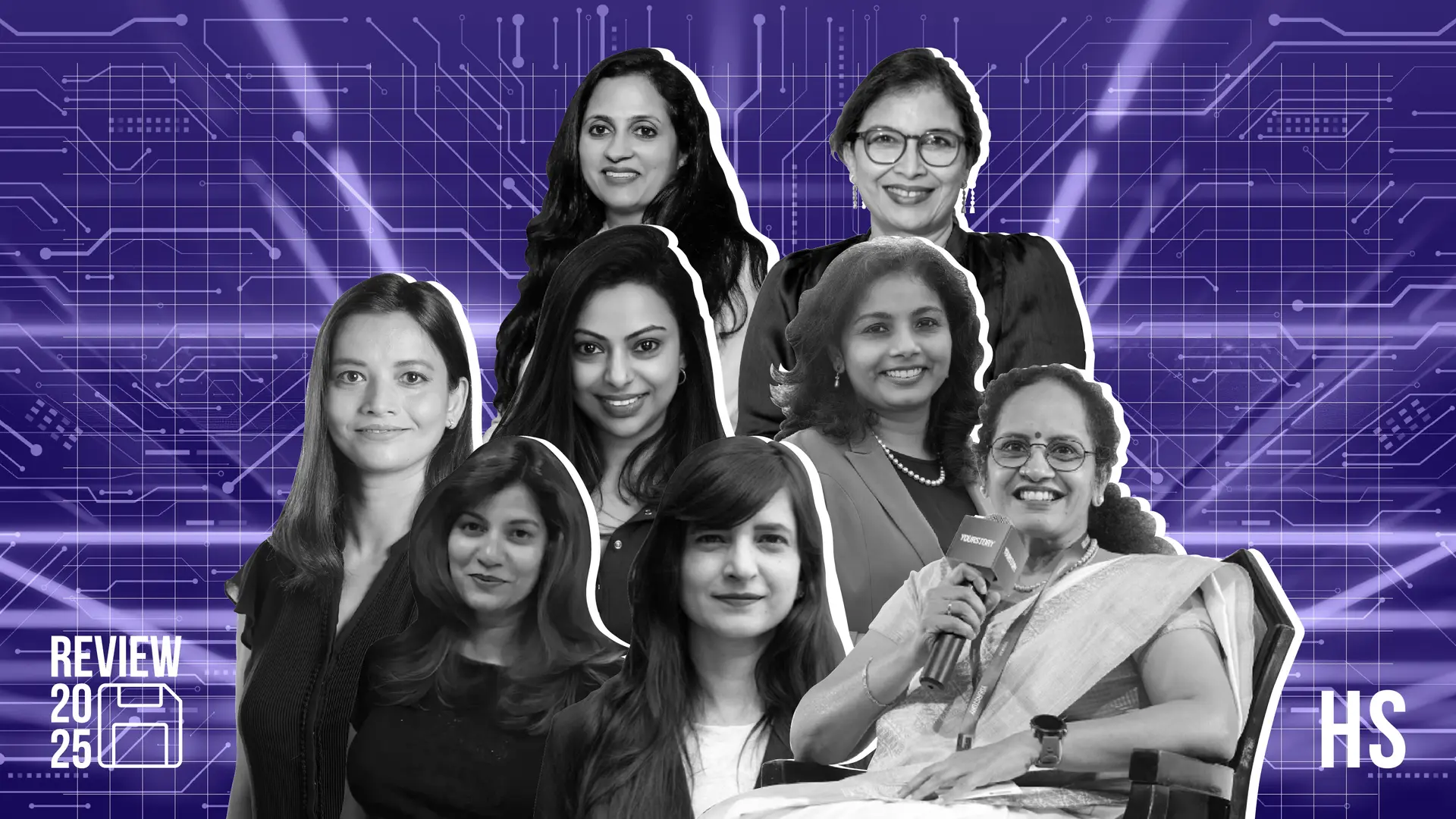

Women tech leaders have always been known for their distinct detail-driven leadership and collaborative approach—as they push for equitable tech adoption, transparent processes, and long-term goals.
They drive billion-dollar businesses, balancing innovation with responsibility. They also bring a people-first approach to technologies that shape everyday lives and possess an instinctive understanding of inclusion.
However, despite the emergence of women CTOs, engineering heads, and product leaders, there are deep gaps that continue to hold women back. They still have to push harder to be heard, network twice as much to be visible, and shoulder disproportionate responsibilities as they enter leadership rooms where women are far too few.
Overcoming these challenges, women lead with intent and purpose to shape a future that’s stronger and more inclusive.
In the past year or so, women leaders have stood out with their ability to navigate the advancement of AI and lead digital transformation across sectors.
Here is a list of women leaders in technology we featured this year.
Bhawna Agarwal
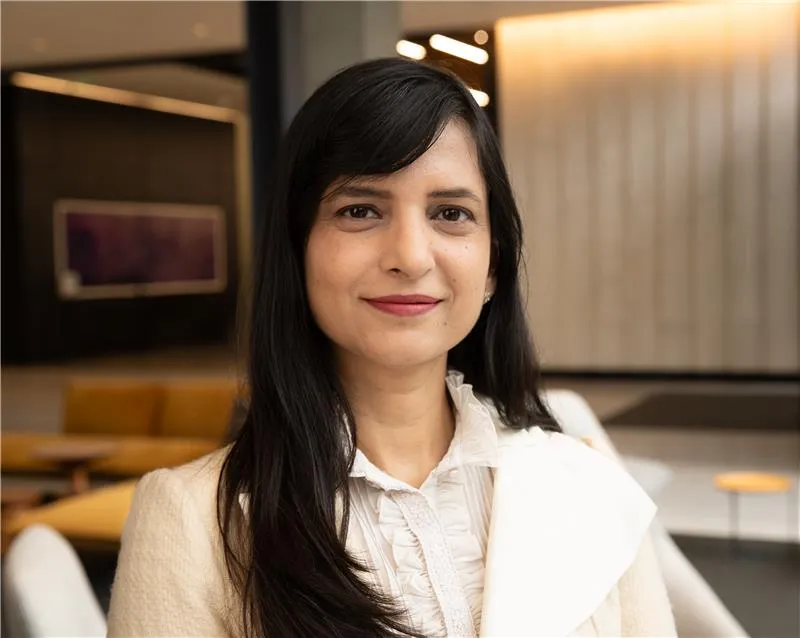
In May this year, Bhawna Agarwal was appointed the senior vice president and managing director of Hewlett Packard Enterprise (HPE) in India.
With more than 25 years at the helm of digital startups, media brands, and consumer tech companies, Agarwal joined HPE in 2019 to steer its Compute Business Unit and Growth team. For the past year, she has also been leading account management and strategic industry verticals.
Agarwal started her career when the concept of digital business was still new. At Times Internet, she and her team thought of midnight flower deliveries when the concept of online shopping was unheard of. It became a roaring success.
Agarwal admits that in her long career in tech, she has had to prove herself time and again.
“I've had scenarios where people actually thought I was an intern. They did not know I was the co-founder. There was a time when I was not the only woman in the boardroom, but I was also the youngest,” she says.
She believes in being authentic and focusing on merit. “I’m never going to command a presence because I'm their boss, but I've to earn my stripes. I was very clear that you need to earn your respect, not command it,” she says.
Agarwal points out that the way people buy and consume technology has changed dramatically. A purely product- or catalogue-driven approach, she says, will not sustain a company in the long run. Under her leadership, HPE India is shifting toward a more consultative selling model, one built on relationships and trust. “People trust people they like. People buy from people they trust,” says Agarwal.
Chandrika Deb

As Canva’s first employee in India, Chandrika Deb has been instrumental in driving the platform’s rapid growth in its fourth-largest market globally and advancing its mission of design democratisation.
Deb’s career trajectory has been anything but conventional. She began in public policy, moved to ecommerce giant Flipkart, and eventually became the first employee of Canva India—a role that placed her at the heart of building the design platform’s presence in one of its fastest-growing markets.
Her leadership, rooted in innovation, inclusivity, and scale has enabled Canva to reach more than 100 million active internet users across the country, from students and solopreneurs to creators and enterprises. She also leads Canva’s AI and localisation efforts, including the launch of its Hindi website and the platform’s expansion into more than a dozen Indian languages.
As head of Canva India, Deb is focused on creating a workplace where people are empowered to thrive. “My job is not to tell my people what to do, but to empower and mentor them,” she says, emphasising her leadership philosophy.
In a conversation at HerStory’s SheSparks event, Deb addressed the growing conversation around AI and its impact on design. “AI is more of an enabler and will make us more efficient,” she said, and noted that AI now helps anyone create, even without technical skills.
For small businesses, she believes, AI can be transformative, opening doors to scale and visibility that were once out of reach.
Shilpa Menon
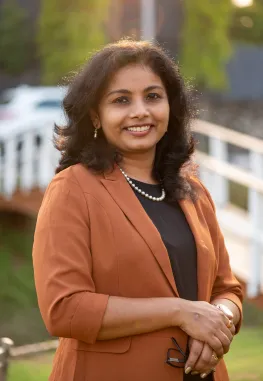
Shilpa Menon
When Shilpa Menon joined UST (then US Software) in 2000 as employee number 53 at its Thiruvananthapuram campus, the company was still in its early days, with only a handful of people and a limited number of projects.
The tight-knit team of 50–60 employees learned on the go and took on every responsibility that came their way.
Menon too learned the ropes along the way.
“One day I was a developer, the next day a tester, and the day after that, analysing requirements. It was great exposure not just focusing on one area but gaining broad experience across roles,” she recalled.
Twenty-five years later, Menon is a technology and delivery leader, now serving as the centre head at UST’s Thiruvananthapuram campus, the company’s largest development centre with more than 7,500 employees.
She oversees end-to-end operations, drives employee engagement, and ensures delivery excellence for clients around the world.
As one of UST’s earliest employees, Menon has witnessed the organisation’s transformation first-hand, from a small, close-knit setup to a global technology leader with a workforce of more than 30,000 people.
The centre head position is in addition to her delivery work. Her responsibilities include growing the centre, employee retention, engagement activities, and maintaining the back-to-office rate, which is currently 80-87% at Thiruvananthapuram.
Swapna Bapat
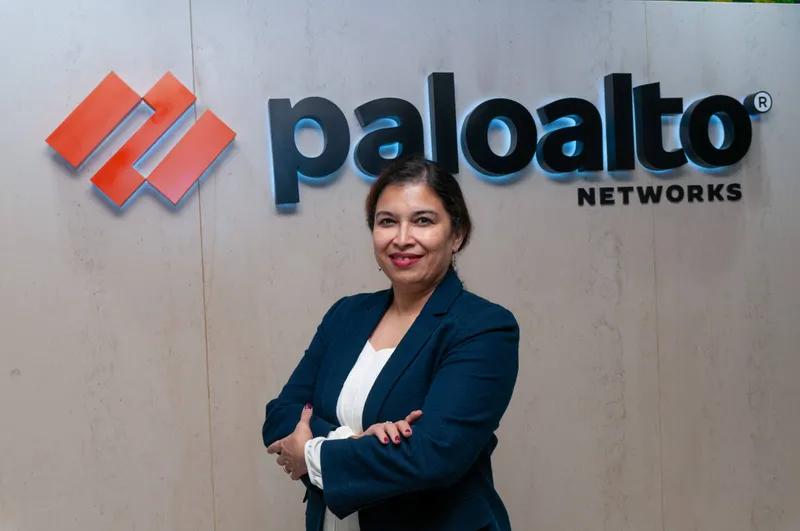
Swapna Bapat
Swapna Bapat, Vice President & Managing Director for India and SAARC at Palo Alto Networks, has traversed an incredible 25 years in technology, from the days of dial-up internet to an era defined by AI and sophisticated cybersecurity threats.
Growing up in different countries taught her adaptability, a skill that shaped her career as she moved from early engineering roles into leadership positions at companies such as Lucent Technologies, Cisco Systems, and Microsoft, before joining Palo Alto Networks.
At Palo Alto Networks, Bapat leads the company’s growth by expanding its technology reach, building strategic alliances, and strengthening the partner ecosystem across India and SAARC.
Her role places her at the forefront of one of the world’s fastest-growing cybersecurity markets, where she works closely with customers and partners to drive awareness and adoption of cutting-edge security solutions.
Bapat is forthright about the importance of finding one’s voice as a woman in tech. She recalls moments from earlier in her career: “There were times when I would go in front of the room and stand there saying, ‘Hey, I’m short but I have a voice. I demand to be heard.’” She also stressed the need to build strong networks: “Somebody should speak up for you when you are not in the room.”
She is optimistic about the future of cybersecurity, highlighting the momentum at Palo Alto Networks: “I think it’s one of the most exciting times to be in cybersecurity. The leadership here is extremely forward-thinking, customer-centric, and fast in decision-making.”
Sangeeta Yanamandra
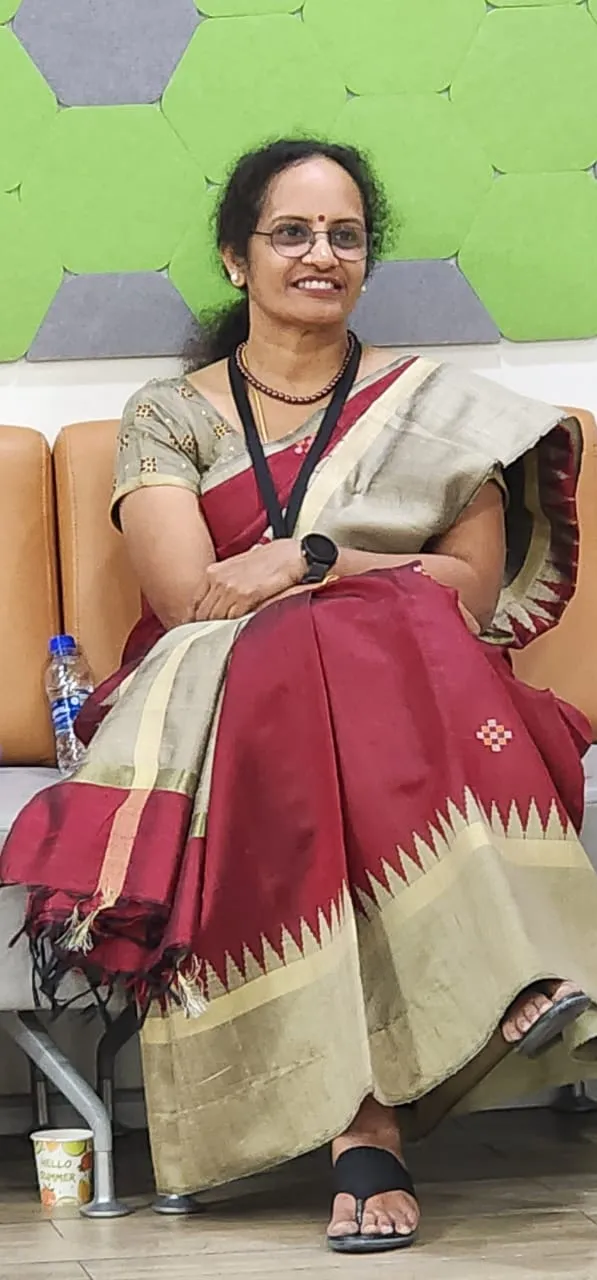
Sangeetha Yanamandra has built a 27-year career in technology, evolving from mobile technologies to enterprise solutions, cloud computing, analytics, and AI. She describes her path as one of continuous self-challenge.
Early in her career she entered a slow technology job market and embraced resourcefulness. She has worked across domains including airlines, security, legal and clinical trials.
At OpenText, Yanamandra oversees engineering and product management India teams in analytics and the legaltech space.
She is also the site leader for Hyderabad, taking care of employee engagement and CSR, and she also chairs the diversity and inclusion committee.
She emphasises the importance of mentoring women engineers, especially those navigating major life transitions such as marriage and maternity.
Her guiding beliefs is that technology isn’t just about skills but is also about staying curious, adaptable, and resilient.
She reminds users to see AI as a foundation and build on it with their own distinct ideas.
“Don’t use it as is, apply your thoughts. AI should not overtake our thought process. We are unique in our thought process and that has to come out explicitly.”
Reena Gupta
Reena Gupta, Head of Digital Experience Services at Epsilon India, has built a career spanning over 25 years at the intersection of technology and business. She started out as an electrical engineering graduate, and within two years realised her true calling lay in bridging technology and consulting. This realisation prompted her to pursue an MBA at IIM Lucknow.
Gupta spent 16 years at Capgemini where she discovered her niche. “I found my niche where I could play that role of bridging the gap (between technology and consulting). There are technologists who are very good with technology. Then there are people on the consulting side who can speak business. My sweet spot was that I could understand both technology and business,” she says.

In 2019, she joined Epsilon India as the vice president of strategy and scaled the go-to-market business for marketing platforms across APAC and Middle East.
She now leads a $250-million global portfolio for digital experience services and heads a team of over 1,000 people.
A major focus for Gupta has been evolving the India centre from a pure delivery model into one that drives strategic thinking and innovation: “I think in the last couple of years, one of the challenges we faced was to be able to position India as one step ahead of just delivery and execution… drive strategic thinking that can bring in thought leadership and innovation,” she says.
Gupta is also candid about gender dynamics in tech. “There have been times when you feel you have to prove your credibility. But again, I wouldn’t say it’s necessarily due to gender. Even my male colleagues might feel the same way.”
Sujatha Mukunthan
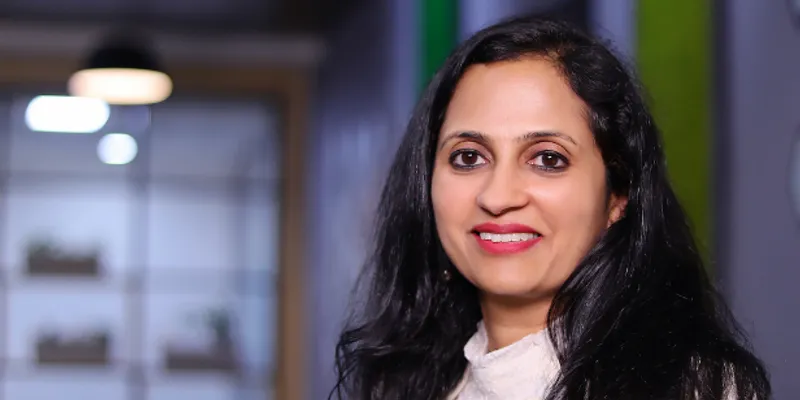
Sujatha Mukunthan began her tech career more than two decades ago as an intern at Siemens, and has since returned to the organisation in a senior leadership role. After completing her bachelor’s in computer engineering and a master’s in embedded systems in Germany, she joined Siemens R&D in Zurich, working on fire-safety systems.
Mukunthan then moved to Bosch, shifting from research into software development and product roles. In her 21 years there, she deliberately took on different roles every three-to-four years to build breadth. As she puts it: “Rather than becoming a T-shaped engineer with deep expertise in one area, I aimed to be more of an M-shaped engineer … ready for any type of leadership role.”
In 2023, Mukunthan returned to Siemens. She is now the vice president and head of research & pre-development at Siemens Technology & Services India. In this role, she leads a team of around 180 researchers in India, part of the larger global research setup in Germany.
On the subject of gender and career progression, she notes that there is the lingering pressure for women to over-perform. “Women sometimes think they should prove extra. Instead of achieving five, should they achieve ten to show they are equally strong?”
In every role she takes up, she aims to not only steer research for real-world problems but also leave her mark. “Every role I take, I want to leave my footprints that say she was here, she did this, and now she has moved on.”
Priti Sawant

Priti Sawant, Founder & CEO of JoulesToWatts, is steering the company towards becoming India’s first $100-million GCC-focussed firm, helping build the country’s GCC enablement industry from the ground up.
Sawant entered STEM as an engineering graduate and later worked at Accenture in consulting.
Noticing a gap in support for global capability centres (GCCs) in India, she founded her first venture in 2004 and then launched JoulesToWatts in 2015 with backing from investor Mohandas Pai and Dr. Ranjan Pai.
Today, JoulesToWatts, which employs 5,800 tech professionals across nine countries, has helped establish over 330 GCCs (including work with 70% of the Fortune 500 companies). It is targeting $100 million-120 million in revenue.
Sawant emphasises a tech-first, data-driven approach at her company. “After God, we believe in data. This tech-first approach has enabled the company to make data-driven decisions on an hourly basis.”
On gender dynamics, she says: “When women traverse the first five to ten years, they don’t even know there’s a bias because you just wonder what is going on, why things are like this.”
At her company, women comprise 32% of the tech workforce and nearly 50% of the enterprise workforce—achieved not through quotas but organically.
Looking ahead, Sawant believes India’s GCC story has an enormous runway.
“India’s story is so interesting, with our STEM talent, our engineering and math minds… There’s enough for everybody to do.”
Edited by Swetha Kannan