



Inside the quiet revolution of Maharashtra’s single women’s sangathans
Across Maharashtra, widows and single women left behind by agrarian distress are slowly rebuilding their lives through collective organising.

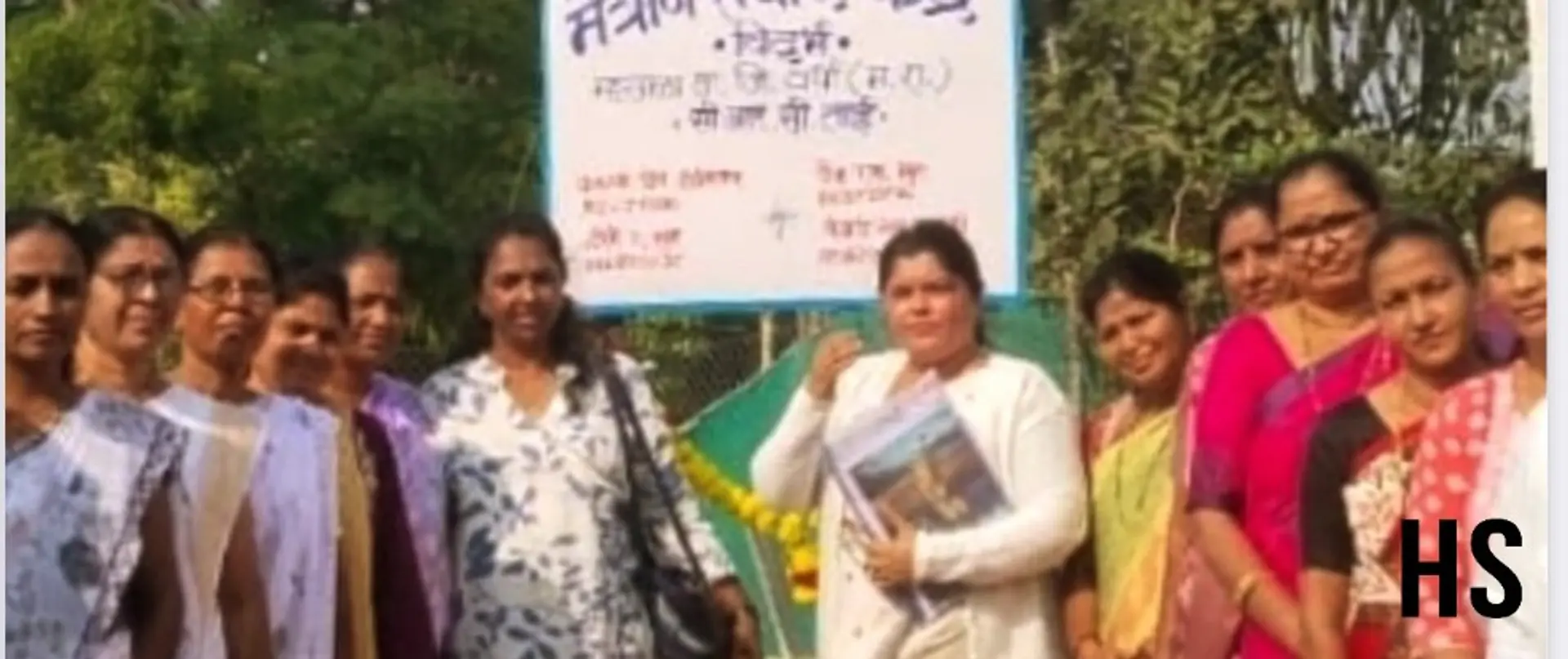

Lata Dhadase’s world fell apart the day her farmer husband, Padmakar, ended his life, unable to repay crushing loans. He left behind two small children, an arid farm, and a debt that consumed their family for years to come.
For over half a decade, Dhadase, a resident of Yavatmal district in the drought-prone Vidarbha region, found herself overwhelmed juggling these responsibilities. In 2014, she heard about Ekal Mahila Sangathan, a collective of single women that helps widowed, deserted and unmarried women access rights and state support. Within months of joining, she learnt how to secure her widow’s pension, open a bank account, and start a small home-based livelihood making leaf plates.
The collective also enabled her to become an anganwadi worker through steady encouragement, sharing information, and building the confidence to navigate difficult bureaucratic systems.
Lata’s story is just one of many women affected by farmer suicides and left alone to make sense of their lives and responsibilities. According to NCRB data for 2022, Maharashtra alone saw 2,708 farmer/cultivator suicides, which was more than half of the national total in that category.
Families are left with unpaid debts, childcare responsibilities and, for women, an uncertain legal and social status marked by unclear land titles, missing documentation and limited legitimacy to make independent claims.
The barriers to rebuilding a life are substantial. Field studies have repeatedly recorded long delays in pension payments, difficulty securing identity and land documents, and low awareness of welfare entitlements, forcing many women to navigate slow bureaucratic processes.
An IndiaSpend investigation in 2018 found that only a fraction of widowed women received regular pension payments, while many lacked the documentation necessary to claim land or compensation.
For women like Anita Tai of Osmanabad, these gaps translate into daily hardship. “The rules say you must have your name on the land or a card—neither of which I had. After my husband ended his life, I was sent away without rations,” she tells HerStory.
Dozens of such accounts highlight the isolation faced by widows trying to keep farms running, care for children, and negotiate village hierarchies. The stigma of widowhood and the loss of a male household member create both economic precarity and social invisibility, a double burden that collective organising seeks to counter.
Across Maharashtra, women like Lata have formed collectives that are at once practical and political. In Marathwada, members of the Ekal Mahila Sangathan meet regularly to support one another through visits to government offices, sharing information about entitlements, and tackling day-to-day problems, ranging from ration cards to delayed pensions. Meetings become spaces for mutual learning and small but significant administrative acts.
The immediate gains are tangible. Many women begin kitchen gardens, run modest poultry units, or participate in group savings schemes that provide food security or small, regular incomes.
The long-term gains, however, lie in confidence and public presence.
Chitra Tai, one of the 27 women trained through the Collective’s Grassroots Leadership Development Programme in 2014, returned to her village in Ambajogai and mobilised 250–300 women to voluntarily build a check-dam under guidance from the Paani Foundation. “Together, we built a check-dam and I helped many single women get MNREGA jobs. This made me realise I, or anyone, could become a leader in my village,” she says.
Notably, not all members are widows. In households shaped by poverty or domestic conflict, some women take the difficult step of leaving their husbands, while others are abandoned—circumstances that bring them to the collective, which has made it a mission to support them.
The deeper transformation is also social. Women who once felt compelled to “stay quiet” now travel to taluka offices in groups, insist on receipts, and follow up repeatedly on pending applications. Their collective presence forces officials to acknowledge delays and address gaps in service delivery.
CORO (Community Outreach and Resource Organisation), based in Mumbai and active across Maharashtra, has played a key role in strengthening such leadership. Through its Single Women Programme in Marathwada—across Beed, Latur, Osmanabad, and Nanded—CORO supports women who are widowed, abandoned, separated or never married, to form sangathans, Mahila Mandals (women’s collectives) and self-help groups. Training focuses on documentation, property rights, access to welfare schemes and livelihood strengthening. Over time, these sangathans register independently and build their own funding mechanisms through member savings, small enterprises and local fundraising efforts, reducing reliance on external grants.
“We were working with widows, abandoned and single women,” says Mahananda, a leader trained through CORO, in a podcast by Nirantar Trust. “Then we saw there were women who had left their husbands because of abuse. We thought, why should they be left behind? So we brought together single women from all backgrounds.”
Nirantar, which works on gender and education, describes this as a form of emergent leadership, which has grown not from formal authority but from necessity, shared learning and steady practice.
As one woman from the collective puts it: “What is family—the one you are born into or the community you live with? When I am struggling with something, personal or bureaucratic, ten or twelve women show up within minutes. That is what empowerment looks like.”
Edited by Kanishk Singh