



This initiative in Tamil Nadu bets on rural micro-entrepreneurs to curb migration
An initiative by BYST and Ashok Leyland Foundation aims to create micro-enterprises among rural and marginalised youth. But its success depends on more than just skills training; it also has to navigate deep-rooted barriers of debt and exclusion.

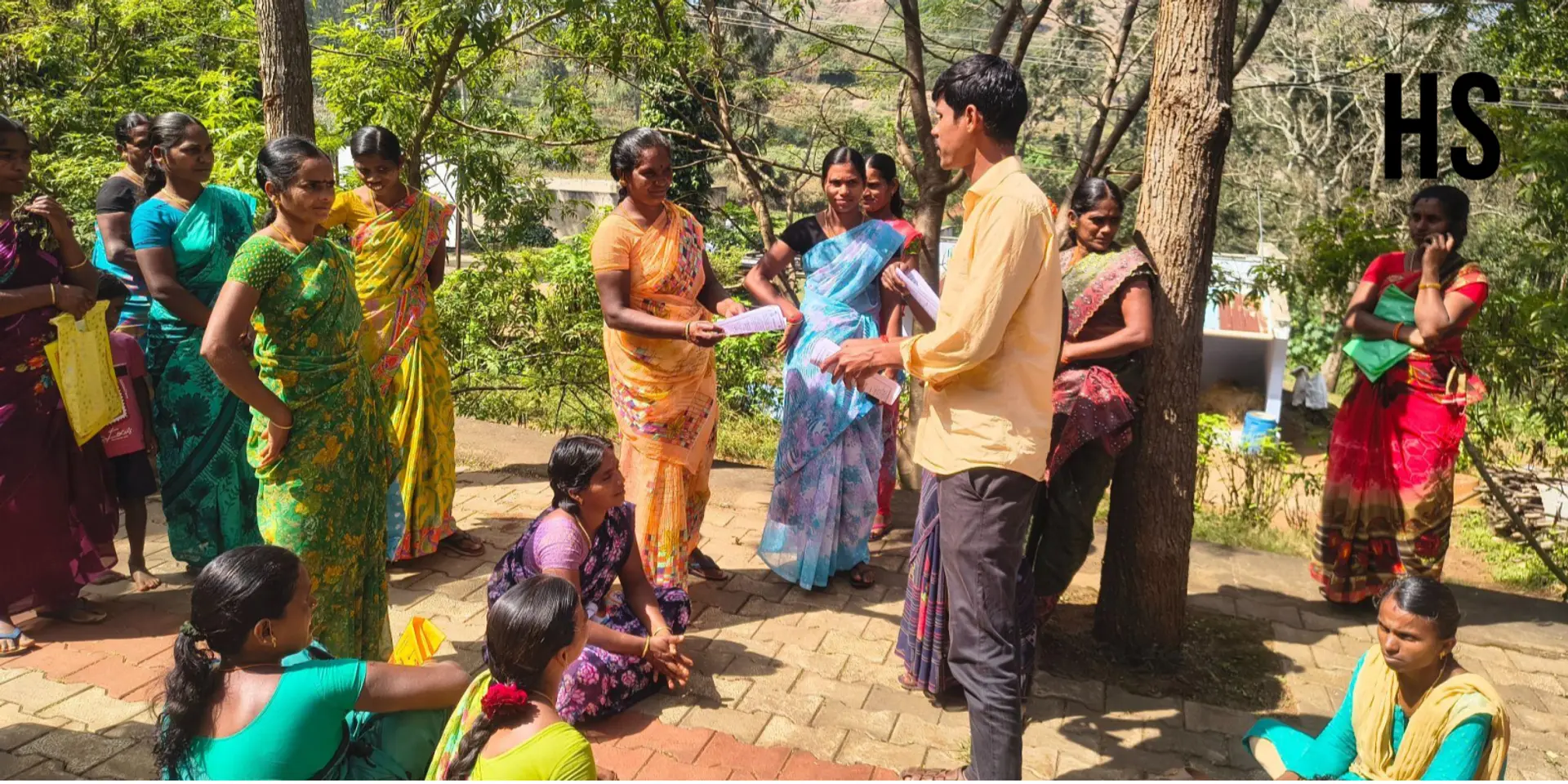

Entrepreneurship is often framed as a pathway out of poverty. But for many scheduled Caste and Scheduled Tribe (SC/ST) communities, the prospects of owning an enterprise remain slim.
According to data from the office of the MSME development commissioner, entrepreneurs from the Scheduled Caste category own 6.8% of MSMEs in India, while those from the Scheduled Tribe category own just 2.1% of them. Most micro-enterprises have limited access to capital, markets, and opportunities for growth.
Young Grampreneur Development, a three-year programme by Ashok Leyland Foundation and Bharatiya Yuva Shakti Trust (BYST), a Delhi-headquartered non-profit, seeks to address these gaps and create micro-entrepreneurs from rural and marginalised communities in Tamil Nadu.
The programme’s aim is to enable these communities to build enterprises in their home districts and position entrepreneurship as an alternative to chronic underemployment and distress migration.
Running from 2025 to 2028, the programme prioritises women and youth from Scheduled Caste, Scheduled Tribe and tribal communities, with an aim to reach 4,500 young people out of which 900 aspiring entrepreneurs will receive structured training.
The idea is not only to support enterprise creation but also to anchor livelihoods locally, strengthen value chains, and build long-term income stability.
“This initiative will help create a new set of young micro-entrepreneurs who are skilled and confident and need not look for jobs,” says Lakshmi Venkataraman Venkatesan, Founding and Managing Trustee of BYST, pointing to the programme’s emphasis on self-driven, locally rooted enterprise.
“We are targeting youth who are semi-skilled, unemployed, or underemployed, because this is the demographic that’s often pushed into unstable informal work or compelled to migrate for daily-wage jobs,” explains a BYST spokesperson.
The approach to rural entrepreneurship differs from short-term skilling models; the core differentiator is mentoring. “We work with volunteer mentors from industry who stay with the entrepreneur from the awareness stage through training, bank linkage, and two years of post-loan handholding.”
The programme begins with community-level awareness campaigns designed to make entrepreneurship a tangible prospect in rural settings, where salaried employment is often seen as the only marker of stability. These campaigns use formats the communities are familiar with, such as street theatre and folk music; mobile outreach vehicles; and business idea contests; to draw young people into conversations about enterprise creation.
But only a small fraction of these people eventually move forward.
“Out of 50 or 60 young people we may reach, one might finally take up entrepreneurship,” says the BYST spokesperson, given the risks inherent in starting and running a business.
Enterprises are chosen by BYST based on parameters such as business viability, local demand, technical skills and feasibility in a particular geography. These hold good for all applicants, regardless of caste or gender.
The programme focuses largely on manufacturing and service enterprises, with limited retail trade, and avoids environmentally harmful activities. Training modules cover digital readiness, financial literacy, and ethical business practices, alongside preparation for engaging with banks.
Challenges along the way
The programme is not just about skills training; it also has to tackle the barriers of debt and exclusion.
Many rural and marginalised communities face high levels of longstanding household debt, due to low and/or irregular incomes, health emergencies, and informal borrowing practices. Debt often prevents people from starting businesses because their existing financial obligations prevent them from taking on even modest risks for entrepreneurship.
In such a context, access to credit is a major constraint.
BYST does not provide loans directly; instead it routes them through banks and government schemes.
“So, if someone is already in a debt trap and has not serviced earlier loans, we cannot process them,” says the BYST spokesperson. “We would then counsel them to clear existing debt and return later.”
The organisation has also observed that fear of debt itself often limits participation in entrepreneurship.
In tribal-dominated areas like Kalahandi in Odisha, BYST found that even though most residents are from tribal communities, fewer than one in three aspiring entrepreneurs came from these groups. Those who did apply usually chose smaller loans, often under Rs 1 lakh, reflecting a strong fear of debt rooted in past exclusion from banking systems.
A spokesperson from Ashok Leyland Foundation, the CSR arm of the automobile manufacturer, says the foundation’s representatives regularly visit project locations in Kolli Hills and the adjacent areas of Namakkal district, interact with beneficiaries and bank managers, and provide feedback to implementation partners. Despite this intervention, representatives also consciously step back wherever decisions must remain with the entrepreneur.
“Livelihoods are deeply tied to local conditions such as agriculture cycles, climate and market access,” he says. “No external agency can fully control these variables.”
The teams behind the initiative admit that there are limitations of using entrepreneurship as a development tool. They acknowledge that enterprise-building cannot compensate for structural deficits such as landlessness, poor infrastructure, and social discrimination. .
Building confidence, capacity and mentorship
The programme places emphasis on confidence-building and visibility among women professionals and first-generation graduates from under-priviledged backgrounds.
Sustainability beyond the funding cycle is a central concern.
Both partners of the programme plan to train local mentors, including past beneficiaries, so that
entrepreneurs can continue receiving guidance beyond 2028.
BYST also runs an institutional mentoring model, training educators, district-level officials and incubation-cell staff to support entrepreneurs independently, without the organisation’s direct presence.
“The idea is to create an ecosystem where a young person who wants to start a business finds encouragement, not a closed door,” says the BYST spokesperson.
For Ashok Leyland Foundation, the micro-entrepreneurship programme builds on its earlier work in education. Through its flagship Road to School initiative, the foundation employed local graduates as educators in remote government schools for four years. When this came to an end, it began exploring ways to ensure that newly skilled youth did not slip back into unemployment.
“Tamil Nadu has a rich tradition of skill, enterprise and community strength,” says T Sasikumar, Chief Operating Officer, Ashok Leyland Foundation. “Yet many young people in rural areas face gaps in guidance, networks and access to credit. Our partnership responds to these needs in a focused and practical way, supporting local job creation and strong value chains so that young people are not forced to migrate out of the state in search of menial work, but can build enterprises where they live.”
Whether entrepreneurship can meaningfully reduce migration remains to be seen. Programme representatives distinguish between migration driven by aspiration and migration driven by compulsion, noting that their intervention targets the latter.
“If young people can build viable enterprises where they live, migration becomes a choice, not a necessity,” says the foundation’s spokesperson.
Both BYST and Ashok Leyland Foundations stress that entrepreneurship is not a universal solution. Its success depends on sustained mentorship, cautious exposure to credit, and realistic expectation, particularly for communities already navigating debt and social exclusion.
The programme’s impact, they say, will ultimately be measured not just in terms of the enterprises created but also by whether young people are able to stay, earn and grow on their own terms.
Edited by Swetha Kannan