


From footpaths to bus fleets: making Indian cities work for women
As the world observes the 16 Days of Activism Against Gender-Based Violence, mobility remains one of the most overlooked battlegrounds for gender justice. In India’s rapidly-growing cities, women’s safety and mobility continue to hinge on public transport systems that aren’t designed for them.

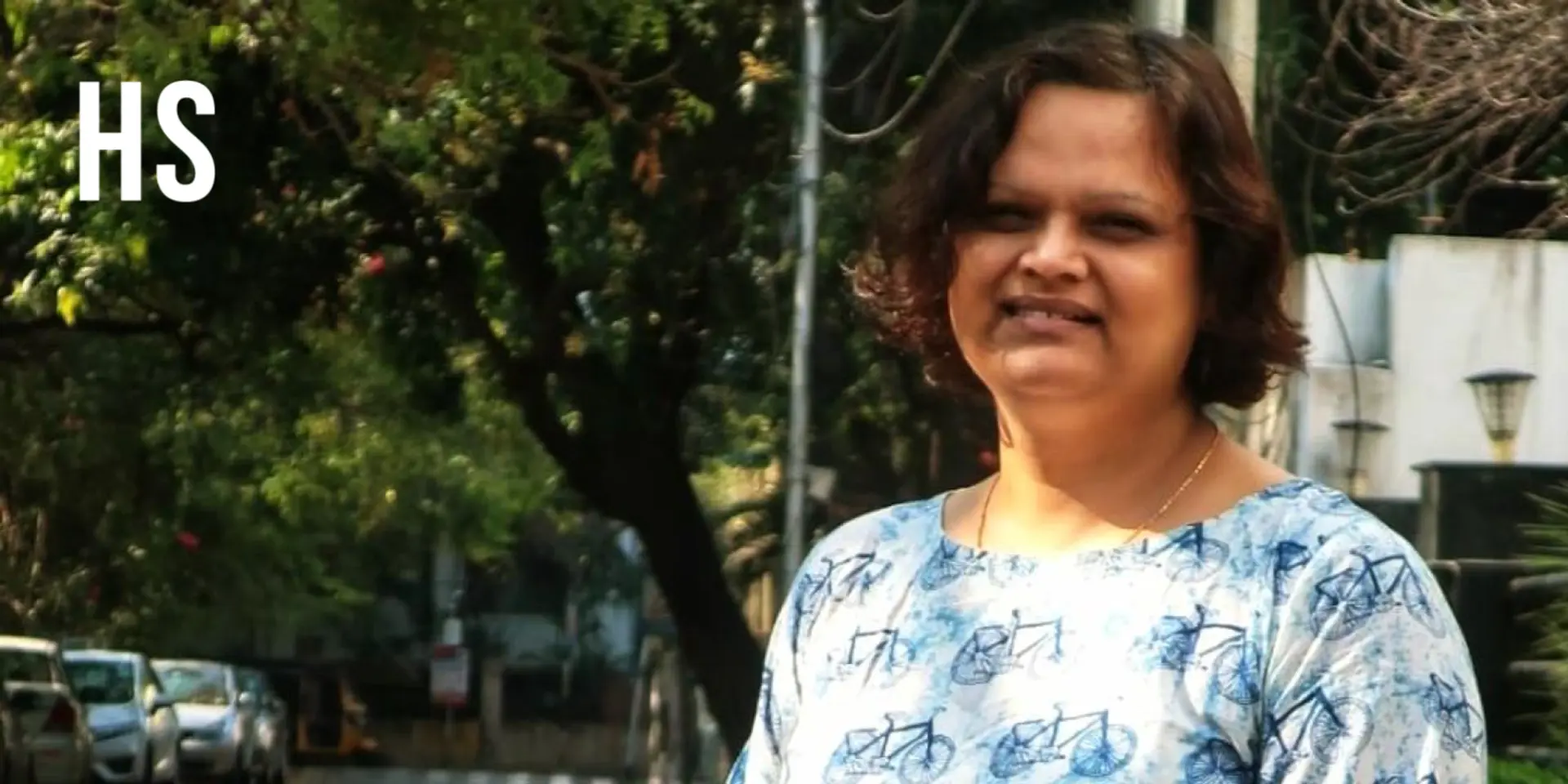

Across urban India, women tend to make shorter, more frequent trips, relying largely on walking, cycling, and public transport. Yet, as mobility expert Shreya Gadepalli, longtime urban transport reformer and Founding Director of the Institute for Transportation and Development Policy (ITDP) India Programme, points out, the systems meant to carry women safely through cities are built on a fundamentally male template. Everything from how streets are designed to who gets access to a vehicle, she says, “is skewed toward men.”
Gadepalli spent over two decades shaping progressive mobility reforms in cities like Chennai and Pune, championing walkable streets, better bus networks, and gender-sensitive planning. She now continues this work independently, advising governments in Assam and Sri Lanka on improving buses, street design, and public transport governance. Her approach is considered radical because it is grounded in data, everyday realities, and the lived experiences of women. And because it challenges the big-ticket projects that dominate Indian mobility investments.
Why women depend disproportionately on public transport
Women walk more, cycle less, and use public transport more than men, and most often not by choice, but because of barriers that begin at home.
“Even in households that can afford a vehicle, the two-wheeler goes to the man. Women remain dependent on public transport for their mobility,” she tells HerStory.
Cycles are largely inaccessible as well. Many older women were never taught to ride, and unsafe streets further discourage them. As a result, women’s mobility is confined to the modes that remain available: walking, buses, and shared autos, where safety becomes the defining prerequisite for every trip.
This is why improvements in bus services have an outsized impact on women. Frequent stops, shorter walking distances, reduced waiting times, less crowding, and well-lit, active streets significantly improve women’s ability to travel without fear. “Any improvement in buses benefits everyone, but it benefits women much more,” she says.
Why metros don’t solve women’s mobility problems
Despite billions invested in metro rail, Gadepalli argues that metros - while useful, - cannot serve as the backbone of women’s mobility.
Stations, she notes, are farther apart, less walkable, and often harder to reach safely. “A metro stop simply cannot be as close to your home as a bus stop,” she says. Frequent stops, which women rely on, are a feature only buses can provide.
Moreover, metros are also costlier, and their networks serve only narrow corridors of a city. Even large systems like Delhi move a fraction of their projected ridership because access remains restricted to small portions of the city. Meanwhile, buses, though cheaper, more flexible and far more impactful, remain neglected.
“It’s not a budget issue at all. A fraction of the money spent on metros could double a city’s bus fleet,” Gadepalli says. “But buses aren’t seen as ‘sexy’ enough.”
The myth of women-only solutions
Many cities have introduced women-only buses, pink autos, or reserved seats. But these gender-segregated ideas are, at best, symbolic gestures that do very little to improve on-ground safety, says Gadepalli.
“If only 10–20% of the fleet is women-only, you are effectively telling women that 80% of your system is unsafe for them,” she says. More importantly, these special buses arrive infrequently, forcing women to wait longer, walk farther, and risk harassment.
What women actually need is the opposite: more, frequent, and better buses - for everyone. “When crowding reduces and wait times fall, harassment drops. That’s what improves women’s safety,” she says.
When policy becomes tokenism
Gadepalli is frank about the widening gap between policy announcements and reality. Free bus schemes, women-only initiatives, or “pink-washed” safety programmes may sound impressive, but they often skirt the real issue, which is the access itself, she says.
In Chennai, which is considered one of India’s better performing cities, her team’s analysis found that only 50% of residents had access to frequent buses and only 60% had access to any bus at all. Women repeatedly told her team the same thing: free buses don’t matter if there is no bus to take.
This mismatch, she says, is rooted in a planning culture that prioritises spectacle over substance. “Most planning in this country is not data-driven. It is decision-driven,” she says. “Decisions are made first, data is manufactured after that to support these decisions.”
The link between access, safety and employment
Women’s participation in the labour-force is tightly bound to mobility and several studies have shown that. Cities with stronger public transport, such as Chennai, Mumbai, and Bengaluru (according to peer-reviewed journals like Transport Policy), report higher female workforce participation, while those without such infrastructure see women withdraw from the workforce.
“It’s very clear: where there is better public transport, more women work,” Gadepalli says.
Safety alone, she says, does not determine mobility, what we need is access. When women arrive late because buses are infrequent, they lose wages; in informal work, they may lose the day’s job altogether. “A missed bus can mean no income,” she says, “and these realities aren’t even acknowledged in policymaking in urban transport.”
The hidden gender biases inside transport agencies
Even within transport institutions, gender exclusions run deep. Gadepalli notes how women hired as drivers or conductors have found no toilets at depots, no women-friendly ergonomic design in buses, and no support systems enabling them to remain in the workforce.
“Even the buses were designed for the male body,” she explains. “Systems never imagined women would be part of the workforce.”
During her tenure leading the ITDP India Program, she ensured over 50% of her team was women, a rarity in the transport planning sector. “You cannot solve mobility issues for women without women being at the table,” she says.
Despite systemic resistance, Gadepalli sees pathways for meaningful change. Some of her suggestions include:
- Designing walkable streets
- Before-and-after studies in Chennai showed footfall rising 50% to 200% after footpath upgrades— - a clear sign that good design directly enables mobility.
- Doubling bus fleets
- She is currently advising Assam, where the government has agreed in principle to double Guwahati’s bus fleet and expand services to other cities.
- Designing safer cycling environments
- Women need safer intersections, not just cycle tracks, a detail that is often ignored.
- Empowering women with cycles
- Tamil Nadu’s decades-long program providing cycles and training to girls has significantly improved women’s independent mobility. Unlike women-only buses, this intervention directly expands freedom of movement.
Mobility as a site of gender justice
Gadepalli argues that gender-sensitive mobility planning is not a niche reform but a structural necessity. “Make everything better for women,” she says. “If you do that, it will automatically be better for everyone else.”
“Create plans rooted in everyday life: build better footpaths, crossings, buses and frequency. Do it everywhere and do it well,” she says.
Edited by Megha Reddy