



‘It’s a biological process’: How Samarpan is transforming menstrual hygiene for rural girls
Across Rajasthan and Madhya Pradesh, menstrual taboos and poor access to safe products continue to restrict girls’ lives. Sisters Ruma and Megha Bhargava are challenging that reality with reusable pads, awareness sessions, and community engagement.

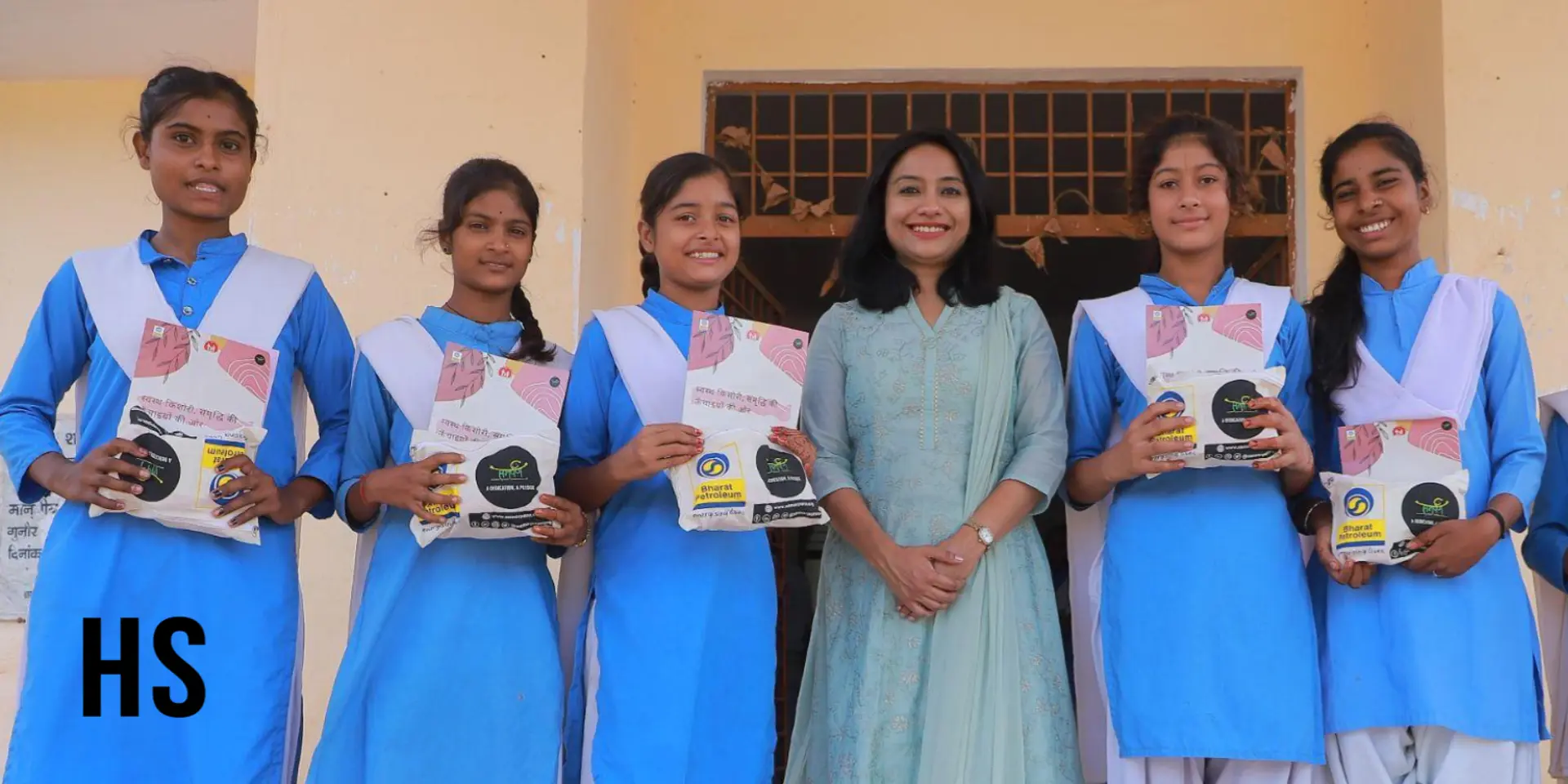

In rural classrooms across Rajasthan and Madhya Pradesh, it is not unusual for girls to miss several days of school every month during their period. In some cases, if the girl is old enough and in menstruating age, she might even drop out of school and be given into early marriage.
It was during one such school visit years ago that sisters Ruma Bhargava and Megha Bhargava recognised how deeply these issues cut into the lives and futures of girls. The experience led them to build Samarpan, an organisation headquartered in Mumbai that is working to ensure that this “natural biological process” which is shrouded in shame, silence, and logistical difficulties (including lack of access to safe, sanitary products) doesn’t become a barrier to young women’s dignity and right to healthy futures.
From the beginning, the sisters—both coming from medical backgrounds—knew that the challenge wasn’t just access to sanitary products, but an ecosystem of stigma, misinformation and poor infrastructure. The shift toward reusable sanitary pads came from a combination of medical insight, environmental concern, field realities, and a solid awareness of what girls were navigating everyday,” Ruma tells HerStory.
Why reusable pads became their central intervention
Ruma is clear about the limitations of plastic-based disposable pads, especially in rural areas. “They cause irritation, can increase cervical cancer risk, and are often unaffordable; even the cheapest packs cost between Rs 50-80,” she says. “In government schools, when free pads are distributed, the quality is inconsistent,” she adds. At one point, she recalls how a government scheme in one of the states they work in, had reduced the size of pads so drastically that the girls simply stopped using them. Disposal was no better; in many schools, she witnessed burning pits set aside for used pads, a practice that has been normalised.
The reusable pads, tested and designed by Samarpan’s team and produced through women’s self-help groups, offer a more sustainable option. But before introducing them to communities, Ruma and her team used the products themselves. Only then, they feel equipped to answer the girls’ questions honestly: how it feels, how often it needs to be changed, and how to care for it hygienically.
But the more significant shift happened inside classrooms. Girls who had only ever seen disposable pads or cloth pieces, now handled a scientifically tested, multilayered reusable pad for the first time. Their skepticism eased as conversations opened. Within minutes, Ruma recalls, their hesitation dissolved into curiosity, relief and even some humour. “They are extremely smart,” she says. “Once the barrier is broken, acceptance comes quickly.”
Choosing where and how to work
Samarpan’s menstrual health programme is centered in rural and tribal districts of Rajasthan and Madhya Pradesh. Ruma, who grew up in Kota, understood the region’s geography and its low performance on human development indicators. “We were very clear that we would work in rural and tribal areas, not cities,” she says.
The first major project began in Panna district with the support of the local police, using a community policing model to identify the most remote and vulnerable pockets. They started with 5,000 girls, who have today grown to around 22,000, with an additional 5,000 to be covered by March next year.
The team does extensive demographic mapping before distributing their products. Reusable pads do not work everywhere, especially in urban slums with shared toilets and little access to clean water. “The programme would collapse there,” says Ruma. But in the rural interiors where Samarpan works, most homes have toilets, access to water is stable, and girls have private drying spaces -all factors that make reusable products viable.
Education first
In every school, Ruma and her team have worked in, they have ensured that awareness precedes distribution of products. “Because, our goal is for longterm transformation, not a quick fix,” she says.
Samarpan uses a Hindi language booklet they have developed, explaining menstruation in simple scientific terms, debunking myths, and addressing taboos. Their sessions include demonstrations, question circles, and followups. Ruma emphasises the need to work with teachers, - especially male teachers, - through a step-by-step trust-building process.
“You cannot keep men out of the conversation,” she says. “Girls grow up in families and schools where men are present and play influential roles. If menstruation is treated as a secret or as shameful, girls will never be able to speak about discomfort or ask for leave. This defeats the purpose of treating it as a biological process,” she explains.
She also notes that the team does face some resistance initially. But once the male staff are educated about the scientific and social contexts of this work, they tend to join subsequent sessions voluntarily. And this normalisation at school continues to trickle outward—to homes, communities, and to the next generation of girls.
Samarpan tracks two primary indicators of impact: qualitative feedback on comfort, irritation, and rashes, and school attendance during menstruation.
Across the districts where they work, both indicators have shown improvement, says Ruma. School principals report noticeable reductions in absenteeism, especially in classes where long follow-up cycles have been completed. The comfort of the reusable pad remains a recurring theme in every feedback session, she says, and is often what convinces girls to continue using it.
A research partnership with a university is now underway to document these changes formally.
In November 2025, Ruma and Megha received the ‘Forbes India We Serve India Award’ in the category of Women-Led Social Innovation. The award highlighted Samarpan’s wide-reaching menstrual hygiene work and its impact on school attendance and environmental sustainability in rural and tribal India.
The organisation has, over the years, reached more than 50,000 children across 250 government schools, according to statements shared on their official social media handles. Their menstrual hygiene projects alone have supported thousands of girls with reusable sanitary kits and awareness sessions.
Despite all this progress, Ruma says the biggest barrier they face is the community’s inability to treat menstruation as a normal biological process, and secondly, the exclusion of men from conversations about it.
Both, she says, reinforce each other. “When menstruation is treated as taboo, men remain uninformed; when men remain uninformed, the taboo persists, making it harder for girls to seek support, comfort, or understanding,” she adds.
Samarpan is trying to break that cycle, with a belief that change begins with active listening and dialoguing.
Edited by Affirunisa Kankudti