



Meet the women working to protect India’s wildlife
From forests and wetlands to conflict-prone landscapes, these women are working on the frontlines of wildlife conservation across India.

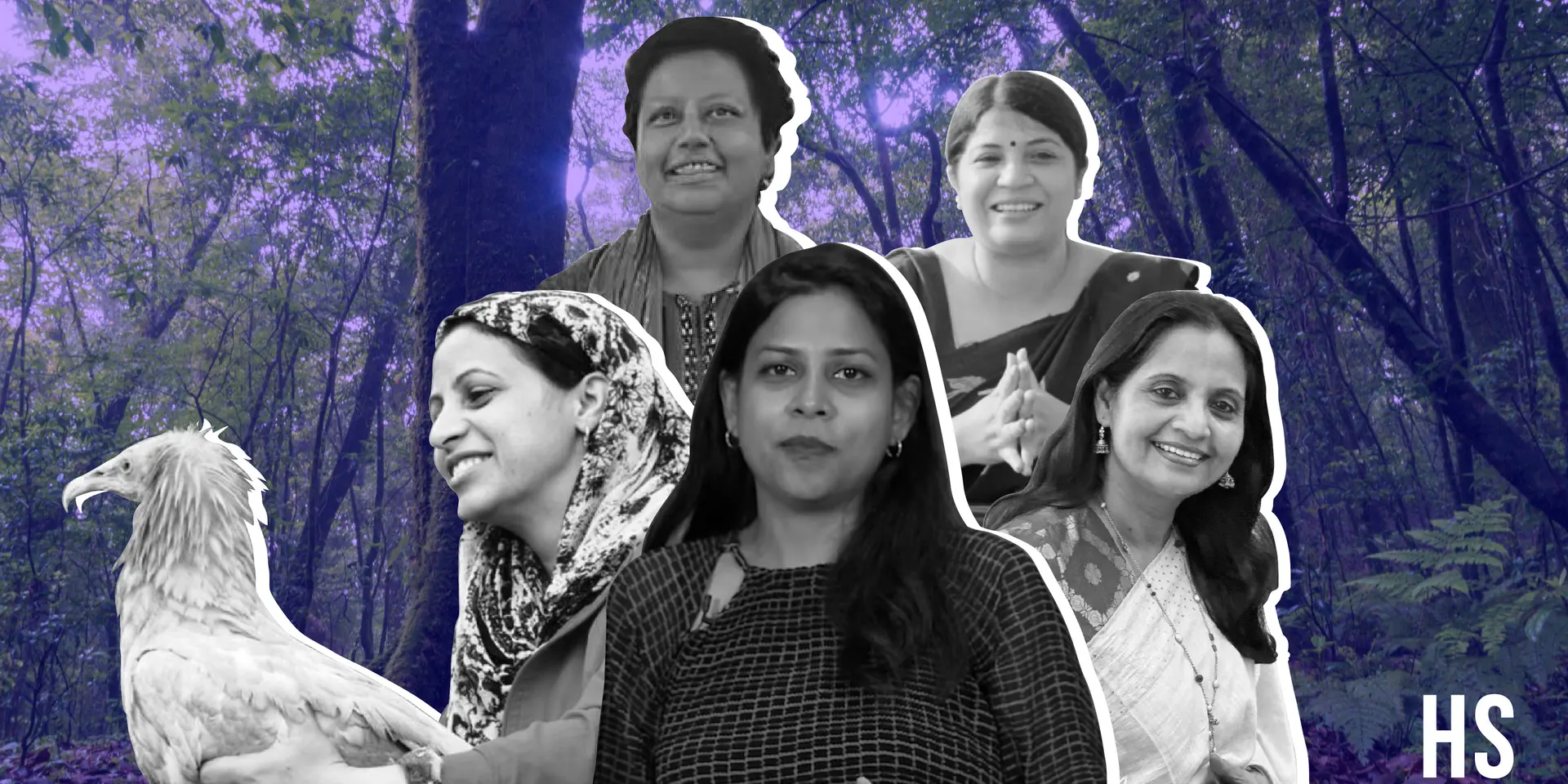

Women have always been at the heart of wildlife conservation, protecting forests, grasslands, wetlands, and coastlines as caregivers, community leaders, scientists, and frontline workers.
Their engagement with nature is often rooted in lived experiences of sharing landscapes with wildlife. They understand issues ground up and respond to environmental change in practical ways.
In recent years, women have stepped into roles that were once considered inaccessible or unsafe: as forest officers patrolling remote terrain, scientists studying elusive species, and grassroots leaders mobilising communities against poaching and habitat loss.
Working with indigenous communities, farmers, fisherfolk, or students, these women prioritise coexistence over conflict.
Here are some women who are leading from the forefront in wildlife and environmental conservation.
Sonali Ghosh
Last year, Sonali Ghosh, the first woman field director of Kaziranga National Park, became the first Indian to win the WCPA-Kenton Miller Award for innovation in national parks and protected area sustainability.
In 2023, Ghosh assumed leadership of a landscape globally known for both biodiversity value and conservation pressure. Kaziranga faces persistent threats from organised poaching networks, annual floods, and intense management demands across multiple forest ranges.
Ghosh’s impact was most visible in strengthening anti-poaching architecture, improving patrol coordination, ensuring consistent deployment of frontline staff, and reinforcing intelligence-led responses. These systems are critical in a park that protects high-value species such as the one-horned rhinoceros and requires round-the-clock vigilance.
During Assam’s annual floods, Ghosh oversaw large-scale wildlife rescue and relief operations, coordinating forest staff, veterinarians, rescue camps, and transport logistics. Timely evacuation, treatment, and release reduced animal mortality during peak inundation periods.
Importantly, her tenure emphasised institutionalising rescue protocols, enforcement routines, and accountability mechanisms so that protection did not rely on individual officers.
Purnima Devi Barman
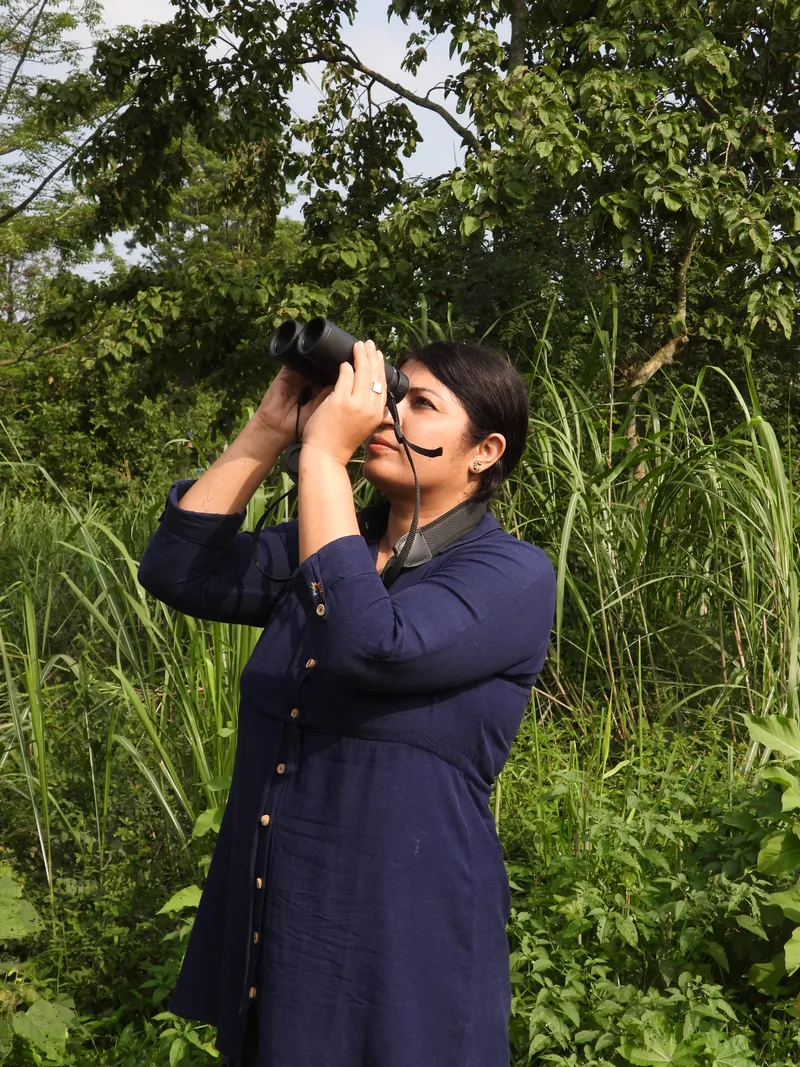
Purnima Devi Barman’s most significant contribution lies in transforming conservation from an external intervention into a community-driven movement.
She founded the Hargila Army, mobilizing rural women across Assam to protect the endangered Greater Adjutant Stork, a species that nests near human habitation.
Her work produced direct conservation outcomes, active nest guarding, prevention of nesting-tree felling, monitoring of breeding sites, and emergency response during storms or disturbances. These actions improved chick survival rates in landscapes where conservation enforcement alone had failed.
Communities that once viewed the stork as undesirable began to see it as a shared responsibility. Women became the primary custodians—tracking nests, educating families, and intervening when threats emerged.
Last year, Barman was the only Indian woman on Time’s Women of the Year 2025 list, which honours extraordinary leaders working towards a better, more equal world.
Aaliya Mir
Aaliya Mir operates on the frontlines of wildlife rescue in Jammu & Kashmir, a region defined by difficult terrain, human–wildlife conflict, and heightened operational risk. Her work involves responding to distress calls, assisting in animal capture, relocation, and safe release.
By consistently working in the field, Mir expanded the operational capacity of rescue teams, contributing to faster response times and safer handling protocols. Through her efforts, communities became more willing to report wildlife encounters promptly, leading to a shift in mindsets and an increase in timely action.
Mir and her team also lead awareness workshops in schools and colleges, helping students learn practical, non-violent ways to stay safe around wild animals—without harming or killing them.
Supriya Sahu
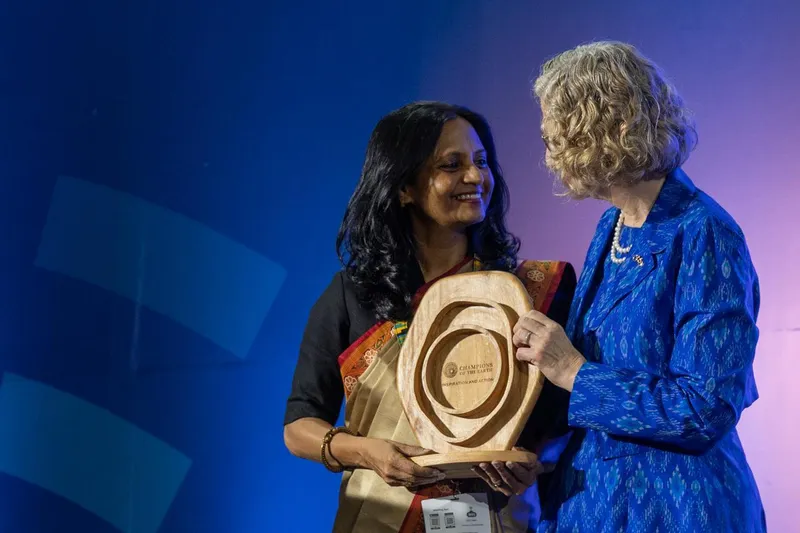
Supriya Sahu’s work received global recognition when she was honoured with the Champions of the Earth award, the United Nations’ highest environmental honour, instituted by the United Nations Environment Programme.
Sahu is a senior Indian Administrative Service officer who has consistently pushed the boundaries of environmental governance in Tamil Nadu.
As Additional Chief Secretary for Environment, Climate Change and Forests, she has brought long-term ecological thinking into everyday administration, focusing on forests, wetlands, wildlife conservation, and climate resilience.
One of Sahu’s defining contributions is her emphasis on technology-led conservation. From deploying AI-powered tools to monitor wildlife movement and reduce human-animal conflict, to strengthening early warning systems and rapid response teams, she has championed data-driven solutions on the ground. These initiatives aim to minimise loss of both human and animal lives, especially in conflict-prone landscapes, while ensuring that conservation efforts are practical and scalable.
Sahu believes that conservation works best when local communities are partners rather than bystanders.
Meghana Pemmaiah
Meghana Pemmaiah is a wildlife veterinarian who works closely with the Karnataka Forest Department to rescue big cats and other wild animals caught in perilous situations.
Over her career, she has treated a wide range of wildlife, from birds and snakes to mongooses and jackals, and has successfully rescued leopards from wells and snares.
She shot to fame with a dramatic rescue near Niddodi in Karnataka, where she was lowered 20 feet into a deep well in a cage to dart and rescue a leopard that had been trapped there for two days.
Beyond rescue operations, Pemmaiah emphasises the need for greater public awareness about habitat loss and urges people to seek help instead of harming wildlife that enters human settlements. She also calls on governments to include conservationists and forest communities in infrastructure planning to prevent disruption of traditional wildlife corridors.
Edited by Swetha Kannan