



Meet the women building climate resilience from the ground up in rural India
Rural women across India are adapting to climate change in informal ways rooted in cultural practices and indigenous wisdom.

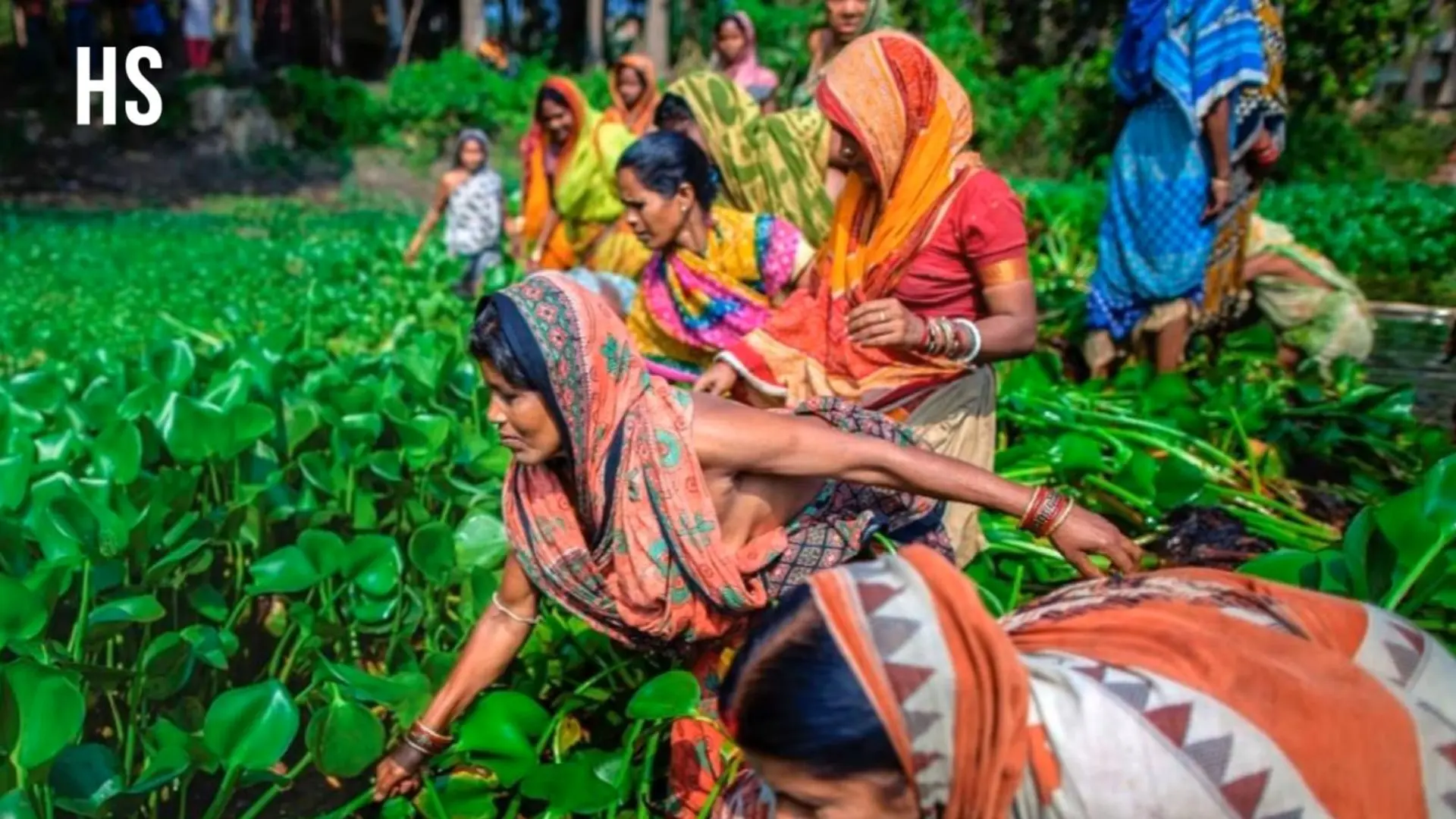

Across rural India, women are responding to climate change in various roles—as organisers, farmers, knowledge-keepers, and stewards of land and water. They are adjusting cropping patterns, reviving drying water bodies, documenting ecological loss, and bringing communities together to protect shared resources, often long before formal climate action plans reach their villages.
Much of their work is local, unpaid, and rooted in cultural practice, and rarely recognised as ‘climate action’ in the formal sense.
From Odisha’s cyclone-prone coast to the drought-stricken plains of Bundelkhand and the millet-growing villages of Karnataka, the women of these regions are shaping climate resilience in practical ways—through collective efforts deeply grounded in shared experiences.
Here are five examples that challenge the idea that adaptation must be technical or top-down. These show how climate resilience is being built from the ground up by women who live with its consequences every day.
Strengthening coastal resilience in Odisha
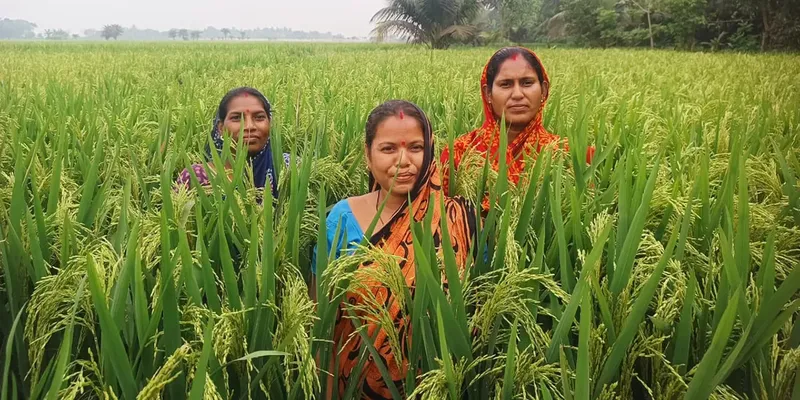
In Odisha’s coastal districts, women are emerging as frontline climate responders through the Enhancing Climate Resilience of India’s Coastal Communities project. Implemented by the Ministry of Environment, Forest and Climate Change, Government of India, the project runs in partnership with the United Nations Development Programme, with funding from the Green Climate Fund.
Under this, more than 300 women have been trained as ‘Climate Champions’ in sustainable agriculture, organic seed treatment, pest management, disaster preparedness, and mangrove restoration. Farmers from the region, such as Debjani Mandal and Jyotshna Rani Pradhan, have shifted to climate-resilient farming practices, and they share these methods in their villages to strengthen collective resilience.
During Cyclone Dani, the trained women helped communities prepare for the disaster, thus reducing damage and risk. Beyond farming, the women also connect households to government schemes, run youth awareness programmes, and support local climate action at the grassroots.
Mapping climate loss and demanding land restoration
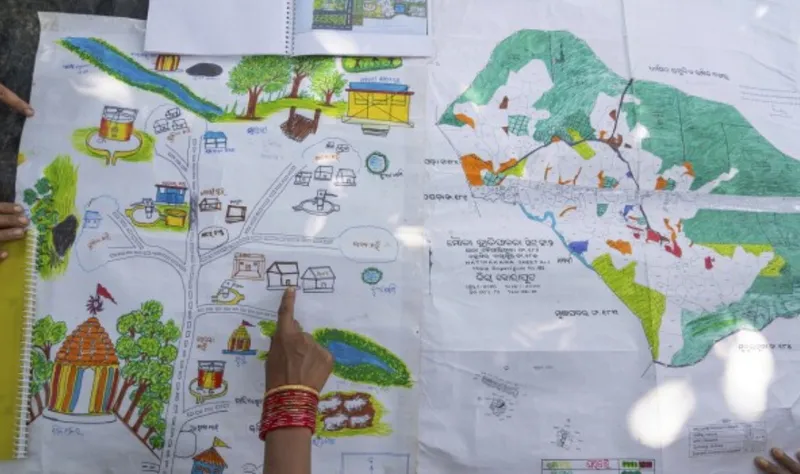
In Odisha’s Koraput district, adivasi women from 10 villages are leading a public climate adaptation effort by creating ‘dream maps’ that document environmental change on their ancestral lands. These women collected local surveys of forests, springs, agricultural areas and commons, and compared them with government records from the 1960s, finding that their shared village lands had shrunk by as much as 25% due to shifting rainfall, rising temperatures, and ecosystem degradation.
The dream maps depict the landscape the women want restored with forests and water. They are being submitted to local government officials as the first step towards securing development funds, estimated at around $2 million, to protect and revive ecosystems. For many of the women involved in the initiative, this is the first time they have publicly led such a community push for land protection and restoration.
Engaging communities through environmental stewardship rituals
In another part of Odisha, thousands of women across over 100 villages have transformed the festival of Raksha Bandhan into an act of environmental stewardship by tying rakhis around trees, in a tradition known as ‘Brukhya Rakhyabandhan’.
In 2020, around 3,000 women gathered in Sundargarh district and the neighbouring areas to perform rituals, decorate tree trunks, tie protective threads, recite pledges, and vow lifelong protection of trees as a symbolic and practical commitment to forests and nature amid climate stress.
The tradition started during the COVID-19 lockdown, when travel restrictions kept many women from visiting their families for Raksha Bandhan. At the time, local environmentalist Digambar Upadhyay encouraged them to plant saplings and tie rakhis around trees, thus turning their distress into an act of care for the land.
What began as a small, local gesture has since spread to at least seven districts across Odisha, strengthening community bonds with nature and weaving climate awareness into a familiar cultural practice.
Protecting and restoring water resources through community action
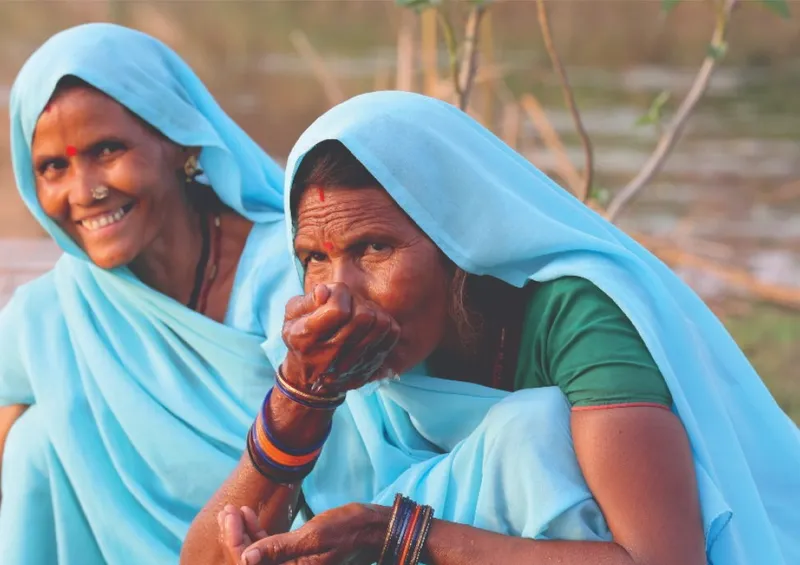
In the drought-prone region of Bundelkhand, Jal Sahelis (translated to ‘friends of water’) are networks of rural women volunteers leading community-driven water conservation and adaptation efforts. They organise village meetings with local panchayats and, with facilitation from the voluntary organisation Parmarth Samaj Sevi Sansthan, they revive traditional water bodies such as ponds, wells, and check dams to retain rainwater and raise groundwater levels.
Started in 2005 in Madhogarh, the initiative has grown to involve thousands of women working across districts in Uttar Pradesh and Madhya Pradesh. Through their work, Jal Sahelis have restored and constructed hundreds of water bodies, increased water availability for households and agriculture, and supported multiple crop cycles/ They have also helped reduce out-migration and strengthened community water governance structures like Pani Panchayats.
Building climate-resilient agriculture and biodiversity at scale
In Teertha village of Dharwad district, Karnataka, the Bibi Fatima Women’s Self-Help Group (SHG) has become a model of women-led, nature-based climate adaptation. Formed in 2018 by 15 women, the group has revived millet-based mixed cropping systems across 30 villages using eco-friendly, low-input farming methods that enhance soil health and climate resilience. They also conserve indigenous seed varieties through community seed banks, preserving biodiversity and offering seeds free to local farmers.
Supported by partners including Sahaja Samruddha, Indian Institute of Millets Research, CROPS4HD, and Selco Foundation, the group has established a solar-powered millet processing unit run entirely by women, adding value and creating rural livelihoods. For this work, the SHG was named one of ten global winners of the United Nations Development Programme Equator Initiative Award 2025, often called the ‘Nobel Prize for biodiversity conservation’.
Edited by Swetha Kannan