



Meet the women at the forefront of climate entrepreneurship and innovation
These women are re-engineering India’s fight against climate change from the ground up.

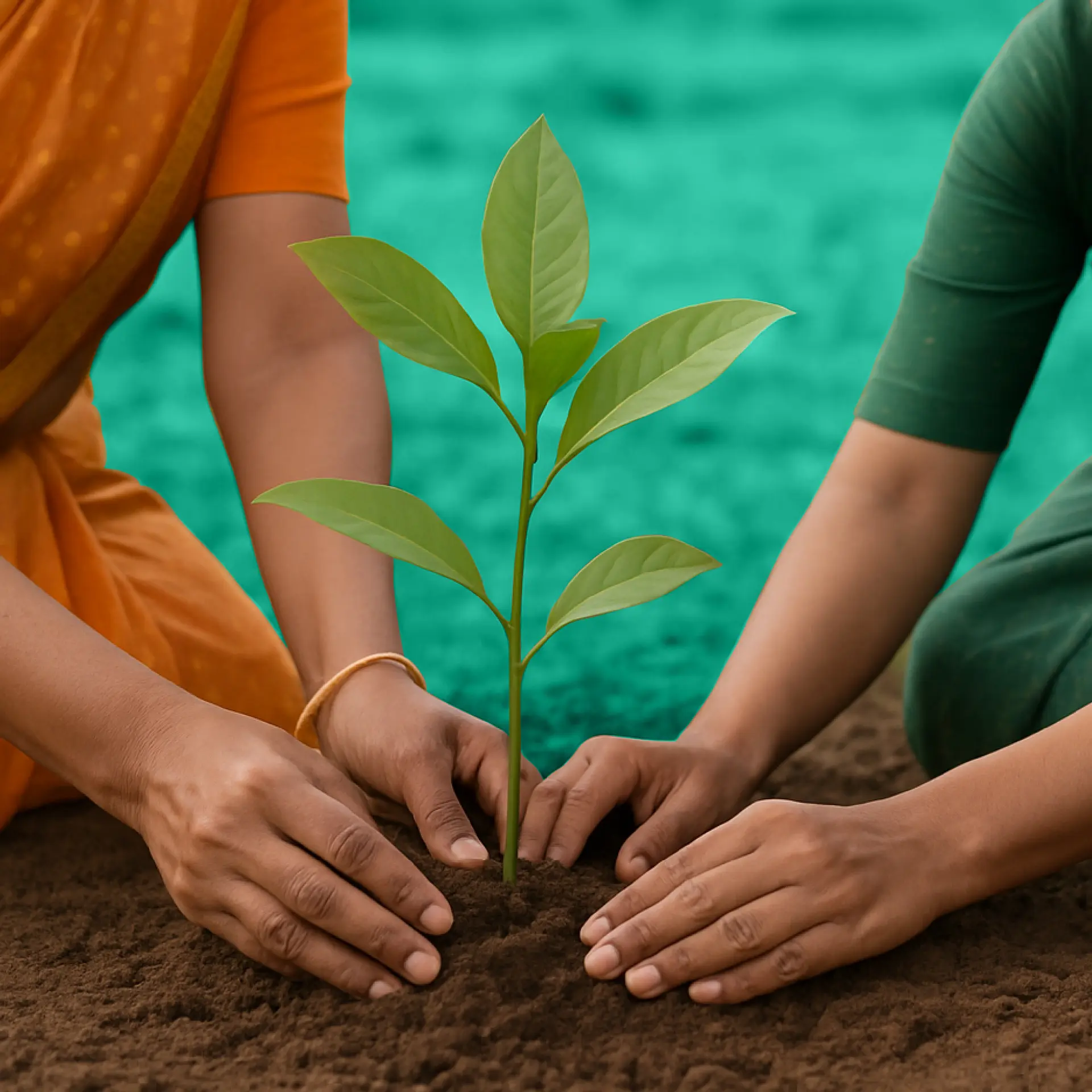

Climate change affects everyone, but it impacts women more severely. Data and research from the United Nations reveal the connections between gender, social equity, and climate change. Women’s livelihoods are threatened, they are at a greater risk of food insecurity, and poor access to healthcare hits women harder.
However, women are not just victims of climate change, but are critical problem solvers. Evidence suggests that women’s leadership leads to better outcomes for the communities they serve. Engaging them in formulating solutions from the ground up sees better, effective, sustainable, and equitable results.
Here are four women who have not only founded startups that tackle waste, energy, and sustainability, but are also engaging communities, investors, and policymakers in climate action.
Ajaita Shah, Frontier Markets
Ajaita Shah, the founder of Jaipur-based Frontier Markets, turned a rural distribution network into a powerful climate-entrepreneurship engine by recruiting local women, known as Sahelis, to deliver clean energy products directly to underserved villages.
Through her Saheli network, Shah did more than distributing solar lamps and clean cookstoves. She cultivated trust, climate awareness, and behavioural change from the ground up.
By training women in product knowledge, financial literacy, and community engagement, Frontier Markets turned them into climate educators who held workshops, answered household questions, and demystified clean energy. This grassroots model bridged technology and culture, helping communities overcome upfront costs, scepticism, and adoption barriers.
The Sahelis become the front-line sellers, educators, and change agents in the fight against climate change. Here, women become the bridge between technology and community, not just its audience.
Victoria Joslin D’Souza, Swachha Eco Solutions
Victoria Joslin D’Souza’s journey from a village in Mysuru to founding Swachha Eco Solutions is rooted in her early exposure to power outages, grassroots activism, and volunteering with waste management NGOs. D’Souza co-founded Swachha – Project Bengaluru, which later evolved into Swachha Eco Solutions, a professional recycling venture.
Swachha’s model is different. It moves away from conventional waste management approaches by shifting control of dry waste collection centres to NGOs and waste pickers. For this, the team renovated a derelict municipal recycling unit in Bengaluru into a functioning plastic granulation facility, eventually expanding to Hosur, Tamil Nadu.
Today, Swachha handles plastic segregation, granulation (LDPE, PP, HDPE), and recycling, diverting over 1,10,000 tonnes of waste from landfills and recycling 60,000+ tonnes of plastic.
Beyond recycling, Swachha has developed innovations like ‘Retile’ plastic pavement tiles and Repolymix blends for road construction, aiming to embed plastic waste into construction materials.
Importantly, Swachha prioritises women’s economic participation. Nearly 60% of its direct workforce are women, many of whom are former waste pickers, helping thousands transition into dignified, formal employment.
Gayathri Kuppendra Reddy - NOW Venture Studio
Bengaluru-based Gayathri Kuppendra Reddy’s interest in sustainability was shaped by her family’s deep involvement in environmental initiatives, from lake rejuvenation projects to green-certified buildings.
After studying Advanced Management Practice in the UK and gaining experience in her family’s infrastructure business, she began exploring independent ventures—running a café, angel investing, and setting up the KReate Foundation to focus on urban development and water management. These experiences prompted her to combine business with climate action.
In 2024, she launched NOW Venture Studio (No Other World), a deeptech venture studio that focuses on climate action and sustainability. The studio helps early-stage founders overcome the challenges of scaling complex, research-driven solutions by offering capital, mentorship, market validation, and partnerships.
Within months of its launch, NOW received over 1,500 applications, engaged 130+ investment partners, and began building a strong pipeline of climate-tech projects, proving that there is a growing appetite for deep-science solutions to the climate crisis.
Gayathri is equally passionate about gender inclusion in climate entrepreneurship. Through initiatives such as the Women Climate Initiative, she is ensuring that women are not just participants but leaders in shaping solutions to climate change. For Gayathri, the intersection of deeptech, sustainability, and women’s leadership represents the future of impactful climate action in India.
Divya Hegde, Baeru
Former Google professional Divya Hegde founded Baeru Environmental Services in Udupi in 2021 after witnessing the mounting plastic crisis along Karnataka’s coast, where fishermen often dumped more plastic than fish, signalling a grave threat to marine life and human health.
Baeru tackles the challenge of pollution and livelihoods by engaging fishermen to recover, recycle, and repurpose ocean-bound plastic.
Baeru’s model, which engages fishermen to collect marine litter and channels it into sorting centres run largely by women from coastal households, combines waste management and women’s empowerment.
These women are trained to segregate plastic, recycle waste, and generate income through a blend of fixed salaries and profit-sharing models. The initiative not only addresses the twin issues of pollution and unemployment but also helps women from marginalised communities secure dignified livelihoods and recognition for their contribution to climate action.
What sets Baeru apart is its emphasis on behavioural change and community engagement. The organisation leverages cultural forms like Yakshagana and puppetry to spread awareness about waste, climate, and sustainability. It also provides mental health support for women working in waste management, recognising the stigma and stress tied to such roles.
Edited by Megha Reddy