



How helmet brand Tvarra is redefining safety for women riders
Founded by Alpana Parida and backed by Indian cricketer Jemimah Rodrigues, Tvarra is a helmet brand designed specifically for women, addressing a long-overlooked gap in safety, fit, and design for two-wheeler riders.

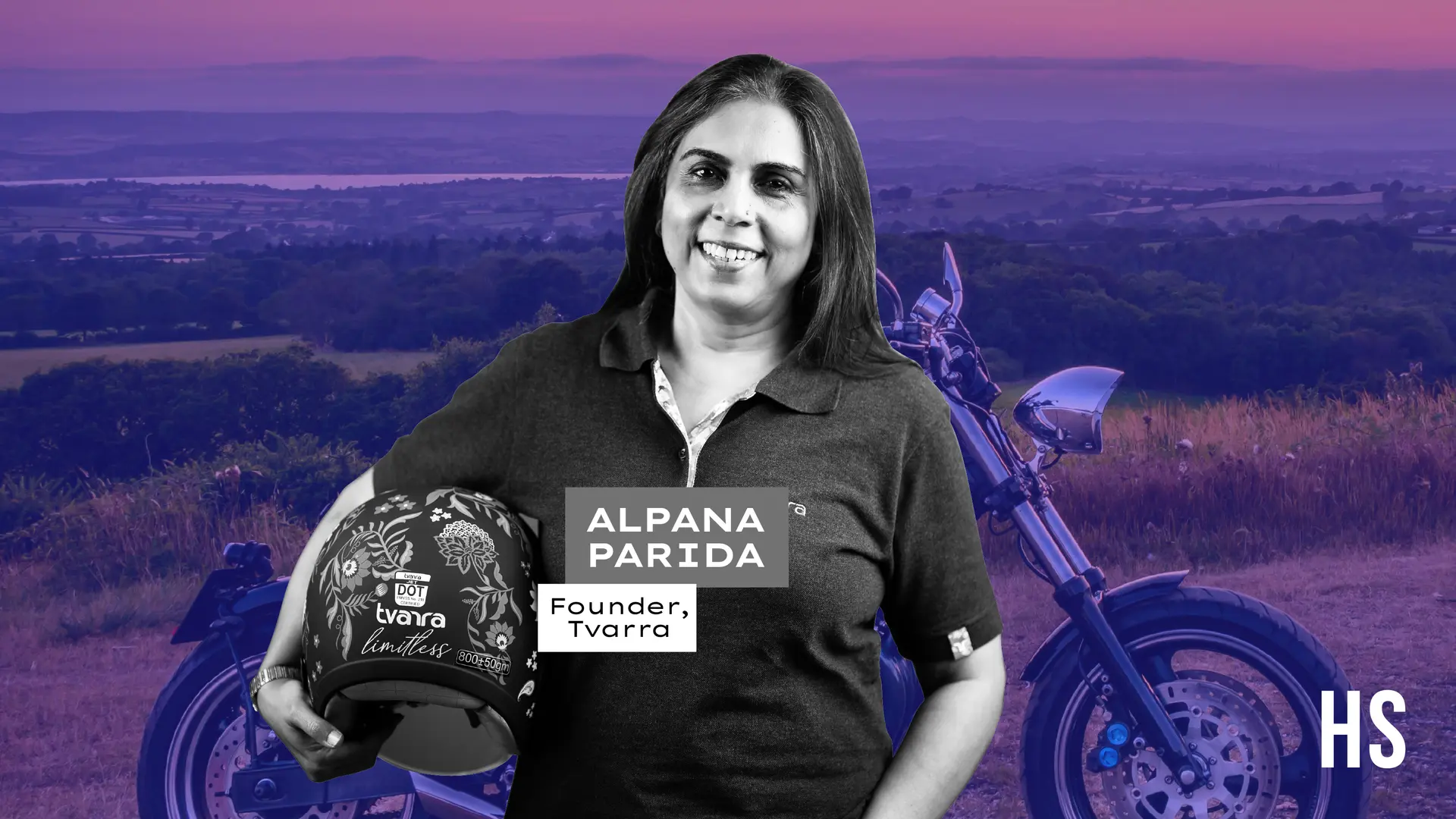

Today, while Alpana Parida’s IIM Ahmedabad classmates are contemplating retirement, she is building Tvarra, a helmet company dedicated exclusively to women and children.
"Genghis Khan set out to conquer the world well into his 50s. That's very good inspiration for me,” Parida laughs.
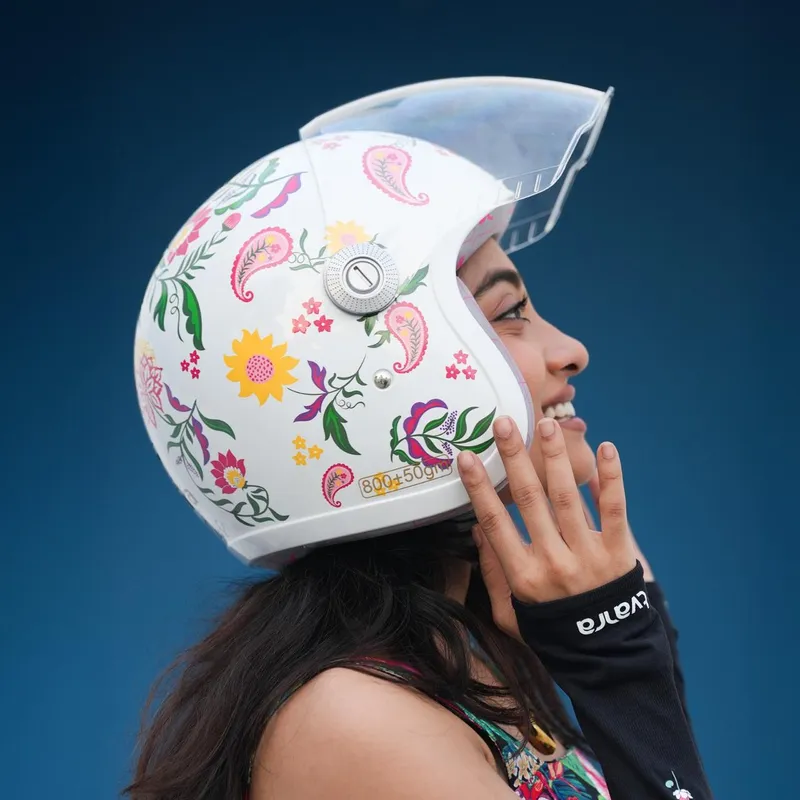
Tvarra helmet for women
After completing her MBA, Parida joined Rediffusion and, after six years, quit her job when her husband moved to Cairo.
“After I returned and told people I was expecting a child, nobody would touch me with a barge pole. With no support system, I became a stay-at-home mum, with some gigs on the side. This continued when we moved to the US,” she says.
In the US, however, she couldn’t work as her visa did not allow it. And, when a visitor asked Parida’s 5-year-old daughter what she wanted to become when she grew up, her reply was, “I want to be like mummy. I want to cook and clean the house.”
With an MBA from Ahmedabad, years of professional experience, and a progressive mother who had once insisted Parida attend a boys’ school rather than settle for an all-girls institution, this was a wake-up call.
Her daughter’s statement made her realise that she had to do something. A friend's offer of a low-paying webmaster position changed everything.
Early days
Within six months, Parida was heading marketing for North America. "It takes you less than three months to realise you didn't lose your brains when you got pregnant. You only lose confidence, and you get it back fast enough,” she adds.
After she returned to India, she joined Tanishq in Bengaluru and later spearheaded DY Works, one of India’s top branding firms. Parida’s entrepreneurial drive and leadership instincts took shape during this period.
She also drew inspiration from watching her IIM classmate and friend Falguni Nayar build Nykaa, and Mithun Sacheti grow CaratLane from his early partnership days with Tanishq.
During the pandemic lockdown, Parida decided to quit and start Tiivra.
“I looked at various businesses, helmets being one of them. I had a biker colleague, and he told me that the best helmet testing in the world is done below 32 km per hour, which is 8.5 m per second. In India, bikes were getting more powerful, and riders were riding at speeds beyond 100-150 km, and their current helmets didn’t really keep them safe, even though they met ISI standards,” she explains.
The initial focus was on affordable composite fibre helmets, premium products engineered for high-speed riding, but the issue lay in the complex production process.
"Composite fibre—whether it's torpedoes, wings of aeroplanes, or parts of Chandrayaan—there's no application where it's made in the millions," Parida explains, adding that the company could produce only 300 to 500 helmets monthly. But demand called for 10 times that.
Helmets engineered for women
While the market was flooded with sophisticated helmets for men, Parida noticed there was nothing engineered for women. “If you searched on Amazon for women’s helmets, a lot of them pop up, but they all say, 'helmets for men and women,” she notes.
When she decided to pivot, everyone cautioned her that “women” was a small segment with around 20-30 lakh women scooter riders in India. But Parida had set her sights on the 30 crore pillion riders, comprising women, who often go unprotected. Taking that further was the 60 crore kids’ segment.
When Parida spoke with women riders, most hadn't even considered the possibility of a helmet made for them. "There's a scooter at home, there's a helmet at home. Whatever helmet is there, we wear it and go," they told her.
Their biggest complaint, however, was that the helmet wobbles. “Helmet moulds are expensive. If you don't believe women represent a significant market, you won't invest in smaller sizes. Instead, manufacturers take a man's mould, add padding, and call it a day,” she says.
Parida and her team went back to basics, starting with a seminal 1950s National Institute of Design study that measured head sizes across lakhs of Indians for the fashion industry. It identified the "intermediate oval," the most common head shape for Indians, and designed it specifically for women's measurements.
Tvarra addressed aerodynamics to prevent wind lift. It created a notch for earrings, even large jhumkas, so the backing wouldn't dig painfully into the skull. The company added a visor that actually protects the face from insects, dust, and pollution, unlike competitors' decorative "goggle-shaped" designs.
Most critically, the company refused to compromise on materials. While women's helmets typically sell for Rs 800-1,200 and are made from substandard materials, Tvarra uses 45-density EPS foam and polycarbonate blends—the same materials in premium motorcycle helmets.
While a third-party manufacturer produces the helmets, the moulds, quality control, and the helmet lines are dedicated to Tvarra.
At Rs 2,000-2,950, these helmets are more expensive than the competition. "We don't want to make it cheaper. We want to make it better. Safety should be our lookout,” Parida insists.
Backed by Jemimah Rodrigues
When it came time to find a brand ambassador, well-meaning advisors pushed Parida to choose a Bollywood star. She resisted the idea.
"The brand is about being real. The day a girl sits on a scooter for the first time, she has independence like no other. She's chasing her dream. The brand needs to be an enabler of that dream,” she explains.
She found her answer in cricket star Jemimah Rodrigues and also made her an equity partner. Rodrigues’ humility, loyalty, and her infectious joy clinched the decision, she says, adding that it’s a leap of faith that is paying off.
One of Tvarra's best-selling helmets from the Lotus collection bears the slogan "Rise Above"—a mantra for women overcoming circumstances to chase their dreams.
Tvarra is already seeing exponential growth. The company expects to close the year at Rs 5 crore in revenue and projects 8-10x growth next year.
It has tapped into Swiggy Instamart, Nykaa, Amazon, Flipkart, and Tata CLiQ to sell its helmets. Further, Crossword is adding Tvarra to its shelves. The company is opening two pilot stores in Bengaluru and plans to scale to 50 franchise-led stores by next year.
Parida bootstrapped the business for three years, investing her own savings into the composite fibre helmet venture before pivoting to women's helmets. Friends, family, and high-net-worth individuals, including Sacheti of CaratLane and Harit Nagpal of Tata Sky, came aboard.
This year, Tvarra is launching Hype, a kids' helmet line. It is also expanding into lifestyle apparel and accessories, positioning itself as a Lululemon for women riders.
With a DOT certification from the US, Tvarra can already sell in 11 countries, and Parida is eyeing international expansion.
She also speaks openly about the challenges women entrepreneurs face. When Tiivra was struggling to scale, Parida says she spent six to eight months wrestling with self-doubt.
"You think, 'Oh God, you're a failure.' But at some stage, I had to pick myself up and say, 'You're doing this because you believe in yourself. If you let go of that belief, nobody else will believe it,’” she shares.
She quotes advice from her friend and Nykaa Founder Nayar: "You will have a lot of people giving you advice. But if they had wanted to be entrepreneurs, they would have done it themselves. If you are doing it because of your own conviction, follow that."
Edited by Suman Singh