



How Embarq’s women-only expeditions are reshaping who owns the road
What happens when women drive 4,000 kilometres across India together? For the founders of Embarq, it’s not just a road trip — it’s a shift in how women see themselves and how the world sees them.

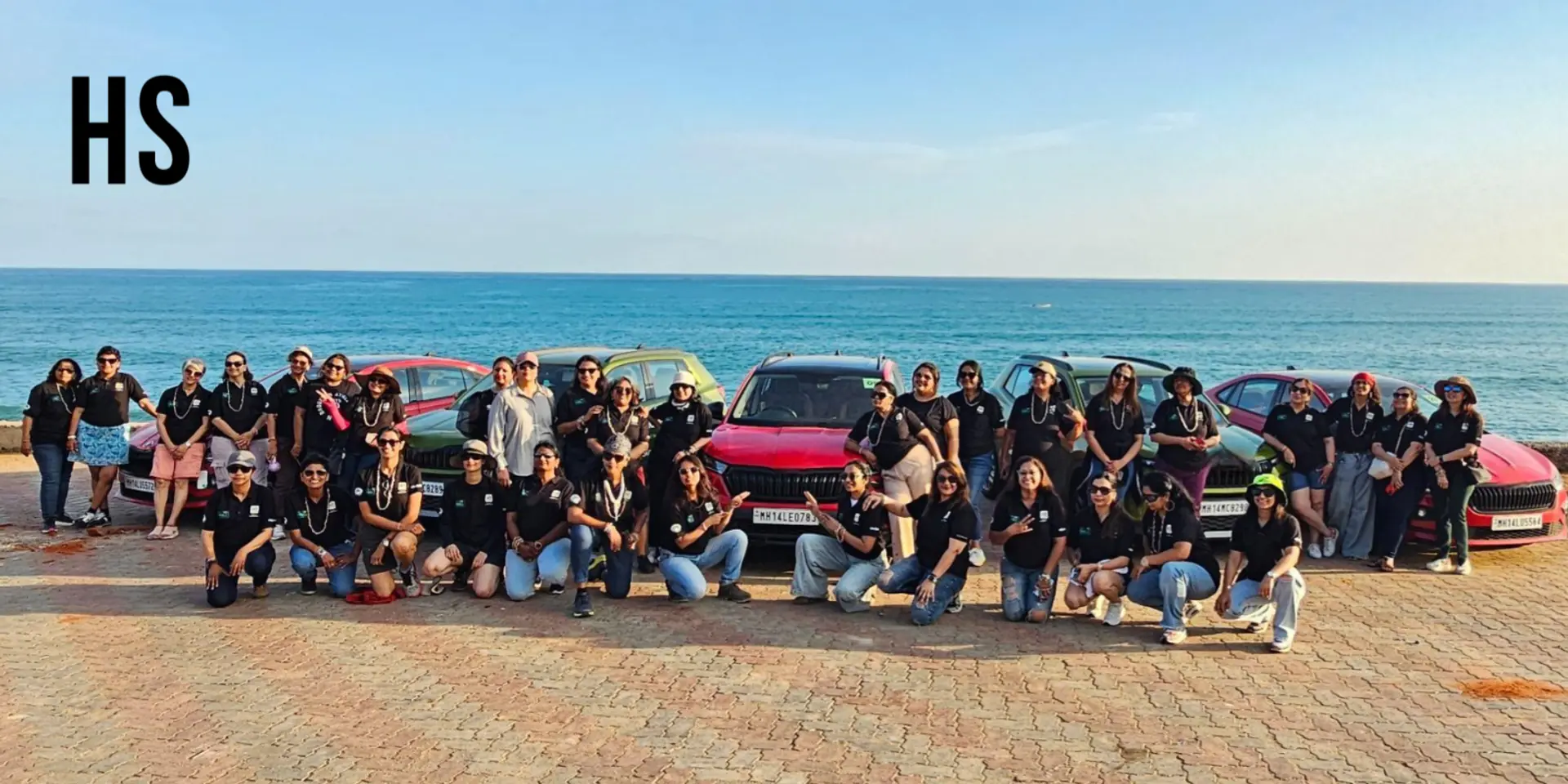

When a convoy of more than a dozen SUVs with women behind the wheels rolls through India’s hinterlands, people stop, some stare and many even run behind the cars to take photos. Others walk up at traffic lights to ask the same question—“Are all the drivers women?”
For Sujal Patwardhan and Medha Joseph, founders of self-drive expedition company Embarq, those moments are the point of the work they do.
“The more people see this, the more conversations happen. It becomes a conversation starter rather than just ending up as a gendered statement or a moment of awe. Awareness and exposure are the real change agents,” says Patwardhan.
Over the last decade, Patwardhan and Joseph have witnessed a visible shift on India’s roads. More women are stepping out, taking road trips, and claiming time for themselves.
“The women we meet are not trying to prove anything to anyone. That need has shifted,” says Patwardhan. “They’re doing it for themselves, to feel free and confident, because driving isn’t just about skill but autonomy. It means deciding when to leave, where to go, and how far to travel, on their own terms,” she adds.
This is the kind of transition that Embarq’s trips are curated to support. The organisation, which works to promote accessibility and mobility, sees itself as an enabler: a platform that removes barriers of all kinds—logistical, psychological, and social—so women can undertake journeys they might otherwise hesitate to attempt.
The purpose of these expeditions is not simply to travel across India but to change who feels entitled to the road. By putting women behind the wheel for thousands of kilometres, Embarq is challenging social conditioning that limits mobility for women.
Behind the scenes of a 4,000-km drive
Their upcoming Kutch-to-Kibithoo expedition starting on International Women’s Day on March 8, spans roughly 4,000 kilometres across multiple states and terrains. Every kilometre has been physically mapped by the founders first-hand.
“We actually drove the entire route, hand-picking every stop, every hotel, restaurant, washroom break, photo point,” says Joseph.
This kind of groundwork is essential, because what seems like a road trip on paper is actually a complex logistical operation, she adds.
“Washrooms must be safe and hygienic, breaks must be timed, food availability must be checked, and parking spaces must accommodate 20 vehicles at once. And in remote stretches where nothing is available, we also must carry supplies,” says Joseph.
A big part of this expedition will be the convoy design. A lead vehicle will navigate and participant cars will follow with a support vehicle trailing behind. They will carry walkie-talkies to ensure constant communication, and every two hours, the convoy will stop for rest.
“The goal, simply, is to remove uncertainty so participants can focus purely on driving,” says Patwardhan.
For the team, risk mitigation begins even before engines start. Organisers speak individually with each participant to assess driving experience, comfort levels, and terrain familiarity. Cars are then assigned strategically so each vehicle has at least two strong drivers who can support others if needed.
Medical centres, service stations, and breakdown assistance points are mapped along the route. Car manufacturers involved in the expedition are alerted in advance, and technical support teams remain on standby.
In some remote border regions, the Indian Army coordinates support facilities for rest stops. But one of the hardest barriers is internal, say the founders.
“Sometimes families are supportive and work is supportive, but women still hesitate to step away from their homes and environment for 20 days,” says Patwardhan. “That mindset shift is subtle, but it’s changing.”
The women in the convoy
Participants come from across India and across professions, say the founders. They include doctors, professors, architects, entrepreneurs and homemakers—aged anywhere between late 20s and early 60s.
“Many are first-time highway drivers,” says Joseph. “Some initially choose to observe before taking the wheel. And by the third or fourth day, most begin driving confidently. They’re often encouraged by fellow participants,” she adds.
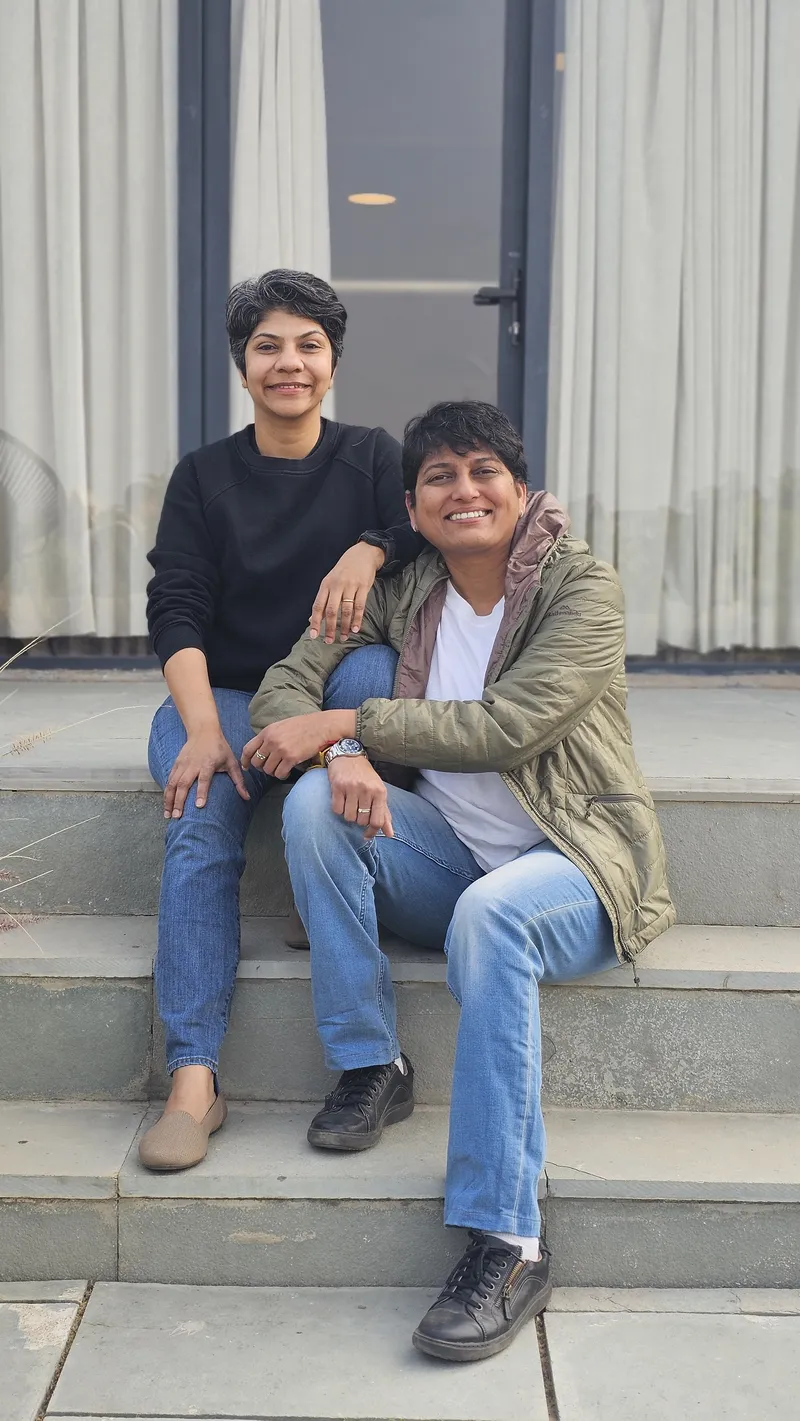
Medha Joseph and Sujal Patwardhan, Co-founders, Embarq
“That’s also the best training - peer-to-peer,” says Patwardhan. “Everyone steps in to support the next person.”
In smaller towns especially, where women driving long distances is uncommon, the convoy sparks curiosity and dialogue. Joseph says this year’s expedition will also include women from local northeastern communities who will join parts of the journey, bringing regional participants into the experience.
After last year’s north-to-south Kashmir-to-Kanyakumari drive, this year’s west-to-east journey was chosen deliberately to cover the breadth of the country.
“If you’ve done the length, you want to do the breadth,” says Patwardhan. “And this one is more challenging with longer distances and tougher terrain. That’s what makes it exciting.”
Where it began
The idea for Embarq was born long before women-only drives existed. About a decade ago, Joseph and four friends drove from Hyderabad to Morocco - a 23,000-kilometre journey across continents.
On that trip, they noticed something striking: plenty of Europeans road-tripping internationally, but very few Indians.
That gap became their starting point. They launched Embarq to handle the permits, navigation, logistics, and contingencies that discourage people from attempting long drives, especially abroad.
Over time, a growing number of women began signing up.
“There was no company offering luxury self-drive expeditions exclusively for women,” Joseph says. “And the camaraderie and sisterhood that builds is beyond what we can put in words.”
Busting the “bad driver” myth
Busting the stereotype of “bad women drivers,” the founders say, “There are good drivers and bad drivers. Not male or female drivers.”
Patwardhan calls driving a “gender-agnostic” skill but notes that women often approach driving with less ego and more self-awareness—qualities that can actually make them safer on the road.
Edited by Affirunisa Kankudti