



How Tink Her Hack is powering women-led innovation in Kerala
Tink Her Hack 2026, an exclusive hackathon for women, is set to bring together over 6,000 women across 100+ venues in Kerala, driven by a community-powered model of inclusive tech learning.

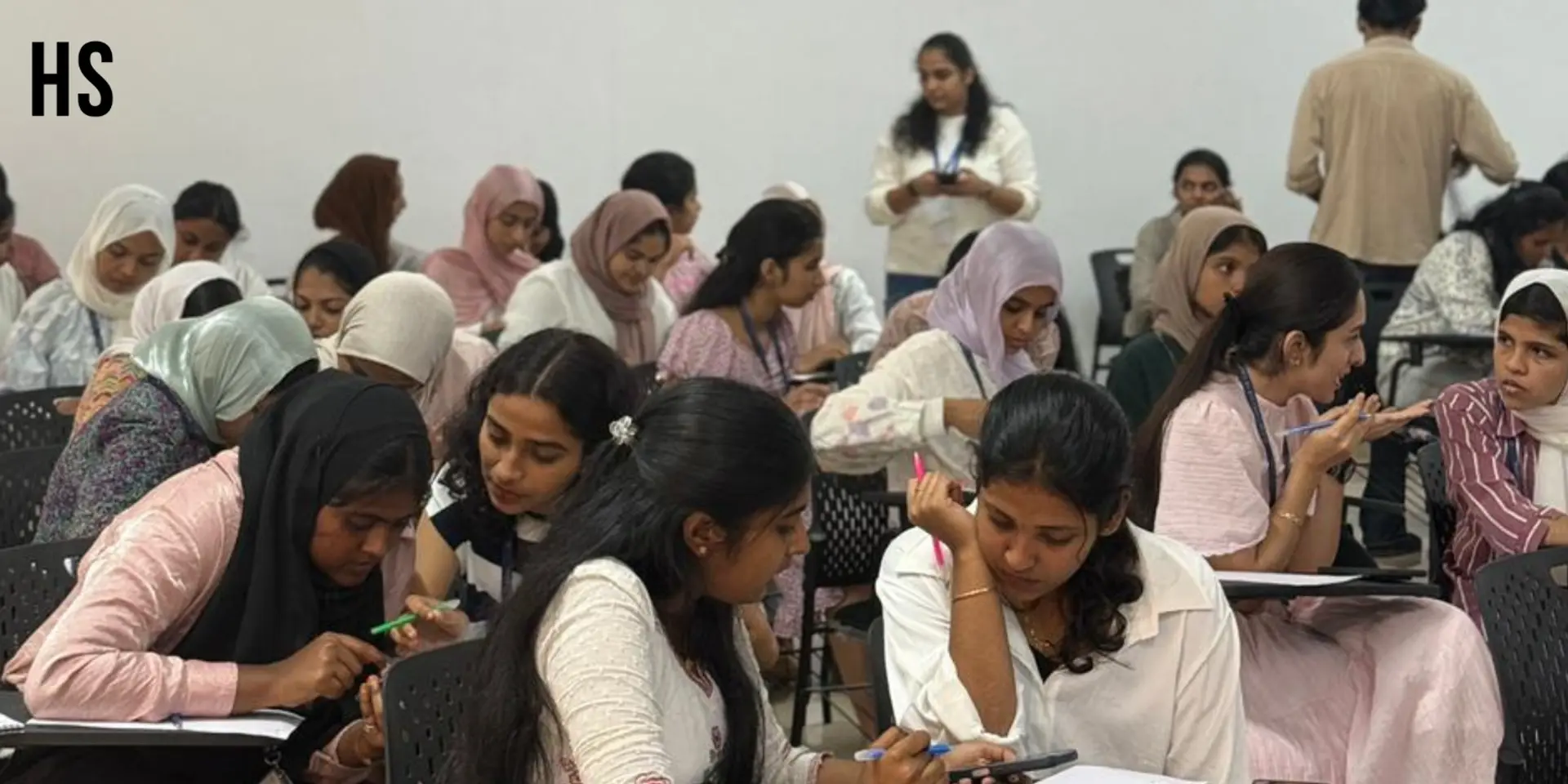

Most hackathons reward the fastest coder. This one rewards the first step.
The fourth edition of Tink Her Hack, organised by TinkerHub Foundation, kicked off with an all-night hackathon last week, providing a learning space for women from all backgrounds.
Started as a student-driven tech community at Cochin University of Science and Technology (CUSAT) in 2014, TinkerHub Foundation has grown into a state-wide movement, impacting over one lakh young people.It has opened up access to tech learning for young people—especially girls—through open, peer-led, community-driven programmes.
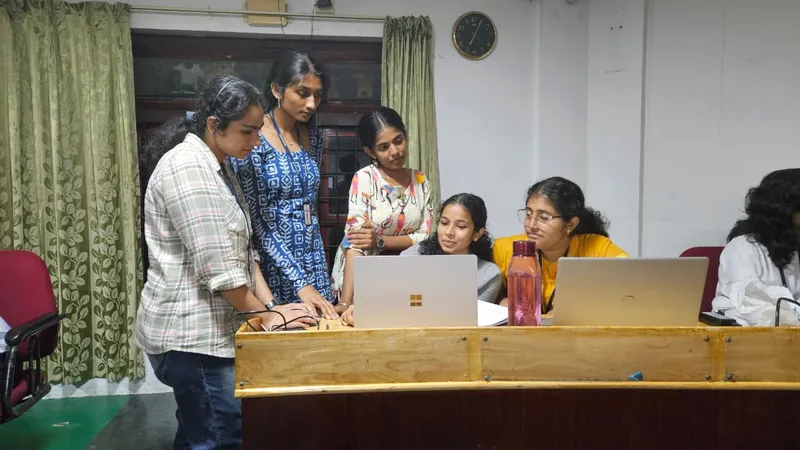
Girls tinker away during the first phase of Tink Her Hack
This year, the six-day event, spread across the month and culminating on February 28, is expected to draw over 6,000 participants across 100+ venues in Kerala, as it continues to be the world’s largest offline hackathon for women.
Tink Her Hack is a collaborative effort of TinkerHub, Samagata Foundation, Kerala Startup Mission, along with IEEE and AnitaB.org.
When TinkerHub began, the girls hostel inside CUSAT had a curfew of 7 pm. Classes ended at 4 pm and workshops at the community centre could only start by 5 pm, leaving the girls only time until 6-6:30 pm to participate, making them lose core parts of the learning experience.
“Our tech leads also had to call the parents of the girls to allow them to attend the hackathons. There were clear gender gaps in campus leadership and program attendance,” says Mehar MP, Co-founder, TinkerHub Foundation.
These insights led to an exclusive hackathon three years ago, beginning with four venues and 500 women. Last year, the event saw 4,000 women participating across 60 venues.
Interestingly, Tink Her Hack is a learning-first hackathon that not just signals participation, but intent.
Mehar explains: “Learning is at the core of our community. All our activities centre around enabling students with agency to figure out what they want to learn and become a maker. We see the world as a place to collaborate and co-exist, rather than beating someone. It grounds the learners and shapes their own journeys.”
Many hackathons, even if well-intentioned, can intimidate beginners. Transport and safety and the overnight concept still remain concerns for parents.
A hackathon that goes where women needs it
Tink Her Hack approached the problem differently.
Instead of hosting a single mega event in one central venue, the organisers decentralised the hackathon model. A large overnight gathering in a single venue might have created scale or even broken records, but Mehar believes it would have also excluded many first-time participants.
So Tink Her Hack went to them, and to safe places close to them. There are venues in every district and 100 venues within a 500 km stretch that include colleges, office spaces, co-working spaces and community centres. Many of the venues are in rural areas.
“When you go out of your home, attending a hackathon in a room full of girls and learning and building something overnight, will give you the confidence that learning and building is not exactly rocket science and you can do it . Physically being able to do this in a different space will invoke the feeling of agency over their bodies,” believes Mehar.
What makes Tink Her Hack accessible for more women is that the experiences come free of cost for students, it’s beginner friendly, there are no grant problem statements but problem domains and it focuses on program design and mentorship in building small projects.
Joanne Alice Thomas, a third-year Computer Science Engineering student at Muthoot Institute of Technology and Science (MITS), stepped into Tink Her Hack 2.0 with zero understanding of hackathons.
Her team, Optimus Prime, made it to the top 100. It pulled her into the TinkerHub community and she started tinkering at TinkerSpace, the Foundation’s physical space in Kochi. With support from mentors in college, she developed Thermo Tunes: a system that changed your Spotify playlist based on room temperature, and it placed in the top 10. That win earned her a six-month scholarship at Tinkerspace.
Among her most meaningful projects is Hope, a digital platform she developed using TypeScript (a programming language). Inspired by a friend’s father’s diaries, the platform allows people to record and share memories.
After the hackathon, the top participants will be part of a pre-ideation programme offered by Kerala Startup Mission. The top 350 makers will also receive tickets to the Grace Hopper Celebration, the world’s largest gathering of women and non-binary technologies hosted by AnitaB.org in Bengaluru. Mentoring programmes by TinkerHub will continue as usual.
“Initiatives like Tink Her Hack play a crucial role in building a future-ready Kerala by encouraging more young women to actively participate in technology and innovation. When women are empowered to build technology, we are not only bridging the gender gap but also accelerating Kerala’s growth as a progressive, knowledge-driven state.,” says Tom Thomas, COO, Kerala Startup Mission.
Tink Her Hack will also culminate into the Women Maker Celebration, bringing together top participants and women leaders in the tech industry.
“For the first time we are hosting in a venue outside Kerala, in Providence College for Women in the Nilgiris district. Based on this experience, we might expand it to other states. Our dream is to have women CTOs from the TinkerHub community,” says Mehar.
Edited by Megha Reddy