



How a volunteer collective is helping women return to public life after mastectomy
After discovering knitted breast prostheses while visiting her son in the US, Jayashree Ratan returned to India and founded Saaisha India Foundation that makes hand-knitted prostheses to help women reclaim comfort, confidence and choice after mastectomy.


When Jayashree Ratan was in the US visiting her son, she made it a point to spend time working with her hands: crocheting, knitting, embroidery, painting. And almost everything she made, she gave away—scarves for babies, blankets for charity, beanies for kids.
With a desire to learn more, Ratan came across the website of Knitted Knockers, a volunteer-led, nonprofit organisation that makes and distributes hand-knitted or crocheted breast prostheses—called “knockers”—free of cost to people who have undergone mastectomy or lumpectomy due to breast cancer.
“I became so eager to have found this, I searched and sourced the right yarn, learned from their tutorials—as I have learned all my handiwork—and made a pair of knockers, which they instantly approved in quality and finish. I didn’t know this would become a part of my life until a family member underwent mastectomy and I made her a pair that she loved.
“As a survivor, she said there were hundreds others like her who would need these. And that was all the cue I needed,” says Ratan.
For many women, a mastectomy is not only a medical intervention but a rupture in how they inhabit their bodies and move through public life. The loss of a breast can unsettle balance, posture and clothing, but it also reshapes confidence amid gendered cultural expectations.
Breast cancer is the most common cancer among women in India, accounting for roughly a quarter of all female cancer cases. Survival varies significantly depending on stage at diagnosis—national registry data suggest five-year survival rates around 66 % overall, significantly lower than in high-income countries. Survival is much higher when the disease is detected early but drops sharply with later stage at diagnosis.
“I realised quickly and without hesitation: this mattered. It wasn’t cosmetic or about vanity. For a cancer survivor, rebuilding confidence in life means many things, and among them is to be able to step outside without feeling exposed,” says Ratan.
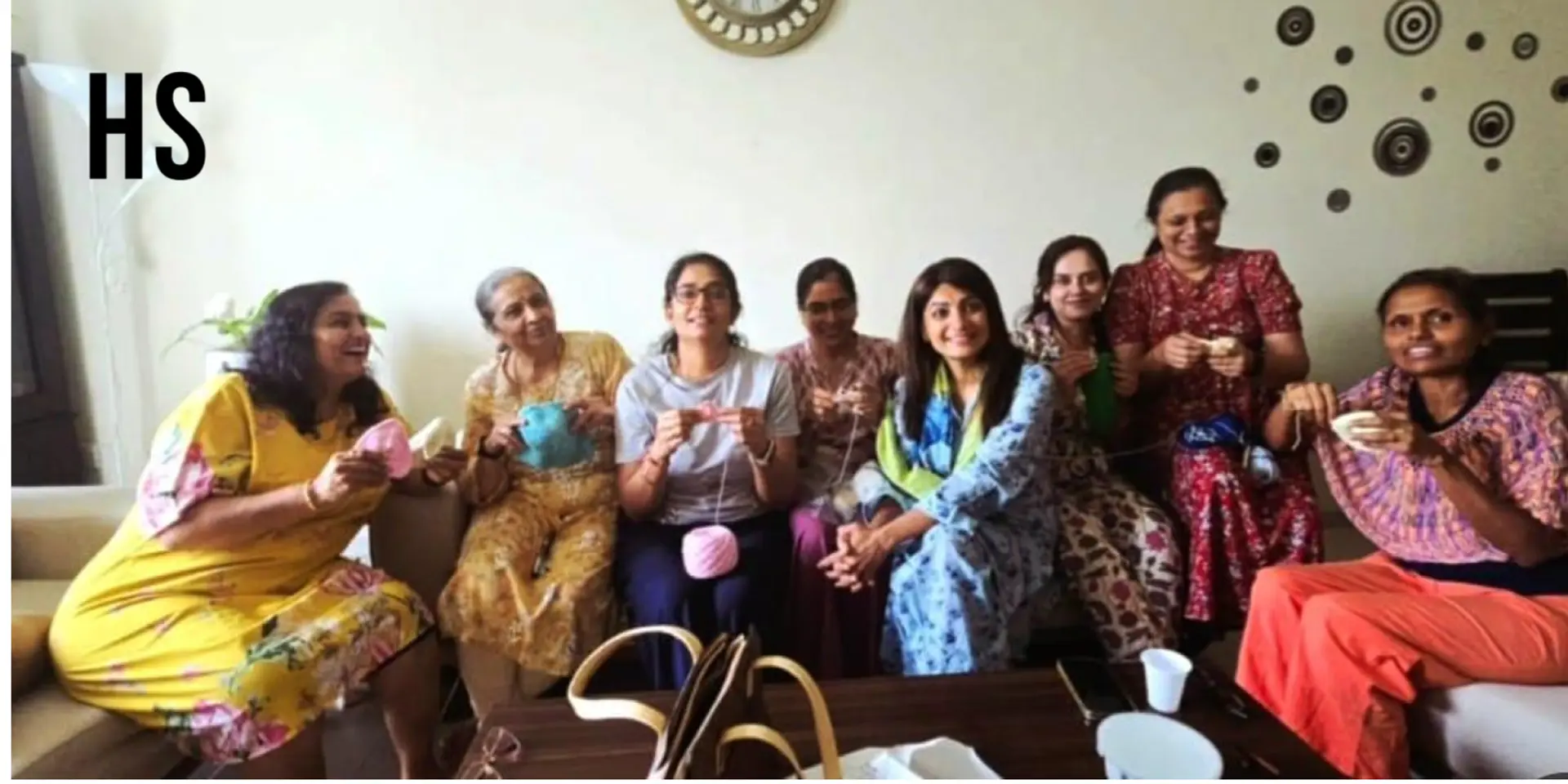
Saaisha India Foundation, her Mumbai-based, volunteer-led charitable trust started in 2018, soon after she returned to India. It began with four women sitting together to make knitted knockers (a term for breast prostheses), and has since grown into a network of 400+ women volunteers spanning multiple Indian cities and overseas communities, particularly in the Middle East. The word spreads through beneficiaries, hospitals and volunteers.
“There was no blueprint, no funding plan and no institutional backing. There was only the work,” says Ratan, who calls it a “divine call to action.”
She soon registered Saaisha as an Indian provider with Knitted Knockers, followed their quality standards, and started making calls for orders. Many times, she was unsure whom to call at all. Doctors, she realised quickly, were key. The first oncologist she met with the prosthetics didn’t need an explanation. “I wanted to ask him how to go about this, but before I could say anything, he took the knitted knockers from my hands and said simply, ‘This will help my patients’,” says Ratan.
From there, the requests just wouldn’t stop coming in. Fifty pieces, then more. At the time, Ratan didn’t even have the yarn, the fibre, or the volunteers ready. She just had an instinct to say yes, and then figure out the rest.
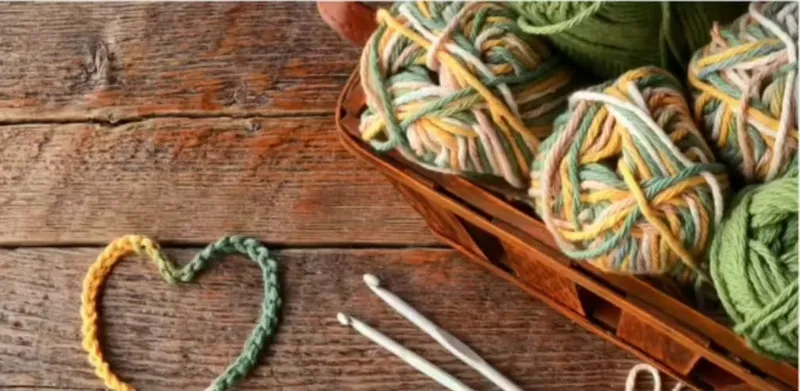
The prostheses are small and softly weighted, restoring balance, fitting easily into clothing, and washed and worn without discomfort.
Today, under Saaisha, 150 volunteers are actively making prostheses at any given time. Together, they have supported over 14,000 women—distributing nearly 28,000 knitted prostheses—along with thousands of caps for children undergoing cancer treatment.
Ratan says for many women who receive a knitted prosthesis, the first instinct is to talk.
“They just want to pour out,” she says. Calls that begin as requests for a pair of prostheses often stretch into half-hour conversations. Women speak of shame, of not stepping outside their homes for months, of hiding their bodies, of family members who do not know—or do not know how—to support them.”
The prostheses are small and softly weighted, restoring balance, fitting easily into clothing, and washed and worn without discomfort.
One woman, a midday meal worker at a government school, told Ratan that when she returned to work after surgery, her colleagues couldn’t tell she had undergone breast surgery at all. “Unless I tell them, they won’t know,” she said.
“This anonymity—being able to choose when and whether to disclose—matters more than people realise,” says Ratan.
Breast cancer, she learned through years of conversations, carries a specific kind of stigma. Support groups for cancer exist, but many survivors told Ratan they did not feel seen within them. Breast cancer came with its own set of psychological and social wounds.
Today, many of Saaisha’s volunteers are survivors themselves.
One such woman, based in Mumbai (name concealed on request), first reached out to Saaisha in 2020. She had been diagnosed with stage two breast cancer during the pandemic, underwent a mastectomy, and was grappling not only with physical pain but with fear about returning to work and to public life. There was no obligation, or expectation of repayment, but just an invitation, offered by Ratan that when she was ready, she could volunteer someday.
After her retirement she jumped right in.
Volunteering, she says, allowed her to give back. “The training included weeks of online sessions, careful attention to stitch, size, and finish. Every piece was checked, and uniformity mattered,” she recalls.
She has since made dozens of prostheses, knowing she will likely never meet the women who receive them. “That’s the beauty,” she says. “You don’t know who you are helping. You’re just helping.”
This ethic runs through Saaisha’s work. Volunteers buy their own yarn and give their time freely. Donations, when they come, are small and steady—used for postage, printed instructions in nine languages, and the unglamorous but essential costs of keeping things moving.
Ratan speaks often of faith, but the system she has built is anything but abstract. Records are meticulously kept, dispatches are tracked, volunteers are personally onboarded and “quality is never compromised.”
What holds it all together is the belief—shared across hundreds of women—that care can be collective, non-commercial and a way to step back into the world without being stared at, questioned, or pitied.
“Sometimes… that is enough to begin again.”
Edited by Affirunisa Kankudti