



[International Women's Day] These women are leading India’s deeptech revolution
From artificial intelligence and biotech to telecom and genomics, these women founders are choosing the long road, creating technologies that will define India’s next wave of innovation.

![[International Women's Day] These women are leading India’s deeptech revolution](https://images.yourstory.com/cs/4/8e7cc4102d6c11e9aa979329348d4c3e/WomeninDeeptechListicle1600x900-1772877835532.jpg?mode=crop&crop=faces&ar=2%3A1&format=auto&w=1920&q=75)

Deeptech isn’t built in pitch decks. It takes shape through failed prototypes, years of-long clinical trials, and code that cannot afford to go wrong. And within these exact fields – artificial intelligence, biotech, cybersecurity, telecom, neuroscience – a group of women founders is choosing depth over visibility. They are building systems, infrastructure, and science. And in doing so, they are shaping the hardest edges of India’s technological future.
Geetha Manjunath, Founder & CEO, NIRAMAI Health Analytix
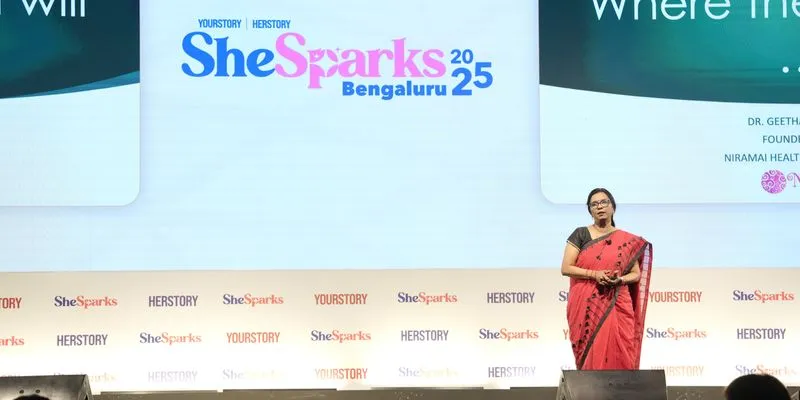
With a PhD in computer science and years of research experience, Geetha Manjunath could have comfortably stayed within corporate research and development (R&D). Instead, she chose to solve one of India’s urgent healthcare gaps: early breast cancer detection. What moved her was not just technology, but inequity: the lack of accessible, affordable screening for women, especially in semi-urban and rural India.
Building medical deeptech required earning both scientific and clinical trust. Manjunath navigated regulatory issues and the challenge of introducing AI into healthcare diagnostics. Her work reflects a clear conviction–artificial intelligence should move beyond laboratories and research papers into real-world healthcare systems where it can save lives, particularly for women who often delay or avoid screening due to cost, accessibility or discomfort.
Founded in 2016, NIRAMAI Health Analytix develops AI-powered thermal imaging technology for early detection of breast cancer. Its flagship solution, Thermalytix, analyses thermal patterns in breast tissue using machine learning, enabling non-invasive, radiation-free and contactless screening. The technology makes large-scale screening possible in clinics, mobile health camps and rural programs, expanding access to early detection and improving outcomes for over 30,000 women across countries.
Ashwini Asokan, Founder & CEO, Mad Street Den
Long before artificial intelligence (AI) became fashionable, Ashwini Asokan was already building in cognitive computing. After working in Silicon Valley, she returned to India with a clear goal: to build a globally competitive AI company from the ground up. She saw that businesses were sitting on massive amounts of data but lacked intelligent systems to translate it into meaningful decisions.
Building a deeptech AI company required patience and long-term belief. Enterprise adoption cycles were slow, and the technology was often misunderstood as hype rather than infrastructure. Ashwini positioned Indian deeptech not as outsourced engineering but as innovation capable of shaping global technology markets, while also showing that women could lead at the forefront of complex AI development.
Mad Street Den, founded in 2013, develops AI-powered enterprise platforms, with Vue.ai as its flagship product. The platform uses computer vision and machine learning to power product tagging, visual search, personalisation and retail automation. By transforming how global retailers manage products and consumer insights, the technology also influences industries such as fashion and retail that employ and serve millions of women worldwide.
Priyanka Aash, Co-founder, FireCompass
As digital ecosystems expanded, so did the scale of cyber threats. Priyanka Aash recognised that most organisations were still relying on reactive cybersecurity systems that responded to breaches only after damage had occurred. The need was for enterprises to have predictive defence systems capable of identifying vulnerabilities before attackers could exploit them.
Building cybersecurity deeptech meant operating in an environment defined by constant technological evolution. In a sector often perceived as aggressive and male-dominated, Priyanka built credibility through deep technical expertise and product performance, helping organisations shift from reactive security toward proactive cyber resilience.
Founded in 2017, FireCompass develops AI-driven cybersecurity automation and attack surface management platforms. Its technology continuously maps an organisation’s digital footprint, simulates cyberattacks and identifies vulnerabilities before they are exploited. By strengthening digital security infrastructure, the platform helps create safer online ecosystems.
Kaitki Agarwal, Co-founder, A5G Networks
Telecom infrastructure is among the most technically demanding sectors in deeptech. Kaitki Agarwal entered the field with a belief that India should build, not merely consume, next-generation network technologies. She identified a critical gap in indigenous innovation within telecom infrastructure, particularly in areas such as Open RAN and 5G systems.
Her journey required navigating a complex ecosystem of hardware engineering, telecom policy and industry partnerships. Telecom deeptech moves slower than most startup sectors, but its influence is foundational – shaping the connectivity infrastructure that powers digital economies and access to information.
A5G Networks, founded in 2020, develops Open RAN and 5G technologies designed to enable scalable, flexible telecom infrastructure. These systems help telecom operators deploy cost-efficient and interoperable networks, expanding connectivity in both urban and rural regions. Improved digital access has significant implications for women, enabling greater participation in online education, remote work and digital entrepreneurship.
Kavitha Iyer Rodrigues, Founder & CEO, Zumutor Biologics
For Kavitha Iyer Rodrigues, immunotherapy represents one of the most promising frontiers in modern medicine. She founded Zumutor with the goal of advancing antibody-based cancer therapies that harness the body’s immune system. The challenge she set out to address was the limited effectiveness of many traditional treatments in activating immune responses against cancer.
Biotech entrepreneurship requires both patience and scientific rigour. Kavitha’s journey has involved years of research, cautious funding cycles and complex clinical validation processes. Progress in this field is measured slowly, through incremental scientific breakthroughs rather than rapid commercial milestones.
Founded in 2013, Zumutor Biologics focuses on developing next-generation antibody-based immunotherapies designed to enhance the immune system’s ability to identify and destroy cancer cells. While its work addresses cancer broadly, advances in immunotherapy have particular relevance for women’s cancers, including breast and ovarian cancers, where targeted treatments can significantly improve survival.
Laina Emmanuel & Rimjhim Agrawal, Co-founders, BrainSight AI
For Laina Emmanuel and Rimjhim Agrawal, the human brain represented a frontier in clinical medicine still insufficiently understood. They observed that neurological and mental health treatments often relied on generalised protocols rather than individualised insights about brain connectivity. The need for more precise diagnostic tools became the foundation of their work.
Building at the intersection of neuroscience and artificial intelligence meant combining clinical brain science with advanced computational modelling. The founders underwent rigorous medical validation processes as they built a technology platform designed to deliver greater precision in neurological and psychiatric care.
Founded in 2019, Brainsight AI develops AI-powered brain mapping technologies that analyse neural connectivity patterns. These insights help clinicians design more personalised treatment strategies for neurological and psychiatric conditions, while also providing accurate diagnoses.
Meenakshi Vashist – Founder & CEO, TekUncorked
After working as a scientist at ISRO, Meenakshi Vashist turned her attention toward a different challenge: energy infrastructure. She saw that traditional power grids struggled to manage growing demand, renewable integration and climate-related disruptions, particularly in rapidly urbanising economies.
Her transition from space research to entrepreneurship was driven by a belief that artificial intelligence infrastructure could transform energy systems. Building smart grid technologies required navigating engineering complexity, regulatory frameworks and industrial partnerships.
Founded in 2019, TekUncorked builds IoT-enabled smart grid solutions designed to make energy infrastructure more adaptive and efficient. These systems enable real-time monitoring, predictive analytics and automated energy management. By strengthening the reliability and sustainability of energy infrastructure, these solutions contribute to broader societal benefits, supporting economic participation and improving everyday living conditions.
Anuradha Acharya, Founder & CEO, MapmyGenome

Anu Acharya, Founder of Mapmygenome
When genomics research was still emerging in India, Anuradha Acharya recognised its transformative potential. She envisioned a healthcare system that could shift from reactive treatment to predictive and preventive medicine. The challenge was not just scientific, but also cultural, as genetic testing had to become accessible, understandable and trusted.
Building a genomics company meant addressing questions of privacy, ethics and medical interpretation while educating the public about the value of genetic insights. Anuradha focused on making complex genomic information actionable for individuals and healthcare providers.
Founded in 2013, MapmyGenome provides genomics-based diagnostics and personalised health insights through DNA testing platforms. By identifying genetic predispositions to diseases and offering preventive recommendations, the platform empowers individuals to make informed health decisions.
Edited by Megha Reddy