



Women-first AI hackathon WitchHunt 2026 concludes with 373 prototypes for real-world challenges
Young innovators from Nellore, Udupi, and New Delhi emerged winners at the grand finale of the hackathon.

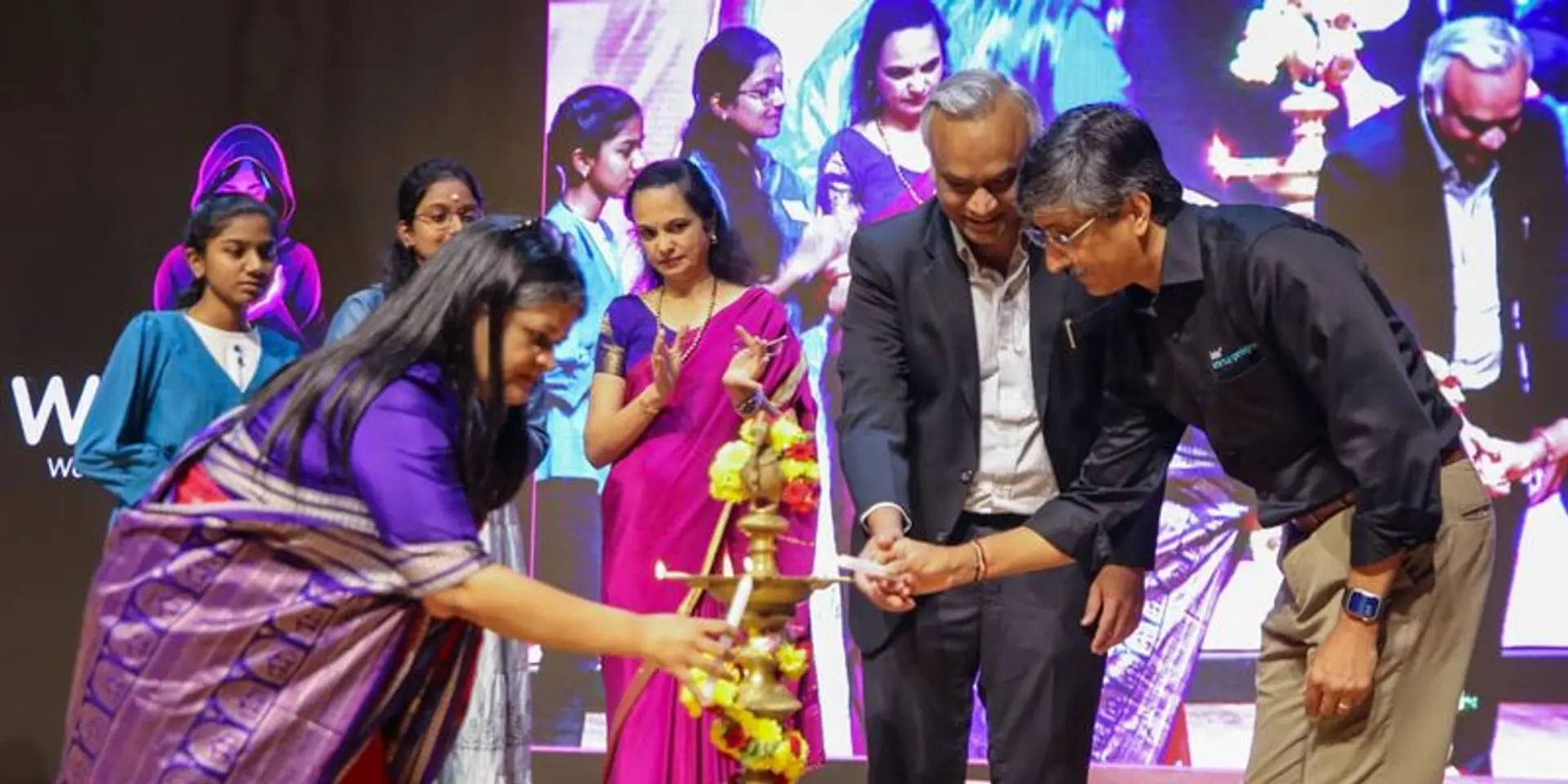

WitchHunt 2026, India’s premier girls-first AI hackathon, announced its winning solutions at a grand finale held at Jyoti Nivas College Autonomous, Bengaluru, on June 14.
Bytebusters (Nellore) won the Climate Action track for predictive farming tools; aipaglus (New Delhi) secured the Health track with an AI maternal health companion; We4 (Udupi, Karnataka) topped the Education track with an offline, voice-first regional language mentor for rural girls; and shecoders (New Delhi) won the Smart Cities track for localised urban infrastructure monitoring.
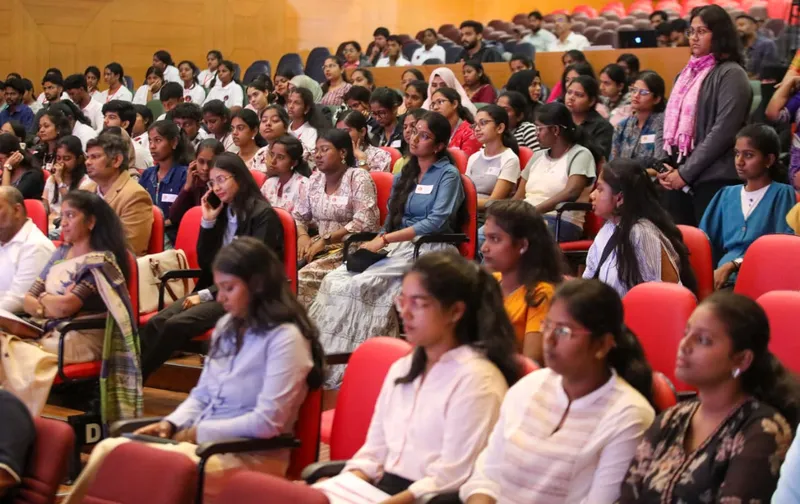
Participants of WitchHunt 2026
Organised by HopeWorks Foundation in partnership with AI4India and the Karnataka Digital Economy Mission (KDEM), WitchHunt 2026 saw 373 functional, real-world prototypes built by 6,151 participants from 23 states.
From 779 initial ideas, 373 functional prototypes were developed—a 50% idea-to-prototype conversion rate, among the highest recorded on the HackCulture platform.
The four-month programme was delivered in collaboration with Infosys Springboard, supported by over 300 industry mentors and a jury of 70+ domain and AI experts. The campaign was anchored by co-chairs Varsha Verma, Chitra Gurjar, and Neeraja Ganesh.
A total prize pool of Rs 19 lakh was awarded across the four tracks, with industry partners and jury members committing to internship allocations and technology co-development pipelines for the winning teams.
The grand finale event was inaugurated by Priyank M Kharge, Minister for Home (excluding Intelligence), Information Technology & Biotechnology, and E-Governance, Government of Karnataka, in the presence of Ramalinga Reddy, Minister for Water Resources, Government of Karnataka and MLA, BTM Layout Constituency.
In an interaction with the students, Kharge said, “Move up the value chain. Replicating another ecommerce platform is great, but India needs real innovation. My request to youngsters is to upskill fast, and start creating and building for the world rather than just servicing it."
Pointing to Karnataka's efforts to build an inclusive innovation ecosystem, he cited the Rs 300-crore Nipuna reskilling programme, which has trained over 30,000 young people, primarily women, for technology careers. He also underscored that women-led ventures make up 38% of ELEVATE programme winners, with a significant number emerging from Tier II and III regions.
Debjani Ghosh, Distinguished Fellow at NITI Aayog, pointed out that while India is one of the world's largest users of AI, it now needs to pivot to becoming its largest builder. Without mastering the development of foundational models, she said, the country risks importing intelligence the way it once imported finished goods.
Ghosh observed that while India is among the world's largest consumers of AI, its next challenge is to become one of the world's leading builders of AI. She cautioned that unless the country develops expertise in building foundational models, it risks importing intelligence much as it once imported finished goods.
"We grow the wheat, but if we don't convert it to bread ourselves, it gets sold back to us at ten times the cost," she said, underscoring the importance of building indigenous AI infrastructure and capabilities as a matter of national intelligence sovereignty.
She emphasised that this shift requires diverse leadership, noting that "women don’t need AI, but AI needs women."
Gokul V Subramaniam, President of Intel India and Vice President of Intel's Client Computing Group, echoed this call to action in his keynote, urging participants to move from being "fantastic users of technology" to becoming "impactful innovators."
The day also featured two panel discussions—'AI for Nation Building', with panellists discussing how AI literacy can become inclusive and locally rooted, and 'Beyond the Hackathon' to throw light on how to sustain momentum through mentorship and long-term ecosystem support.
In her session 'Witches and Witch-Hunt,' Shreya Krishnan, Managing Director India, AnitaB.org, said, "Financial independence is the most important thing in the world," she told the audience. Be the witches with a career that nobody can mess with."
Reflecting on the success of the initiative, Chitra Gurjar, Chair, WitchHunt, said, "WitchHunt was conceived with a simple but powerful vision: to ensure that more women are empowered to shape the future of technology. The enthusiasm, talent and ideas showcased today reaffirm the need for platforms that nurture innovation, leadership and inclusion."
The organisers also announced plans for the next edition of WitchHunt.
Edited by Swetha Kannan