



Inside 'Oslo – A Tail of Promise': Conservation biologist Pooja Bhale on love, loss, and life with her husky
'Oslo - A Tail of Promise' is a documentary that offers an intimate glimpse into conservation biologist Pooja Bhale's life with rescued animals and the extraordinary bond she shared with her Siberian husky, Oslo.

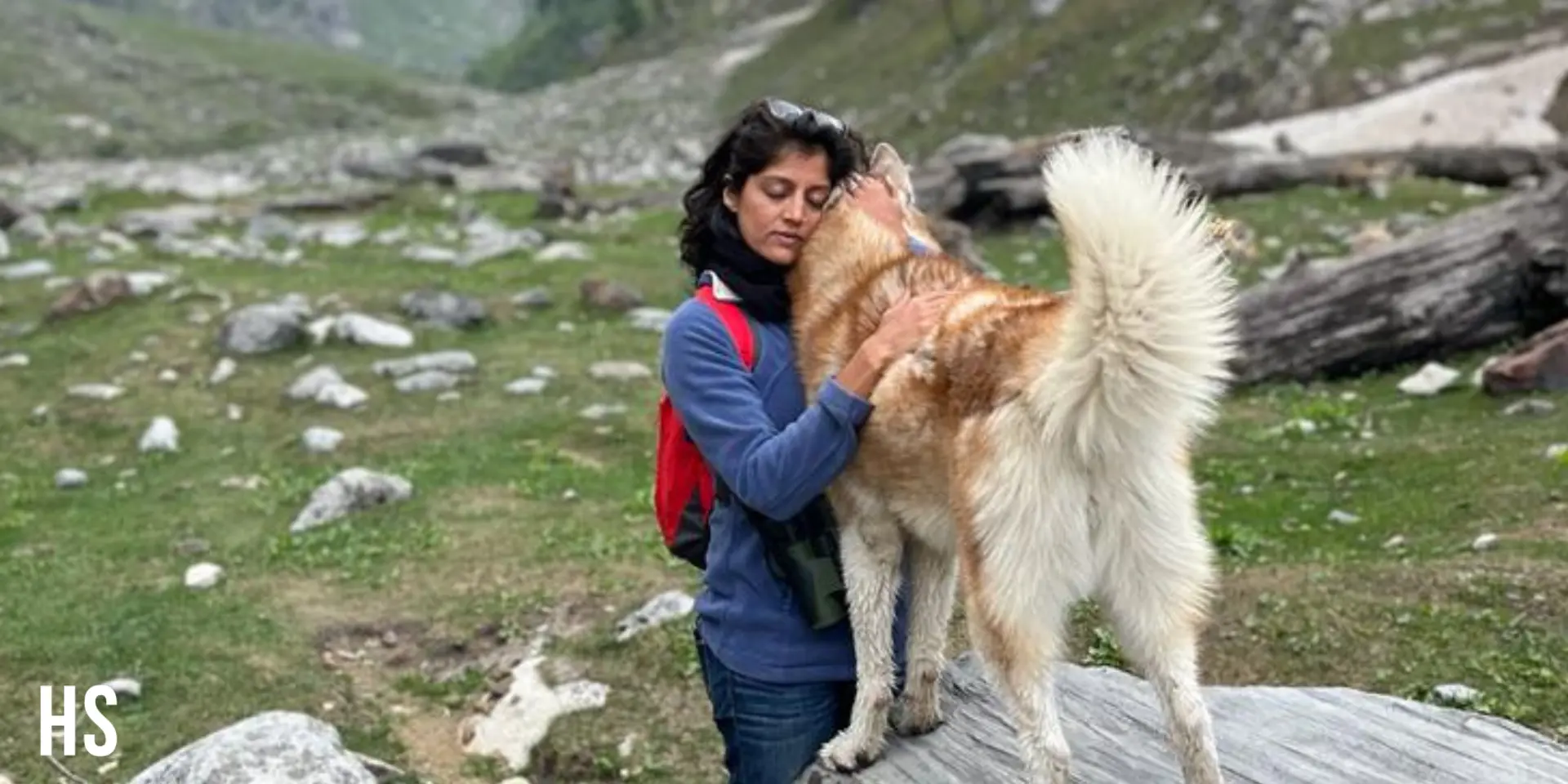

In 2022, in a stretch of ghat road just before Shimla, where several cars were lined up, a Siberian husky named Oslo was cooped up in a car.
Stubborn, irritable and determined to get out, his human, Pooja Bhale, gave up and rolled down the window. As he popped his wolfy head out, every horn in the vicinity went silent.
“Windows came down all around us, heads poked out, children stared, wondering what this creature was. I remember turning to my friend Neha and saying, ‘Look at the effect this boy has. We must capture this',” recalls Pooja.
Actor John Abraham opens the documentary Oslo – A Tail of Promise, narrating this beautiful moment on the ghat, setting the tone for a deeply personal documentary directed by Isha Pungaliya and produced by him. The film offers an intimate glimpse into conservation biologist Pooja Bhale’s life with rescued animals and the extraordinary bond she shared with her husky, Oslo.
Love, joy, and companionship
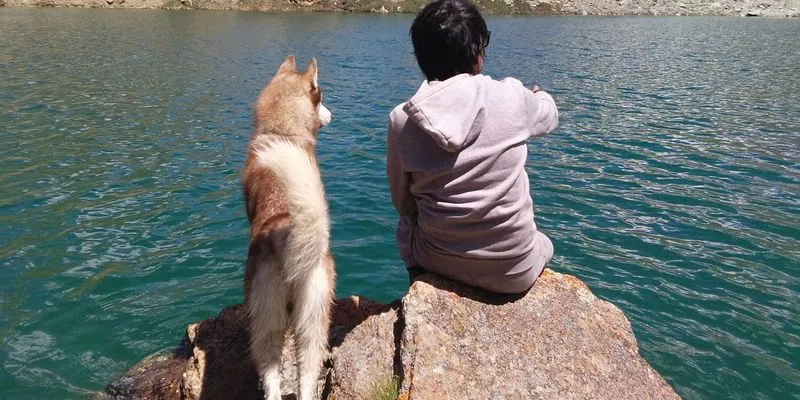
Pooja and Oslo spent 12 years, 8 months, and 19 days together, and the documentary celebrates the love, companionship, and joy that defined their relationship. The film premiered at the International Film Festival of India and will be available on YouTube and Apple TV from July 29.
In 2018, HerStory had featured Pooja’s work on The Farm, two-and-a-half acres of family land on the outskirts of Pune she had converted into a biodiversity hub, through the Protecterra Foundation, which she had founded in 2011. Oslo was one of the many dogs at the farm along with cats and elephants.
Oslo came to Pooja and her partner Varun when he was five-and-a-half months old. Born in a kennel in Bengaluru, he had passed through many homes before they adopted him.
At the ghat, Pooja and Neha started documenting their next journey to the hills with an iPhone. Pooja would have been happy with a 10-minute travel vlog of Oslo's journey and back, shot on a phone.
“I just wanted to immortalise Oslo’s impact. I told my producer and creative partner, Amey Gosavi, at the end of 2022 that I wanted to tell this story. Once you bring a filmmaker on board, you end up making a documentary,” she says.
Filming began in April 2023 and spanned 45 days over the year. Pooja’s family shared their experiences later.
“Oslo and I have always travelled to Himachal in May; so that portion had to be shot in that window. There's also a lot of archival footage spanning 10 years woven in, so the film isn't just about that one year. Editing took close to two years through multiple cuts and versions, because stories like ours aren't scripted; they take shape only once you have the footage and figure out how the pieces fit together,” she explains.
One of the reasons why the film tugs at the heartstrings is how natural everything feels. There are no staged moments or dramatic recreations, just glimpses of everyday life on the farm. We see Poooja talking to Oslo and the other animals, effortlessly switching between Marathi and English.
The conversations, the affection, the little routines—it all feels completely unscripted, almost as though the camera is quietly observing her life rather than documenting it.
Nature speaks
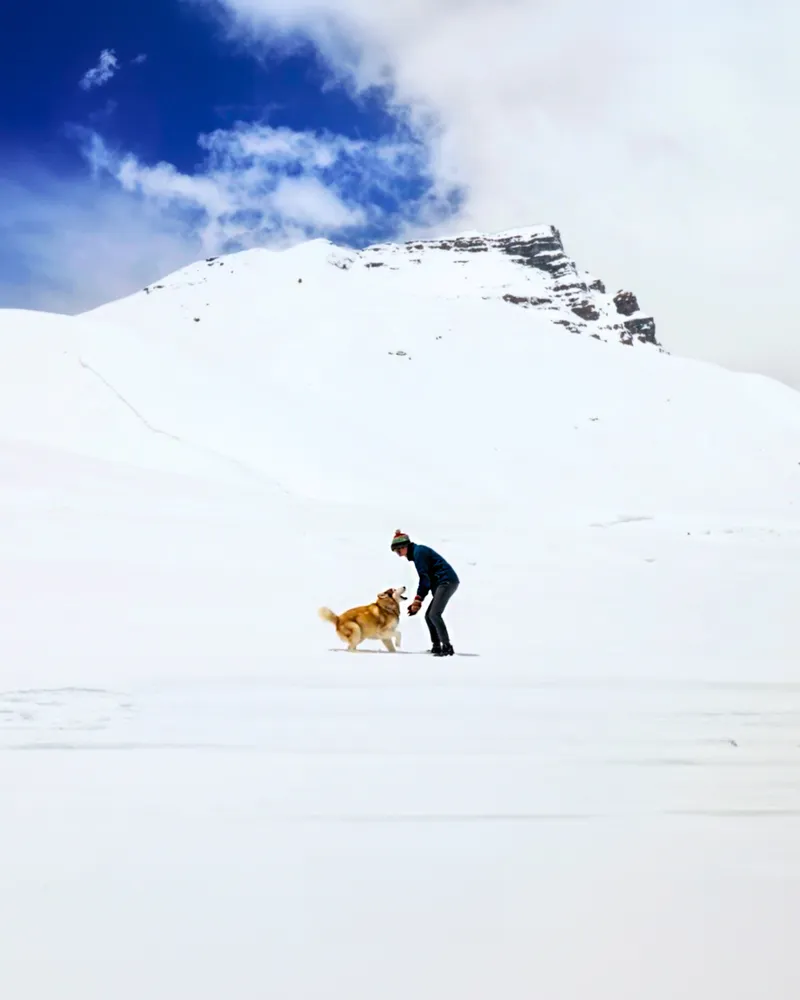
For 45 shoot days, the cameras were rolling more or less constantly, and everywhere it was Oslo and Pooja, or the animals and her, with the only sit-down interviews with the family.
One thing that strikes you throughout the documentary is how animals communicate in ways humans often overlook.
Pooja believes the esoteric idea of telepathic, interspecies animal communication can sound far-fetched to people outside this kind of work.
“At a basic level, animals communicate through bodily cues that anyone living closely with them learns to read, through vocalisations, how they behave, walk and move. I think science is only just catching up with what spiritual and ancestral teachings have always known—that nature speaks, and we have simply shut down our ability to hear it,” she elaborates.
In the less than two months Oslo has passed, Pooja says Tadi, another dog at The Farm, comes to sit at the exact spot where Oslo first started “to leave his body”. And never once has she sat there before. There’s another dog, Chocolate, that does the same.
A tale of belonging
Over many years at The Farm, Oslo and the many rescued animals she has shared her life with quietly transformed the way she looks at the world. They taught her to let go of the instinct to ask, “Why is this happening to me?” and instead ask, “What am I meant to learn from this?” Alongside it came lessons in patience, unconditional love, and surrender—accepting that not everything needs to be controlled.
While the film is called Oslo - A Tail of Promise, it’s also very much about belonging. Pooja reveals that Belonging was the first title they went with before they decided on ‘promise’.
“I don't think you have to belong to a place. I think it is internal—you have to belong to the truth of yourself, and to the integrity you hold, to who you authentically are. Once you have that, you could be picked up and placed anywhere. My anchor is the farm—I feel most comfortable, safe, happy and settled here—but if I were removed from it, would my sense of belonging disappear? I don’t think it would. I don’t think you belong to a single space; you can belong to multiple spaces, multiple realms, multiple people, multiple ideas. It's an internal state,” she says.
Oslo also influenced the way Protecterra Foundation has evolved. Oslo took Pooja from the city and brought her to The Farm.
“The whole dimension of spiritual ecology—deeper reconnection, meditation, the presence of the moon in my life—was always there on the periphery, but Oslo, Shera (another dog) and the elephants, especially Mahua, brought it front and centre, and it's carried forward since,” she says.
Also, Protecterra’s community helped fund the film. Pooja says its programmes are running well; the foundation is working with over 150 children every month on a long-term basis.
“Our core work is about helping people choose compassion, kindness and empathy, without being preachy about it, showing that it's possible to make kinder choices, in whatever capacity you have,” she says.
Oslo - A Tail of Promise opened to an overwhelming response, and as it opens to a wider audience, Pooja believes the call to action is simple: open your eyes.
Adopt, don’t shop
“Adopt, don't shop; animals are not commodities. Nature is sentient; she feels; this isn't a human planet to use and abuse at will. This is a shared planet, and there's dignity in all life; we are all just visitors here. Those are the three conversations we want to spark.
“This isn’t a standalone film—it’s part of a larger movement for a shared planet, and we are building a handbook and a set of conversations and questionnaires around it, which is where Protecterra’s wider work comes in.”
As our conversation draws to a close, I ask Pooja to imagine the story from a different perspective. If Oslo were the one behind the camera, or the narrator of her life, what would he say?
She smiles. “If Oslo had made this film, it would look very different,” she laughs. The two had an imaginary debate about this for years. “He always said it was my film. I always told him it was his.”
“I think he’d say, ‘She's the bravest person I know’,” says Pooja.
Edited by Swetha Kannan