



How Jagriti is helping women in eastern UP build digital businesses and new livelihoods
Through incubation, mentorship, market access and ecosystem building, Jagriti Sewa Sansthan’s Women’s Centre of Excellence is helping women build sustainable businesses.

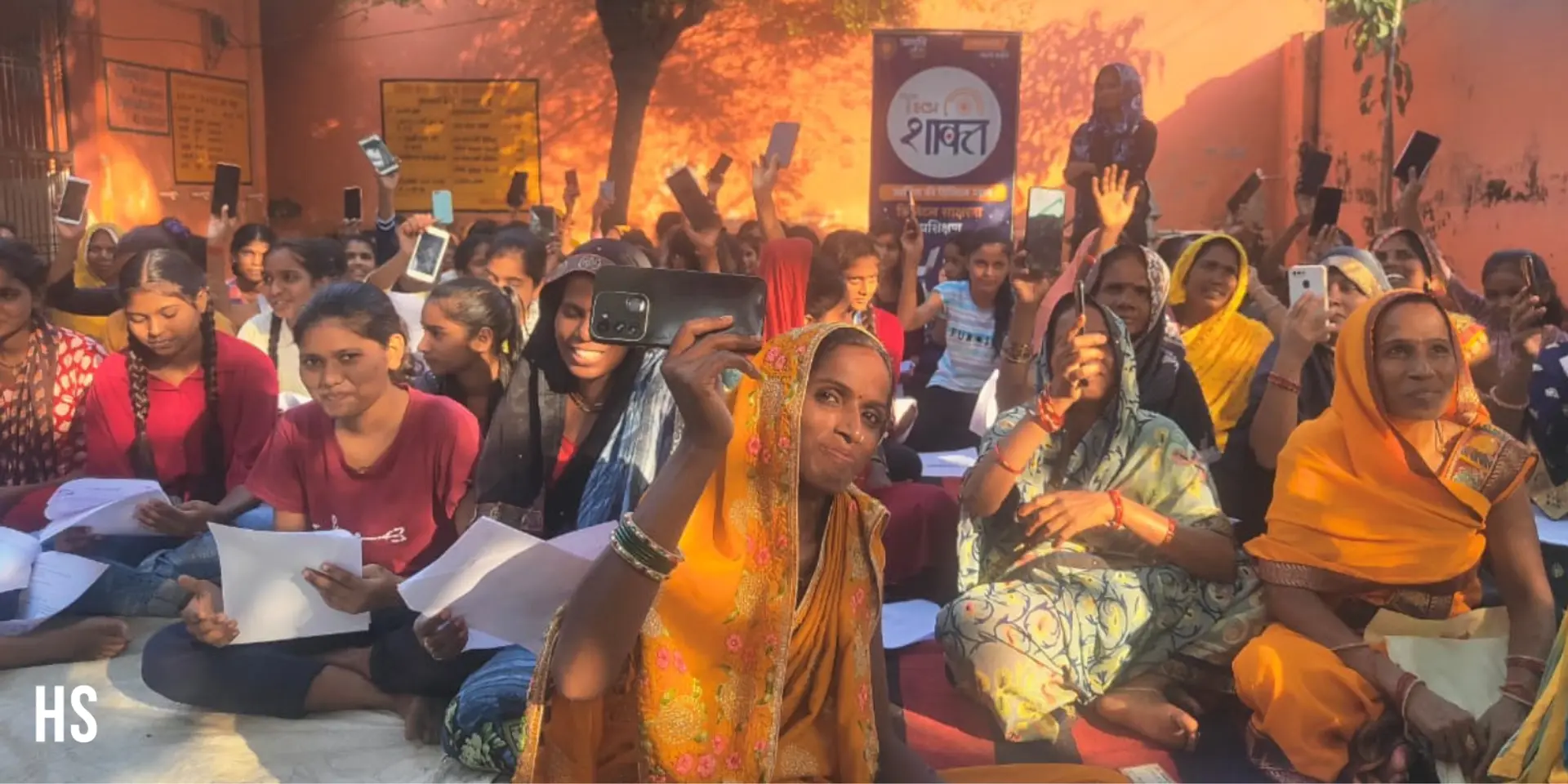

In 1999, Shashi Mani Tripathi started Jagriti Sewa Sansthan in Deoria district, Uttar Pradesh, after noticing that women, particularly from socio-economically weaker families, had time on their hands but few structured avenues to use it productively.
That observation became the starting point for Jagriti Sewa Sansthan, a grassroots organisation that set out to turn women’s time and potential into opportunity. Jagriti, which means “awakening”, was an apt name for an organisation built around helping women discover their own agency, skills and economic potential.
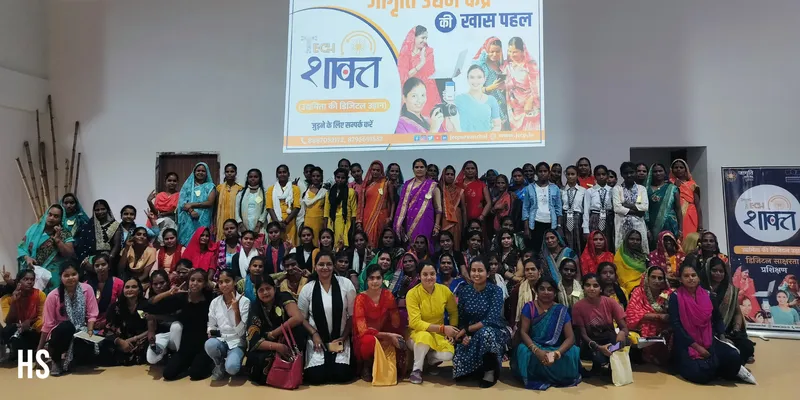
The Tech Shaktis
It began and continues as a low-cost training programme where women from villages could learn computer education, English, tailoring, handicrafts and beauty skills.
Shashank Mani Tripathi, Shashi’s son, shared his mother's instinct: India's transformation wouldn't come just from its metros, but from within its districts and villages.
In 2008, working with early co-founders and supporters, he launched Jagriti Yatra — a 15-day, roughly 8,000-kilometre train journey across India that each year brings together around 450 young changemakers from small towns and rural regions, pairing them with facilitators and entrepreneurs working on India's toughest development problems.
Over 18 years, the Yatra has built a network of more than 9,500 alumni, 40% of them women, with 28% going on to start their own ventures and has even been replicated, at a smaller scale, in other countries.
Around 2013–14, Jagriti acquired six acres of land in Deoria and set up the Jagriti Enterprise Centre Purvanchal (JECP).
By 2013–14, Jagriti began asking itself a larger question: if the organisation's larger vision was “Building India through Enterprise,” could it go beyond vocational training and help build sustainable enterprises?
The next step was incubation. Jagriti built a model around a 7M framework: Mobilisation, Mentorship, Market Connect, Money, Miscellaneous Services, Mahol (the enabling environment) and Mitra (a support network).
Jagriti initially worked across three districts of Eastern Uttar Pradesh for its first five to six years, before expanding to Gorakhpur and, more recently, four additional districts. It now has a presence across seven districts in the region, with an eventual ambition to reach all 10 districts of Eastern UP.
Alongside incubation, Jagriti began developing a second layer of its enterprise ecosystem: Centres of Excellence (CoEs) across seven areas — Digital, Women, Bioregional, Agro, Handicrafts, Healthcare and Rural urbanisation. Five are currently operational.
Women at the centre of enterprise
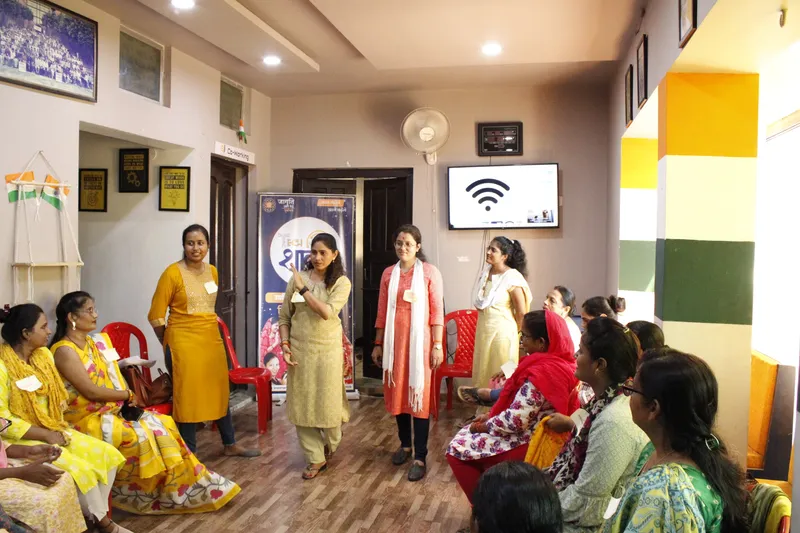
A digital training session in progress
Vanita Viswanath chairs Jagriti’s Women’s Centre of Excellence, while Shilpi Singh leads its day-to-day operations along with her colleague, Surya.
Shilpi joined Jagriti Yatra in 2018 as a Yatri (participant).
"I was lost in my own world, but the Yatra gave me a sense of how much is going on in this country and in this world, and how unexposed we are,” she says.
Three years later, in 2021, she joined Jagriti full-time and has now spent five years with the organisation, the last three building the Women's Centre of Excellence from scratch.
One of Jagriti’s earlier efforts with women was through the Internet Saathi programme, through which nearly 1.7 million women were trained in basic internet skills using a train-the-trainer model, at a time when smartphones were not so common.
Shilpi explains that Women’s CoE is built around three pillars: creating an entrepreneurial mindset among women; ensuring that women enter a wider range of sectors; and making gender intentionality, safety, and integration part of the larger enterprise ecosystem.
The first pillar is particularly important, and the Centre focuses on awareness and training alongside incubation.
The second pillar focuses on moving women beyond the traditional sectors where they are often expected to operate. The Centre of Excellence has created new pathways into digital and technology-led businesses.
Digital-first businesses for women
Its first major initiative, TechShakti, began in November 2022 and combines digital literacy with financial literacy and entrepreneurship training.
The team observed that most women ran very traditional businesses. So they researched roughly 30 potential business models with a digital/tech core and narrowed them to 13, which they introduced to 10,000 women through workshops. These models included service centres, digital libraries, photography, graphic design, T-shirt printing, IT coaching, virtual reality services, drone-based services, and others.
The centre had to build the women’s journey from the ground up, from understanding the technology to developing skills and eventually figuring out how those skills could generate income.
The first cohort brought together 55 women, but women did not continue with digital businesses in the first year.
Jagriti responded by changing the way it structured the next cohort. The second cohort included 42 women—22 new participants supported through a Cisco-backed programme, alongside 20 more experienced women from the first cohort who moved into a second-stage programme.
“During the initial pilots, we would group women interested in a particular business—say, graphic design—and bring in a technical training partner for a five-day programme. But a group of 15 could quickly drop to three or five committed participants,” Shilpi says.
This year, the centre enrolled 50 women into digital businesses, applying lessons from the earlier pilots to the larger programme.
“You won't find a programme like this—this deep and this comprehensive—anywhere else focused on women. That's why we don't talk about scale as our headline metric; our work is deliberately deep. Women participating in the digital-business programme recorded a cumulative 33–35% increase in income,” she says.
For many women, starting and running a business may not be possible because of limited time, skill gaps, or other constraints. Jagriti is therefore exploring gig work as another income pathway.
Jagriti partnered with Karya to bring data-annotation work related to AI-training data in Bhojpuri to women who had completed digital-literacy training. Around 1,000–1,200 women took up the work, earning up to Rs 2,000 each using their smartphones and adding roughly Rs 18 lakh in additional income to the local economy.
The lesson beyond training
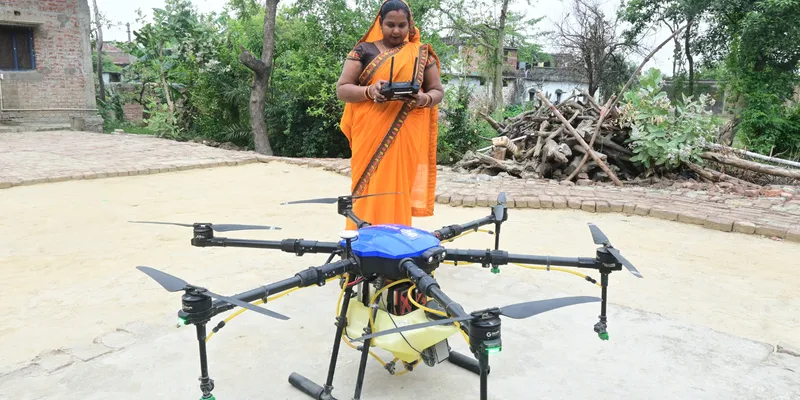
Drone didi Seema Gupta
Over three years of piloting, Jagriti discovered that family support remained a barrier to women showing interest and continuing with training.
A follow-up study of 29 women from a 42-member cohort found that those who were doing well had strong family backing.
“The family's trust in the women of their own household can't be manufactured by an outside party. We can only amplify and strengthen it once it exists; we can't force it,” Shilpi says.
“If we work alone, there's only so much we can do. Real social impact comes from the ripple effect—when people see others in their community succeed and start believing, "If she can do it, I can too,” she adds.
This year, Jagriti has begun working on gender-intentionality workshops with families, sessions with male entrepreneurs to encourage them to create space for women in their families, and internal workshops for its own team.
Singh shares the story of Seema Gupta, a drone didi from Deoria who struggled to even understand how to structure a business. The team helped her build a marketing plan and secure a tie-up with a sugarcane mill, 40 km away from her home.
During the season, she now stays away from home for 7–10 days in a mill guest house, a significant social step, since it's unusual in her village for women to stay away from family in spaces occupied mostly by men. While most operators can spray only 2–3 acres in a session, she can spray 6–7 acres because the programme provided her with 3–4 extra battery sets for her drone. During the peak season, she earns roughly Rs 70,000–80,000 per month.
The Centre’s overall vision is to nurture at least one million women over the next 5-10 years.
“With women's empowerment work, you genuinely can't move fast, and you can't easily scale — there's a fundamental "readiness gap" that hasn't closed in a long time. Even in today's AI-driven moment, people already inside the system don't fully understand where things are headed. If we rush women who've never been part of any of this straight into that complexity, we might hit some numbers or serve some agenda, but we risk not solving the underlying problem, and the consequences would only show up 3–5 years down the line. We have to solve this sustainably,” Shilpi says.
(The story has been updated to include details of the CoE's other members.)
Edited by Affirunisa Kankudti