



In full bloom: Bootstrapped with Rs 2 lakh, FlowerAura has now grown into a Rs 100-Cr gifting business
With a presence across 700 cities and 30 international markets, FlowerAura is gearing up for its next phase of growth. It aims to double its revenue and enter new international markets in the next few years.



Back in 2010, when ecommerce was still finding its feet in the country, friends Shrey Sehgal and Himanshu Chawla noticed a need that only few others were addressing—gifting.
At that point in time, the act of sending flowers or gifts was largely an offline affair, mostly put off until the very last minute. It was also dependent on local vendors.
“We wanted to make gifting accessible and effortless through technology,” Sehgal tells SMB Story.
So, in 2010, Sehgal and Chawla put in Rs 1 lakh each to launch FlowerAura, an online flower delivery platform. The duo realised that flowers, a universal symbol of emotion, could serve as the perfect entry point into the gifting segment.
For the first five years, FlowerAura delivered only flowers before expanding to other categories. What began as a simple flower delivery platform for users in Delhi-NCR, has today evolved into a full-fledged pan-India gifting platform featuring hampers, cakes, and plants.
The company now delivers to over 17,000 pin codes across 700 cities and 30 international markets. In FY2024, the venture clocked a revenue close to Rs 100 crore, recording a 15% year-on-year growth.
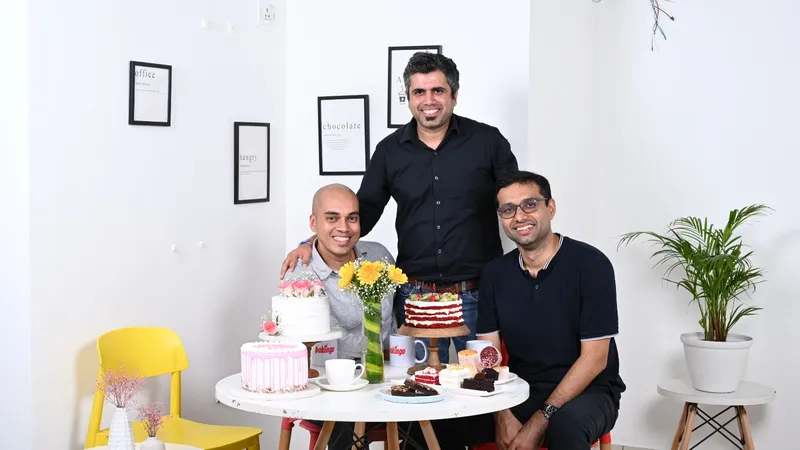
Co-founders of FlowerAura: Suman Patra, Himanshu Chawla, and Shrey Sehgal (L-R)
Flowers and beyond
FlowerAura’s evolution over the years reflects India’s growing comfort with online shopping and digital commerce. Over time, the company ventured into real-time ordering, personalisation, and last-mile delivery. In 2015 the company introduced cakes and hampers, followed by plants in 2017. It also launched a premium floral line. The company’s current product portfolio features up to 6,000 SKUs, spanning flowers, cakes, plants, hampers, and personalised gifts.
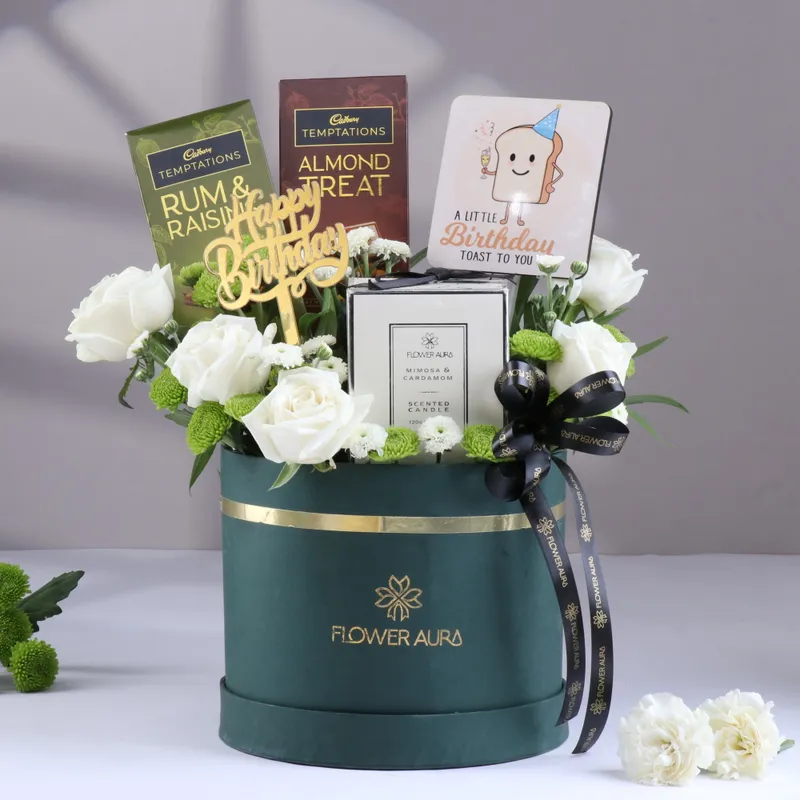
Birthday hamper by FlowerAura
In 2015, Suman Patra joined the team as a co-founder and the head of product and growth.
The company went international in 2021, launching operations in the United States, the United Kingdom, Canada, and Australia.
“The idea was simple,” says Sehgal. “A large part of India’s diaspora lives in these countries. We wanted to help them stay emotionally connected to their families back home (by allowing them to send gifts home on special occasions).”
To ensure product consistency and freshness of cakes, FlowerAura established an in-house bakery, Bakingo, in 2016. Today, these facilities operate in major cities including Delhi NCR, Mumbai, Bengaluru, Hyderabad, Kolkata, Lucknow, Pune, and Chandigarh, allowing the company to control quality and guarantee same-day deliveries.
Last financial year, the company clocked a growth of around 15% year-on-year, with the premium and personalised gifting segments clocking a growth of 20% YoY, outpacing the overall growth.
FlowerAura currently boasts a 30% repeat customer rate.
Optimising logistics
Behind FlowerAura’s every gift delivery lies an intricate web of logistics. Ensuring freshness, timely deliveries, and consistency across hundreds of cities is a constant challenge that the company has to deal with.
“The biggest test is maintaining reliability across geographies,” says Sehgal.
The company relies on local vendor partnerships, a tech-driven fulfilment system, and 150 dark stores across 24 cities to optimise its last-mile delivery.
Interestingly, there has been a big surge from Tier II and III cities, which now make up 55–60% of business. Metros like Delhi, Mumbai, and Bengaluru account for 40–45% of sales.
Sehgal says gifting in smaller markets has grown twice as fast as that in metros, driven by improved internet access and rising consumer aspirations.
“The difference lies in the emotion behind the purchase,” Sehgal says. “Metros lean toward premium and personalised options, while Tier II and III buyers are more tradition-driven, seeking gifts that are meaningful yet affordable,” he adds.
The overall landscape
The last decade has seen gifting habits in India evolve from ritualistic to emotional and personalised. Younger consumers are driving this shift, favouring gifts that are meaningful, quirky, and often Instagram-worthy.
According to Research and Markets, the Indian gifting market was valued at $75.16 billion in 2024, and is expected to reach $92.32 billion by 2030, growing at a CAGR of 3.55%. The gifting segment includes gift cards, flowers, chocolates, jewellery and personalised gifts, and is largely dominated by players such as FnP (formerly Ferns N Petals), Archies, Chococraft, and BigSmall.in.
The convenience of online shopping, coupled with the availability of a wide range of products, has led to the growth of this segment.
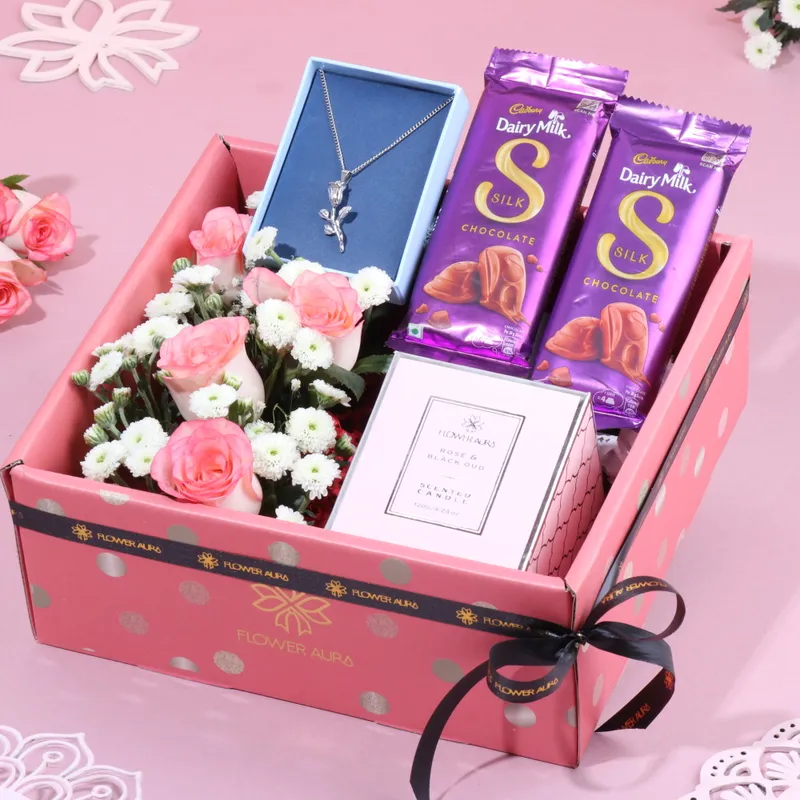
“Personalised gifting has grown by almost 20% on our platform,” says Sehgal. “Consumers want to create memories, not just exchange presents.”
At FlowerAura, flowers are the largest segment of revenue, contributing about 60%, followed by hampers and premium offerings (20–25%). Personalised gifts (15%) are the fastest-growing segment.
Within the premium range, exotic blooms such as hydrangeas, eustomas, and birds of paradise, and curated hampers featuring scented candles, wine glasses, and artisanal treats are the best-sellers.
The brand’s products range between Rs 195 and Rs 7,500. The luxury floral portfolio, priced between Rs 1,800 and Rs 7,000, contributes 12–15% of flower revenues.
According to Sehgal, the response from consumers, especially in metros, signals that India is ready to embrace flowers as an aspirational lifestyle choice.
FlowerAura’s marketing campaigns position gifting as an emotional bridge rather than a transaction. “We don’t just sell flowers; we tell the stories behind why people send them,” Sehgal explains the company's marketing strategy.
“Every gift is an emotion in a box. Our job is to make sure that emotion arrives perfectly, wherever it needs to go,” says Sehgal.
FlowerAura aims to double its revenues in the next three to five years, expand its dark store network to 200 by the year-end, and introduce new luxury product lines including rare blooms. It’s also gearing up to enter the Middle East, another region with a strong Indian diaspora.
Edited by Swetha Kannan