



In the wake of violence: Mental health professionals offer free support to those in distress
Following the Pahalgam attack and the surge in polarisation, a network of counsellors and grassroots organisations has launched free mental health support for those grappling with trauma and discrimination.

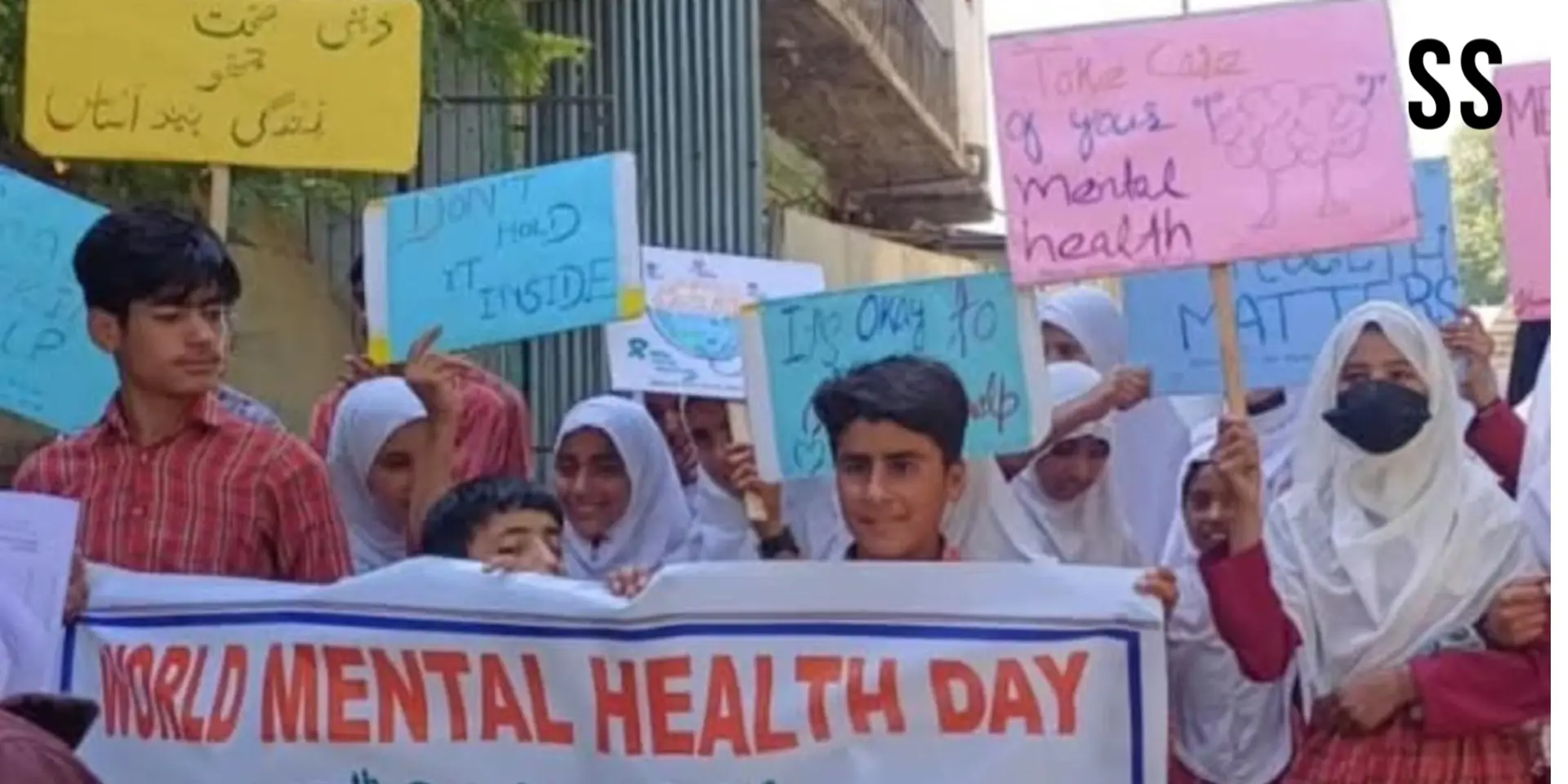

As tensions rise across India following the recent attack in Pahalgam, citizens nationwide are reeling under fear and grief. Kashmiri students across India have reported a surge in discrimination and hostility, ranging from physical threats and forced evictions to institutional biases and religious restrictions.
In Chandigarh, a Kashmiri nursing student was allegedly assaulted by a group of individuals who entered his residence at night. Similarly, students in Prayagraj have faced pressure from houseowners to vacate their accommodations. The Jammu and Kashmir Students Association (JKSA) has documented multiple such cases and has urged authorities for immediate intervention.
“There is definitely uncertainty, fear and lack of control. There’s also a lot of trauma and collective grief,” says Kirti Garg, founder of The Psyk Life, a Delhi-based mental health organisation. “Even those not directly impacted by the attack are feeling uncertainty, anger and helplessness.”
In response to this widening psychological crisis, a network of mental health professionals and grassroots organisations have stepped up to offer free, trauma-informed support—to people from across the country, struggling with vicarious trauma, and especially to Kashmiris navigating the compounded weight of loss, isolation, and fear.
World Health Organization records show India has just 0.75 psychiatrists per 100,000 people—which is far below the recommended minimum of three. During periods of conflict or crisis, this disparity becomes starker, as public health systems are often focused on physical safety and legal response, leaving psychological trauma largely unaddressed.
And this is why these interventions have been particularly critical.
Delhi-based The Psyk Life, which was founded during the COVID-19 pandemic, began offering pro bono support during times of crisis. Garg describes the extension of their services to those affected by the conflict, as a “psychological first aid” for a country that’s in shock.
“This isn’t deep therapy,” says Garg. “It’s about being present. People want someone to listen, to help them process the emotions they’re holding.”
With a team of 35–40 counselling psychologists trained in crisis intervention, The Psyk Life has lifted all limits on the number of sessions that can be availed during this period. The service is open to everyone who cannot afford professional therapy, regardless of location or identity. “We function entirely online and on the basis of trust,” she adds.
Anyone facing anxiety, depression and emotional distress can reach out through their Google Form. Clients are paired with suitable therapists, and the sessions are completely free of charge so long as their needs fall within the scope of counselling psychology. Those requiring long-term or more intensive care are referred to clinical psychologists or psychiatrists, which may involve a cost depending on the external professional’s fee structure.
Over the last five years, The Psyk Life has provided pro bono mental health support to more than 4,500 people. Since this initiative was re-activated in response to the Pahalgam attack, over 50–60 people have reached out, from across India—not just Kashmir, says Garg.
Building care from crisis: SEEK by Rethinking Refugees
In June 2018, Sindhuja Sankaran, a social and political psychologist and academic from Chennai, started Rethinking Refugees, a non-profit organisation established in Kraków, Poland. Sankaran’s goal was to humanise the discourse around refugees by promoting awareness, fostering empathy, and encouraging informed action.
For her, the current political atmosphere is therefore all too familiar. During the Ukraine war, her organisation launched Project Kiran—a remote mental health support system connecting displaced individuals with volunteer therapists worldwide. In April 2025, as news of the Pahalgam attack and the aftermath began surfacing, she extended Project Kiran into a new programme named SEEK in partnership with Young People for Politics (a platform for young Indians to engage in political discourse and activism), specifically to support Kashmiris facing trauma and marginalisation.
“When we launched our initiative during the onset of the Ukraine war, we encountered a range of mental health concerns. Many individuals were experiencing anxiety and symptoms of PTSD, while others, particularly those already living with pre-existing mental health conditions, reported heightened depression and emotional dysregulation,” says Sankaran. “With SEEK, we anticipated similar challenges but shaped by a different sociopolitical context. We expected trauma, anxiety, grief, and a pervasive sense of uncertainty and fear—especially among students and young people who might suddenly feel unsafe or targeted,” she adds.
A recent study by the International Journal of Indian Psychology found that 47% of adolescents in Kashmir are affected by mental health issues, with significant numbers experiencing peer-related problems, hyperactivity, conduct issues, and emotional despair.
Likewise, a 2023 report by The Associated Press (AP) points out that nearly every one of the Kashmir valley’s 7 million people has been touched by violence, and carries invisible psychological and emotional scars from decades of conflict.
The report presents the case of Aayat Hameed, a young student from the valley, who had to seek psychiatric help after experiencing anxiety, palpitations, and suicidal thoughts. She was diagnosed with acute depression. “I realised that seeing a psychiatrist or reaching out to someone you trust really helps to deal with suicidal thoughts and depression,” said Hameed.
Professor of anthropology Saiba Varma provides insights into the profound psychological impact of prolonged conflict in Kashmir. “The most basic building blocks of a healthy psyche — a sense of safety and security — are, and have been, under attack for decades in Kashmir,” she says.
The mental health care infrastructure in the Kashmir Valley is reported to fall under 17 government-run mental health clinics across its various districts. This is a significant increase from the early 2000s, when there was only one main mental health care clinic in Srinagar. Despite these developments, the mental health network in Kashmir remains overwhelmed due to the high demand for services, stemming from decades of conflict and associated trauma.
There is a rising need for intersectional, trauma-informed, and politically aware approaches to mental health care in conflict contexts and these and these professionals are stepping up to meet it.
With years of experience working with people in strife-torn regions, Sankaran found that when conflict shits close to home—especially one tied to people’s identities, geographies, or communities—it shakes not just their sense of safety but our entire psychological and emotional equilibrium. “We see heightened anxiety, fear of being surveilled or targeted, especially among students, migrants, and minorities. There’s a sharp polarisation of narratives, the emotional toll of having to pick sides, and moral distress from feeling silenced or helpless,” says Sankaran.
This is also followed by a collapse of trust in institutions, leaving people feeling alienated and unprotected. “That’s why grassroots mental health responses are so important—not just to help people cope with trauma, but to remind them that they are not alone, that their grief is valid,” she adds.
Among those who have reached out to SEEK is a 21-year-old woman from Kashmir who had lost a family member to the conflict. As with other young citizens in her demographic, the profound and long-term impact on her mental health was shaped by this personal loss, but not limited to it. The broader context of militarisation, political uncertainty, social stigma, and limited access to trauma-informed care deeply affected her mental health. “These factors also create a persistent environment of psychological distress that affects communities collectively and intergenerationally,” says Sankaran. “This young woman has been struggling to eat and sleep, is constantly experiencing panic attacks, feeling unsafe and just needed someone to speak with, to be witnessed,” says Sankaran.
With a combination of personal networks and professional referrals, Rethinking Refugees has built a collective of 20 volunteer psychologists who are offering free short-term therapy to those experiencing either direct trauma or vicarious distress. As with The Psyk Life, individuals fill out a form describing their concerns following which they are referred to a professional best suited to the case.
Each person is assured a minimum of two free sessions, with the option to continue based on mutual agreement.
A decade of grounded support: Kashmir Lifeline’s healing framework
Long before the current crisis, the Kashmir Lifeline and Health Centre (KLL) has been a responder to mental health care in the Valley. Founded in 2011, KLL is dedicated to providing accessible, trauma-informed mental health care to people in Kashmir and over the years, has reached thousands through its confidential toll-free helpline (1800 180 7020), online and face-to-face counselling services, and psychoeducational outreach.
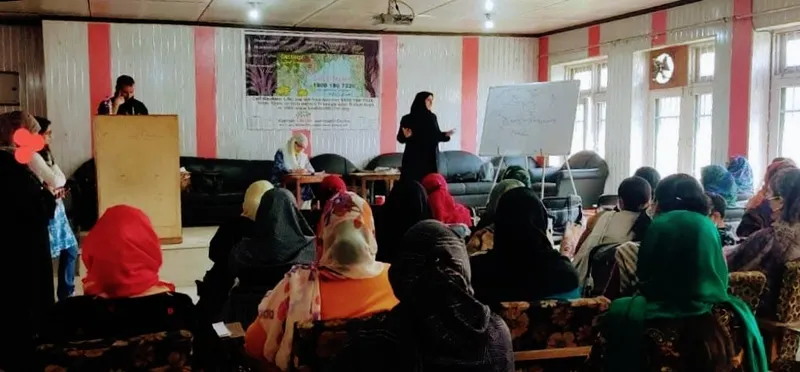
KLL conducts awareness sessions and training programs at the grassroots level, including collaborations with Integrated Child Development Services projects. These initiatives aim to reduce stigma and promote mental health understanding within communities.
KLL has supported more than 25,000 clients and engaged over 8,500 participants across various mental health and wellbeing programmes. One of its flagship initiatives, Young Minds, focuses on building psychological resilience and equipping children and adolescents with practical skills such as psychological first aid.
Mental Health in conflict: an urgent, underfunded priority
“Imagine spending 40 to 50 years of your life saving up to build a house, and losing it to an armed encounter overnight. This is the reality people here are dealing with over the past few weeks,” says Shahida Khanum, a social worker from Kashmir. “They are huddling up their families and fleeing to safe zones. They have lost all belongings and they don’t know when their children will go to school next,” says Khanum.
That mental health support remains severely underfunded even in the face of such profound loss and displacement speaks volumes about how invisibilised psychological care continues to be. Almost every pro bono support functions with contributions from mental health professionals but little to no external funding.
As Kashmir continues to bear the burden of both old and new wounds, the quiet, sustained work of these organisations offers more than psychological relief. In a landscape where trust in institutions is fraying, these grassroots efforts remind people that care can still be found in community.
As Sankaran puts it, “Conflicts don’t begin with the news cycle—they reopen long histories of oppression and exclusion.” In offering spaces to be heard, seen, and held, these initiatives stitch back a sense of safety that violence tries to unravel.
Edited by Jyoti Narayan