



Stories from the ground: Sky Islands puts a lens on narratives from Western Ghats
Sky Islands, a newly launched community-led storytelling platform, is narrating deeply local, often-overlooked narratives of ecological change and cultural continuity taking place in the Western Ghats.



In some quiet, scattered corners of the Western Ghats, residents and community members are penning untold stories about the life and ecology thriving in the mountain chain. A river being revived through a centuries-old irrigation practice; a conservationist regrowing a forest with devotion and defiance; and a bird’s song chronicled not just in notes, but in lifeways and lineage.
Sky Islands, the community-led documentation and storytelling platform, that brings these stories to light, reflects the diversity of the landscape and the lives that call it their home. The digital platform was founded in April this year by former journalist and writer Rajni George, a resident of Kodaikanal, who, like most contributors to Sky Islands, tells the story with an intimacy that comes from living close to the land.
This collective of writers, ecologists, and community voices reporting from the ground has a sharp eye for small shifts: the disappearance of a fern, the return of a bee species, the way a stream has changed course over decades.
“We often see great journalism in national dailies, but reporters don’t always have the time, proximity or lived experience to deeply understand what’s happening on these lands,” says Rajni, the founding editor and publisher of Sky Islands. “At the same time, local voices—like experienced farmers or forest dwellers—often don’t have access to newsrooms or platforms. Sky Islands was created to bridge that gap: to bring these grounded perspectives into wider conversations about the environment, and to offer people the editorial support they need to tell their own stories.”
Editorial consultant Nitin Padte, a former bureau chief at The Indian Express, explains, “We see our work as quiet journalism. We want to give people time to speak, to write, to breathe.” He adds, “We are trying to resist the pace and aesthetic of the mainstream while producing work that has integrity and impact.”
Murugeshwari, a contributing writer, is a daily wage agricultural labourer and member of the Paliyar Adivasi community. At 25, she’s a single mother and has already written 70 stories on the lives and challenges of her community for Adivasi Lives Matter, a digital media and advocacy platform amplifying the voices of indigenous communities across India, and 35 stories for The Kodai Chronicle, a hyperlocal publication also founded and led by Rajni.
For her work at Sky Islands, Murugeshwari received a small grant from the Delhi-based interdisciplinary arts and ecology initiative, Shared Ecologies, which helped her get a laptop, internet, editorial support and mentorship in Tamil. “I find it important to document our oral histories, cultural and traditional practices, and challenges in the face of changing ecologies,” says Murugeshwari. “As an indigenous voice, it feels like I finally have a place to represent my community members to the world—the way they would like to be represented.”
While it takes time and resources to support someone like Murugeswari, the depth and authenticity of her voice is irreplaceable, says Rajni, highlighting how it's important to defy extractive storytelling practices.
Stories published by Sky Islands cut across themes of food, farming, conservation, gender, and climate resilience. One piece traces the oral history of the endangered kurinji flower, while another documents traditional avocado farming practices in the Palani Hills. They describe the challenges posed by unpredictable rainfall and fluctuating crop yields, while also highlighting unexpected opportunities.
“A big part of the work is just listening,” says Rajni.
The publishing model is deliberately slow and collaborative. Writers are paid, stories are workshopped over time, and editorial support is tailored to the contributor’s context. “It’s not about breaking news, it’s about creating a space where complex, grounded narratives can take shape,” says Padte.
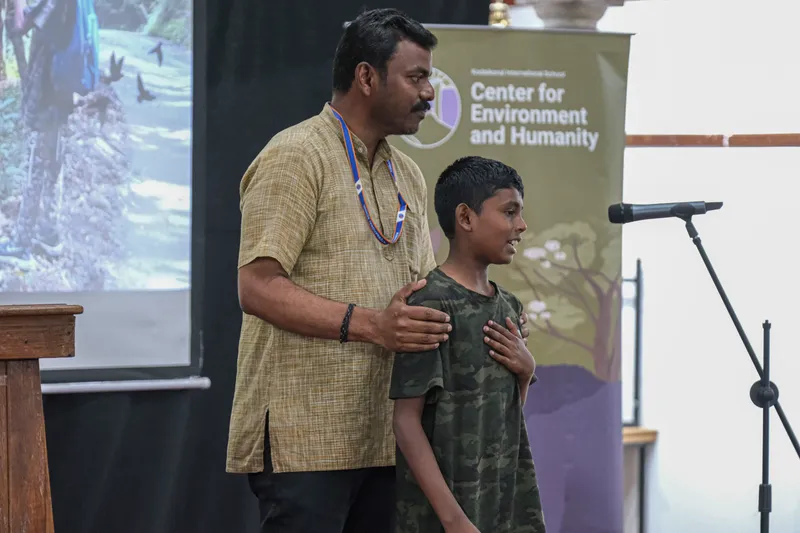
A collaborative storytelling outreach event organised by Sky Islands (Image: Centre for Environment and Humanity)

Beyond publishing, Sky Islands has been experimenting with events and community engagement. It held a cleanup drive in the sholas (high-altitude evergreen forests) of Kodaikanal, raising awareness and facilitating direct engagement with the ecosystems. This participatory model is gaining both trust and attention, especially among ecologically minded travellers. A Kurinji Food Festival, hosted by Sky Islands in Chennai, celebrated the rich culinary heritage of the Western Ghats. Curated by food historian Rakesh Raghunathan, the festival featured produce from Kodaikanal and Ooty.
The platform’s evolving event ecosystem may become a revenue stream for the platform, says Rajni, while also laying the groundwork for broader initiatives like eco-travel aggregation to meet the growing demand for meaningful, low-impact ways to travel.
Padte says what the team looks for are “voices of people who are affected by the changes that are taking place across the Western Ghats.”
“We started off as The Kodai Chronicle, with the focus on Kodai, but then we saw that this was resonating across the Western Ghats. We now live in a development paradigm, and that development means accelerated growth, and that is not necessarily very helpful to the people dwelling in forests, and to forest areas themselves.”
“We are highlighting the various challenges of managing human and environment interaction, which is becoming more and more polarised in favour of development,” he adds.
Importantly, Padte notes, “We’re not trying to do activism. We are simply trying to highlight what’s happening. And by working with people from these communities—some of whom are now staff—we are gathering a much wider range of voices.”
In giving voice to these layered, often-overlooked narratives, Sky Islands is slowly building an archive for the future—grounded in listening and reclaiming.
Edited by Kanishk Singh