


How Aether Biomedical’s bionic hands are restoring lives, one grip at a time
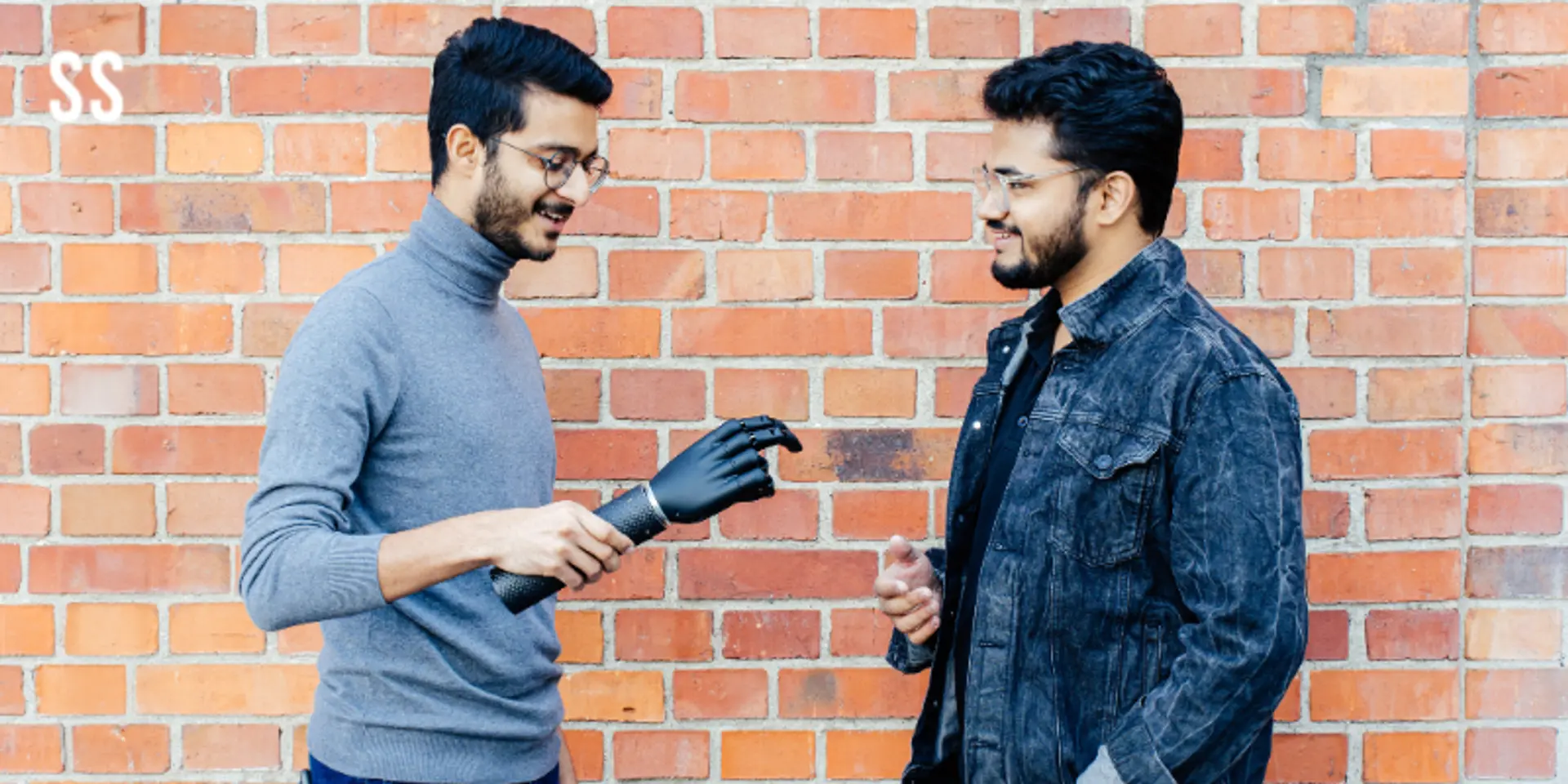
Aether Biomedical, founded by Dhruv Agrawal and Dr Faith Jiwakhan, has developed the Zeus Hand, one of the strongest bionic hands on the market. The device has been instrumental in providing prosthetic limbs to amputees in war-affected Ukraine.


In war-torn Ukraine, a man held his bride’s hands and took his first dance. He had lost one hand and undergone double leg amputations. Among the wedding guests was his clinician who fitted his prosthetic hand and witnessed him take a new step in life.
The prosthetic limb, known as the Zeus Hand, was fitted at a camp run by Aether Biomedical and Superhumans Centre, a rehabilitation centre in Ukraine. To date, Aether has fitted prosthetics for over 140 patients in Ukraine within the past 12 months.
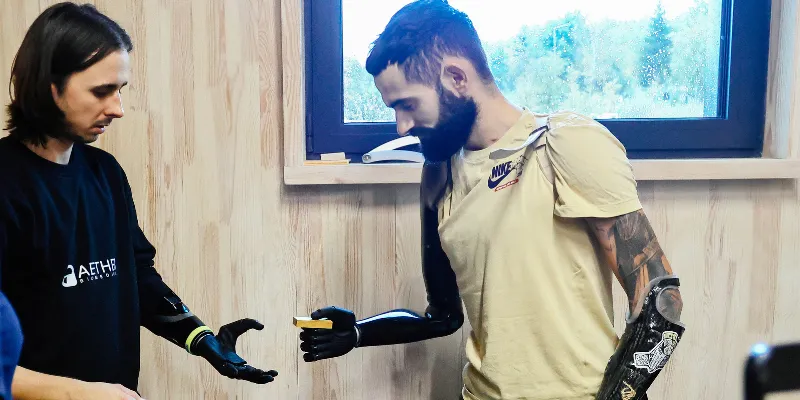
Aether Biomedical's work in Ukraine
Zeus Hand is the flagship, award-winning product of Aether Biomedical, started by Dhruv Agrawal and Dr Faith Jiwakhan. As the strongest bionic hand on the market, Zeus delivers a grip force of 34.17 lbf/152N. It can carry loads of up to 77 lbs / 35 kgs. Most importantly, all repairs can be completed on-site in just 30 minutes, which eliminates the need for shipping.
With doctor parents, it was a given that he followed their path. In 2016, as first-year medical students at VMCC & Safdarjung Hospital, he and his co-founder Jiwakhan were grappling with the rigidity of the educational system that “is a strict pathway, where you just have to follow the exact trend without widening or looking at intersectional areas.”
Tinkering for a need
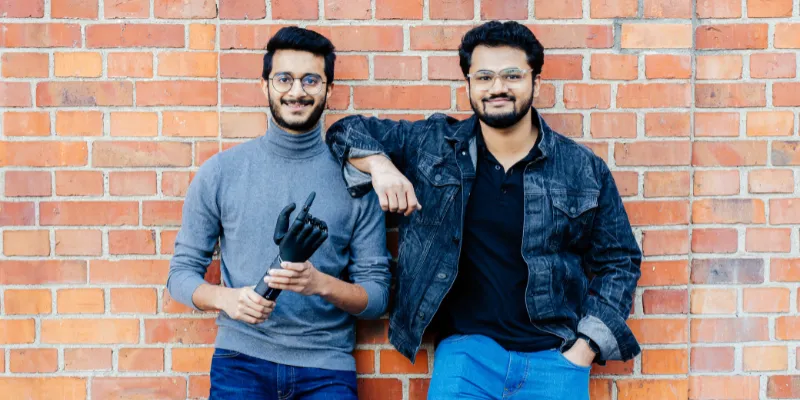
Dhruv Agarwal and Dr Faith Jiwakhan
In his second year of college, Agrawal’s parents gifted him a 3D printer, which set him on a different course.
Starting a biomedical innovation club in college, along with Jiwakhan and others, Agrawal began tinkering with it, printing gadgets and experimenting with open-source prosthetic designs.
“If you ask me, why specifically prosthetics, I don’t have an answer,” Agrawal admits.
“I think where there’s a 3D printer, the aim is to build something robotic. A prosthetic hand is one of the obvious things people think of when building things from a medical standpoint,” he adds.
The friends came across e-NABLE, a community of individuals from all over the world who provide simple yet functional 3D printable prosthetic designs for kids, and this clinched the first yet functional idea for them.
“So, it went from a club to let’s start a company. We started looking at the field of prosthetics and understood that we wanted to produce bionic devices that would be 20 times cheaper than those available in the market, and be as good as what anybody has built so far,” Agrawal says.
This became a problem statement to start Aether Biomedical with a bunch of grants from Nidhi Prayas, and others.
By 2017, Agrawal had made the bold decision to drop out of medical school, a move that would initially hurt their fundraising prospects in India.
"Unfortunately, at that time, nobody wanted to give money to a medical school dropout," Agrawal recalls.
The turning point came through an unlikely source: a Polish government grant programme offering foreign entrepreneurs $50,000 to explore the Polish startup ecosystem. “The original plan was, ‘let’s get that money, spend 2-3 months there, learn something new and come back to India because $50,000 takes you a much longer way in India than in Poland,’” he says.
But Poland offered them a team that believed in their vision. Within weeks, Agrawal met Marta Szymanowska and Kamil Fabiszak, who would become the company's head of operations and engineering. They decided to stay back in Poland.
Making bionics stronger, smarter, and cheaper
A Polish VC, impressed by their prototype, led a $250,000 pre-seed round that allowed them to build their first commercial product in 2020.
“While the bionic limb was economical, it had the same problems like other bionic devices in the market. As we went from 2020 to 2022 showing the product to people, we got rejected over and over again,” he reveals.
The problems they discovered were fundamental: existing bionic hands were weaker than basic mechanical hooks, broke frequently, and took weeks to repair. Most damaging of all, "the drop rates in this industry are nearly 50%. So, we give these thousands of dollars’ worth of devices to people and then they stop using them within six months."
“We also found that these prosthetic devices break three times a year on an average and it took four to six weeks to get them repaired each time, which meant that between three to 4.5 months, the patient doesn’t have his device,” Agrawal explains.
They set out to make Zeus the strongest bionic hand on the market, with enough grip strength to handle medium to heavy-duty tasks. This made sense, as a large number of amputations occur among blue-collar workers who rely on prosthetic devices to carry out demanding physical work.
They redesigned both the product and supply chain from scratch.
Aether built modular hands, like Lego blocks. “If a finger breaks, what I do is I ship a spare finger replacement to the clinician. The patient goes to the clinic, the product is repaired on site, irrespective of the breakage that happens by a clinician in less than 30 minutes,” Agrawal elaborates.
It wasn’t just hardware that needed fixing , the industry’s software was stuck in the past too. “We built an entire digital platform that works as a digital twin for the patient… and monitors how patients are using the device,” he adds.
Out of nearly a thousand hands shipped, Agrawal shares that only seven have come back to the company for repairs.
Sarai Gascón Moreno, a Zeus user was born without a hand and part of her left forearm. A medal-winning Paralympic athlete, she says, Zeus helps in all her daily tasks. Regarding exercising and training for swimming, it helps her perform a wider range of exercises, allowing her to train better and increase her performance further.
Reaching more people
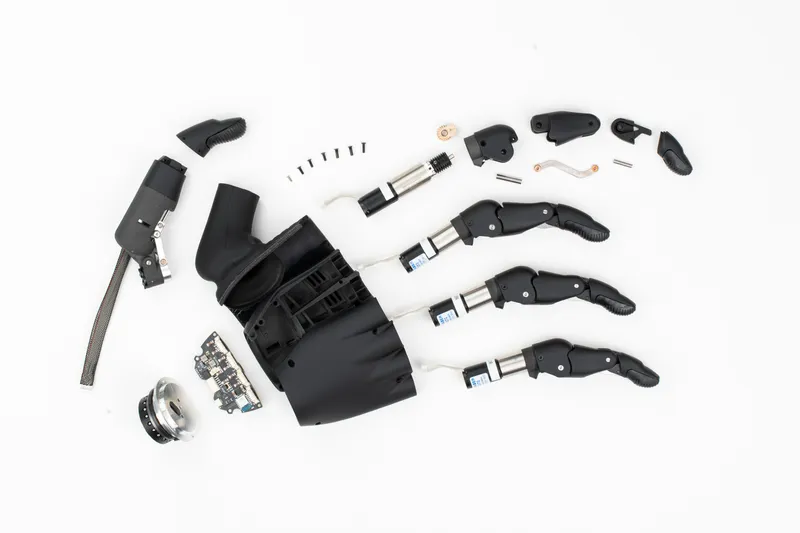
The Zeus Hand
The Zeus Hand is manufactured in Poland and is available to users in 17 countries, including India, Germany, the US, Canada, Saudi Arabia, and Ukraine.
In most countries, Aether operates as a B2B company. “We are not a clinic. We sell the device to the clinician, the clinician fits the device to the patient,” Agrawal explains.
In India, however, the company runs its own clinic in New Delhi for direct-to-customer fitting. It also works with prosthetic centres across India to fit the devices on the patients.
“Patients go through post fitment rehabilitation and work with physical and occupational therapists. Our software platform and the patient's mobile applications are designed to support this process. Patients can track their muscle signals and practice in the mobile app. Their therapists can also create a digital program for the patients to follow and patients get instructed care through the mobile app," he adds.
Every country poses a new challenge. “Every single market is completely different from the perspective of the flow of money within the prosthetics industry,” he says. “In Poland, for example, there’s a certain reimbursement framework. I cross the border 200 kilometres to the west, go to Germany, and there’s a completely different reimbursement framework.”
The device costs anywhere between $12,000, $13,000 as the minimum price for the patient, all the way up to $30,000- $35,000 or more depending on the type of componentry used.
Where insurance coverage is limited, Aether works differently. In India, for example, the company looks at partnering with NGOs, philanthropists, and companies that provide zero percent EMI-based loans… to make the device as accessible as possible.
“The goal is to reach more people—not just a few wealthy patients. “We always see what is the best possible mass market adoption I can get for my device while staying green at a P&L level. That is our approach,” he says.
Its work in Ukraine along with Superhumans began in 2023 when they realised that there were only about 13-14 prosthetics in Ukraine and over 100,000 amputations in the last three years.
“In Ukraine, it is estimated that 25-35% of total amputations are upper limb amputation and major amputations, which largely happens due to drone warfare. We started building camps in Ukraine with prosthetists from the US, Poland, and India, he says. Aether is planning to scale its efforts to fit 500-1,000 patients in a year.
Dhruv is honest about how mistakes have often led to breakthroughs. One key lesson was size. “We had one version of the product in the market for the last four years… but we made a big mistake… we built it with a large size hand first and then we found it impossible to reduce the size to medium and small. It turns out medium and small are about 70% of the market.”
As for competitors, Agrawal believes the two largest companies in the space are Ottobock and Ossur. There are also global competitors in the market like Taska prosthetics, Open Bionics, and Covvi. In India specifically, there are some upcoming startups like Bionicli and Kal Arm.
Aether has launched the next version, the smallest hand in the market till date. The new hand is designed for women, teenagers, and people with smaller hands. Over the coming months, it will be launching multiple sizes for the Zeus Version 2 hand that are all built on the same platform.
“In the next three years, we are laser-focused on the field of upper limb prosthetics within the bionic hand segment and other devices. We are also looking into solutions for mechanical and mechatronic solutions for partial finder amputees. In the long term, we are excited about sensing and monitoring technologies,” Agrawal concludes.
Edited by Megha Reddy