



Meet 5 artisans who are shaping Gujarat’s craft legacy
Meet the artisans behind Gujarat's craft renaissance. They are preserving centuries-old traditions while embracing modern tools and technology to share their art with the world.

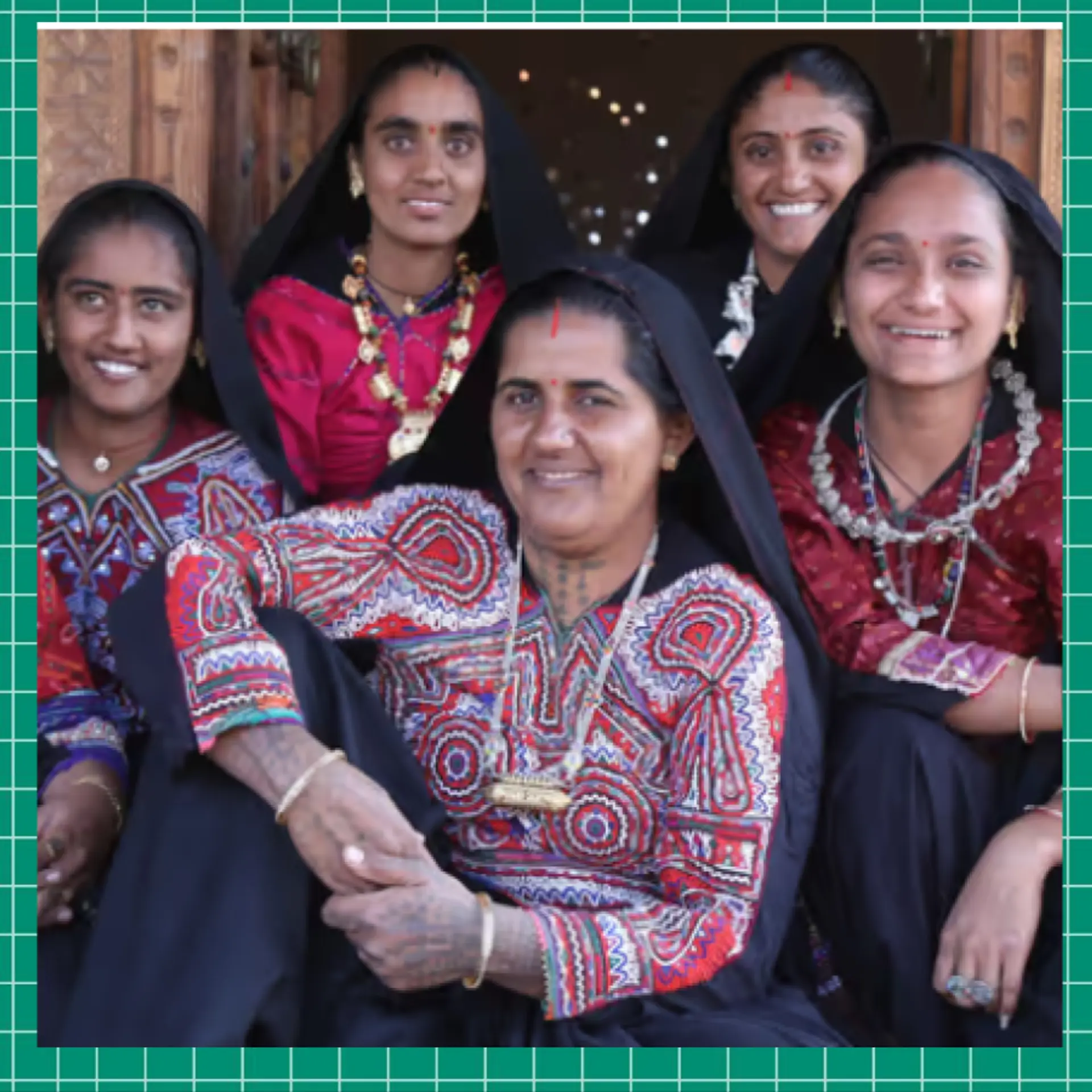

Gujarat is home to diverse art and crafts that date back centuries. Intricate embroidery, striking applique work and painting, vibrant weaves and prints, the state has been a forerunner in showcasing the country’s vibrant heritage.
In recent years, artisans from traditional art and craft communities have been at the forefront of Gujarat’s craft renaissance. They have faced seemingly insurmountable obstacles—poverty, lack of education, natural disasters and changing market dynamics. Yes, they have learned to stay rooted in tradition while learning to embrace innovation and technology to take their art to the world beyond, and build a sustainable future for their communities.
Here are five artisans from Gujarat and their stories of resilience and survival.
Rajiben Vankar
Born in Kotay village in Gujarat’s Kutch region, Rajiben Vankar was denied education because her father believed women had no use for learning. At 12 years, she secretly learned weaving from her cousin, but only when her family faced starvation and mounting death did her father allow her to take up weaving work.
Many years later, after her husband’s death, Rajiben was left with three children and no income to survive on. At first, she worked as a farm labourer and in 2009, joined Khamir, an NGO. Here, she discovered a revolutionary idea, weaving with upcycled plastic. What started as an experiment became her mission. Today, she leads a unit with 10 looms employing 70 women from underprivileged backgrounds, transforming discarded plastic into beautiful, functional products. Her enterprise creates fruit baskets, grocery bags, clutches, and wallets priced between Rs 50-1,500.
Each product carries information about how much plastic was upcycled and features the story of the woman artisan who made it. Her products have sold at exhibitions across India with a 90% sell-out rate, and she now demonstrates her craft to visitors, inspiring them to try their hand at upcycling.
Pabiben Rabari
Born and raised in the Rabari community, Pabiben Rabari would work in the fields and in different homes during the day and return home to practise Rabari embroidery. Girls from the community had to make their own wedding trousseau of blouses, outfits, bedspreads, home linen and baby accessories. The embroidery, done by hand, was painstaking, with a single blouse taking up to one year. When the community banned the tradition because marriages were getting delayed, Pabiben invented a new form of embroidery, close to the original, that could be done on a sewing machine and was quicker.
She called it Hari Jari, and with help from Kaarigar Clinic, a collective of artisans started displaying it at exhibitions. Her first product, a sling bag, is now known all over the world as the Pabi bag.
She employs over 300 women, and her products include different types of bags, garments, home linen, and accessories. She also appeared on Season 2 of Shark Tank India, making her a household name. Her eponymous brand is available at the Smithsonian Institute in New York, the Textile Museum in Washington, DC, the Taj Group of Hotels, and is stocked by other global brands.
Majikhan Mutva
Majikhan Mutva passed his Class 10 board exams, the only student in his class of 19 to do so, but dropped out despite his father's protests. He preferred earning over studying. Majikhan worked various odd jobs, including as a security guard at an ATM. The turning point came in 2013 when a Lippan artist withdrew Rs 55,000 he'd earned in just 15 days from the ATM he worked at.
Despite hailing from the Mutva community that is famous for its Lippan art, Majikhan was unaware of its potential. He asked for training and received just 45 minutes of instruction before being handed clay and an MDF piece to practice.
A 450-year-old traditional mural craft of the Mutva community from the White Rann of Kutch, Lippan art uses mud and mirror work to create intricate patterns. With only a handful of masters left in his community, Majikhan travelled to Bhuj with just Rs 485 in his pocket to buy materials. A kind shopkeeper gave him what he needed for the money he had.
Amazon’s Karigar programme brought Majikhan national fame.
In his small village, Majikhan turned a kutcha hut into a functional studio with just Rs 2,000. Using only his mobile phone, he began creating professional-quality videos, and despite a patchy internet connection, he managed to showcase his art to a global audience. His resourceful setup caught attention, earning him an invitation to Google India’s Impact Program in 2023.
With growing demand, Majikhan Mud Art expanded its reach, selling not only on Amazon, Etsy, and its own website, but also fulfilling customised orders for individual and corporate clients. Today, his handcrafted pieces are exported to countries including Australia, Canada, the US, Dubai, Abu Dhabi, Oman, and the UK, with prices starting at Rs 1,600.
Vishnu Suthar
Hailing from Tharad in Banaskantha district, Gujarat, Vishnu Suthar helped supplement his family's income during his late teens by delivering newspapers door to door. Though his father was an appliqué artisan, Suthar, a school dropout, had little interest in taking up the craft.
Handmade applique involves attaching fabric pieces of different shapes onto a larger canvas to create intricate patterns, commonly seen on sarees, dupattas, curtains, pillow covers, and bedspreads. As a child, Suthar watched his father and other artisans painstakingly complete the few orders they received from an NGO, but he never imagined that appliqué could one day become his calling.
Everything changed in 2008 when, during one of his delivery rounds, he spotted a newspaper advertisement by the Gujarat government announcing a handicraft exhibition and sale in Ahmedabad, with all arrangements handled by the organisers. Excited and intrigued, Suthar began collecting appliqué pieces, pillow covers, bedspreads, and whatever the local artisans could quickly put together. He took just one bag of products and received an overwhelming response, which prompted him to take the traditional craft seriously at the age of 20.
Once he realised that the craft could create opportunities for more artisans, Suthar began learning appliqué work from his father and collaborating with others. Soon, he was participating in numerous exhibitions. Over time, he united a community of artisans, mainly women, from the villages of Banaskantha district.
Partnering with the NGO Craft Roots has significantly increased visibility for Suthar’s work. Today, he receives orders from individual clients as well as a strong retail customer base spanning 10 states in India.
In addition, he regularly fulfils orders from the Government of Gujarat. His applique products are sold through the state government’s Gurjari outlets, alongside exhibitions.
Jabbar and Mubin Khatri
Jabbar Khatri and his nephew Mubin belong to a family of ajrakh artisans in Dhamadka, Kutch, Gujarat. The uncle-nephew duo has revitalised the traditional craft through their brand, Jabbar & Mubin.
Despite the challenges posed by the 2001 Gujarat earthquake, which impacted the handicraft industry, Jabbar’s dedication to preserving this centuries-old craft remained unwavering. After exploring various professions, including working in Mumbai's mobile retail sector and an aluminium plant, Jabbar returned to his roots after understanding the potential of online platforms to promote ajrakh.
In 2014-15, Jabbar began showcasing their designs on Facebook, leading to immediate sales and validating his belief in the digital marketplace. Collaborating with Mubin, who had completed a design course at Kala Raksha, they participated in exhibitions like Dastakar Mela in Delhi.
The duo expanded their product range to include ajrakh-printed sarees, stoles, and dupattas on various fabrics, focusing on quality and design. They employ 200 women in production and 300 women as resellers, and have completed over a thousand orders. Their products are available on platforms like pabiben.com and Okhai and are supplied to renowned companies such as Taneira and FabIndia.
Jabbar & Mubin's ajrakh motifs were also featured in fashion shows in Uzbekistan.
Edited by Jyoti Narayan