



Oil change for wheels of justice: How new experiments strive to make POCSO cases transparent
This September, Pratapgarh’s Mission Pankh made headlines for shifting focus from prosecution to rehabilitation. However, it has to navigate the clogged and uneven justice system that continues to fail many children.

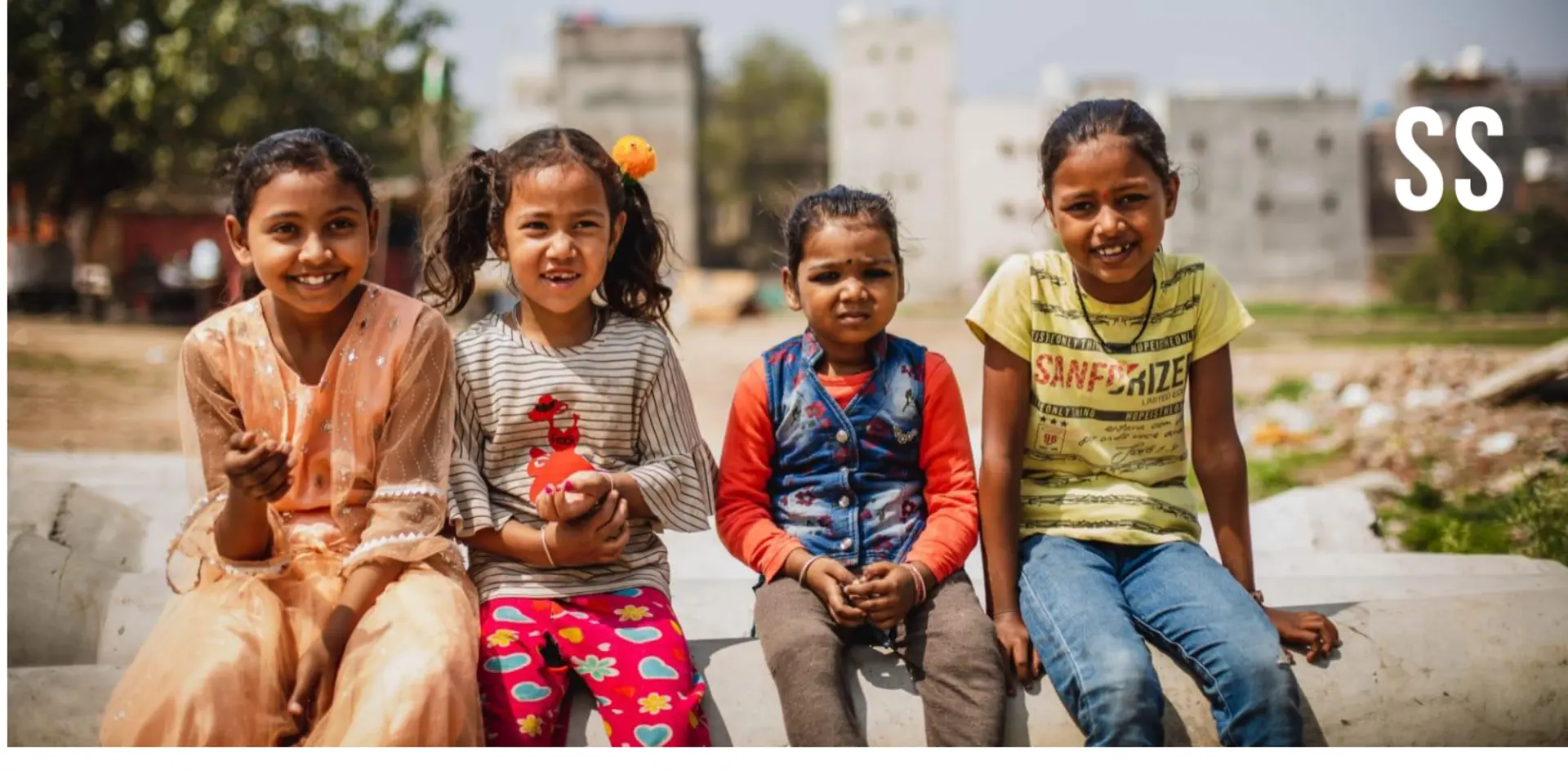

When Uttar Pradesh’s Pratapgarh district last month rolled out Mission Pankh, a rehabilitation programme for survivors of child sexual abuse under the Protection of Children from Sexual Offences (POCSO) Act, headlines for once focused on healing rather than hearings. Launched by the district administration in partnership with UP Police and the departments of women’s empowerment and social justice, the initiative connects survivors to compensation, school re-enrolment, and PTSD counselling.
“We wanted to show that even after facing difficult circumstances, children can find new hope, new direction and a new flight,” said District Collector Anjali Rajoria following the launch.
What makes the programme radical—even in its early days—is its fundamentally restorative approach. India’s POCSO framework has largely been retributive, built around investigation, prosecution, and conviction. While these steps are crucial, they often leave survivors and their families entangled in intimidating bureaucracies with little emotional or social rehabilitation.
Mission Pankh, in contrast, places protection, education, and psychosocial care at its core—a shift child rights advocates have long demanded. By speeding reintegration and offering trauma care, it aims to soften the harm that follows a sexual-offence complaint.
Why POCSO cases still languish
Over a decade after the POCSO Act came into force, convictions remain dismally low—around 3% nationally, according to research by the India Child Protection Fund.
“Speeding legal justice for child survivors requires blunt institutional fixes—trained prosecutors, dedicated courts, faster forensics, and better case management. India’s uneven record on these fronts defines both its progress and its failures,” says an activist based in Chennai.
Courtroom experience tells a similar story. In Bijoy v. State of West Bengal (2017), the Calcutta High Court ordered immediate FIRs, timely medical exams, and interim compensation before conviction. Yet many survivors still wait months for these basic procedures. A 2024 IndiaSpend analysis found that delayed FIRs and medico-legal exams are among the leading causes of collapsed cases.
In Vishnu Kumar v. State of Chhattisgarh (2017), judges were urged to make proceedings more child-friendly—even to step down from the dais to comfort witnesses—but reports by HAQ: Centre for Child Rights and Enfold India show most special courts still lack safe spaces or trained staff, forcing children to relive trauma.
In Dinesh Kumar Maurya v. State of U.P. (2016), the Allahabad High Court clarified that the absence of physical injuries does not disprove assault. Yet this misconception continues to colour cross-examinations, especially where forensic delays stall corroboration.

The gap between law and practice
Recent state data shows how such procedural bottlenecks deepen inequities. Lok Sabha figures tabled in 2025 revealed vast regional disparities: Delhi’s Fast Track Special Courts (FTSCs) took an average of 1,717 days—nearly five years—to dispose of a case, while Puducherry averaged just 180 days.
In Kerala, 6,522 POCSO cases were pending as of September 2025, with forensic laboratories stretched far beyond capacity and districts waiting months for single reports. Courts cannot progress without the results of investigations, effectively freezing trials.
A 2023 NIMHANS consultation report flagged similar concerns. Shortages of trained judges and special prosecutors, and overburdened courts that list hundreds of cases but record testimony for only a few witnesses, lead to a grindingly slow justice system. Add to that weak witness protection, poor shelter oversight, and inconsistent coordination between police, health, and child welfare systems, which bring out further inefficiencies.
Vidya Reddy, Founder-Director of Chennai-based NGO Tulir – Centre for the Prevention & Healing of Child Sexual Abuse, says the reason why cases languish in courts for years is the shocking shortage of resource professionals. “Just a handful of courts have a full-time magistrate present for POCSO cases. In most courts in Chennai—as with other parts of the country—a magistrate may show up once or twice a week for the initial administrative stage of court proceedings,” says Reddy.
Together, these failures point to a system rich in rights but poor in resources—one where the outcome of a case depends more on judicial discretion than on systemic care.
Models to learn from
Some state experiments are showing what a more coherent POCSO system could look like. These include the expansion of Fast Track Special Courts (FTSCs) and exclusive e-POCSO benches, as well as state-driven innovations that combine judicial infrastructure with survivor support.
FTSCs, launched under the Department of Justice’s Centrally Sponsored Scheme, are meant to ensure time-bound trial and disposal of sexual-offence cases. By mid-2025, hundreds were operational across states. These courts are paired with adequate staff, regular hearings, and case tracking, improving disposal rates.
In August 2025, Maharashtra announced 27 new fast-track courts and a multi-storey POCSO complex in Pune designed with video-recording and counselling facilities for survivors. Legal experts welcome the expansion but caution that it must be matched with specialist prosecutors, trained staff, and faster evidence pipelines.
Advocates, including Sana Raees Khan, praise the initiative as a “step in the right direction” but warn that “the ground reality”—including weak forensics and case overloads—still hinders meaningful progress. Child-rights activist Varsha Rokade has also called for courts to operate in extended shifts and for district-level committees to monitor shelter homes and case handling.
In Madurai, the POCSO court recently sentenced a man to life imprisonment for raping a minor and ordered Rs 6 lakh compensation, underscoring how timely coordination between investigation, medical examination, and trial can produce quicker, decisive outcomes. In a September 2025 ruling, the Madurai Bench of the Madras High Court held that adults can file POCSO cases for abuse suffered as minors—affirming that the law imposes no limitation period and recognising delayed disclosure as an outcome of trauma, not inconsistency.
Beyond infrastructure
Experts agree that expanding courtroom infrastructure alone won’t fix the broken system. Many lawyers and prosecutors have called for dedicated teams to ensure witness attendance, continuous case tracking, and timely forensic processing.
States that have enforced active policing units, counselling services, and NGO-supported case follow-up have reported faster movement and reduced secondary trauma for survivors.
Reddy adds that other critical aspects also need to be addressed. “Teenage pregnancies, lack of action or awareness building, and access to preventive contraceptive products like condoms to minors in consensual relationships—all these are problems that no one wants to discuss.”
Administrators leading programmes like Mission Pankh are measuring success not just in convictions, but in survivor outcomes through school re-enrolment, compensation disbursal, and immediate protection. “Our goal is to connect these children with the mainstream and support their journey towards a better future,”
Rajoria had said earlier.
Only when fast-track courts are supported by efficient forensics, specialist prosecutors, safe witness transport, and community-based reintegration, real justice thrives.
Edited by Kanishk Singh