



These student-founded initiatives are reshaping social impact in India
From hostels to nationwide movements, these student-led ideas have grown into powerful engines of change, tackling education, health, hunger, water, and livelihoods.


Across campuses in India, young people are reimagining what civic engagement looks like. A 2024 study titled 'Empowering Youth for Social Change: The Role of Social Entrepreneurship Education', highlights how student-led initiatives are increasingly combining empathy with enterprise to solve local problems through sustainability, innovation, and inclusion.
This shift has given rise to a generation of student-founded organisations that blend activism, development, and community building. What began as weekend projects in hostel rooms have grown into NGOs shaping lives across states—working to improve education, food recovery, clean water, and healthcare access.
Here are seven such campus-born initiatives proving that social change can start with a simple idea and a few determined students.
Make A Difference (MAD)
Founded by college students from Kochi, Jithin C Nedumala, Vivek Saldanha, and others, in 2006, Make a Difference was started to mentor children in orphanages and transit homes.
Founded by college students from Kochi, Jithin C Nedumala, Vivek Saldanha, and others, in 2006, Make a Difference was started to mentor children in orphanages and transit homes. Today, it has grown into a pan-Indian youth volunteering network, and operates in around 20 cities, with over 3,000 volunteers who support more than 3,500 children.
MAD’s long-term model, Progression Mentoring, supports children in institutional care across four life stages—from building foundational and academic skills to preparing them for independent living and aftercare beyond 18.
The organisation’s “whatever it takes, for as long as it takes” approach provides consistent emotional, educational, and life-skills support.
MAD won the Lipman Family Prize in 2022 as a model for youth-led volunteering and aims to help every child in institutional care become a self-reliant adult.
BloodConnect
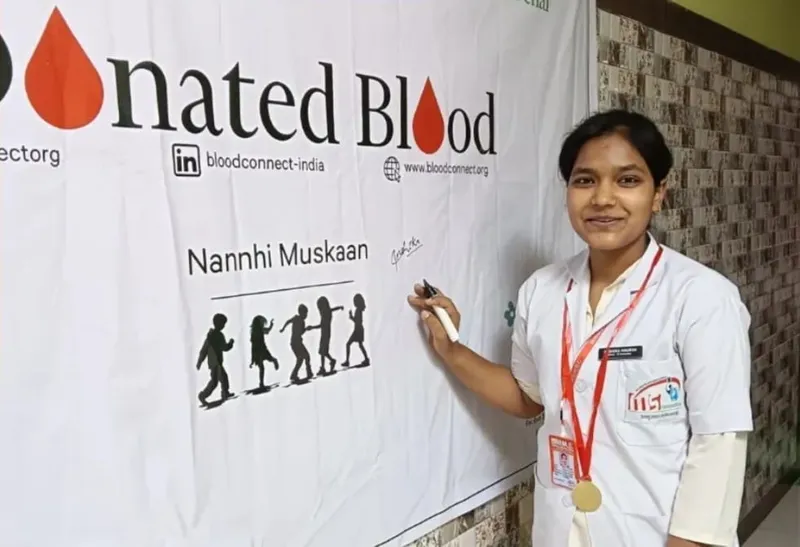
Started in 2010 as an NSS project by Utkarsh Kawatra and others at IIT Delhi to address India’s chronic blood shortage, BloodConnect has evolved into a youth-led NGO connecting donors, hospitals, and communities.
Started in 2010 as an NSS project by Utkarsh Kawatra and others at IIT Delhi to address India’s chronic blood shortage, BloodConnect has evolved into a youth-led NGO connecting donors, hospitals, and communities. Its 360-degree approach includes blood-donation camps, donor-awareness drives, a 24×7 emergency helpline, and a volunteer network across 10 cities.
According to public metrics, the organisation has held over 1,700 donation camps, collected 100,000+ units of blood, and claims to have saved 400,000 lives.
The organisation partners with colleges, corporates, and local bodies to build awareness and logistics capacity, and in 2025 marked 15 years of continuous operation.
BloodConnect’s goal is to help India achieve complete blood sufficiency by 2030 through stronger grassroots participation.
Project Asbah
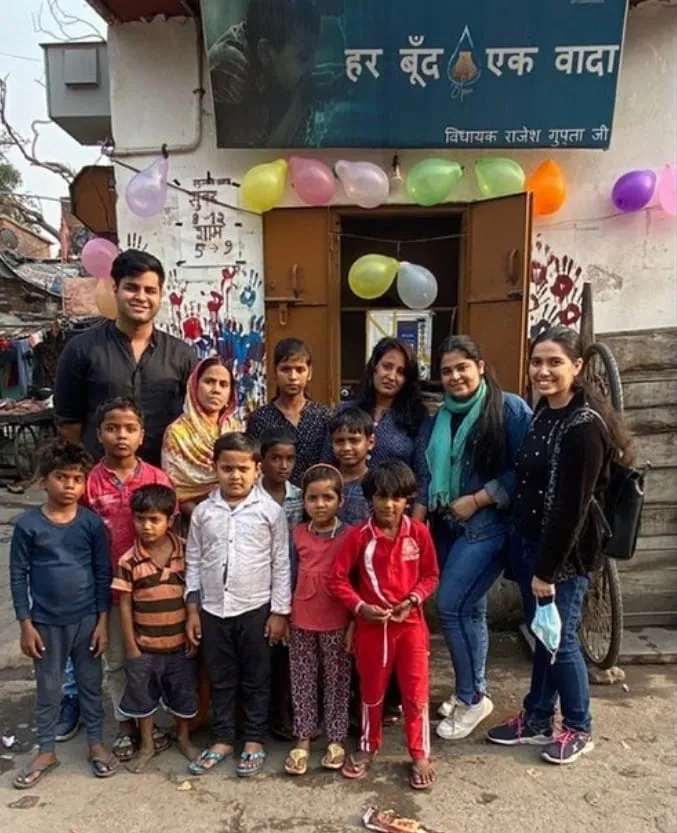
Born at Shri Ram College of Commerce (SRCC), Delhi, in 2018, Project Asbah provides affordable clean drinking water through community-run filtration plants and water ATMs, priced at Rs 4-6 for 20 litres.
Born at Shri Ram College of Commerce (SRCC), Delhi, in 2018, Project Asbah provides affordable clean drinking water through community-run filtration plants and water ATMs, priced at Rs 4-6 for 20 litres.
Each plant is run by women entrepreneurs from the local community, combining livelihood with social ownership. Operating in Delhi’s water scarce areas such as Lalbagh, Kabir Nagar, and Azadpur, the project recently expanded to Muzaffarnagar, Uttar Pradesh.
To date, Asbah has installed 18 plants serving over 46,000 people daily, reused 40.8 million litres of wastewater, and saved communities an estimated Rs 5.8 crore in health costs, according to SRCC website.
The project won the World Water Race 2019 and Cisco’s Employee’s Choice Award in 2022. Looking ahead, Asbah plans to deepen sustainability, expand in rural areas, and scale its clean-water entrepreneurship model.
No Food Waste
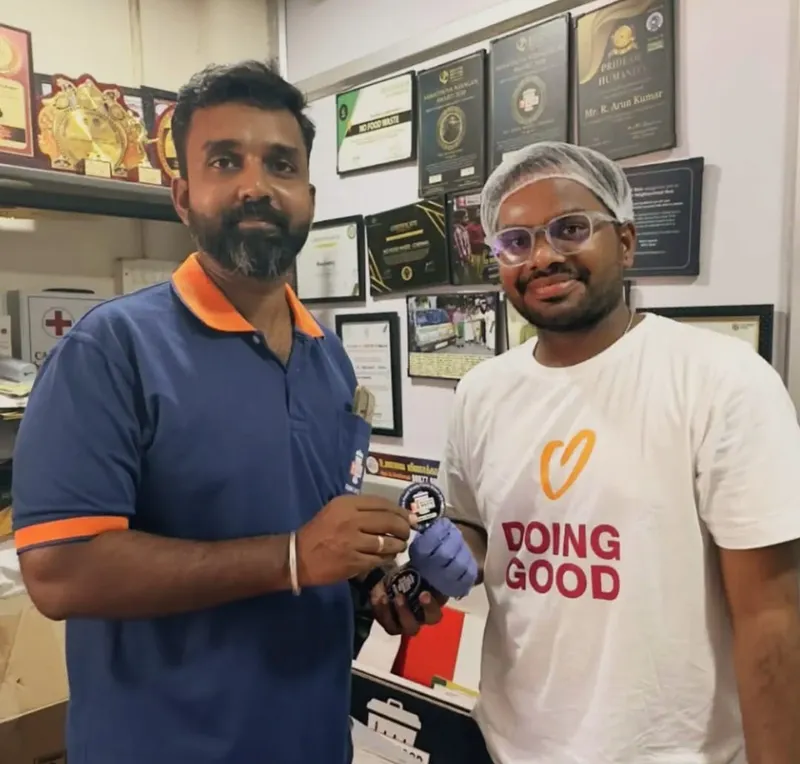
Engineering students and friends Padmanaban Gopalan, Dinesh Manickam and Sudhakar Mohan, started No Food Waste to collect surplus food from weddings.
No Food Waste (NFW) was started in Coimbatore on World Food Day in 2014, when engineering students and friends Padmanaban Gopalan, Dinesh Manickam and Sudhakar Mohan, collected surplus food from weddings to feed the homeless.
Today, NFW operates in multiple cities, including Chennai, where it reportedly serves 40,000 meals every month, bridging the gap between food waste and food insecurity.
Its tech-driven model uses real-time mapping to collect untouched food from banquets, restaurants and corporate kitchens, redistributing it to identified “hunger spots”.
The initiative, which won the United Nations V-Award, continues to expand its volunteer network and partnerships to reduce urban hunger.
Its future plans include institutional collaborations and scaling city-specific food-recovery systems nationwide.
Kartavya
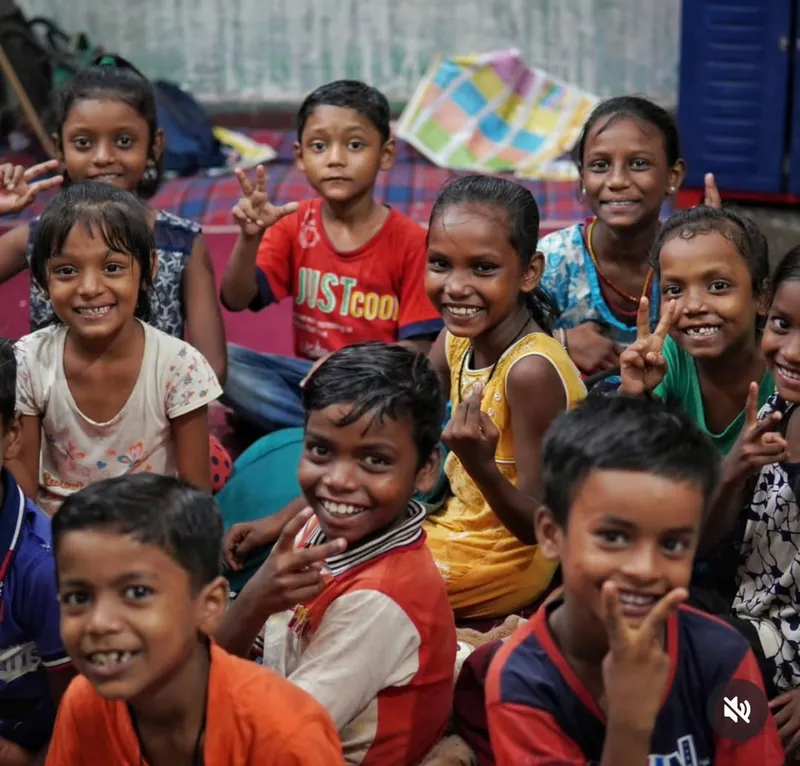
Founded in 1999 by students of IIT (ISM) Dhanbad, and led by Amresh Mishra, Kartavya began as evening classes for slum children. It has now grown into one of India’s longest-running student-led NGOs.
Operated through the Centre for Societal Mission (CSM) at IIT (ISM), it now runs five centres teaching over 500 children, alongside a women’s sewing unit and a computer-literacy centre. Kartavya also organises health-awareness, counselling and social-issue campaigns, and extracurriculars such as dance, art, and yoga.
The organisation celebrated its 26th anniversary in 2025 with Prakash ’25, reaffirming its commitment to education, digital inclusion, and women’s empowerment.
Going forward, Kartavya aims to expand its vocational and computer-training programmes and open new learning centres in slum areas around Dhanbad.
Nirmaan, BITS Pilani
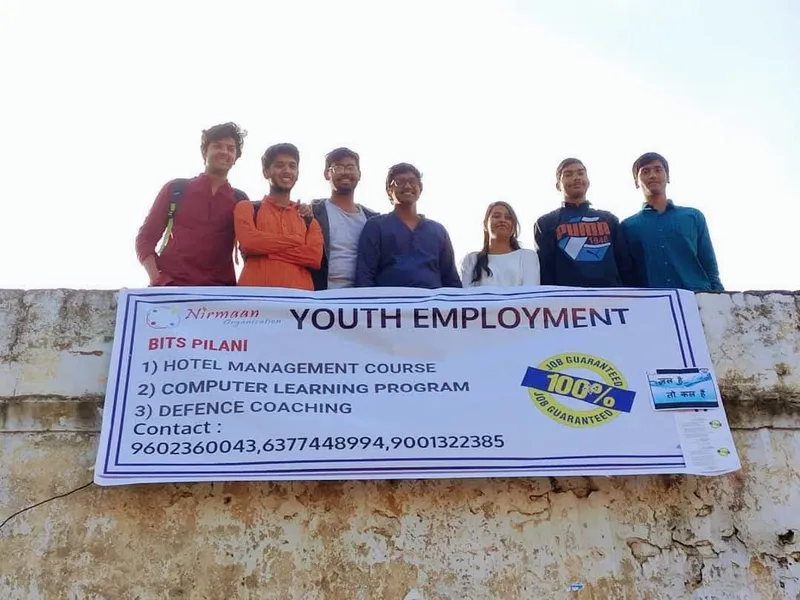
Nirmaan began in 2005 when BITS Pilani students started tutoring children of campus staff and local underprivileged youth. It has since evolved into a multi-state NGO running programmes in education,
skilling, and livelihoods.
Its Goa chapter leads activities like Joy of Giving Week, old-age home visits, and blood-donation drives. Flagship initiatives include Project Unnati, which supports women’s financial independence through self-help groups; and Project Saahasa, which offers livelihood and entrepreneurship training to marginalised youth.
Nirmaan’s 2021–22 report recorded impact on 1.6 million people, while its 2023–24 update announced a partnership with the Infosys Foundation to establish youth-employment centres in Telangana.
The organisation is now expanding its Individual Social Responsibility (ISR) campaign to engage professionals and students in grassroots volunteering.
Gopali Youth Welfare Society, IIT Kharagpur
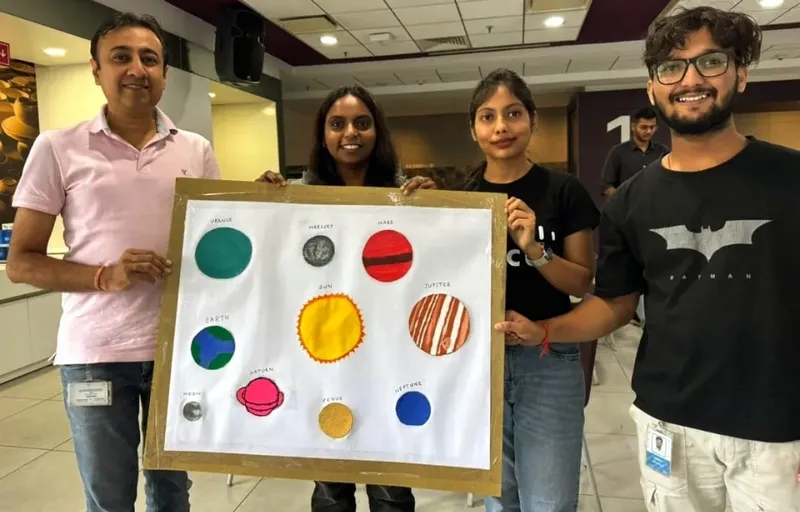
Run by IIT Kharagpur students, faculty, and local residents, Gopali Youth Welfare Society (GYWS) was founded in 2002 and formally registered in 2005 to uplift communities near the IIT campus through education, women’s empowerment, and vocational training.
Its flagship initiative, Jagriti Vidya Mandir (JVM), a free English-medium school, opened in 2008, and now educates more than 240 children from nursery to class five. GYWS also runs Educate A Child (EACh), which provides sponsorships for underprivileged students; and the LiGHT programme, a national youth-leadership network building local social-impact centres across India.
During the pandemic, JVM transitioned online to ensure learning continuity. Looking forward, GYWS plans to expand JVM to higher grades and broaden LiGHT’s reach, with new student-run chapters being launched each year.
Edited by Megha Reddy