



Can virtual reality help rewire the brain’s response to trauma? AdagioVR thinks so
In a country where mental-health care remains under-resourced and stigmatised, AdagioVR is exploring whether immersive technology can make healing more accessible.

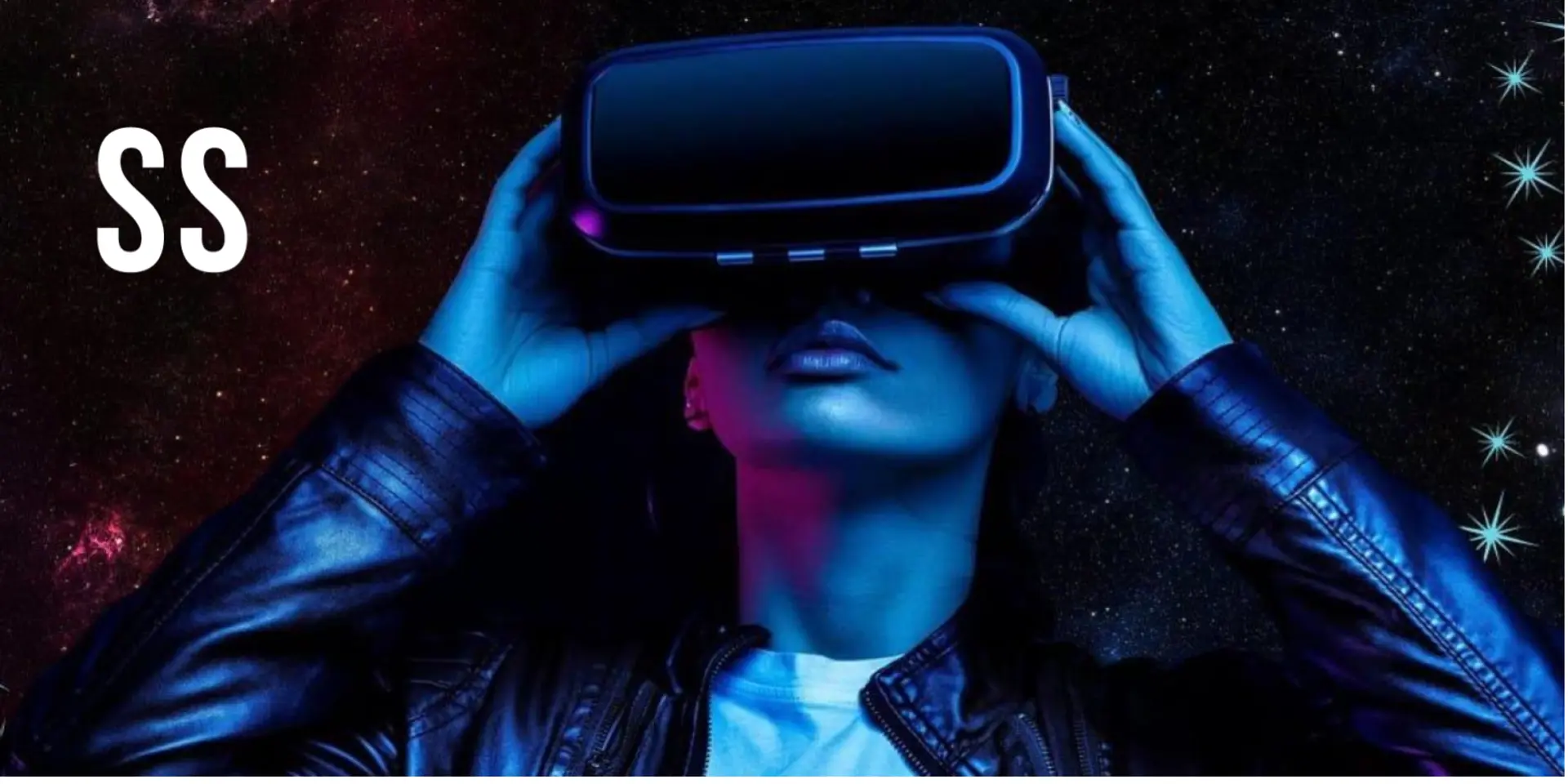

Putting on a VR (virtual reality) headset comes with the promise of an escape. But for the London- and India-based startup AdagioVR, this goal is flipped on its head—to confront subconscious patterns that have long been steering decisions, reactions, and life at large.
At its core, AdagioVR is a therapeutic tool designed to help the mind identify and rewire deep-seated emotional responses, says founder and CEO Sanya Rajpal, a University of Oxford graduate who decided to build a bridge “between medicine and human experience” using the immersive technology. The idea came from watching even the most advanced mental health systems managing symptoms rather than causes.
VR, when used along with guided immersive sessions, can transport users to a space of calm, sensory-controlled environments that help surface the root causes of anxiety, stress, or “unhelpful” behavioural patterns. These are not the grand cinematic simulations but rather deliberately minimal, soothing spaces designed to let the nervous system reset.
Most importantly, the headset experience is paired with human facilitation: trained practitioners guide users through short reflective exercises before and after each session. “It’s not therapy in the conventional sense,” says Rajpal. “We don’t diagnose or direct people. We help them reach the insight themselves, in a space where their brain is calm enough to see it.”
The technology
Before a session begins, participants meet a facilitator who helps them identify a specific challenge—“something that feels present and real,” as she puts it. “It could be trouble sleeping, or the inability to focus, or just that constant background anxiety most people live with.” Through a few short questions, they trace the issue back to a trigger. “Then the headset helps their brain change how it’s responding to that trigger.”
The VR experience may last from 20–30 minutes. The environment is a guided sequence of sound, light and language designed to quiet the body’s threat responses. “You’re not being ‘talked at’ by a therapist avatar,” Rajpal clarifies. “There’s no artificial simulation of people. It’s completely contained, almost meditative, and built to allow the brain to process emotions differently.”
At the end of each session, facilitators record a pre- and post-assessment—how distressed the person feels before and after. “We typically see about a 45% reduction in distress levels after the first session,” says Rajpal. “Over 6–12 sessions, that may go up to more than 90%. But the goal is not numbers—it’s that people begin to experience choice again in how they respond.”
She describes this emotional re-patterning with a simple analogy. “When I ask someone what their favourite childhood meal is, they look up and smile—their body remembers the warmth of that memory,” she says. “Similarly, if I ask about something that once made them feel powerless, their body reacts again. Our brains store these associations like emotional shortcuts. What we’re doing is helping people rewire those shortcuts so that what once felt threatening no longer has the same grip.”
That process, she says, doesn’t need deep verbal excavation. “Traditional therapy often asks why something is happening,” Rajpal says. “We don’t need that at the start. We just need to know when you last felt it. The rest is mechanical—the brain does the work when it’s guided into safety.”

Why VR?
VR for mental health is gaining traction globally. A 2021 protocol for a ‘MIND-VR’ intervention in healthcare workers showed VR’s potential to manage stress and anxiety by immersing users in controlled virtual environments.
For Adagio, the allure lies in VR’s ability to bypass some barriers faced in traditional therapy: stigma, environment control, and the difficulty of consistently engaging nervous-system regulation. Rajpal notes that many people wait until the “breaking point” because the system is built to react rather than prevent.
In a country like India, where mental health infrastructure is stretched and cultural stigma remains entrenched, the proposition of scalable, immersive interventions is timely—though the proof of healing still lies in lived experience.
Adagio’s framing is deliberately modest on one level: the intention is not to claim a silver bullet, but to offer an additional pathway into nervous-system regulation. As the modules can be experienced without a therapist in the room, there is potential for reach beyond typical therapy spaces.
“Think of it as technology that gives the mind a moment of relief and the tools to transform that moment into lasting change,” Rajpal remarks.
Building trust and context
The company’s work spans three use cases: corporates, where the focus is on improving emotional regulation and performance; individuals looking for support outside conventional therapy; and with community groups, particularly marginalised populations.
“In India, we began working with the LGBTQ+ and trans community through the Mitr Trust in Delhi,” she says. “The facilitator always comes from the same community or cultural context as the user—that’s really important for trust.”
For many queer and trans individuals, trauma isn’t a single event but a slow accumulation of rejection, fear and invisibility—what mental-health professionals call ‘complex trauma’. Traditional therapy often expects people to “open up” within frameworks that don’t mirror their lived realities. “But when the facilitator shares your language, your social references, your world—that’s when regulation and repair become possible,” Rajpal explains.
At Mitr Trust, users can access guided VR sessions by Adagio in private, in a safe space where trust already exists, and supported by someone who understands both the technology and the lived experience of marginalisation.
In corporate settings, the outcomes are measured differently. “If a company tells us productivity is down, that’s often not a time-management issue—it’s an emotional one,” Rajpal explains. “Our 360-degree assessments help identify behavioural patterns like emotional dysregulation or lack of focus, and then we work with individuals to change how their brains drive those behaviours. We’ve seen a 20–40% improvement in executive functioning—planning, regulating, responding—just by addressing what’s happening under the surface.”
The bigger vision
For now, AdagioVR remains early in its journey. Founded in 2021, the startup is bootstrapped and is still testing its models across geographies and communities, refining how facilitators are trained and how cultural contexts shape responses. Its approach—blending psychotherapeutic principles, behavioural science, and immersive tech—sits in an uncharted zone between wellness and clinical care.
Rajpal says this ambiguity isn’t a weakness. “The whole point is to meet people before they need a diagnosis,” she says. “We’re not replacing therapy or medication; we’re offering another doorway. And this doorway could be particularly powerful in settings where traditional care remains inaccessible or stigmatised.
“We don’t ask people to tell us their big personal stories,” she says. “They don’t have to relive trauma in front of someone. It’s private, safe, and culturally adaptable. That’s why we hire local facilitators—because the person guiding you should speak the same emotional language.”
As immersive mental health tools inch their way into the mainstream, AdagioVR’s challenge will be to balance innovation with evidence.
“We’re still learning how the brain responds to this combination of immersion and introspection,” she says. “But if technology can help someone take one lighter breath—to see their own life with a bit more clarity—that’s a start worth making.”
Edited by Kanishk Singh