



Meet the changemakers driving social change across Northeast India
Across Northeast India, these individuals and organisations are driving meaningful social change.

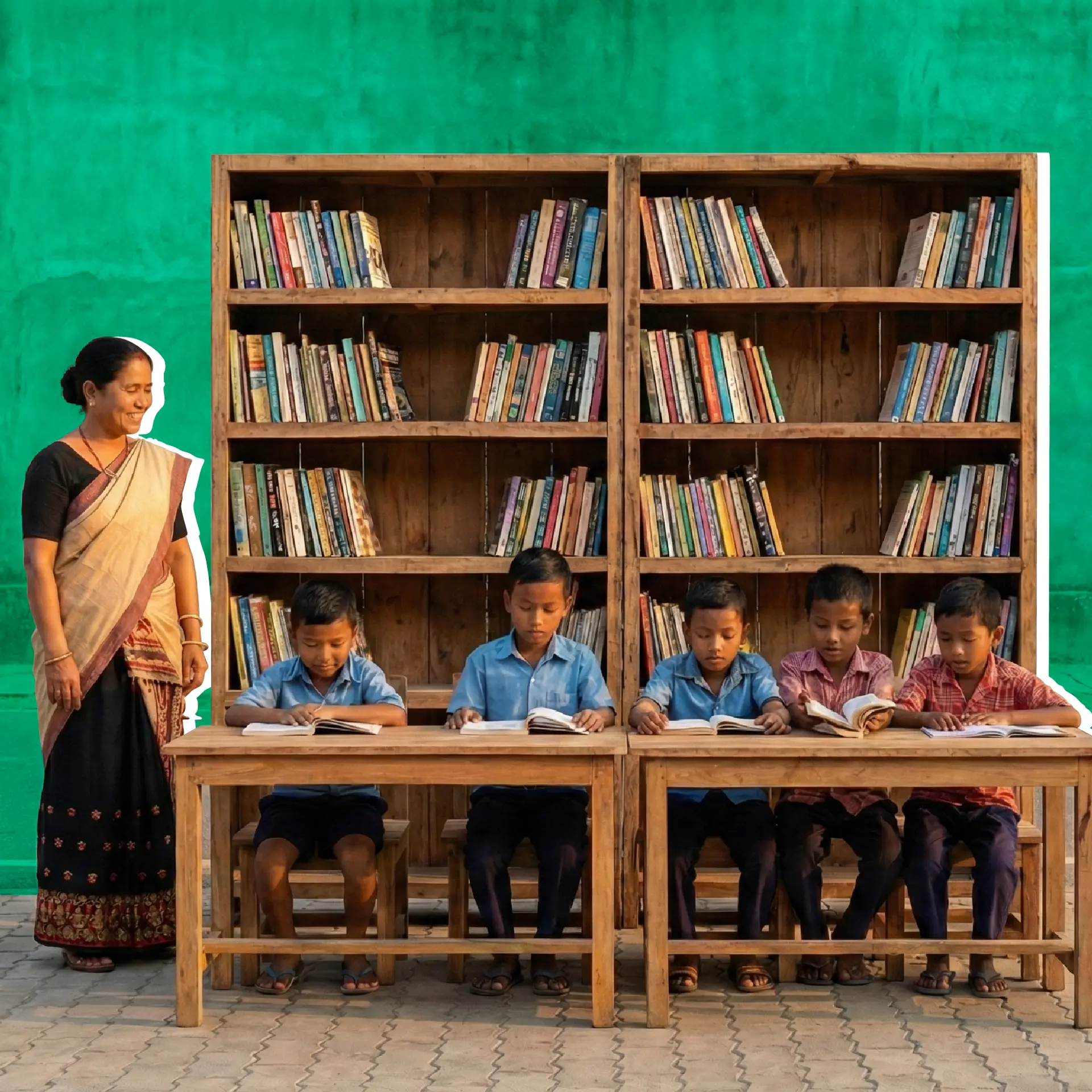

Northeast India is home to some of the country’s ground-breaking social change and impact. Across the seven Sister States, individuals and community-led organisations are addressing structural gaps in justice, education, livelihoods, and inclusion through locally-rooted solutions.
From restorative justice inside prisons to roadside libraries and women-led craft economies, these initiatives demonstrate how impact in the region is built quietly, consistently, and from within communities.
Meet the individuals and organisations leading social initiatives in Northeast India.
Studio Nilima
Started by Abantee Dutta, a lawyer and restorative justice practitioner, Studio Nilima works within correctional homes across Assam, focusing on restorative justice approaches that move beyond punishment.
Its programme Pratidhwani provides legal awareness, counselling, and psychosocial support to incarcerated individuals, helping them understand their legal status and cope with prolonged detention.
Dutta has worked extensively at the intersection of law, mental health, and community engagement. Her work is shaped by sustained engagement with Assam’s criminal justice system and the realities of incarceration faced by marginalised communities.
Operating across multiple districts in Assam, Studio Nilima addresses critical gaps in legal literacy and mental health support inside prisons. It contributes to more informed legal navigation and improved emotional well-being among inmates and their families.
Rituparna Neog
Founder of the Akam Foundation, Rituparna Neog is a trans leader, educator, and social activist from Assam whose work is informed by her own experiences of exclusion, bullying, and isolation during her childhood years.
Books became an early refuge for Neog, shaping her belief that education can be a powerful tool for dignity and empowerment.
Neog initiated Kitape Katha Koi—a community library movement in rural Assam that provides free access to books in Assamese, Hindi, and English. These libraries function in areas with limited educational resources and are open to children and young people without institutional barriers.
Alongside literacy, Neog works extensively on LGBTQIA+ inclusion in rural contexts. In April 2021, she founded Drishti Queer Collective as a meetup space for LGBTQIA+ people from villages and small towns around Jorhat, creating a forum for dialogue on equality, identity, and social justice.
Through community workshops, gender-sensitisation programmes, and queer collectives, she builds support systems and leadership pathways for queer youth outside urban centres.
Dew Drop Academy
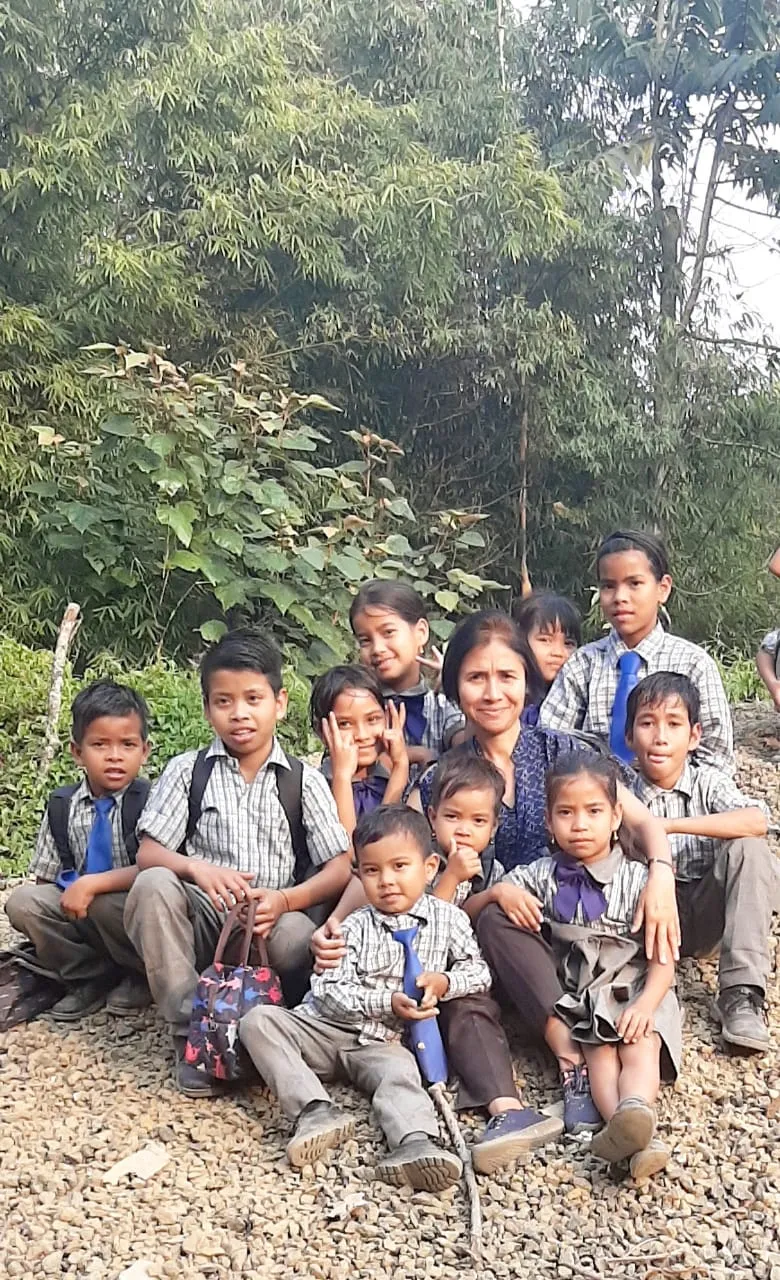
Genavafa Behphat with the students
Genavafa Behphat’s journey towards becoming an educator was shaped by early struggles with English and the limitations of rote-based learning—experiences that later informed her approach to education.
After training as a teacher, Behphat returned to her village to establish a school that focuses on conceptual understanding, language confidence, and affordability.
Three kilometres from Nongshken—a remote village in Meghalaya’s East Khasi Hills that borders Bangladesh—a small school in a forested area educates 241 students from marginalised communities.
Founded in 2019 by Behphat, Dew Drop Academy is part of the Sunbird Trust’s School Transformation Programme, which focuses on the holistic development of partner schools in conflict-affected areas.
Despite infrastructure and funding challenges, the school continues to provide structured education in a region where educational options are scarce.
Ngurang Learning Institute
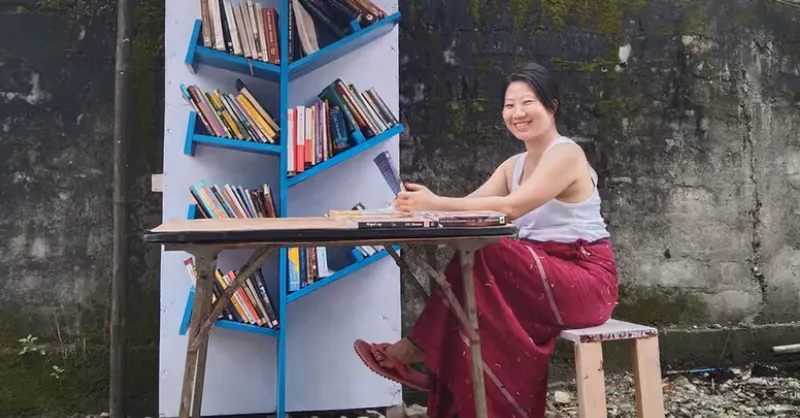
Ngurang Meena
Ngurang Learning Institute was founded by sisters Ngurang Meena and Ngurang Reena, who began their work by teaching women to read and write in Arunachal Pradesh. Over time, the institute expanded its focus to children and young people, responding to the lack of reading culture and public learning spaces in rural regions.
Their focus has consistently been on education that reaches people outside formal institutional systems.
The institute expanded its work during the COVID-19 pandemic through Free Street Libraries—open-access bookshelves in public spaces, such as roadsides and marketplaces. The initiative brought books directly into everyday community life.
With more than 26 libraries across three districts and over 1,000 learners reached, the institute has demonstrated how low-cost, community-trust-based models can sustain literacy in remote regions.
Chizami Weaves
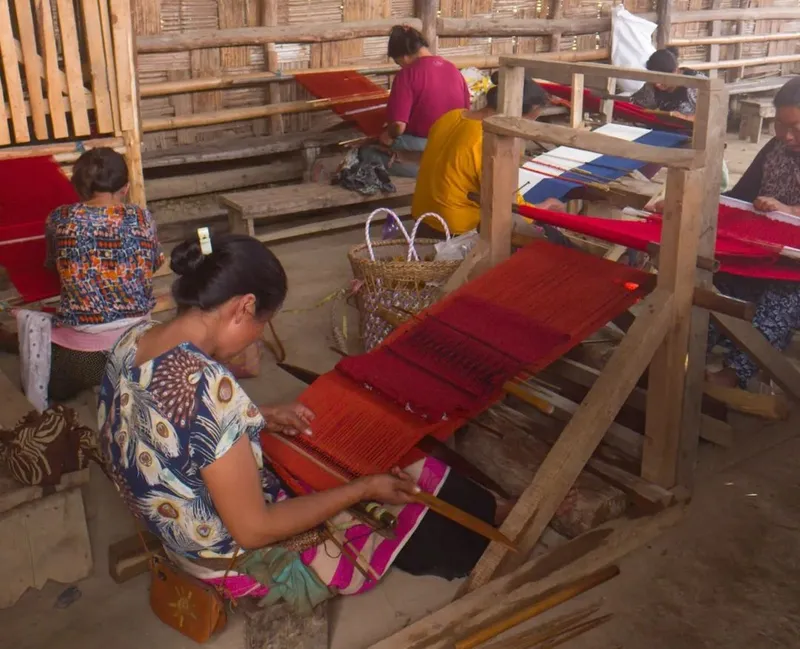
Women operating loin looms | Image: Instagram/Chizami Weaves
Chizami Weaves emerged from livelihood initiatives supported by the North East Network—a feminist organisation working across the Northeast. The enterprise was developed to address the limited income opportunities available to rural Naga women, despite their strong traditional weaving skills.
The initiative works with over 600 women weavers across Nagaland’s villages, producing textiles such as shawls, stoles, and home furnishings. It provides design inputs, fair wages, quality control, and collective market access.
Chizami Weaves goes beyond a livelihood initiative to function as a community space for women. Many members face personal challenges and strained family relationships, and the collective provides encouragement and support during difficult periods—whether within their homes or in the wider social environment.
Through regular interaction, women motivate one another and find a sense of belonging. The initiative also creates opportunities for confidence-building through skill training, learning from experienced weavers, community programmes, and participation in exhibitions.
Kenono Foundation
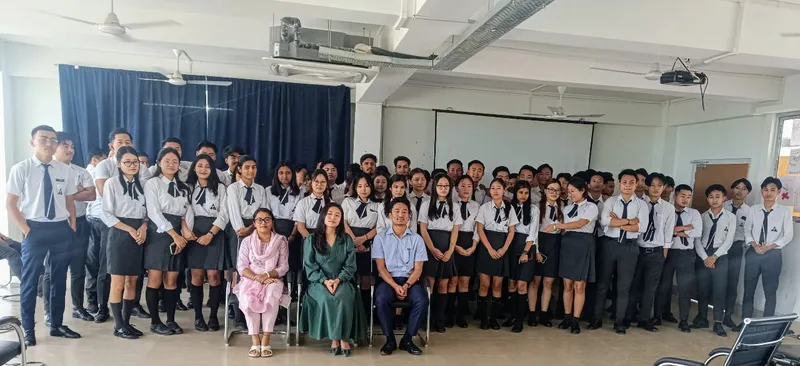
Kenono Foundation was founded by Ruchinilo Kemp, a Nagaland-based conservation practitioner, with a background in community engagement and biodiversity protection. Her work is grounded in the belief that conservation must be led by the people who live closest to forests.
Promoted by Zunpha MPCS Limited, Kenono Foundation focuses on three core areas: documenting indigenous conservation practices, strengthening the management of community conserved areas, and advancing biodiversity education.
The foundation works with forest-dependent communities to document indigenous ecological knowledge, train youth leaders, and promote sustainable land-use practices. It has engaged with more than 128 villages across Nagaland.
Besides conservation, the organisation supports community-run enterprises such as coffee cultivation to create livelihood pathways linked directly to environmental stewardship and long-term sustainability.
Edited by Suman Singh